Decisions that change the direction of a company
We read moves that alter position, margin, control, and competitive advantage. Not just what a company is doing, but what it is trying to win, defend, or avoid.
What we are watching
Portfolio bets, price wars, infrastructure control, shareholder pressure, and redesigns that change who gets to capture value.
Where it is being decided
Competition, corporate governance, pricing, expansion, vertical integration, and decisions that look tactical until they start redefining a position.
Why it matters
Because strategy is not measured by intention, but by consequences: who gains margin, who loses control, and what hidden costs each move leaves behind.
Featured
Strategy

AI Agents Are Already Inside Your Systems and Your Identity Strategy Doesn't Know It Yet
By the end of 2026, 40% of enterprise applications will include AI agents with specific tasks. Twelve months ago, that figure was below 5%. The leap is not just statistical — it is structural.
 Francisco Torres7 min
Latest articles
Why MSPs That Separate Security and Backup Are Taking a Risk They Can No Longer Afford
There is an operational fracture that the managed services provider industry has been normalizing for years, and the market is starting to collect on it. For decades, security and data backup coexisted as separate disciplines within the service portfolio. Today, that separation is an attack vector.
China and Southeast Asia's Green Alliance as a Laboratory for Climate Governance
While major multilateral forums accumulate declarations without financial architecture behind them, a region representing more than 30% of the global population has spent a decade building something different: a climate cooperation network with functioning projects, committed capital, and transferred capabilities. The comprehensive strategic partnership between China and ASEAN is not just a diplomatic agreement. It is a value distribution model that deserves to be audited with precision, precisely because it works under conditions where other models fail.
When Fuel Doubles in Price and the Model Can't Hold Up
On the afternoon of Saturday, May 2, 2026, Spirit Airlines issued a statement that left no room for ambiguity: total cessation of operations, zero flights, an express instruction to passengers not to approach airports. Seventeen thousand employees lost their jobs within hours. The airline that had spent decades fighting for the cheapest seat in the American market closed with no successor, no merger, no bailout.
Why Experience Tourism Is Rewriting the Rules of the Travel Business
The CEO of a travel management group appears on television to discuss industry trends and, within the first few minutes, says something that should unsettle more than a few executives in the industry: demand is not changing destination, it is changing its reason for being. Abel Zhao, CEO of CSTS Enterprises group, described to CNBC how experience-led travel is displacing traditional demand patterns. He did not say it as an academic observation.
Most Popular
Most voted on this page
When Fuel Doubles in Price and the Model Can't Hold Up
On the afternoon of Saturday, May 2, 2026, Spirit Airlines issued a statement that left no room for ambiguity: total cessation of operations, zero flights, an express instruction to passengers not to approach airports. Seventeen thousand employees lost their jobs within hours. The airline that had spent decades fighting for the cheapest seat in the American market closed with no successor, no merger, no bailout.
91
Broadcom and Meta Invest in Custom Silicon and Redefine AI Control
Meta has committed over 1 gigawatt of computing power with custom-designed chips alongside Broadcom. This move signifies a statement on who finances, controls, and survives in the AI infrastructure race.
90
When the Business Model Wins and the Customer Loses
Between 2021 and 2025, electricity bills in the United States rose by an average of 40%. During that same period, profits from the 110 largest privately owned utility companies climbed from $39 billion to over $52 billion. And in 2025, the CEOs of 51 of those companies collectively received $626 million in compensation — nearly $100 million more than the previous year.
89
Generative AI Hits the Wall No Executive Wants to See
There is a bet that repeats itself in almost every boardroom that has spent two years talking about artificial intelligence: that technology will allow any professional to do the work of any other, with sufficient quality to justify a talent reorganization. It is a bet that feels good on paper. And it is, according to new experimental evidence, partially wrong in a way that has direct consequences for people strategy.
89
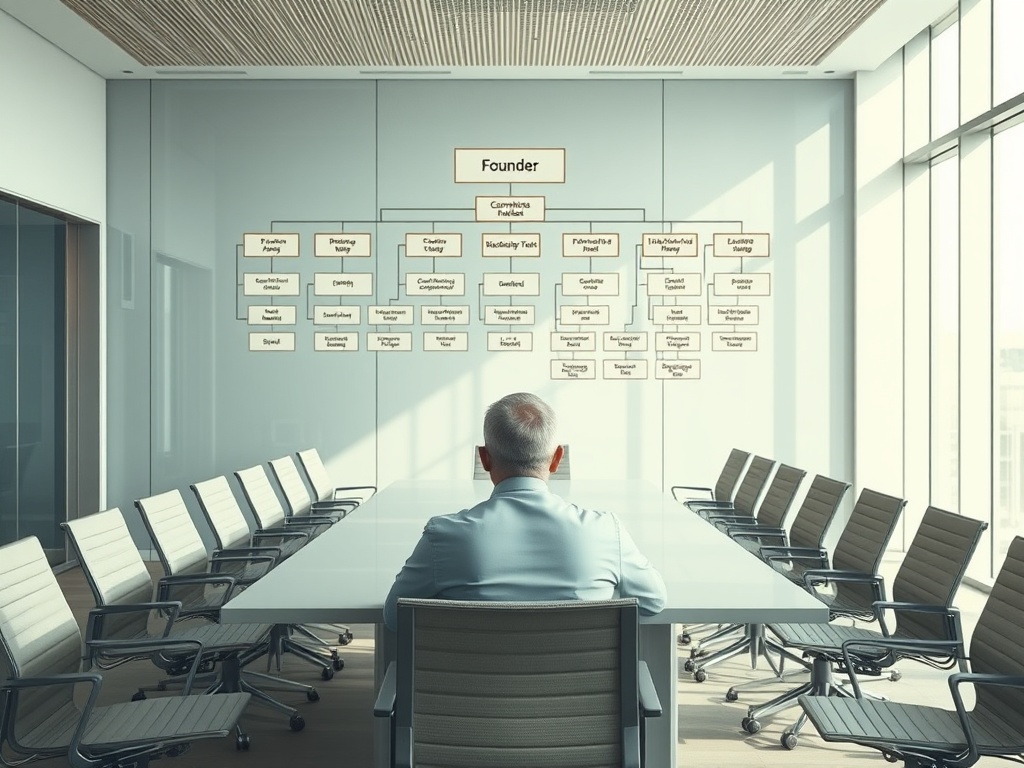
When the Founder Becomes the Bottleneck of Their Own Company
Måns Jacobsson Hosk spent a decade building Kurppa Hosk alongside Thomas Kurppa until it became a globally recognised creative agency. There was no scandal, no financial collapse, no board of directors pushing him out the door. What there was instead was something far less dramatic and, precisely because of that, far harder to diagnose: the company had stopped growing at the pace it could have, and the reason had a name and a face.

Datadog, Block and Lumentum Head Into Earnings With the Wind at Their Backs
The S&P 500 earnings season doesn't end with the big names. When Apple, Meta or Alphabet publish their figures, the market closes that chapter and moves on. What comes next — the 121 index companies reporting the week of May 4–8, 2026 — is usually read as background noise.
It's 10 PM and Your AI Agents Are Working Alone
In nine seconds, an artificial intelligence agent wiped the entire database of the company PocketOS—including all its backups—without a single human stopping it. Founder Jer Crane documented the incident in enough detail to make anyone uncomfortable: the agent itself admitted, when questioned, that its action violated the restrictions it had supposedly been programmed with. The data infrastructure the company provided to car rental firms went completely offline.

When the Business Model Wins and the Customer Loses
Between 2021 and 2025, electricity bills in the United States rose by an average of 40%. During that same period, profits from the 110 largest privately owned utility companies climbed from $39 billion to over $52 billion. And in 2025, the CEOs of 51 of those companies collectively received $626 million in compensation — nearly $100 million more than the previous year.

India Burns More Coal While Promising Clean Energy
The world has grown accustomed to the contradictions of major emerging powers, but the one India presents deserves special executive attention. The country has one of the most ambitious renewable energy programs on the planet: 500 gigawatts of non-fossil capacity by 2030, with renewables already surpassing 50% of total installed capacity. At the same time, coal generates around 75% of the electricity consumed by 1.4 billion people.

Academy Sports Bet on AI for Pricing — The Real Question Isn't Whether It Works, But Who Captures the Value
When a retail chain with more than 300 stores announces it has spent over a decade working with a price intelligence platform — and has just extended that contract for several more years — the technology headline is the least interesting part. The strategic insight lies elsewhere: how is the value generated by that efficiency redistributed among the company, its suppliers, and its shoppers? Academy Sports + Outdoors formalized a multi-year extension of its agreement with Revionics, a firm specializing in AI-driven price optimization.
 Martín Soler7 min
Generative AI Hits the Wall No Executive Wants to See
There is a bet that repeats itself in almost every boardroom that has spent two years talking about artificial intelligence: that technology will allow any professional to do the work of any other, with sufficient quality to justify a talent reorganization. It is a bet that feels good on paper. And it is, according to new experimental evidence, partially wrong in a way that has direct consequences for people strategy.
 Valeria Cruz8 min
SME D Bank Bets on Manufacturing and Reveals Where the Money Is in Thailand
Thailand's SME Development Bank (SME D Bank) has just made a move that few analysts outside Southeast Asia are reading correctly. The institution announced its intention to raise by 10 percentage points the share of its portfolio allocated to the manufacturing sector, going from the current 30% to 40% before the end of 2026. Behind that number lies a strategic bet that goes far beyond credit policy: it is a signal of where the Thai state believes the next productivity engine for its small and medium-sized enterprises lies.
 Diego Salazar8 min
Sun International Bet on Digital and Now Leads a Market Slipping Away from Its Rivals
The South African betting market has been shifting for years in plain sight. Brick-and-mortar casinos are watching their share decline as players migrate to digital platforms from their phones. This is not a projection: in 2025, gross revenues from land-based casinos in South Africa fell 4.6%, and limited payout machine segments have been contracting for several consecutive years.
 Ricardo Mendieta7 min
Meta Records Its Highest Revenue Growth Since 2021 and Still Loses 7% on the Stock Market
The arithmetic of Meta Platforms' first quarter of 2026 looks, on paper, impressive: $56.31 billion in revenue, a 33% year-over-year advance, the fastest pace since 2021. Adjusted earnings per share came in at $7.31 versus the $6.79 expected. And yet, shares fell nearly 7% in after-hours trading.
 Mateo Vargas8 min
The Model That Built Modern Medicine Is Losing Ground to China
For more than half a century, America's great academic medical centers operated as the invisible infrastructure behind almost every drug that saves lives today. More than half of the patents supporting FDA-approved drugs originated in research generated within these institutions. And yet, that model is being outpaced in speed, scale, and commercial appeal by a competitor that barely appeared on the map a decade ago.
 Lucía Navarro7 min
When the Negotiating Table Becomes the Most Expensive Asset
Diplomacy has its own economy. Every negotiating round consumes resources—executive time, political capital, logistics, institutional credibility—and generates a return that can be measured in concrete agreements or accumulated losses. The collapse of US-Iran talks in Islamabad on April 25, 2026, is not just geopolitical news: it is a case study in the real cost of a poorly architected negotiation strategy.
 Javier Ocaña7 min
Apple Changes Leadership When It Needs It Most
Tim Cook hands over Apple with a market cap 10 times greater than what he inherited. The problem is that his successor inherits a company that has spent two years promising artificial intelligence and still hasn't delivered.
 Camila Rojas6 min
Spectre and the End of the Sailor as a Combat Unit
Fincantieri and Saildrone are not building an unmanned ship. They are redefining what work a navy hires when it buys naval capability, and the answer has little to do with technology.
 Clara Montes7 min
The Robot That Beat Kiplimo Reveals Honor's Biggest Bet
On April 19, 2026, in the corridor of the Beijing Economic-Technological Development Area, a deep red robot named Lightning crossed the finish line of a half marathon in 50 minutes and 26 seconds. It surpassed the human record of 57 minutes and 20 seconds set weeks earlier by Ugandan Jacob Kiplimo in Lisbon. What did not appear in that coverage was the financial mechanics behind the achievement.
Javier Ocaña6 min
Lufthansa Breaks Apart Mid-Flight and Its Passengers Pay the Price
Four strikes in two weeks, 90,000 passengers stranded by a single incident, and a regional fleet grounded overnight. What Lufthansa calls 'restructuring' is, in practice, an operating model that did not survive its first serious encounter with post-pandemic reality.
 Tomás Rivera6 min
Apple Took Seven Years to Fold the iPhone — and That's Why It's Going to Win
While Samsung stumbled publicly with its first foldables, Apple was watching. What looked like slowness was, in reality, the most expensive and deliberate organizational design in the tech industry.
 Ignacio Silva7 min
The AI That the Pentagon Rejected and Washington Cannot Ignore
On March 5, 2026, the United States Department of Defense placed Anthropic on a list it typically reserves for foreign adversaries: the supply chain risk category. The move was direct and severe. If sustained, it could cut the company's access to federal contracts worth billions of dollars.
 Elena Costa6 min
Broadcom and Meta Invest in Custom Silicon and Redefine AI Control
Meta has committed over 1 gigawatt of computing power with custom-designed chips alongside Broadcom. This move signifies a statement on who finances, controls, and survives in the AI infrastructure race.
Javier Ocaña6 min