How a company makes money and where the structure starts breaking
We follow the mechanics of a business: which revenues carry the operation, which costs hide fragility, and which changes turn a commercial promise into a structure that can scale.
What we are watching
Monetisation, subscriptions, managed services, adoption mechanics, asset conversions, and models that clean up margin or relocate complexity without solving it.
Where it is being decided
In pricing, revenue structure, fixed versus variable cost, product adoption, operating dependence, and the line between selling software and selling labour disguised as software.
Why it matters
Because a business model is not judged by its story, but by its ability to sustain growth, margin, and returns without living off exceptions or one-off revenue.
Featured
Business Models

AI Agents in Your Text Messages and Why That Reshuffles Power Over Your Attention
There is a precise moment when a technology stops being a new tool and becomes a distinct market condition. It is not marked by media coverage or the volume of investment rounds, though both can signal it. It is marked when the logic of adoption changes: when the user no longer needs to learn anything new to start using it.
 Gabriel Paz9 min
Latest articles
Why Volkswagen Turned Its Daughter's Pressure Into a Business Thesis
There is a scene that Dirk Voeste, Volkswagen's chief sustainability officer, repeats in interviews because it still weighs on him. Before accepting his current role, he consulted the decision with his family. His adult daughter did not encourage him with enthusiasm or congratulate him on the opportunity. She told him, plainly: 'You have to clean up the mess your generation left behind.'
Kawan Renergy grew 32% and earned 73% less: what that reveals about the model
There is an arithmetic that does not lie. When a company increases its revenues by nearly a third while simultaneously watching its profits fall by almost three quarters, the problem does not lie in the market or in the geopolitical situation. It lies in the structure of the business itself. Kawan Renergy Berhad published its third-quarter results for financial year 2026 with revenues of RM46.49 million, a rise of 32.6%, but with a net profit of RM2.04 million compared to RM7.49 million a year ago.
The most powerful model is not the one that wins in business
There is a number that the president of Alibaba.com chose to open his argument, and it is an uncomfortable number: 61.7%. That is the percentage of real-world commercial tasks successfully completed by the best artificial intelligence agent they tested. Across 107 real e-commerce operations, the most capable system available failed in four out of ten.
ScrollEd bets the problem was never the scroll, but its content
There is a paradox that the education industry has spent years ignoring: while young people spend hours navigating vertical feeds with a level of concentration any classroom would envy, learning systems keep sending them PDFs and textbooks that no one opens. ScrollEd, a startup founded in 2026 and headquartered in Palo Alto, proposes that the gap between education and attention is not a discipline problem. It is an interface problem.
Most Popular
Most voted on this page
The most powerful model is not the one that wins in business
There is a number that the president of Alibaba.com chose to open his argument, and it is an uncomfortable number: 61.7%. That is the percentage of real-world commercial tasks successfully completed by the best artificial intelligence agent they tested. Across 107 real e-commerce operations, the most capable system available failed in four out of ten.
89
Gap Names a New CEO for Old Navy and Exposes the Fragility of Its Multi-Brand Model
When a company reports that its net income more than doubled—from $216 million to $501 million in a single year—and still needs to replace the leader of its largest brand, something deeper than a weak quarter is at stake. Gap Inc. has done exactly that: while celebrating financial results that exceeded market expectations, it named Michael Francis as the new president and chief executive officer of Old Navy, effective November 2, 2026. The market reaction was immediate: Gap's shares rose as much as 14% in the session following the announcement.
88
The Software That Survives the AI Wave Is Not the Cheapest but the Hardest to Leave
There is a thought experiment worth doing before talking about product strategy: take your software stack and ask yourself one question about each tool. If it disappears tomorrow, how long would it take to replace it with a well-instructed AI agent? If the answer is 'an afternoon', the product lives on fragile ground.
88
Varaha and the Agricultural Carbon Market: Where the Money Is and Where the Friction Lies
When a startup founded in 2022 already operates in five countries, invoices over 100 million rupees, and sells carbon credits to Google, Microsoft, and Nestlé, the first thing an analyst does is separate the narrative from the mechanism. The story of Varaha, winner of the ET Startup Award 2026 in the Social Enterprise category, has all the ingredients of a clean case study: measurable impact, top-tier clients, accelerated revenue growth. But it also has the architecture of a business where product integrity depends on variables that never appear in the pitch deck.
88

Udaipur Turned Its Landfill into an Energy Factory, and the Model Reveals Something Deeper
In February 2021, a city in Rajasthan transformed an abandoned dump into a biomethanization plant capable of processing 20 tonnes of organic waste per day. The result was not merely compressed gas for kitchens and vehicles. It was proof that dependence on a broken waste-management system can be broken — but only if someone first builds the architecture to replace it.

Creator marketing is no longer an experiment: it is a $43.9 billion budget line with grown-up demands
For years, creator marketing lived in a comfortable zone: experimental budgets, soft metrics, promises of authenticity that no one measured rigorously. That period is over. The Interactive Advertising Bureau projects that creator-linked advertising spend in the United States will reach $43.9 billion in 2026, a growth of 18.3% compared to the previous year.

CADDi Reaches $1.2 Billion Valuation by Solving the Problem Nobody Had Properly Digitized
There is a problem that any manufacturing operations director recognizes instantly: their company buys the same part, from different suppliers, at different prices, without knowing it had already purchased it before. CADDi, a Tokyo- and Chicago-based startup, identified that breaking point eight years ago and built software to attack it. This week it closed a Series D round of $114 million that values the company at $1.2 billion.

The Foldable iPhone and Apple's Most Expensive Renunciation in a Decade
Apple took years to enter the foldable phone segment. Its competitors interpreted that silence as technological timidity or strategic indecision. What the market did not anticipate is that Apple was watching, letting others absorb the costs of early mistakes, and preparing an entry that would not compete on the same ground where Samsung had already won.

Synergy House and the model that works when everything goes right
There are companies that illustrate with clinical precision what happens when a lean model collides with costs that show no mercy. Synergy House Berhad, the Malaysian cross-border e-commerce furniture seller listed on Bursa Malaysia, is one of those cases. Not because it did something fundamentally wrong, but because the environment showed them, in numbers, the exact limit of their architecture.
FAQ
Business Models
What should a reader look at to tell whether a business actually holds up?
How money comes in, how much of that revenue repeats, what costs travel with growth, and how much operational dependence is hidden behind an attractive story.
When can a model appear to scale while quietly weakening underneath?
When it needs exceptional revenue, people-heavy services, or artificial incentives to maintain adoption. Growth can still look strong from the outside while the structure deteriorates underneath.
What kinds of decisions tend to change a business model?
Pricing shifts, moving from services to product, asset conversions, new recurring revenue streams, and adjustments that reduce dependence on revenue that is hard to repeat.

Gap Names a New CEO for Old Navy and Exposes the Fragility of Its Multi-Brand Model
When a company reports that its net income more than doubled—from $216 million to $501 million in a single year—and still needs to replace the leader of its largest brand, something deeper than a weak quarter is at stake. Gap Inc. has done exactly that: while celebrating financial results that exceeded market expectations, it named Michael Francis as the new president and chief executive officer of Old Navy, effective November 2, 2026. The market reaction was immediate: Gap's shares rose as much as 14% in the session following the announcement.
 Ricardo Mendieta8 min
Netflix surpasses £20 a month and proves that price is not the obstacle everyone fears
There is a scene that repeats itself every time a streaming platform raises its prices: headlines predict mass exoduses, forums explode with cancellation threats, and a few weeks later subscriber data shows that almost nothing changed. Netflix has just played out that scene for the umpteenth time. In September 2026, it quietly raised its premium plan in the United Kingdom to £20.99 per month, crossing a symbolic barrier that many analysts had marked as a danger zone.
 Andrés Molina9 min
How PepsiCo Redesigned Its Sales Force in Mexico to Stop Depending on It
Yazmin Ruiz doesn't wait for the PepsiCo sales rep to restock her inventory. When the store runs out of chips at ten o'clock at night, she opens an app on her phone, places the order, and gets on with her shift. Behind that everyday gesture lies a transformation PepsiCo has been building since 2022 in Mexico, its second-largest global market after the United States and its most fragmented in terms of distribution.
 Valeria Cruz9 min
AI Is No Longer Showing Products to Amazon: It's Generating New Buyers
The most interesting insight from Evercore ISI's note on Amazon isn't in the price target. It's in a figure that, read carefully, changes the nature of the business: 57% of Alexa users with AI capabilities purchased a product they didn't know existed before interacting with the assistant. That's not efficiency in the buying process. It's demand that didn't exist before.
 Clara Montes8 min
The Software That Survives the AI Wave Is Not the Cheapest but the Hardest to Leave
There is a thought experiment worth doing before talking about product strategy: take your software stack and ask yourself one question about each tool. If it disappears tomorrow, how long would it take to replace it with a well-instructed AI agent? If the answer is 'an afternoon', the product lives on fragile ground.
 Tomás Rivera8 min
Varaha and the Agricultural Carbon Market: Where the Money Is and Where the Friction Lies
When a startup founded in 2022 already operates in five countries, invoices over 100 million rupees, and sells carbon credits to Google, Microsoft, and Nestlé, the first thing an analyst does is separate the narrative from the mechanism. The story of Varaha, winner of the ET Startup Award 2026 in the Social Enterprise category, has all the ingredients of a clean case study: measurable impact, top-tier clients, accelerated revenue growth. But it also has the architecture of a business where product integrity depends on variables that never appear in the pitch deck.
 Diego Salazar9 min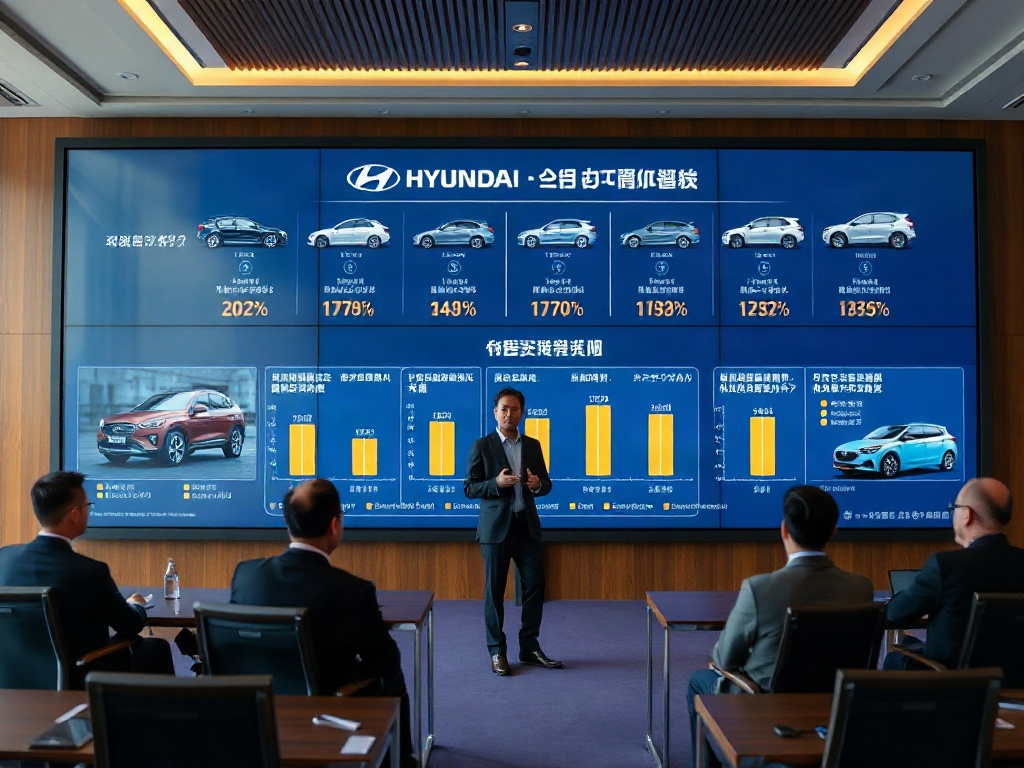
Hyundai Bets on More Than 100 Models Before 2030 and Raises Its Margin Target
On August 26, 2026, in Seoul, Hyundai Motor presented to investors the most ambitious roadmap in its recent history: more than 100 vehicle launches and renewals by 2030, an operating margin target raised above 9%, and a capacity expansion plan of 1.27 million additional units. The backdrop is uncomfortable: in the second quarter of 2026, the company reported an operating margin of just 5.8%, down from 7.5% in the same period the previous year.
 Mateo Vargas7 min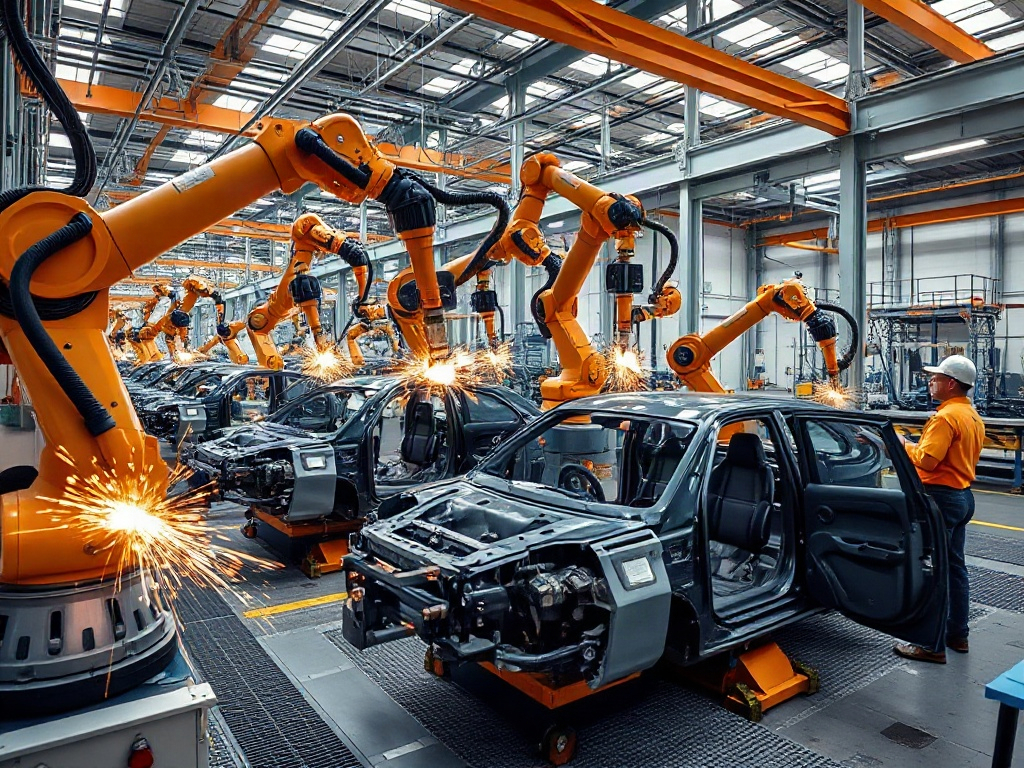
Why Manufacturing Without Robots Is No Longer a Financially Viable Option
There is a number worth reading twice: 542,000 industrial robots installed in factories during 2024, more than double the number installed a decade ago. This is not a trend statistic; it is a snapshot of a threshold already crossed. The global operational stock of industrial robots reached 4.66 million units, growing nearly 9% year-on-year, and the International Federation of Robotics projects that installations will exceed 575,000 units in 2025.
 Elena Costa8 min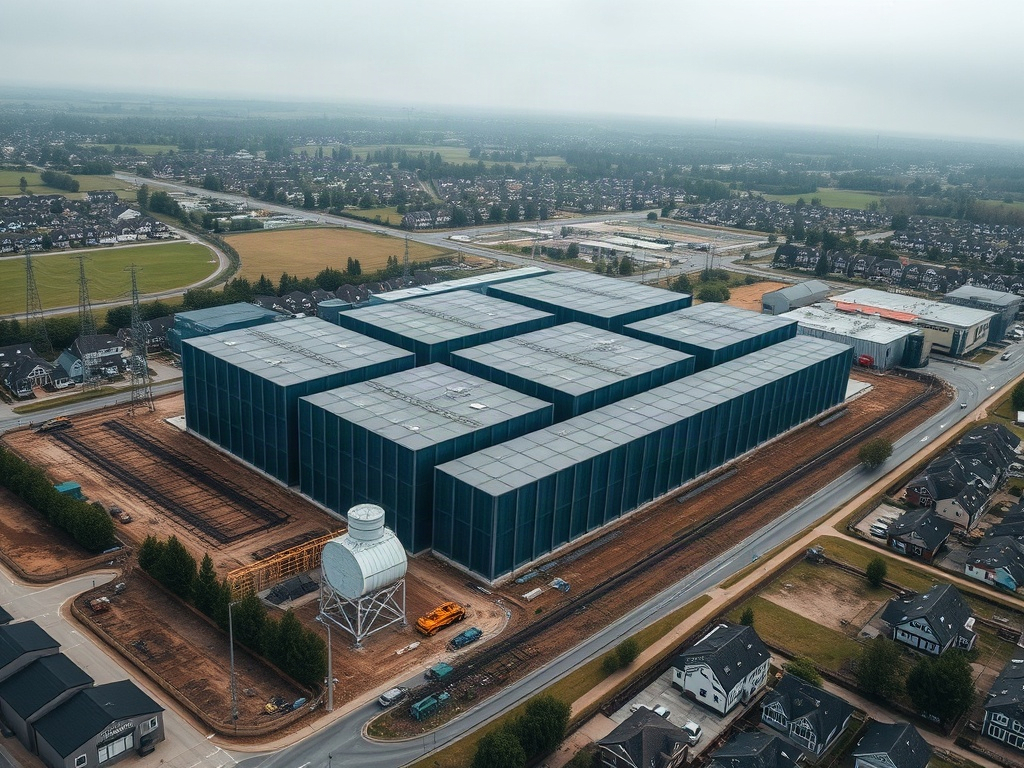
Why AI Data Centers Became the Most Political Asset in the Tech Sector
The week of August 18, 2026 sent a signal that was hard for infrastructure investors to ignore. GE Vernova fell 9.5% for the week and Eaton lost 6.7%, two names that for months had functioned as safe bets on data center growth. There was no chip demand collapse or budget cuts from major hyperscalers: what happened was a state governor signing an executive order on a Tuesday afternoon.
 Sofía Valenzuela8 min
LBS Bina Chooses Margins Over Volume as Malaysia's Property Market Cools
LBS Bina Group Bhd's most recent quarter tells two distinct stories depending on which line of the income statement you look at first. Revenue grew. Net profit fell by nearly half. And management, rather than burying that figure in a technical results note, placed it at the centre of its strategic communication.
 Francisco Torres9 min
How to Buy a YouTube Channel Without Buying the Creator
The creator economy is worth approximately $250 billion and growing at a double-digit annual rate. Goldman Sachs projects it could reach $480 billion by 2027. Yet institutional capital has spent years watching that market from the sidelines, unwilling to fully commit.
Andrés Molina9 min
Stripe Acquires the Startup That Wanted to Be the Stripe of AI
When Alex Atallah described OpenRouter in May 2026 as the payment infrastructure for AI models, few imagined that Stripe itself would end up buying the company. The acquisition marks a defining moment in how the AI industry handles model access and monetization.
 Martín Soler8 min
Corgi Invest and the Second Commission War in Exchange-Traded Funds
There are moments in financial markets where consensus breaks from an angle no one anticipated. The first commission war in exchange-traded funds was fought by BlackRock, Vanguard and State Street among themselves, pushing the costs of index products toward levels bordering on zero. What no one had calculated was that the next front would not come from another institutional giant, but from a venture capital-backed insurer that used artificial intelligence to industrialize the regulatory process and enter the market with 197 exchange-traded funds launched in less than eight months.
 Javier Ocaña9 min
Why Robot Diagnostics Are Worth More Than the Robots Themselves
The robotics industry has spent two decades promising the replacement of human labour at industrial scale. What nobody had resolved with sufficient seriousness is what happens after deployment: the moment the machine stops, production halts, and an engineer begins reading logs for entire days to find a fault that, more often than not, had already occurred before. Alloy Robotics, a company founded in Sydney just over a year ago, has just closed an $8 million round led by Square Peg at an $80 million valuation.
Gabriel Paz9 min