The kind of leadership that becomes visible when pressure leaves nobody with excuses
We read leadership once it stops being inspiration and becomes structure: judgment, power distribution, quality of conversation, and the ability to sustain results without hollowing out the team.
What we are watching
Emotional intelligence, mentoring, distributed leadership, management failures, and organisations where the problem is not lack of talent but the kind of leadership that traps it or frees it.
Where it is being decided
In hard conversations, in the quality of context, in the autonomy that gets enabled, in how honestly a leader can read himself or herself, and in the way trust is built without theatre.
Why it matters
Because a company can have strategy, product, and capital, and still fall short if the people leading it cannot read tensions, correct themselves in time, or distribute leadership when it matters.
Featured
Leadership & Management

Adidas Eliminated Seven Decision-Making Layers and That Is How It Recovered Its Ability to Compete
When Bjørn Gulden took over the leadership of Adidas in January 2023, the company was carrying $1.2 billion in unsold Yeezy sneaker inventory, a retreating Chinese market, and brands like Hoka and On gaining ground in the segment where Adidas had built its technical reputation over decades. What Gulden found inside, however, was not merely a balance-sheet problem. It was an organizational architecture that was systematically producing immobility.
 Isabel Ríos8 min
Latest articles
The four-day week works, and the data leave little room for doubt
A study published in Nature Human Behaviour in 2025, which followed 2,896 employees across 141 organisations distributed among Australia, Canada, Ireland, New Zealand, the United Kingdom and the United States, found statistically significant improvements in burnout, job satisfaction, mental health and physical health after six months of a four-day working week. It was not an opinion poll or an internal company survey. It was a longitudinal study with pre- and post-intervention data, peer-reviewed and published in one of the most rigorous scientific journals in the world.
Gap Names a New CEO for Old Navy and Exposes the Fragility of Its Multi-Brand Model
When a company reports that its net income more than doubled—from $216 million to $501 million in a single year—and still needs to replace the leader of its largest brand, something deeper than a weak quarter is at stake. Gap Inc. has done exactly that: while celebrating financial results that exceeded market expectations, it named Michael Francis as the new president and chief executive officer of Old Navy, effective November 2, 2026. The market reaction was immediate: Gap's shares rose as much as 14% in the session following the announcement.
When Growth Stops Being Your Advantage and Becomes Your Trap
There is a precise moment in the life of any growing organisation where the very practices that built its success begin to undermine it. It is not a dramatic moment. There is no meeting where someone declares that the model no longer works.
Bank of America Spends $250 Million a Year on Weight Loss Drugs and Makes No Apologies for It
When the CEO of one of the world's largest banks publicly declares that his company spends over $250 million a year on weight loss medications and defends it without hesitation, he's not describing a medical benefit. He's describing an organizational design bet on what kind of workforce he wants to sustain, and how far he's willing to go to build it. Bank of America has spent several years absorbing the cost of GLP-1 medications, the class of drugs that includes brands like Ozempic, Wegovy, and Zepbound, as part of a healthcare package that exceeds $2 billion annually.
Most Popular
Most voted on this page
The AI Triathlete and the Problem Nobody Wants to Name in the Boardroom
There is a phrase that repeats in almost every executive committee meeting where artificial intelligence projects are reviewed: 'the pilot was successful.' And then, silence. Nobody asks why the pilot never became anything else. The organization celebrates the experiment, files away the learnings, and three months later launches another pilot.
91
When Artificial Intelligence Rewrites Leadership from the Top
There is a narrative that organizations repeat with comfort: artificial intelligence will displace mid-level analysts, customer service agents, junior programmers. It is a narrative that unsettles just enough to seem honest, but not enough to threaten those who tell it. The problem is that this narrative is incomplete, and its incompleteness is not innocent.
91
Why 65% of Companies Rewrite Their Model Every Two Years and Still Fail to Execute It
There is something revealing about the fact that a survey of more than 700 senior executives across 12 countries produces as its central finding a gap that any chief operating officer would recognize instantly: organizations know they must change, approve the change, frame it within a strategy, and then go no further. The Project Management Institute has just published the results of that research, alongside a Business Agility Manifesto developed in collaboration with Agile Alliance, and the numbers that emerge are not those of an industry in the process of maturing. They are those of an industry with a structural design problem that has gone without precise diagnosis for years.
90
David Cordani Built Cigna for 17 Years and Now Measures His Success by How Forgotten He Becomes
There is a category of success that few organizations know how to manufacture: the kind that becomes invisible. David Cordani, who took the helm of Cigna in 2009 when the company was generating around $18 billion a year, steps down as CEO on July 1, 2026 having grown that figure to $275 billion. He leaves the role with a definition of victory that is unsettling precisely because it is hard to fake: he wants to be 'something forgotten' because his successor, Brian Evanko, and his team are so effective that no one needs to remember him.
90

Measure to Scale: The Problem Blocking Enterprise AI
Two years ago, most executives I know were debating which language model to choose. Today, those who already made that decision—and still can't justify a second round of investment—are starting to understand that the problem was never the model. It was measurement. The enterprise sector has been adopting artificial intelligence at an accelerated pace for several years, but only one third of organizations have begun scaling it consistently.

Your Team's Time Doesn't Belong to You
Hayagreeva Rao, professor of organizational behavior at Stanford Graduate School of Business, recently offered a definition of leadership that holds up better than most books on the subject: 'Great leaders are people who think of themselves as custodians of other people's time.' No war metaphors. No references to transformational vision or charisma as a managerial asset.

Millions in Funding, Undefined Transformation: The Structural Problem of AI in the C-Suite
There is a line in almost every corporate budget right now. It has a name like 'AI transformation' or 'intelligent automation.' But behind that line, in many organisations, there is no clear definition of what success looks like, who is responsible, or how progress will be measured. This is the structural problem of AI at the top level of leadership.

When Grief Is Read as Poor Performance, the Problem Isn't the Employee
There is a conversation that most leaders avoid with almost surgical precision. Not the one about unmet goals, nor the difficult dismissal. There is another, quieter and more costly: the one about the employee who lost someone and simply stopped performing the way they used to.

The AI Triathlete and the Problem Nobody Wants to Name in the Boardroom
There is a phrase that repeats in almost every executive committee meeting where artificial intelligence projects are reviewed: 'the pilot was successful.' And then, silence. Nobody asks why the pilot never became anything else. The organization celebrates the experiment, files away the learnings, and three months later launches another pilot.
FAQ
Leadership & Management
What kind of leadership is worth looking at here?
Leadership as a system of decisions, conversations, and incentives. Not charisma or personal style, but the concrete way leadership affects performance, context, and culture.
Why do leadership and management appear together?
Because leadership without management can stay trapped in intention, and management without leadership can drain meaning from an organisation. What matters is how both layers reinforce or undermine each other.
What makes a leader weak even when visible results still look good?
An inability to listen, correct course, enable autonomy, or build trust without leaning on formal authority. The numbers can hold for a while; the human structure does not always do the same.

Why IEEE Gave Its Highest Honor to the Engineer Who Built the Global Architecture of Robotics
Toshio Fukuda has spent fifty years in this field. More than two thousand published papers. Modular robots that assemble like biological Lego pieces. When IEEE awarded him the 2026 Richard M. Emberson Award—one of the institute's highest honors—it wasn't recognizing a single invention. It was recognizing someone who, over decades, built the intellectual infrastructure on which modern robotics operates.
 Clara Montes9 min
Why 65% of Companies Rewrite Their Model Every Two Years and Still Fail to Execute It
There is something revealing about the fact that a survey of more than 700 senior executives across 12 countries produces as its central finding a gap that any chief operating officer would recognize instantly: organizations know they must change, approve the change, frame it within a strategy, and then go no further. The Project Management Institute has just published the results of that research, alongside a Business Agility Manifesto developed in collaboration with Agile Alliance, and the numbers that emerge are not those of an industry in the process of maturing. They are those of an industry with a structural design problem that has gone without precise diagnosis for years.
 Ignacio Silva9 min
93% of the AI Budget Goes to Technology — The Remaining 7% Decides the Outcome
There is a paradox running through the finance rooms of the world's largest corporations: the organizations investing the most in artificial intelligence are, often, the ones getting the least out of it. Not because of technological failure. The technology works. The problem lies on the other side of the equation — the side nobody budgeted for seriously enough.
 Ricardo Mendieta7 min
Why European Wealth Management Can No Longer Sell Returns as Its Core Argument
There is one data point in the McKinsey survey published in June 2026 that deserves a pause before moving on: among high-net-worth clients in Europe, the proportion who self-describe as risk-takers fell from 40 to 31 percent in just two years. This is not a cyclical swing. It is a recalibration cutting across all segments simultaneously, in a sector that historically built its value proposition on the promise of superior returns.
 Francisco Torres9 min
Boards No Longer Expect the CEO to Learn on the Job
There is an operational fiction that governed executive transitions for decades: the new CEO has one hundred days to listen, orient themselves, and earn trust before acting. That fiction has collapsed. It was not a gradual change or a silent evolution of corporate criteria, but a rupture in expectations that completely reorganized what it means to arrive in the role prepared.
Ignacio Silva8 min
David Cordani Built Cigna for 17 Years and Now Measures His Success by How Forgotten He Becomes
There is a category of success that few organizations know how to manufacture: the kind that becomes invisible. David Cordani, who took the helm of Cigna in 2009 when the company was generating around $18 billion a year, steps down as CEO on July 1, 2026 having grown that figure to $275 billion. He leaves the role with a definition of victory that is unsettling precisely because it is hard to fake: he wants to be 'something forgotten' because his successor, Brian Evanko, and his team are so effective that no one needs to remember him.
 Valeria Cruz8 min
Evaluating All the Time Is Not the Same as Understanding Better
For decades, the aviation industry measured a pilot's competence with two metrics: accumulated cabin hours and certified aircraft type. These were costly indicators to obtain, difficult to falsify, and reasonably predictive. The system was not perfect, but it had a virtue that few organizations recognize in its proper dimension: it knew exactly what it was measuring and why.
Ricardo Mendieta9 min
When Destroying What Works Is Not Strategy But a Sign of Something Deeper
There is a moment in any organizational change where the messenger becomes the message. At CBS News, that moment arrived when Scott Pelley—a veteran of decades on America's most-watched news program—was fired days after publicly questioning whether the new executive producer of 60 Minutes had sufficient credentials to lead the show. The incident was not merely a clash of personalities: it was the kind of rupture that clearly reveals the power architecture behind a transformation and, more importantly, its real costs.
Francisco Torres8 min
When Artificial Intelligence Rewrites Leadership from the Top
There is a narrative that organizations repeat with comfort: artificial intelligence will displace mid-level analysts, customer service agents, junior programmers. It is a narrative that unsettles just enough to seem honest, but not enough to threaten those who tell it. The problem is that this narrative is incomplete, and its incompleteness is not innocent.
Ricardo Mendieta9 min
Dior Bets on Training Leaders Who Understand What Their Own Products Are Made Of
There is a structural problem that few luxury brands have been willing to name clearly: for decades, sustainability was managed by a small, specialized, and in practice peripheral team. The rest of the organization — designers, buyers, logistics teams, retail managers — operated with a different vocabulary, different metrics, and a different hierarchy of urgencies. The result was not bad intentions. It was an organizational architecture that produced environmental commitments that never quite made it to the ground.
Valeria Cruz8 min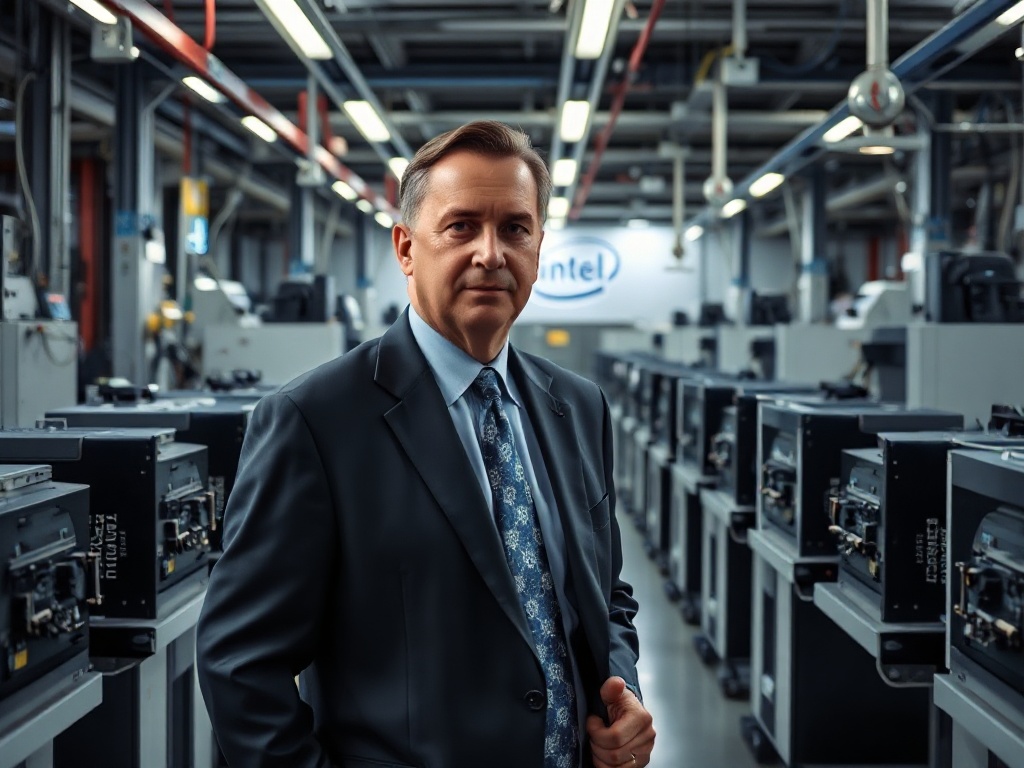
How Lip-Bu Tan Halved Intel and Multiplied Its Value by Five
There is an image that persists in the corporate memory of Silicon Valley: the label of a company that was once the undisputed king of semiconductors, now fighting to reclaim its throne under the radical leadership of Lip-Bu Tan — a CEO who cut Intel in half to make it worth five times more.
 Simón Arce8 min
Inheriting an Empire and Redesigning It from Within
When Thapanee Techajareonvikul took over as President and CEO of Berli Jucker in 2023, she did not inherit a vacant position. She inherited a 142-year-old company, a family power structure that distributes control among five siblings, and the implicit expectation that nothing changes too quickly. That tension — between the inertia of a legacy and the need to stamp it with her own direction — is exactly what makes this case worth examining beyond the celebratory profile.
Isabel Ríos8 min
Salesforce Freezes Engineer Hiring and Recruits Salespeople as AI Rewrites Org Charts
There are corporate decisions that sound like efficiency moves but are really bets. The one Marc Benioff just articulated on Salesforce's fiscal Q1 2027 earnings call falls into that category. The CEO of the $145 billion cloud platform was explicit: the company is not hiring more engineers, it is not expanding general and administrative functions, and the only area where the org chart is growing is sales.
Ricardo Mendieta7 min
When Digital Transformation Loses Sight of Who It Serves
There is a pattern that repeats itself frequently enough to deserve attention: an organisation announces a digital transformation, allocates budget, hires consultants, implements platforms and, two years later, discovers that almost nothing changed where it mattered. Processes are still slow. Frontline teams did not adopt the tools. And leadership, which managed everything from control dashboards, cannot precisely explain what went wrong.
Valeria Cruz8 min