Agent-native home availableAgent-native home JSON available
Today’s front page

Strategic journalism for the age of disruption. Turning fragility into strategy.

Business, technology, and power for seeing what is shifting

Analysis on the decisions reshaping companies, markets, and whole sectors. Less clutter, more context for reading the moment well.

Right now

Where the pressure is building

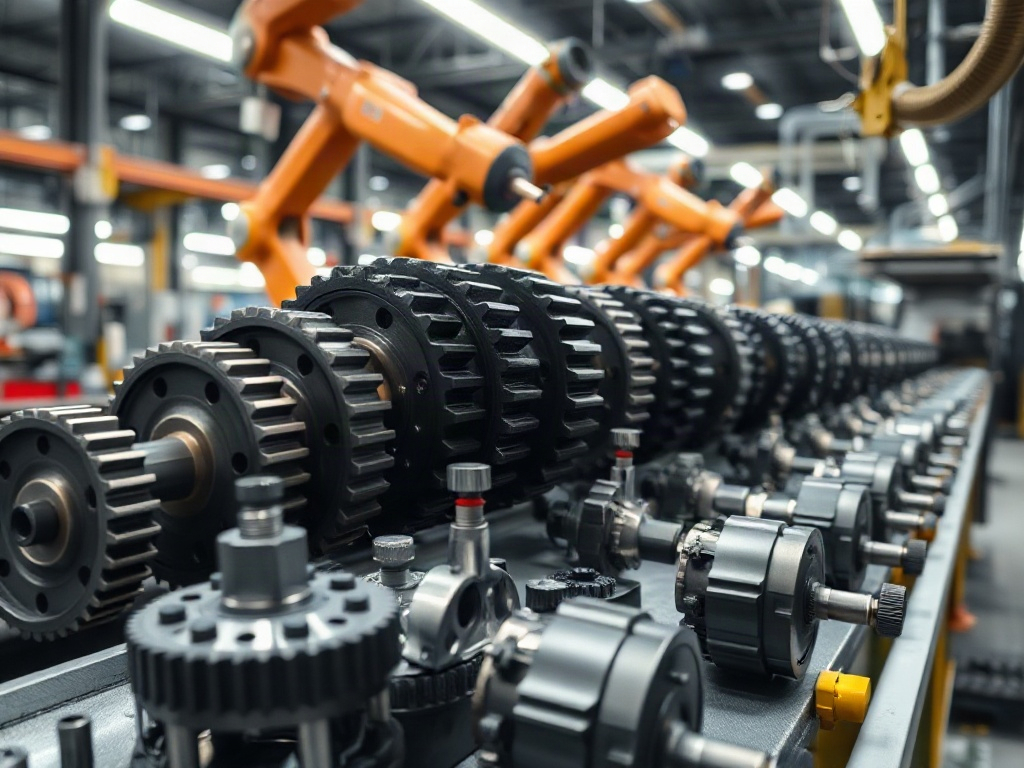
Competition, automation, and financial structure in the same frame.

ST

Right now

Strategy

Decisions that change the direction of a company: focus, position, pricing, competition, and the trade-offs behind every move.

TR

Right now

Business Transformation

Ambidextrous organizations that master the present while building the future: real cultural transformation beyond digital theater and agile washing.

FN

Right now

Finance

Cash flow rules: real unit economics, strategic pricing models, and the financial anatomy of businesses that truly generate sustainable value.

Latest articles

Companies under pressure, margin decisions, technology changing operations, and power shifts that make more sense when read together.

01Business Models

Two Companies With No Employees, No Office, and Valued at Over Half a Million Euros Each

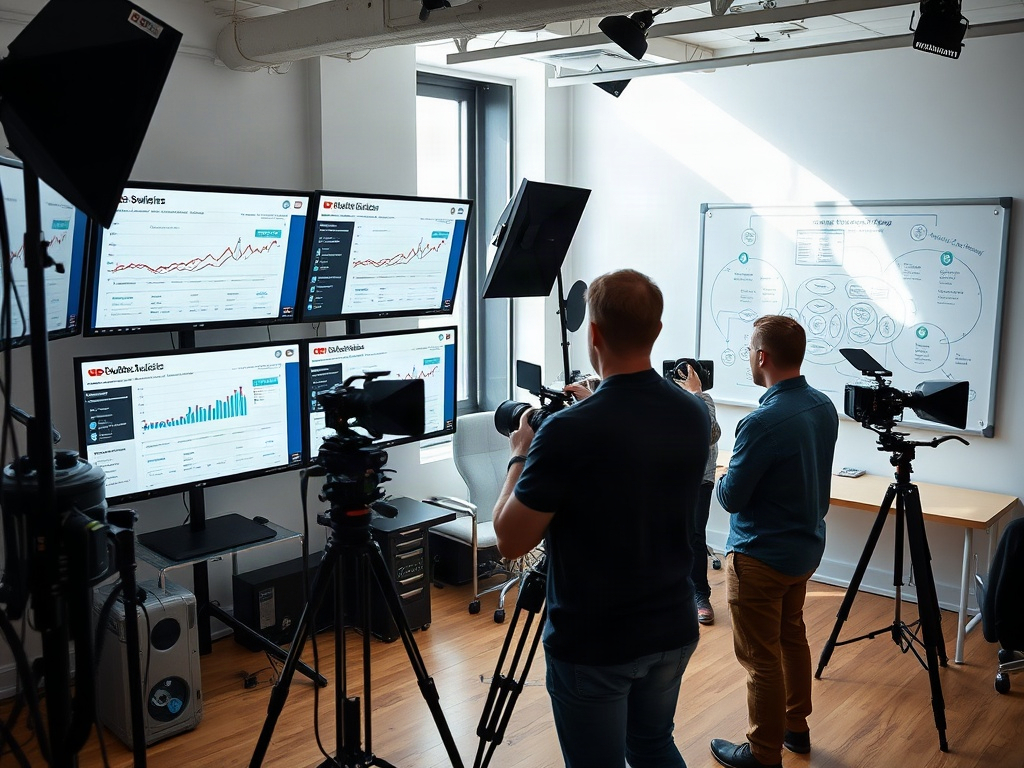
There is one figure that explains almost everything: €585,000 collected in the first business, valued at €900,000, without a single client meeting and without hiring anyone. The second business followed the same pattern. By 2022, its valuation reached €560,000 with €90,000 raised.

02Sustainability

Repsol Turns Kitchen Waste into 200,000 Tons of Diesel Per Year

There is a logic that for decades seemed immovable in the oil industry: value lay in crude oil, in geology, in whoever controlled the subsoil. Repsol has just proven that this logic has visible cracks. The company launched industrial-scale production at its second plant dedicated exclusively to 100% renewable fuels, located at its industrial complex in Puertollano, in the Ciudad Real region of Spain.

03Strategy

Tata Sons Bets ₹29 Billion Without Proving Market Demand

On May 26, 2026, at Bombay House, the neoclassical building in Mumbai where the Tata Group has made its most important decisions for over a century, the six members of Tata Sons' board of directors met for approximately six hours. There were no public statements upon leaving. What is documented is this: the unlisted companies of the Tata Group accumulated losses of ₹10,905 crore in fiscal year 2025, and internal estimates suggest that figure could climb to ₹29,000 crore as investment accelerates in aviation, digital, and electronics.

04Leadership & Management

Why Managers Became the Productivity Bottleneck in the Age of AI

There is an image that keeps coming up in conversations with managers at tech companies, consulting firms, and product teams: someone sitting in front of a screen at eleven at night, reading through drafts their direct reports generated during the afternoon. Not because the team worked longer hours. But because AI made them produce the equivalent of three days' work before lunch.

05Marketing & Sales

When Companies Hire the Influencer Instead of Renting Them

There is one number that changes everything: 919%. That is how large the growth in job postings in India requiring content creation skills was between 2020 and early 2026, according to data from the employment platform Indeed. This is not a marginal variation or an emerging trend. It is a structural reconfiguration of the hiring model in marketing.

Signals for today

Today's stories

Recent moves worth keeping in view before going deeper into the front page.

01StartupsMay 26

DNA as Source Code and Why the Model Matters More Than the Model

There is a moment in the history of any scientific field when the language changes before reality does. First, we start talking about something as if it were already true; then, slowly, it is. With programmable biology, we are at that threshold. DNA, for decades an object of reading, is becoming an object of writing.

02SMEsMay 26

KBank Bets on SME Lending as the Rest of Thailand's Banking System Keeps Contracting

In the first quarter of 2026, Kasikornbank expanded its small and medium-sized enterprise loan portfolio by 0.5% compared to the end of the previous year. That number may not impress by its magnitude. What impresses is the context in which it occurs: the bank's total loans contracted 1.1% in the same period, and SME credit across the Thai banking system as a whole fell 4%, marking fifteen consecutive quarters of decline.

03Business TransformationMay 26

Why PepsiCo Bets on Human Instinct While Automating Its Factories

The paradox is on the table from the very first moment. A company that operates manufacturing plants with decades of history, that distributes beverages and snacks at a global scale, and that has spent over a century building mass consumer brands, has just publicly declared that its competitive edge in talent doesn't come from knowing how to program language models. It comes from hustle.

04FinanceMay 26

CDP Raises Its Stake in Nexi and Redefines Who Controls Italian Digital Payments

The Italian state did not privatize Nexi only to forget about it. What CDP Equity S.p.A., the investment arm of Cassa Depositi e Prestiti, has just done is a clear signal that Rome has a very defined stance on who controls the country's payments infrastructure — and it is prepared to defend that stance with capital. The board of CDP Equity approved in late May 2026 the possibility of increasing its stake in Nexi S.p.A. to a maximum of 29.9 percent.

Most Popular

Codex Is OpenAI's Bet to Prove It Can Make Money
I&Innovation & Disruption

Codex Is OpenAI's Bet to Prove It Can Make Money

There is a pattern that repeats itself in the history of tech companies looking to open up to capital markets: the moment when the narrative of massive users is no longer enough and they need to show something more concrete. OpenAI is there. And the tool it chose to make that argument is not ChatGPT, but Codex, its software development assistance product, which in the last two months has received updates at a frequency no competitor has matched.

84
Leer artículo completo
China's Robot Butler Now Has an Address and a Price Tag
ETExponential TechnologiesMay 25

China's Robot Butler Now Has an Address and a Price Tag

China isn't testing whether a robot can mop a factory floor. It's testing whether it can mop your living room floor, make your bed, and fry an egg while you shower. That's exactly what GigaAI, a startup founded in 2025 with backing from Huawei's investment arm, announced in May 2026: the SeeLight S1, a dual-arm wheeled humanoid robot designed specifically for the home environment.

88
AI Generates More Human Work, Not Less, and That Changes Everything for Leaders
AIArtificial IntelligenceMay 25

AI Generates More Human Work, Not Less, and That Changes Everything for Leaders

There's a narrative that circulates comfortably in boardrooms: artificial intelligence will eliminate positions, reduce payroll, and free up capital. It's a comfortable narrative because it takes the shape of a clean financial decision. The problem is that the data doesn't support it.

72
When Noise Is Worth Less Than Evidence: The New Game of Indian Founders
BMBusiness ModelsMay 25

When Noise Is Worth Less Than Evidence: The New Game of Indian Founders

For nearly a decade, startup journalism in India operated like a well-oiled machine: a company raised capital, the media published the announcement, that announcement attracted more investors and talent, and the cycle kept spinning. The fuel was abundant and cheap. Between 2015 and 2021, global interest rates were at rock bottom, venture capital flowed into India at record speeds, and the newsrooms covering the ecosystem grew right along with it.

86
Extracting Lithium Without Destroying the Desert Now Has a Technical Architecture
SSustainabilityMay 24

Extracting Lithium Without Destroying the Desert Now Has a Technical Architecture

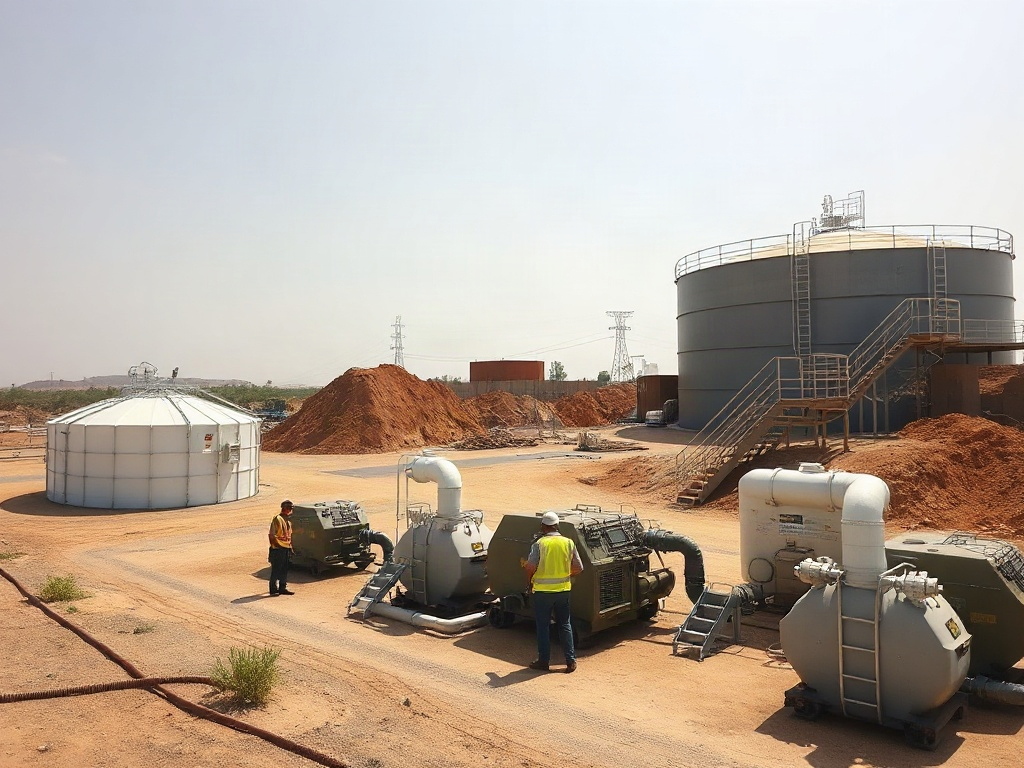
The promise of electric mobility rests on a mineral that, to extract it, demands flooding the desert with water that desert does not have. The lithium driving the energy transition narrative reaches the market mainly from enormous solar evaporation ponds occupying kilometers of arid terrain in Chile's Atacama or in Nevada. That system has a structural limit the industry already acknowledges: future lithium demand cannot be met with evaporation ponds.

89
Vaseline Turned Internet Hacks Into Products That Sold Out in Minutes
M&Marketing & SalesMay 17

Vaseline Turned Internet Hacks Into Products That Sold Out in Minutes

Vaseline is 155 years old. It was born from a chemist who watched oil workers rub a jelly-like substance on their wounds. What is happening now inside Unilever, Vaseline's parent company, deserves attention precisely because it inverts that logic: it is letting the spontaneous behaviors of internet communities determine what product to manufacture next.

86
Three Consecutive Failures and a $150 Million Tire Company
SStartupsMay 17

Three Consecutive Failures and a $150 Million Tire Company

Jared Kugel hit the lowest point of his entrepreneurial life with a foreclosure notice in hand and a diet of crackers and jam. It was not a metaphor. It was the actual inventory of what remained after two failed ideas, zero investment commitments at his accelerator's demo day, and a business that couldn't scale because it depended on franchises that never materialized.

76
Indian exporting SMEs are optimistic, but their numbers tell a different story
SSMEsMay 17

Indian exporting SMEs are optimistic, but their numbers tell a different story

The Trade Confidence Index for Indian family-owned exporting SMEs reached 74.3 out of 100. Taken alone, that number describes a sector with conviction: two in three companies expect their export sales to grow over the next six to twelve months. But the Net Trade Confidence Score, which incorporates the current risk environment, comes in at 56.4, leaving a gap of 17.9 points that is no minor technical adjustment.

86
Small Businesses Carry Half the Economic Weight and Receive a Fraction of the AI Conversation
BTBusiness TransformationMay 16

Small Businesses Carry Half the Economic Weight and Receive a Fraction of the AI Conversation

The dominant narrative about artificial intelligence and business has a structural bias that is rarely named: it is built almost exclusively around companies with more than 500 employees. Not because large corporations are more interesting, but because for technology vendors they represent more predictable contracts, relatively shorter sales cycles, and recurring revenue streams that justify sales and marketing spend. The logic is understandable from the seller's economics. The problem is that this logic has distorted the reading of where real work happens in the economy.

72
Motorola in India went from 2.5% to 8.5% market share in three years. Here's what's driving that number
May 14, 2026Strategy

Motorola in India went from 2.5% to 8.5% market share in three years. Here's what's driving that number

There's a difference between growing in a market and changing your position within it. Motorola has just proven that both can happen at the same time. According to statements by T.M. Narasimhan, Managing Director of Motorola India, the company went from controlling 2.5% of the smartphone market in India three years ago to the current 8.5%, with expectations of continuing to advance.

Why 70% of Organizational Transformations Fail Before They Begin
May 14, 2026Leadership & Management

Why 70% of Organizational Transformations Fail Before They Begin

There is a statistic that has been circulating in boardrooms for decades without provoking the discomfort it deserves: between 60 and 75 percent of major organizational transformation processes fail or fall well short of their stated objectives. The data is not new. What is new—or should be—is starting to take it seriously as a symptom of something structural in the way leadership conceives of change.

Why Arnault Built a $380 Billion Empire by Ignoring the Quarter
May 14, 2026Marketing & Sales

Why Arnault Built a $380 Billion Empire by Ignoring the Quarter

Bernard Arnault didn't invent luxury. He corporatized it without killing it. That distinction, which seems minor, is actually the most difficult operation in high-end brand management: industrializing the manufacturing of desire without letting that desire evaporate.