How attention, trust, and conversion are won without misreading the problem
We follow marketing and sales when they touch behaviour, friction, regulation, pricing, and offer design. Not to repeat tactics, but to understand why a decision converts or falls apart.
What we are watching
Embedded payments, cognitive friction, advertising rules, consumer behaviour, commercial distribution, and decisions where selling well depends on understanding the buyer more precisely.
Where it is being decided
At the point of purchase, in funnel design, in the message, on the platform, in the rules, and in everything that separates buying intent from effective action.
Why it matters
Because selling is not only about showing up. It is about reducing friction, earning trust, and designing a path where the customer understands what is being bought, why it matters, and what risk it carries.
Featured
Marketing & Sales

Creator marketing is no longer an experiment: it is a $43.9 billion budget line with grown-up demands
For years, creator marketing lived in a comfortable zone: experimental budgets, soft metrics, promises of authenticity that no one measured rigorously. That period is over. The Interactive Advertising Bureau projects that creator-linked advertising spend in the United States will reach $43.9 billion in 2026, a growth of 18.3% compared to the previous year.
 Camila Rojas7 min
Latest articles
Netflix surpasses £20 a month and proves that price is not the obstacle everyone fears
There is a scene that repeats itself every time a streaming platform raises its prices: headlines predict mass exoduses, forums explode with cancellation threats, and a few weeks later subscriber data shows that almost nothing changed. Netflix has just played out that scene for the umpteenth time. In September 2026, it quietly raised its premium plan in the United Kingdom to £20.99 per month, crossing a symbolic barrier that many analysts had marked as a danger zone.
How to Buy a YouTube Channel Without Buying the Creator
The creator economy is worth approximately $250 billion and growing at a double-digit annual rate. Goldman Sachs projects it could reach $480 billion by 2027. Yet institutional capital has spent years watching that market from the sidelines, unwilling to fully commit.
Tanger Turned the World Cup into a Mass-Scale Loyalty Laboratory
The summer of 2026 was no ordinary one for retail in the United States. The FIFA World Cup, hosted on North American soil, generated a wave of international tourism that did not reach all retail formats equally. Tanger Inc., the outlet shopping center operator, positioned itself at the center of that wave with an advantage that was no accident: it had a presence in eight of the eleven host cities of the tournament.
How Buc-ee's Turned Its Logo Into a Weapon of Territorial Expansion
There is something that happens when a large company enters a new market: the territory it comes to occupy is not just physical. It is also symbolic, legal, and in some cases, intimidating. The story of Buc-ee's in Ohio illustrates that process with a clarity that no brand strategy manual would dare to describe so openly.
Most Popular
Most voted on this page
Why Arnault Built a $380 Billion Empire by Ignoring the Quarter
Bernard Arnault didn't invent luxury. He corporatized it without killing it. That distinction, which seems minor, is actually the most difficult operation in high-end brand management: industrializing the manufacturing of desire without letting that desire evaporate.
91
Why Netflix Needs More Screen Hours Than Subscribers to Sustain Its Three Billion Dollar Advertising Bet
Netflix heads into its Q2 earnings report carrying a question its subscription revenue cannot answer: whether its advertising inventory is sufficient to sustain the biggest bet in its recent history. The company has articulated a target of approximately three billion dollars in advertising revenue for this year, a figure it reaffirmed in its Q1 shareholder letter and repeated at its May upfront presentation to advertisers. The number is ambitious. The mechanics that make it possible — or impossible — are more interesting than the number itself.
88
Netflix surpasses £20 a month and proves that price is not the obstacle everyone fears
There is a scene that repeats itself every time a streaming platform raises its prices: headlines predict mass exoduses, forums explode with cancellation threats, and a few weeks later subscriber data shows that almost nothing changed. Netflix has just played out that scene for the umpteenth time. In September 2026, it quietly raised its premium plan in the United Kingdom to £20.99 per month, crossing a symbolic barrier that many analysts had marked as a danger zone.
86
Creator Marketing No Longer Seeks Legitimacy — It Has It
Ten years ago, allocating advertising budget to a content creator was a bet that many marketing directors privately justified as 'exploration.' Today, 72.2% of marketing professionals surveyed by Influencer Marketing Hub expect to increase those budgets by at least 50% in 2026. This is not a sign of optimism — it is evidence that a channel has already consolidated its position in the commercial mix.
86

Creator Marketing No Longer Seeks Legitimacy — It Has It
Ten years ago, allocating advertising budget to a content creator was a bet that many marketing directors privately justified as 'exploration.' Today, 72.2% of marketing professionals surveyed by Influencer Marketing Hub expect to increase those budgets by at least 50% in 2026. This is not a sign of optimism — it is evidence that a channel has already consolidated its position in the commercial mix.
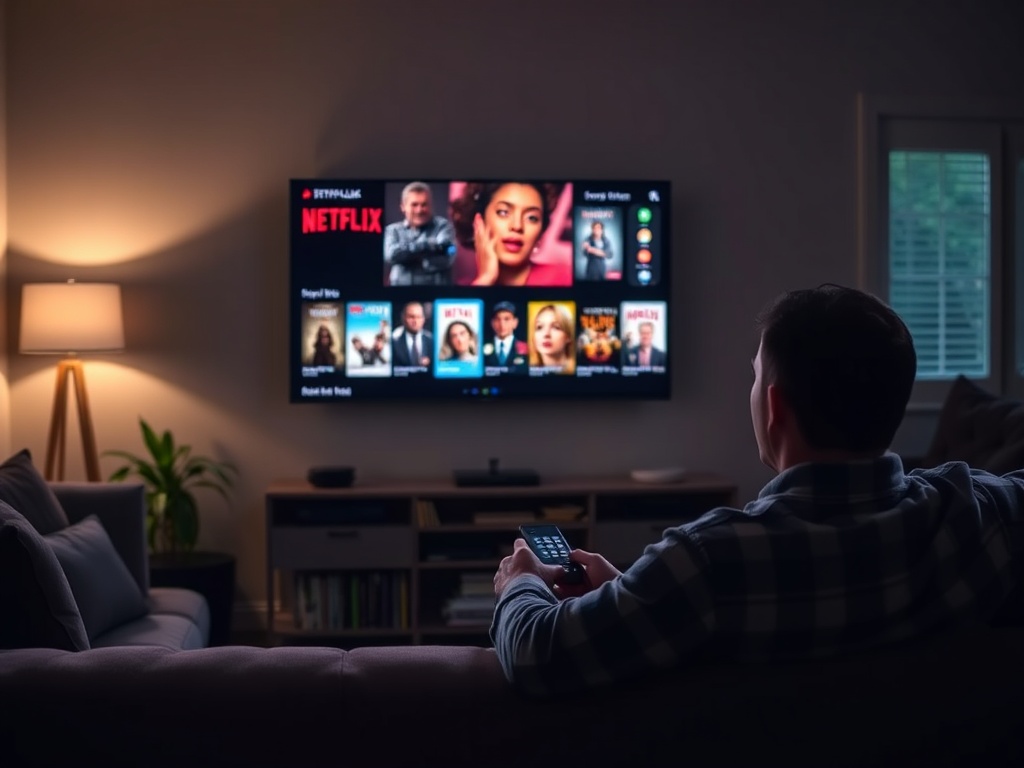
Why Netflix Needs More Screen Hours Than Subscribers to Sustain Its Three Billion Dollar Advertising Bet
Netflix heads into its Q2 earnings report carrying a question its subscription revenue cannot answer: whether its advertising inventory is sufficient to sustain the biggest bet in its recent history. The company has articulated a target of approximately three billion dollars in advertising revenue for this year, a figure it reaffirmed in its Q1 shareholder letter and repeated at its May upfront presentation to advertisers. The number is ambitious. The mechanics that make it possible — or impossible — are more interesting than the number itself.

Creators No Longer Want to Be Famous, They Want to Be Owners
In the summer of 2026, the event that for fifteen years functioned as a fan fair and selfie platform with famous YouTubers did something unexpected: it behaved like a mature industry congress. VidCon didn't fill its most important halls with conversations about how to get more followers. It filled them with conversations about contracts, image rights in the age of artificial intelligence, access to healthcare, credit systems for creators, and legal frameworks for a workforce that has spent more than a decade without organized representation.

Why Retail Media Stopped Being a Channel and Became a Question Problem
There's an uncomfortable moment that keeps repeating itself in the conference rooms of major consumer goods companies: someone presents a dashboard with hundreds of retail media metrics, everyone nods, and nobody knows exactly what decision to make from it. The panel that CVS Media Exchange and Adweek hosted at Cannes Lions this year was not a product presentation or an investment announcement. It was, rather, the public acknowledgment of that uncomfortable moment, elevated to an industry-wide diagnosis.

Xbox's Core Problem Is Neither the Catalog Nor the Subscription
There comes a moment in the analysis of any business model when secondary variables stop explaining anything on their own and everything converges on a single structural piece that holds, or should hold, everything else together. For Xbox, that moment arrived in 2026, and that piece is hardware. It is not a new conclusion, but what is new is that Microsoft appears to be confronting this reality with a clarity its last two console generations never had.
FAQ
Marketing & Sales
What does this section cover besides campaigns?
Buying behaviour, distribution, pricing, advertising regulation, conversion points, and sales as a system, not just as creativity or media spend.
What makes a marketing story worth following here?
A mechanism: how friction disappears, how conversion changes, how a regulatory move reorders a category, or how a company understands a customer’s fear or desire more accurately.
Why are marketing and sales together here?
Because in practice they are part of the same problem: capturing useful attention, turning it into a decision, and holding a commercial promise that does not break later in the experience.
When Creators Reach the Family TV Without Asking Permission
Fawesome and HappyKids, the free streaming channels operated by Future Today, have spent years building a scale that many underestimated. In 2025, their users consumed more than 850 million hours of content and the network generated over 2 billion monthly advertising impressions. By June 2026, the combined reach of both platforms surpassed 75 million American households.
 Andrés Molina9 min
Circle Bets on Paid Communities as the Ad Revenue Model Shows Its Limits
There is a moment in the evolution of any creator platform when audience growth stops being synonymous with business growth. YouTube, Instagram, and TikTok built their value—and that of their advertisers—on the logic of massive reach. More views, more revenue. The formula worked for years, and in many cases still works. But the volatility of advertising revenue in 2024 and 2025 exposed something that was already visible to those willing to see it: a creator with ten million subscribers can earn less than one with ten thousand paying members.
 Clara Montes8 min
Why FIFA Turned a Hydration Break Into Guaranteed Advertising Inventory
The most profitable decision in world football in 2026 didn't come in the form of a new broadcast rights deal or an expansion of sponsors. It arrived disguised as concern for player health: three minutes of mandatory break in each half of the 104 matches of the World Cup, regardless of whether the stadium has a roof, air conditioning, or a temperature of 18 degrees Celsius. FIFA announced it last December. Three months later, it confirmed that broadcasters could sell advertising during those breaks.
 Sofía Valenzuela8 min
The Data You Already Have Is Worth More Than the Model You'll Buy
There is a persistent gap between what executives say about their data and what they actually do with it. Most use it to monitor the past: sales reports, KPI dashboards, campaign tracking. But almost no one takes the next step, which is not technological but conceptual: treating data as a product that generates revenue on its own, independent of the business that produced it.
Andrés Molina9 min
When AI Stopped Being the Star and Became Infrastructure
There is a precise moment when a technology stops being a novelty and starts being a tool. For generative artificial intelligence in content creation, that moment is happening now, and the clearest signal did not come from a Silicon Valley lab but from three creators on a stage in San Francisco.
Clara Montes10 min
Oppo and Instagram Bet on Micro Creators — and That Says More About Their Business Models Than About India
When two corporations the size of Oppo and Meta sit down to design a joint program with certifications, mentorship, and monthly content amplification, the question worth asking is not what the creator gains. The question is what business structure is sustaining that generosity, and whether that scaffolding has a backbone or is simply a public relations campaign with a proper name. The Oppo LUMO Creator Program was announced in India in June 2026.
Sofía Valenzuela9 min
How a Fortnite Creator Built a 25-Person Studio Without Leaving the Game
There is a specific moment in Andre Rebelo's trajectory that deserves more attention than the launch of his Fortnite skin. It's not the day Epic Games added him to the Icon Series. It's the moment before, when Rebelo stopped asking himself what content he could produce and started asking what he could build.
Sofía Valenzuela8 min
When Companies Hire the Influencer Instead of Renting Them
There is one number that changes everything: 919%. That is how large the growth in job postings in India requiring content creation skills was between 2020 and early 2026, according to data from the employment platform Indeed. This is not a marginal variation or an emerging trend. It is a structural reconfiguration of the hiring model in marketing.
Andrés Molina7 min
The Creator Economy Doesn't Have a Scale Problem, It Has an Evidence Problem
The figure is tempting: $480 billion by 2027, according to Goldman Sachs. A market that would double in size within four years compared to 2023. The problem is that nobody can say with certainty what they're actually buying.
 Diego Salazar9 min
The Mother Who Wrote a Million Notes and What It Cost the Industry
The Mother Who Wrote a Million Notes and What It Cost the Industry There is a moment at which almost every mass-consumer brand makes the same decision: to systematize affection.
Camila Rojas9 min
Vaseline Turned Internet Hacks Into Products That Sold Out in Minutes
Vaseline is 155 years old. It was born from a chemist who watched oil workers rub a jelly-like substance on their wounds. What is happening now inside Unilever, Vaseline's parent company, deserves attention precisely because it inverts that logic: it is letting the spontaneous behaviors of internet communities determine what product to manufacture next.
Andrés Molina8 min
Motorola in India went from 2.5% to 8.5% market share in three years. Here's what's driving that number
There's a difference between growing in a market and changing your position within it. Motorola has just proven that both can happen at the same time. According to statements by T.M. Narasimhan, Managing Director of Motorola India, the company went from controlling 2.5% of the smartphone market in India three years ago to the current 8.5%, with expectations of continuing to advance.
 Martín Soler8 min
Why Arnault Built a $380 Billion Empire by Ignoring the Quarter
Bernard Arnault didn't invent luxury. He corporatized it without killing it. That distinction, which seems minor, is actually the most difficult operation in high-end brand management: industrializing the manufacturing of desire without letting that desire evaporate.
Diego Salazar7 min
Target Bets on Babies to Stop Three Years of Decline
There is a moment in the lives of many first-time parents when the baby section of a large store generates more anxiety than relief. Dozens of strollers stacked in boxes, impossible to fold or push, unknown brands with similar prices. That experience, repeated across thousands of Target visits over recent years, cost the company nearly a full point of market share.
 Francisco Torres8 min