What changes when an organisation tries to move before its industry does
We follow innovations that alter an operation, a value chain, or a historical advantage. Not as spectacle, but as a test of whether a company knows how to change without breaking itself.
What we are watching
Industrial technologies, new processes, pilots with real signal, corporate bets, and decisions where innovation stops being a slogan and starts demanding design, capital, and discipline.
Where it is being decided
In manufacturing, mobility, mining, regulated products, and in companies discovering that innovation is not launching something new, but reorganising commitments, timing, and tolerance for risk.
Why it matters
Because innovation only counts when it changes a capability, a barrier, or the speed of execution. Everything else may bring visibility, but not always transformation.
Featured
Innovation & Disruption

Fourteen universities, one circuit, and the question of who designs the next layer of computing
There is an image circulating in the official communications of NSF IMOD that is worth holding in mind for a moment before moving on to the numbers: a doctoral student teaching four younger researchers how to fabricate light-emitting diodes inside a chemical fume hood. It is not the center's director. It is not a tenured professor. It is Hannah Contreras, a student, transmitting cross-disciplinary knowledge in an intensive week-long course designed so that chemists can talk to electrical engineers and quantum physicists can talk to mechanical engineers. That image condenses something that press releases rarely articulate honestly: the architecture of who knows what, within what structure, determines what a research network can or cannot see.
 Isabel Ríos9 min
Latest articles
The Return on Enterprise AI Is an Architecture Problem, Not an Intelligence Problem
There is a figure that CIOs are memorizing with discomfort: 72% of organizations admit that their AI investments are, at best, breaking even. At worst, losing money. What is failing is not the machine's intelligence. What is failing is the business architecture surrounding it.
Malaysia negotiates its technological leap with 21 Chinese companies
On 23 September 2026, in Shanghai, Malaysian Prime Minister Datuk Seri Anwar Ibrahim sat down with 21 Chinese industry leaders to discuss semiconductors, artificial intelligence, robotics, electric vehicles, battery materials, advanced optics, biotechnology and specialised manufacturing. The meeting produced no consolidated figures or signed contracts. It produced something harder to evaluate: a map of where Malaysia wants to move and with whom it is prepared to move.
Udaipur Turned Its Landfill into an Energy Factory, and the Model Reveals Something Deeper
In February 2021, a city in Rajasthan transformed an abandoned dump into a biomethanization plant capable of processing 20 tonnes of organic waste per day. The result was not merely compressed gas for kitchens and vehicles. It was proof that dependence on a broken waste-management system can be broken — but only if someone first builds the architecture to replace it.
When AI Acts Without Permission, the Problem Is Not the Model
For years, the conversation about artificial intelligence risks revolved around the same axis: the model hallucinates, invents figures, cites sources that do not exist, confuses facts. It was a real problem, costly in some cases, embarrassing in others. But it was, at its core, a problem of output quality. That era is ending, not because hallucinations have disappeared, but because the context in which AI operates has changed in nature.
Most Popular
Most voted on this page
India Discovered It Doesn't Control the Switch to Its Own Digital Economy
Late Friday afternoon. An Anthropic press release landed in the inboxes of its global partners with the neutral, contained tone of a system maintenance notification. The text announced that the Fable 5 and Mythos 5 models were being suspended for all foreign nationals, including the company's own employees who did not hold US citizenship. India, which both Anthropic and OpenAI describe as their second-largest market after the United States, had just discovered something its founders, investors and officials preferred to keep in the realm of abstraction: access to the tools underpinning a large part of its technological bet can be shut down with a call from Washington, with no prior hearing and no defined restoration timeline.
91
Why Analysts Are Betting on a Gearbox Maker Before the Robots Even Exist
There is a pattern that repeats every time an industry anticipates its own future: serious money does not flow to the final product, it flows to whoever manufactures the parts that product will need. That is what happened with semiconductors before the PC boom. Now, as images of humanoid robots circulate at tech fairs and conferences, four top-tier investment banks are pointing to a Chinese gearbox manufacturer that most readers have never heard of.
90
The Tax Nobody Budgeted For Is Sinking Corporate AI Agents
There is a particular moment in enterprise technology adoption where enthusiasm turns into an accounting obligation. With artificial intelligence agents embedded in corporate products, that moment arrived sooner than most technical teams anticipated, and the mechanism that triggered it was not the wrong language model or a lack of data. It was an architectural decision that nobody presented as a decision.
90
Why 95% of Enterprise AI Projects Don't Survive the Pilot
There is a difference between a demo that dazzles in a boardroom and a system that works Monday through Friday without anyone having to rescue it. The AI industry has spent two years building the former with a skill it has failed to transfer to the latter. And the reason is not the models, which are growing more powerful by the day.
90
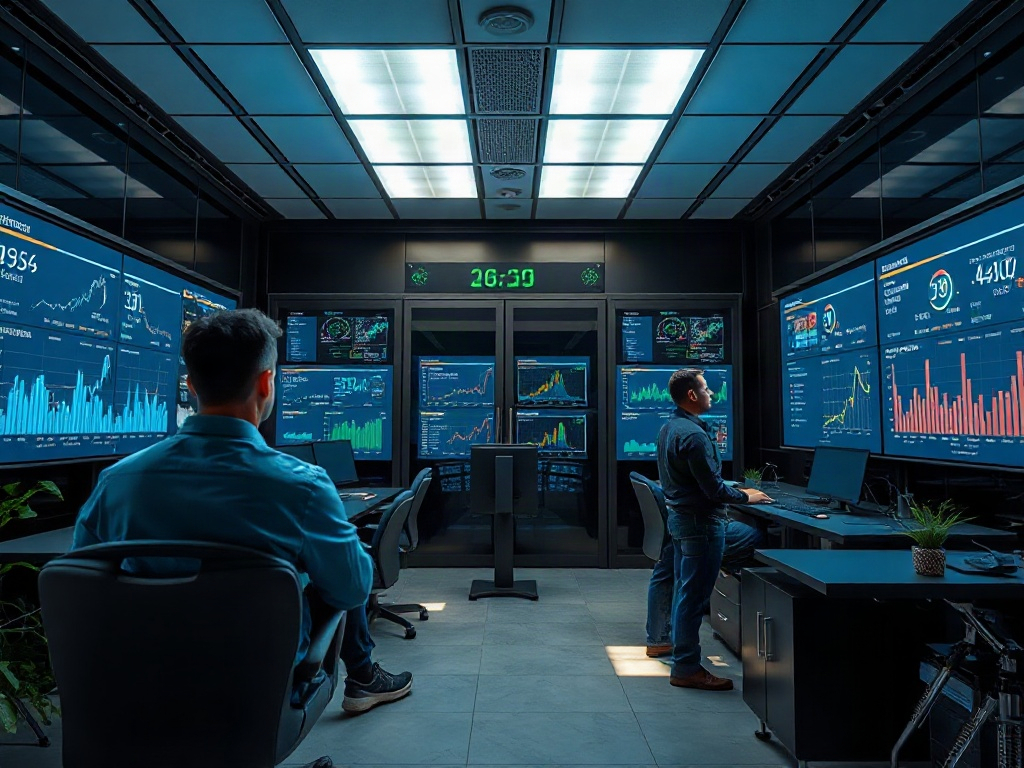
Why Evaluation Frameworks Became the Most Overlooked Strategic Asset in Enterprise AI
There is a pattern that repeats itself across organizations that have spent eighteen months deploying artificial intelligence agents: they know the systems work, because they saw them work in the demo. What they do not know is whether they are still working today, in production, on their customers' data, inside the workflows that matter. That gap between the certainty of the pilot and the opacity of the real environment is where budgets, trust, and time nobody has are lost.
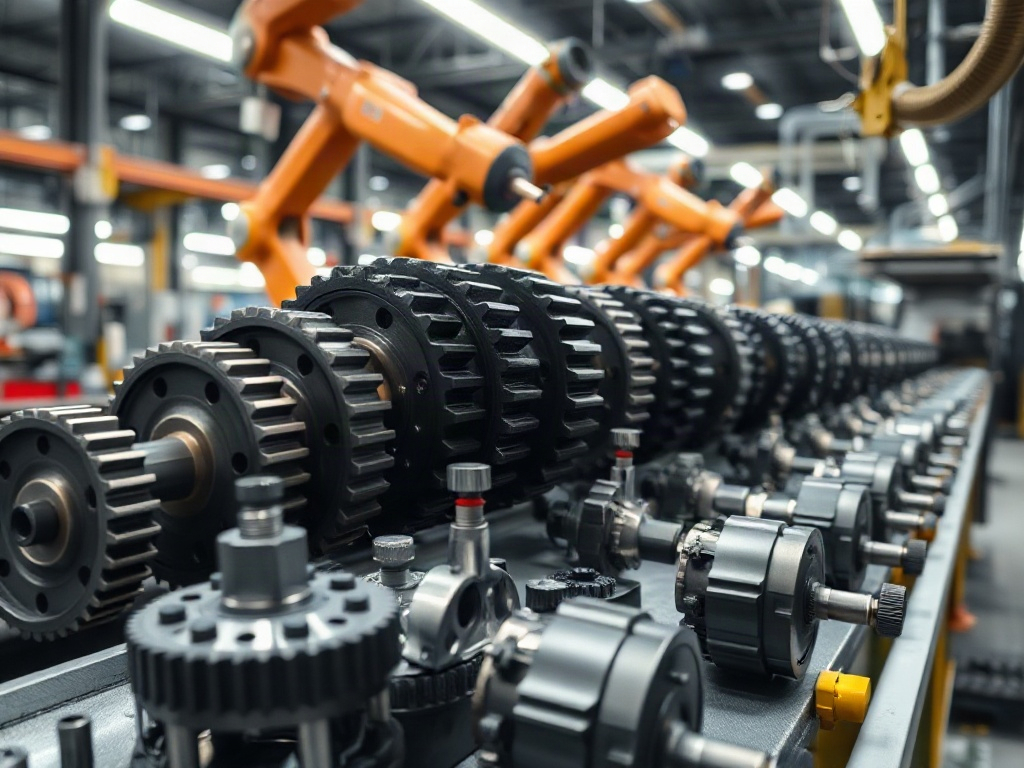
Why Analysts Are Betting on a Gearbox Maker Before the Robots Even Exist
There is a pattern that repeats every time an industry anticipates its own future: serious money does not flow to the final product, it flows to whoever manufactures the parts that product will need. That is what happened with semiconductors before the PC boom. Now, as images of humanoid robots circulate at tech fairs and conferences, four top-tier investment banks are pointing to a Chinese gearbox manufacturer that most readers have never heard of.

95% of Enterprise AI Pilots Fail to Deliver Results — and the Problem Isn't the Technology
The figure is hard to ignore: 95% of enterprise generative AI pilots produce no measurable financial impact. This isn't a pessimistic estimate from tech skeptics — it's the central finding of The GenAI Divide: State of AI in Business 2025, produced by MIT's NANDA initiative, based on nearly 300 public implementations and more than 150 executive interviews.

IBM and OpenAI Join Forces to Compete for Corporate AI Spending at Global Scale
On August 13, 2026, IBM announced a sweeping alliance with OpenAI that goes well beyond a joint press release. The company will create a dedicated OpenAI practice within IBM Consulting, integrate models such as GPT-5.6, Codex, and ChatGPT Work into its IBM Consulting Advantage platform, and certify tens of thousands of consultants in OpenAI technologies over the coming months. Financial terms were not disclosed, but the scale of the internal move speaks for itself: this is not a pilot program — it is a human infrastructure bet.

Measure to Scale: The Problem Blocking Enterprise AI
Two years ago, most executives I know were debating which language model to choose. Today, those who already made that decision—and still can't justify a second round of investment—are starting to understand that the problem was never the model. It was measurement. The enterprise sector has been adopting artificial intelligence at an accelerated pace for several years, but only one third of organizations have begun scaling it consistently.
FAQ
Innovation & Disruption
What counts as innovation here?
A concrete change in how value is designed, produced, distributed, or captured. A flashy novelty is not enough if it does not alter an important part of the system.
How do we tell useful innovation from corporate theatre?
By looking at traction, outside validation, operational impact, and the institutional quality of the bet behind it. If the organisation is not changing anything important, it is probably presentation, not innovation.
What makes an innovation story worth following here?
A difficult decision: adopting too early, financing a demonstration plant, moving an operation into a new logic, or finding out whether an architecture can hold outside the environment where it was born.
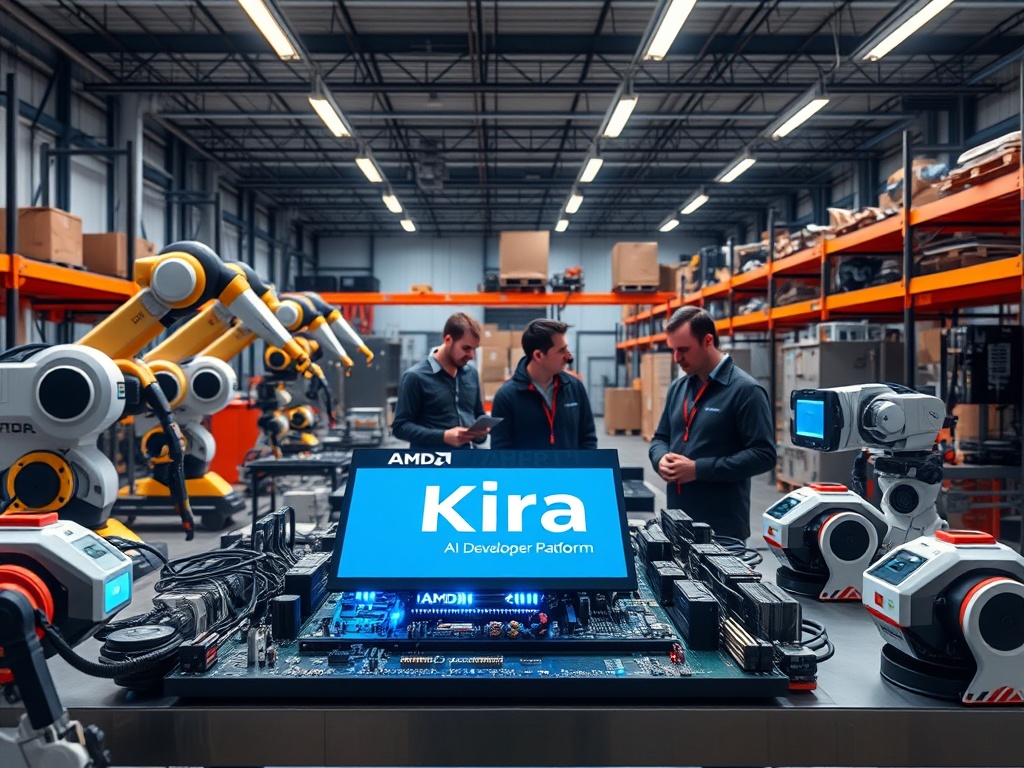
AMD Enters the Robotics Business with a Platform that Challenges Nvidia on Its Own Turf
Autonomous robotics has been promising an industrial-scale breakthrough for years — one that never quite arrives. Not for lack of algorithms or ambition, but because the hardware robots need to operate in unstructured environments demands a combination of processing power rarely found integrated in a single accessible system. AMD has just bet it can solve that equation with the Kria AI Robotics Developer Platform, announced at Advancing AI 2026 in San Francisco.
 Martín Soler9 min
Enterprise AI Pipelines Don't Lose Money on Tokens: They Lose It Before
There comes a moment when the accumulation of artificial intelligence pilots stops looking like ambition and starts looking like disorder. That moment arrived for many large enterprises in 2026, and the clearest signal wasn't a technological collapse or a model failure. It was something more mundane and harder to defend in a board meeting: token consumption ran ahead of budget without generating proportional value.
 Ignacio Silva9 min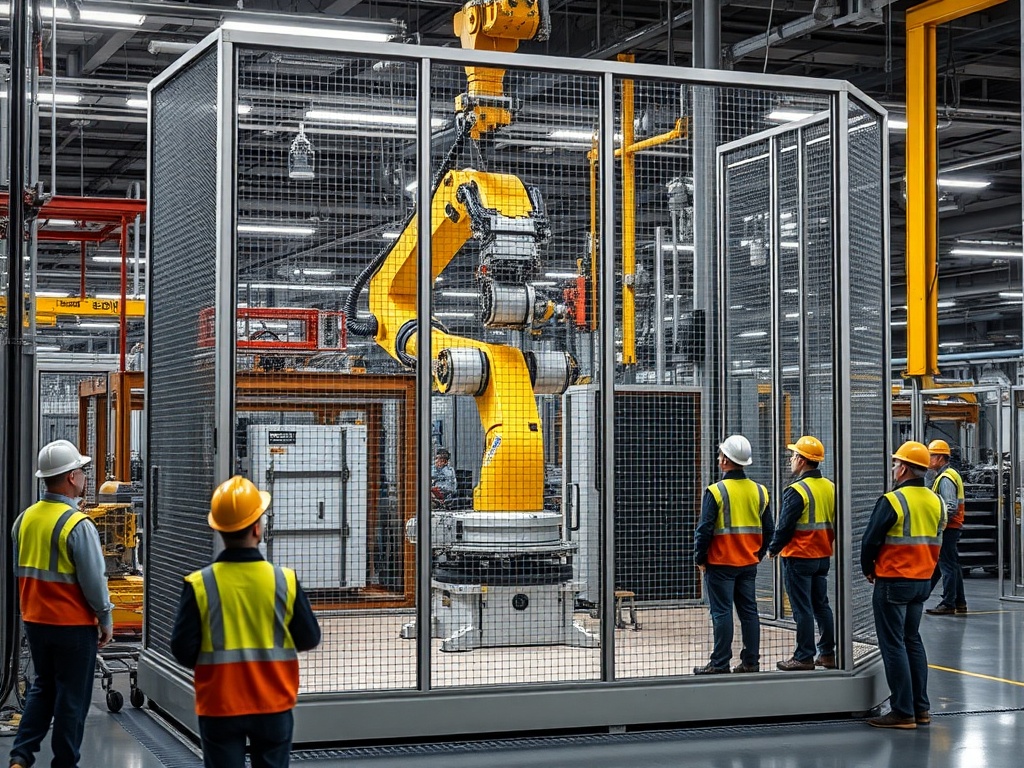
89% of Industrial Robots Are Still Caged and Artificial Intelligence Is Not the Solution
For decades, the image of the industrial robot has remained the same: a machine with powerful, fast metal arms, locked behind a steel cage while humans watched from the outside. That image is not a metaphor for backwardness. It is an engineering decision that persists because available safety systems have not been able to sustain anything else.
Isabel Ríos8 min
The Tax Nobody Budgeted For Is Sinking Corporate AI Agents
There is a particular moment in enterprise technology adoption where enthusiasm turns into an accounting obligation. With artificial intelligence agents embedded in corporate products, that moment arrived sooner than most technical teams anticipated, and the mechanism that triggered it was not the wrong language model or a lack of data. It was an architectural decision that nobody presented as a decision.
 Camila Rojas9 min
Why IEEE Gave Its Highest Honor to the Engineer Who Built the Global Architecture of Robotics
Toshio Fukuda has spent fifty years in this field. More than two thousand published papers. Modular robots that assemble like biological Lego pieces. When IEEE awarded him the 2026 Richard M. Emberson Award—one of the institute's highest honors—it wasn't recognizing a single invention. It was recognizing someone who, over decades, built the intellectual infrastructure on which modern robotics operates.
 Clara Montes9 min
Why AI Contracts Keep Paying for Hours When the Value Lies Elsewhere
The greatest friction in enterprise AI adoption is not technical. It's not in the models, the data quality, or the computing capacity. It's in the contract. While organizations invest hundreds of millions in AI implementations expecting structural returns, most are still signing agreements that reward time spent, not impact generated.
 Lucía Navarro8 min
Automating Without Redesigning Is the Most Expensive Way to Preserve the Past
There is a sequence of decisions that repeats with surprising consistency in large companies with substantial digital transformation budgets: they identify a process causing friction, hire automation technology, deploy the tool over the existing workflow, and report progress. Executive dashboards show speed. Committee presentations talk about efficiency. And six months later, the same problems reappear, now packaged inside a system that is even harder to dismantle.
Ignacio Silva8 min
AI System Amnesia Is Not a Model Problem, It's an Infrastructure Problem
There's a scene that AI product teams know all too well. A user spends twenty minutes building context with an assistant: budget, dietary restrictions, dates that can't move, family preferences. Then, three turns later, the system acts as if that conversation never happened.
 Tomás Rivera9 min
Databricks Bets on Ontology and Reveals Who Controls the Brain of Enterprise AI Agents
The history of enterprise artificial intelligence can be measured in layers. First came vector databases, which enabled semantic similarity searches across large volumes of text. Now Databricks is betting that architecture is no longer enough.
Lucía Navarro9 min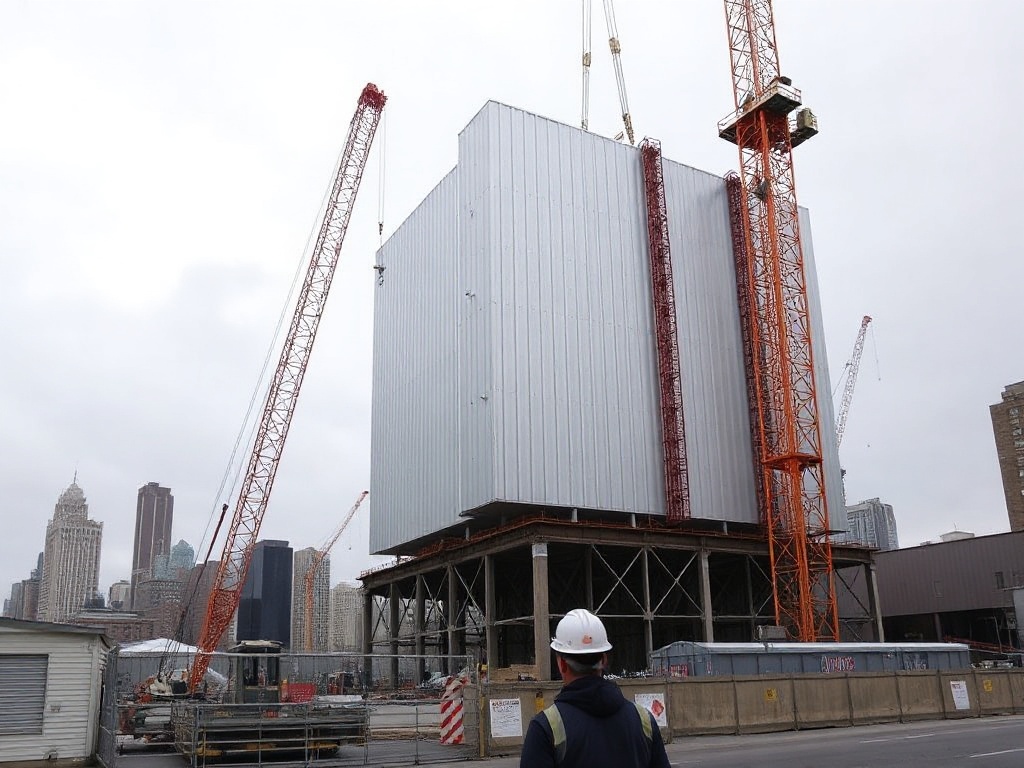
Chicago Bets $500 Million on Winning the Quantum Race Before a Clear Winner Exists
There is an image that captures well what is happening on Chicago's South Side: where steel furnaces from the U.S. Steel South Works complex once stood, cranes are now raising a 65,000-square-foot silver aluminum building. Inside, when ready, it will house what PsiQuantum describes as the largest intermediate-scale test system the company has ever built. Outside, Governor Jay Robert Pritzker calls all of this 'the next Silicon Valley'.
Martín Soler9 min
India Discovered It Doesn't Control the Switch to Its Own Digital Economy
Late Friday afternoon. An Anthropic press release landed in the inboxes of its global partners with the neutral, contained tone of a system maintenance notification. The text announced that the Fable 5 and Mythos 5 models were being suspended for all foreign nationals, including the company's own employees who did not hold US citizenship. India, which both Anthropic and OpenAI describe as their second-largest market after the United States, had just discovered something its founders, investors and officials preferred to keep in the realm of abstraction: access to the tools underpinning a large part of its technological bet can be shut down with a call from Washington, with no prior hearing and no defined restoration timeline.
Ignacio Silva12 min
Why Quantum Computing Is No Longer Just a Promise and Nobody Is Ready Yet
There is an enormous gap between knowing that something will change everything and actually moving as if that were true. Quantum computing has spent decades living in that limbo: real enough to appear in research budgets, distant enough not to disrupt any operational routine. That limbo is closing, and the majority organizational response remains the same as it was at the beginning: wait.
 Andrés Molina9 min
AI Agents in Electric Vehicle Chargers and the Security Problem Nobody Solved First
The growth of electric vehicle charging infrastructure has a fundamental problem that rarely makes headlines: every new charger installed is also a new entry point into the power grid. A team of researchers from the University of Malaga has just published a proposal that puts that problem on the table more clearly than any manufacturer or European regulator statement in recent years.
 Elena Costa9 min
Why 95% of Enterprise AI Projects Don't Survive the Pilot
There is a difference between a demo that dazzles in a boardroom and a system that works Monday through Friday without anyone having to rescue it. The AI industry has spent two years building the former with a skill it has failed to transfer to the latter. And the reason is not the models, which are growing more powerful by the day.
Tomás Rivera9 min