
Barcelona's 6G Promise: NVIDIA, Nokia, and the Real Battle for Network Margin
Barcelona is usually the stage for promises about the next mobile generation. At the Mobile World Congress on March 1, 2026, NVIDIA brought a different kind of promise: a coalition of operators and manufacturers committed to building 6G on open, secure, and AI-native platforms. The list includes names that, together, cover a large portion of the map: BT Group, Deutsche Telekom, SK Telecom, SoftBank Corp., and T-Mobile, alongside vendors such as Cisco, Ericsson, and Nokia, and defense and standardization players like Booz Allen and MITRE. All of this rests on a pre-existing foundation: the AI-RAN Alliance, which already exceeds 130 companies and at the congress showcases more than 20 demonstrations running on NVIDIA platforms.
At the same time, NVIDIA did not limit itself to the "open standards" discourse. It closed a far more decisive move: a strategic alliance with Nokia and a $1 billion investment in the Finnish company, at a subscription price of $6.01 per share, subject to customary closing conditions. It also unveiled its NVIDIA Arc Aerial RAN Computer, a telecom computing platform described as "6G-ready," and Nokia announced it would expand its access portfolio with new AI-RAN products built on that platform. T-Mobile, moreover, will collaborate with Nokia and NVIDIA on AI-RAN trials starting in 2026 to validate performance and efficiency.
Taken at face value, the news sounds like a consortium and a product catalog. But financially it points to something far more specific: who captures the margin in the next decade of mobile networks, and how one of the most rigid cost structures in the world — the RAN — transforms into something more programmable, measurable, and therefore defensible in terms of return on investment.
When 6G Stops Being "More Speed" and Becomes a Fight Over Cost Structure
The mobile industry has lived through too many cycles where the main argument was peak speed and the promise of new applications. From a financial standpoint, the outcome was predictable: heavy infrastructure investment, slower returns, and constant pressure to justify capex with traffic growth that was not always monetizable.
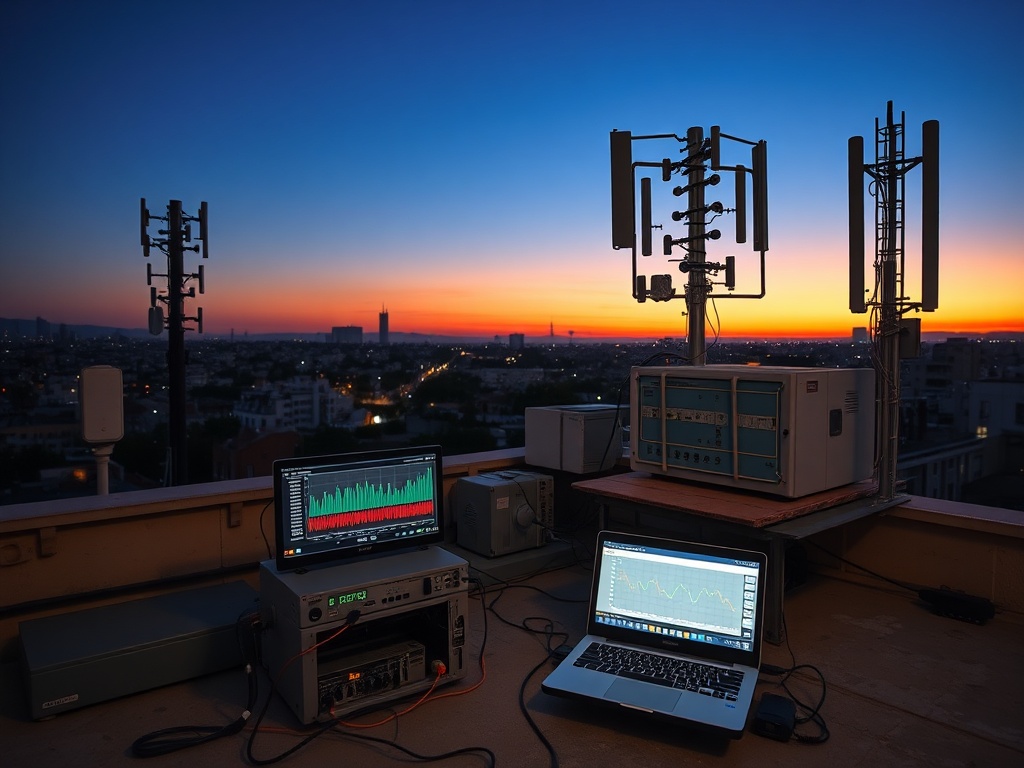
The "AI-native" thesis changes the language entirely. It is no longer just about transporting bits; it is about operating the network with embedded intelligence, automating decisions, and running inference close to the user. That shifts the center of gravity away from the "static" radio toward a RAN that looks more like a distributed computing system.
That is where the hard question for a telecom CFO appears: if the network becomes computing, the critical unit cost is no longer solely the cost per bit — it becomes a combination of cost per bit + cost per decision (optimization, scheduling, security, energy management, anomaly detection). When those decisions are optimized, two things are purchased simultaneously: (1) more effective capacity from the same spectrum and the same physical footprint, and (2) fewer labor hours and less manual intervention in operations.
NVIDIA is betting that this optimization is valuable enough to open a new budget line in telecom: spending on acceleration and AI platforms justified by efficiency, not by marketing. The coalition announced in Barcelona serves as a coordination signal: without interoperability and without joint commitments, the promise stays trapped in pilot projects.
The $1 Billion Investment in Nokia: Less "Financial Bet" and More Adoption Insurance
A check for one billion dollars is usually interpreted as a capital bet. In this case, the more useful reading is operational: NVIDIA is buying commercial velocity and securing a channel.
Nokia already sells RAN at global scale. Integrating "commercial-grade" AI-RAN products into its portfolio reduces adoption friction for operators who do not want to assemble an experimental network from loose pieces. In terms of financial architecture, this follows a simple logic: operators prefer to purchase a component that comes with support, a clear product roadmap, and contractual accountability — because the real cost is not the hardware, but the operational risk.
For NVIDIA, the return does not depend on Nokia's stock "going up"; it depends on the combination of computing platform + software + integration becoming a de facto standard in 5G-Advanced and 6G deployments. The best-case scenario for NVIDIA is the classic infrastructure playbook: recurring sales and capacity-driven expansion.
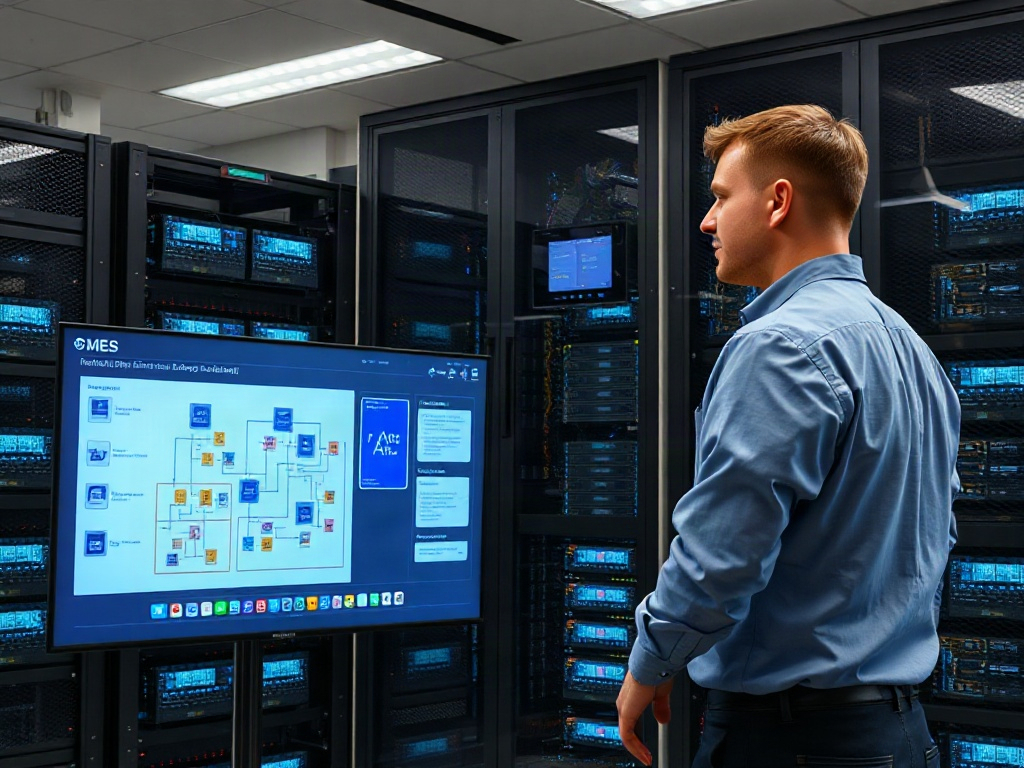
The announcement of the Arc Aerial RAN Computer is important for precisely that reason. It is not just another component; it is an attempt to turn the RAN into a "computer" with improvement cycles more similar to those of a data center than those of traditional telecom. If that materializes, spending migrates away from capex with long amortization and slow improvements toward a more granular combination of computing resources and software licenses.
And here lies the uncomfortable point: that granularity also makes performance easier to measure. When the vendor can tie its value proposition to efficiency metrics — energy, effective capacity, latency, automation — pricing no longer competes only on discount, but starts competing on return.
AI-RAN in 2026: The Year the Spreadsheet Gets Tested, Not the Laboratory
T-Mobile's trials with Nokia and NVIDIA in 2026 matter because they push the debate into the field. In a laboratory, almost everything works. In a live network, the hidden costs emerge: integration with legacy systems, traffic variability, regulatory constraints, operational security, and the reality of ongoing maintenance.
From my perspective, the financial objective of those trials is singular: to demonstrate that AI in the RAN can lower the total cost per site or raise per-site performance in a stable and repeatable manner. If the improvement proves marginal, adoption is deferred. If the improvement proves material, the budget appears.
The industry already knows the pattern: a new generation is deployed, but ARPU does not rise in step with capex. That is precisely why NVIDIA's argument centers on efficiency and automation rather than new services alone. An "AI-native" network promises better resource allocation decisions, energy savings, and less manual intervention. Each of those line items has a direct cash translation: lower electricity consumption, fewer field technician visits, less over-provisioning.
Since there are no public figures in the announcement regarding savings percentages or measurable improvements, the responsible way to interpret it is as an attempt to rewrite the economic contract between operator and vendor. Rather than selling equipment alone, the proposition sells software-managed capacity and acceleration. That tends to shift the margin toward the platform provider, provided it succeeds in becoming indispensable.
Here, the "open and secure" coalition functions as a counterweight: operators are trying to avoid lock-in to a single stack. Open does not mean free; it means the exit cost exists, but is lower. For the industry, this is a preemptive negotiation.
The Real Battlefield: Who Captures the Margin at the Network Edge
NVIDIA's advance into telecom is consistent with its recent financial trajectory: it reports 73% revenue growth and is expanding alliances across sectors where intensive computing is becoming infrastructure. Applying that logic to mobile networks is strategic because the network edge, if it becomes "computerized," starts to resemble a distributed mini data center.
If that happens, margin will be defined by three P&L lines:
1) Energy efficiency per unit of traffic. If the platform reduces energy consumption per site or per gigabyte carried, the operator has a clear argument for reinvesting part of that savings. This is particularly relevant because energy is a cost felt in monthly OPEX, not in slide decks.
2) Operations cost and automation. Automation is not an aesthetic promise; it is a reduction or reallocation of operational costs. If AI reduces incidents, accelerates troubleshooting, or decreases the need for manual optimization, the savings are recurring.
3) Effective capacity without duplicating physical footprint. If AI raises throughput from the same physical asset, capex is deferred. And deferring capex is a very direct way of improving free cash flow.
What NVIDIA seeks with "AI-native" platforms is to sit at the center of those three lines — not as a consultant, but as a provider of critical infrastructure. Nokia, for its part, gains a shortcut to incorporate accelerated computing into its portfolio without rebuilding it from scratch, while preserving its commercial relationships with operators.
The risk, as always, lies in execution: multi-vendor integration, 6G standards still under development, and a market that may move more slowly than the technical innovation itself. Competitive risk also exists, because other silicon and cloud players are pushing their own stacks. The prudent way to view the situation is that NVIDIA is buying position and Nokia is buying time.
The Discipline That Will Define the Winners of 6G
Announcements at MWC tend to inflate expectations. The executive filter is straightforward: if 6G and AI-RAN do not improve the operator's cash flow, they become just another capex cycle that is hard to justify. That is precisely why this coalition has value: it attempts to align operators and vendors around interoperable platforms where performance can be measured and security is built into the design from the outset.
For NVIDIA, the investment in Nokia and the Arc Aerial RAN Computer represent a bet on capturing a portion of the network budget that has historically flowed toward specialized hardware. For Nokia, it is a way to raise the bar on its offering with AI-RAN products ready for commercial sale and to maintain relevance during the transition to 5G-Advanced and 6G. For operators like T-Mobile, the 2026 trials are the point at which the narrative converts into operational numbers.
The pattern I would follow as a CFO or CEO is the same one I use to audit any infrastructure transformation: demand efficiency metrics that translate directly into cash, and insist on contracts where the vendor wins only if performance is sustained over time. The rest is narrative. In the end, control over a network and over a company is determined by a single thing: the money that comes in from real customers, on a recurring basis, with sufficient margin to fund the next iteration without having to ask anyone for permission.