
Coins.ph Integrates USDT and USDC into the Philippine QR Payment Network: What the Move Really Means
For years, holding USDT or USDC in a Philippine digital wallet meant essentially the same thing as keeping dollars under the mattress: an asset that accumulates but never circulates. On April 21, 2026, Coins.ph closed that gap in an operationally elegant way: it integrated the world's most widely used stablecoins directly with the Philippines' national QR payment standard, known as QRPh. The immediate result is that any user can now pay for their coffee, their weekend groceries, or a utility bill at any of the 700,000 compatible merchants, using Philippine pesos, USDT, USDC, or any combination of the three, with a single QR code scan.
The figure that anchors the scale of the move: in December 2025, Coins.ph processed approximately ₱30 billion in QRPh transactions. That is not an optimistic projection — it is the baseline upon which the new functionality is now built. CEO Wei Zhou described it plainly: the goal is to transform crypto from a passive investment into an everyday spending tool.
What the QR Code Conceals at First Glance
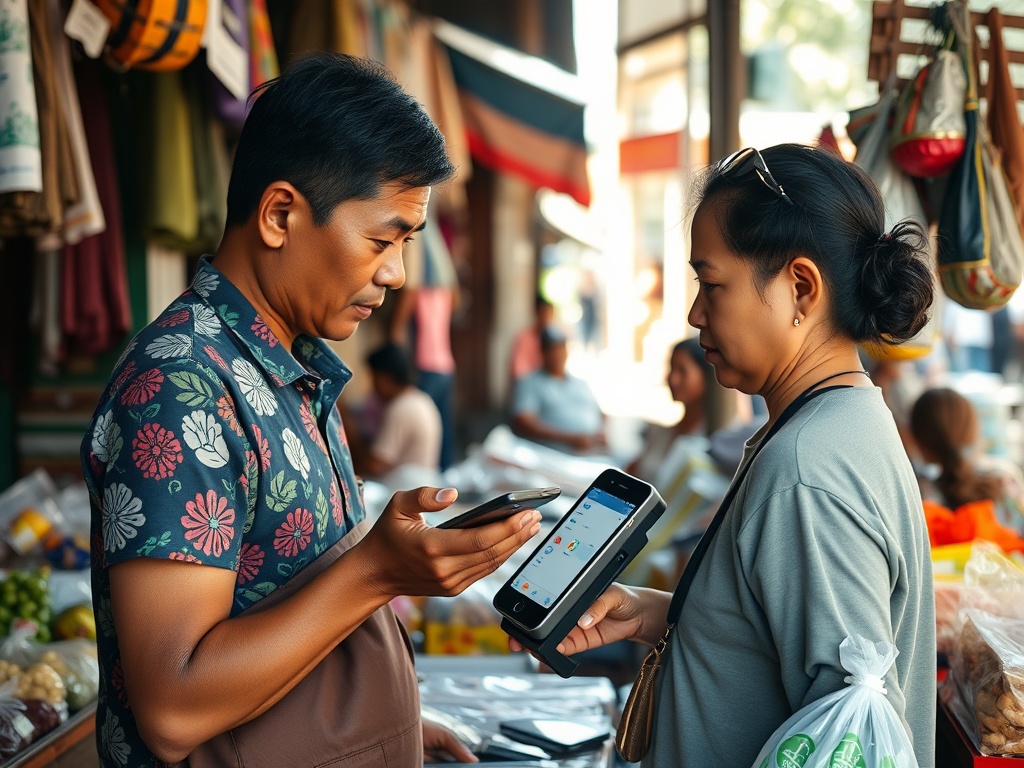
The technical integration looks simple from the outside: the user scans the same QR code that already existed, selects whether to pay with pesos, stablecoins, or a combination, and the system automatically converts in real time. The merchant receives pesos. Nobody changes their terminal, nobody installs new software, nobody negotiates new acceptance contracts.
That apparent simplicity is precisely the most important design decision. Coins.ph chose to absorb all the complexity within its own infrastructure so that friction on the merchant side would be zero. Real-time exchange rate quotes, transaction reversals, and refunds denominated in PHP are mechanisms that absorb the variability of the crypto market before it ever reaches the point of sale. From the merchant's perspective, this is PHP. Always.
The direct financial implication is significant: Coins.ph captures the conversion. Every stablecoin transaction generates a foreign exchange spread that, multiplied by the volume of a base of millions of active users across a network of 700,000 merchants, builds a revenue line that did not exist six months ago. This is not a laboratory experiment; it is a monetisation lever supported by already-amortised infrastructure.
The fact that no other competitor has yet achieved this integration with QRPh positions Coins.ph as the only operator capable of offering this flow today. The window of exclusivity will be short, as is always the case in digital payments markets, but it is within that window that user inertia is consolidated.
The Portfolio Behind the Announcement
Analysed from a portfolio design perspective, this launch is not a pivot. It is an intelligent extension of the core business into an adjacent space with lower execution risk than it might appear. Coins.ph already possessed the most difficult asset: the network of integrated merchants, the transaction volume, and the regulatory licence from the Bangko Sentral ng Pilipinas. Adding stablecoins to the payment flow is, in architectural terms, far less complex than building the network from scratch.
This matters because it defines how the project's success should be measured. Anyone who evaluates it using the same profitability indicators applied to the mature PHP payments business will make a diagnostic error. The relevant metric at this stage is not the margin per stablecoin transaction; it is the adoption rate of the new payment mode among users who already hold immobilised crypto assets. Converting dormant funds into active flow is the validation that matters now. The margin comes later, when the volume justifies the additional infrastructure.
The move also carries logic from the angle of remittances, which have historically been the core of Coins.ph's business model. The Philippines is one of the world's largest recipients of international remittances, and a growing portion of those flows arrives in the form of stablecoins. Until now, the journey from USDT to local spending required manual conversions outside the platform, with lost time and additional conversion costs. The QRPh integration collapses that process: money enters as a stablecoin and is spent as a stablecoin, without leaving the Coins.ph environment. This is asset retention within the ecosystem, measured in Philippine pesos that did not migrate to another provider.
The Risk the Headlines Don't Cover
There is a structural tension that is worth identifying with precision. Coins.ph has built its leadership on domestic payments infrastructure, where volumes are predictable and the regulatory framework is clear. By incorporating stablecoins as a means of everyday payment, it introduces a variable that behaves differently: the liquidity of USDT and USDC depends on global market conditions that the Bangko Sentral does not control and that Coins.ph cannot anchor either.
The PHP refund mechanism and real-time exchange rate quotes mitigate transactional risk under normal market conditions. But if a temporary de-pegging of the dollar-stablecoin parity were to occur, the sequence of reversals and refunds could generate operational losses that low volume does not compensate for. That is not a design flaw; it is a scaling risk that emerges when stablecoin volume ceases to be marginal and becomes a significant portion of total flow.
The appropriate organisational response to that risk is not to slow growth. It is to implement dynamic per-transaction limits, maintain PHP liquidity reserves to cover reversals, and treat this line as a business unit with its own risk accounting, separate from the local-currency payments engine. If Coins.ph manages that separation with discipline, the project scales. If it consolidates it too soon within the same operational structure that manages the mature business, the core profitability indicators will begin to be distorted by the volatility of the crypto segment — and that produces flawed management decisions.
The Infrastructure Already Built Defines Who Wins
The integration of Coins.ph with QRPh is not a bet on the future of stablecoins; it is the monetisation of infrastructure that was already working. The ₱30 billion in monthly volume, the network of 700,000 merchants, and the regulatory licence are assets built over years that now serve as the foundation for a new line of business with low marginal costs. The strategic merit lies in having recognised that the barrier to entry for competitors is not stablecoin technology — available to anyone — but precisely that network which took years to build. Coins.ph did not win this position on April 21, 2026; it won it every single month it processed QRPh payments before its competitors did.