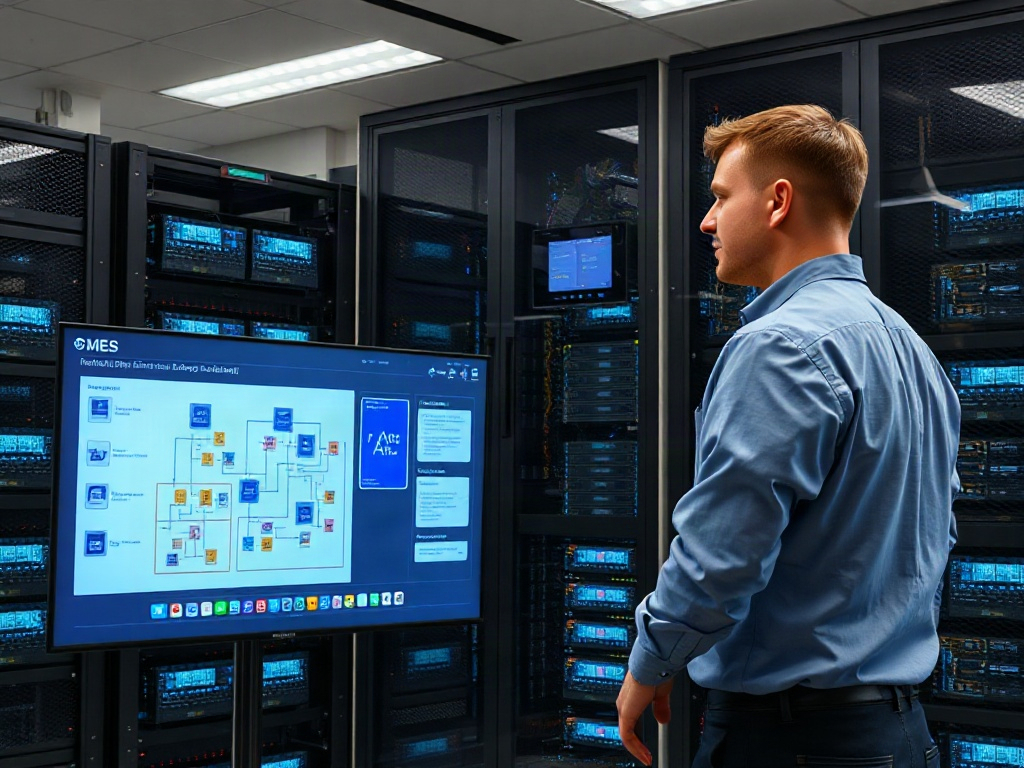

There Is a Number Worth Pausing to Digest: More Than 100 Billion Data Events Per Day
That is the volume Striim moves through its integration pipelines, connecting systems such as Oracle, PostgreSQL, Salesforce, and Kafka with cloud platforms like Google Cloud Spanner, with latency measured in fractions of a second. On April 22, 2026, the Palo Alto-based company formalized a capability expansion that includes the launch of Validata Cloud, alongside advances in its AI Agents — among them Sentinel for anomaly detection, Euclid for semantic search, and Sherlock for governance — and the evolution of MCP AgentLink, its tool for connecting artificial intelligence agents to real-time data replicas without touching production systems.
The technical announcement is solid. But what interests me is not in the press release. It is in the phrase that CEO Ali Kutay chose to summarize it all: "giving customers the confidence to scale without slowing down innovation." Confidence. Not speed. Not performance. Confidence. That single word reveals more about the psychological state of the enterprise market than any specification sheet ever could.
The Real Problem Is Not the Data — It Is the Panic Around Production Data
When a company has spent years running an Oracle system in its physical facilities, that system is not merely software. It is the nervous tissue of its entire operation. Every prescription transaction across the more than 9,000 pharmacies of the health retailer that uses Striim, every logistical movement at a company like UPS, every inventory cycle at Macy's — all of it lives there. Migrating that infrastructure, or worse, allowing an AI agent to query it directly, triggers something that no data architect can resolve by adding more layers of technology: the institutional fear of losing control over the systems that sustain the business.
This fear is not irrational. It is completely logical. The IT teams that have watched a critical system go down at 2 in the morning because of a poorly executed query do not need anyone to explain why anxiety around AI in production runs so high. And neither do the CFOs who have signed off on regulatory fines resulting from data breaches. What Striim is ultimately selling is not a data connector. It is a layer of psychological distance between the AI agent and the core of the business. MCP AgentLink creates secure, governed replicas — enriched in transit with personal data masking and vector embeddings — so that the agent operates on a validated copy and never directly touches the system that cannot be allowed to fail.
The multinational FinTech firm described in the announcement — which maintains bidirectional synchronization between its on-premises Oracle system and Google Cloud Spanner — perfectly illustrates this dynamic: they did not abandon their legacy system overnight. They kept both worlds aligned while building operational confidence in the new one. That is not indecision. It is the only viable way to manage institutional habit within organizations that cannot afford even a single minute of interruption.
Why the Enterprise AI Market Remains Stuck in Experimentation Mode
The dominant narrative in the industry holds that companies are "adopting AI." The numbers tell a more nuanced story. The vast majority of corporate artificial intelligence projects never reach production. They stall as pilots, proof-of-concept exercises, and board-level presentations. And the technical justification that teams typically cite — "our data isn't clean," "the systems aren't integrated," "we need a modern architecture" — is frequently a socially acceptable translation of something far harder to admit: we do not know exactly what the agent will do when it operates with production data, and that terrifies us.
Striim's strategic move around the Model Context Protocol (MCP) is relevant precisely at this juncture. MCP is being backed by Anthropic, OpenAI, Google, AWS, Oracle, and Microsoft as the interoperability standard for enabling AI agents to connect to live systems. When all of that infrastructure converges on a single protocol, the question companies face is no longer whether to adopt it, but when — and under what security conditions. Striim is betting that the correct answer for most corporate teams is: "when someone guarantees me that I am not going to break anything."
The value proposition is not rooted in data velocity. It is rooted in reducing the psychological cost of the decision itself. A team that can tell its CTO, "the agent operates on a governed replica, with PII masked, with full audit trails, without touching production," possesses an argument that cuts through paralysis. And once that argument exists, the friction required to scale drops significantly. The health retailer did not deploy Striim across 9,000 pharmacies because the technology was the cheapest option on the market. It did so because someone within that organization was able to justify internally that the risk was contained.
The Mistake Technology Leaders Make When Selling AI to Their Own Organizations
There is a pattern I observe frequently in companies that attempt to scale AI internally and fail in the process. Technical teams build a solution that works, demonstrate it in a controlled environment, produce impressive metrics, and then grow frustrated because the rest of the organization fails to adopt it. The standard diagnosis is "resistance to change" or "lack of data culture." Both diagnoses are true — but they are incomplete.
What those teams are doing is investing 90% of their energy in making the solution shine technically, and the remaining 10% on addressing the questions that genuinely paralyze decision-makers: What happens if the agent produces an incorrect response during a critical transaction? Who is accountable when there is a compliance error? How is last week's system behavior audited? What happens to customer data that flows through the pipeline? These are not technical questions. They are questions about trust, accountability, and control.
The architecture that Striim presented at Google Cloud — with governance embedded directly in the data flow, agents specialized in regulatory compliance, and validated replicas prepared before the agent ever consumes them — is a direct answer to precisely those questions. It does not add bureaucratic layers on top of the technology. It incorporates governance into the very process of moving the data. Compliance is not a subsequent step; it happens in transit, at sub-second latency.
Confidence as Infrastructure, Not as an Additional Feature
The leaders who will succeed in scaling AI into production over the next two years will not necessarily be those with the most advanced models or the fastest pipelines. They will be the ones who have built the organizational conditions that allow their teams to trust what the system does when no one is watching it. That requires embedded governance — not declared governance. It requires auditable replicas — not security promises contained in an architecture document.
The distance between an AI pilot and a production deployment that actually scales is not measured in weeks of development. It is measured in the quantity of unaddressed fears that accumulated throughout the process. The organizations that are deploying these systems across thousands of simultaneous operational points — pharmacies, airlines, distribution centers — did not achieve that because they eliminated technical complexity. They achieved it because someone made the deliberate decision to invest as much energy in extinguishing the fears of their internal teams as in building the technology itself.
Leaders who continue measuring the success of their AI strategy solely by the sophistication of the model or the speed of the data are building on a foundation that erodes itself from within: sooner or later, the first production failure activates all the fears that were never addressed, and the project is set back by months. The most profitable investment at this moment is not in making AI smarter. It is in making the organization feel that it can trust AI when it operates without direct human supervision.