What the numbers say before the market admits it
We read balance sheets, multiples, credit, and capital allocation to spot where the public narrative no longer matches the financial structure carrying a company or a sector.
What we are watching
Quarterly results, debt, private credit, turnarounds, stretched valuations, and corporate moves where the relevant fact is rarely the most repeated headline.
Where it is being decided
In liquidity, exposure, concentration of profits, the ability to finance a recovery, and the distance between a seductive story and the patience capital is actually willing to show.
Why it matters
Because finance does not just describe the past. It also shows how much room a company still has to keep promising, correcting, or holding the line before the market demands something else.
Featured
Finance

Setting Prices Without Knowing Real Costs Is Not Strategy: It Is a Gamble
According to the Federal Reserve System's employer firms survey for 2024, fewer than half of employer firms in the United States operated at a profit that year. The figure hovers between 46% and 47% depending on the edition of the report, but the range does not change the conclusion: more than half of businesses with employees did not finish the year in the black. The data does not speak to a sectoral crisis or an isolated macroeconomic event, but to a structural problem in how small and medium-sized enterprises (SMEs) understand, calculate and defend their margins.
 Ignacio Silva7 min
Latest articles
Ontario bets $49 million on its small businesses as tariffs reshape cross-border trade
On September 24, 2026, Nina Tangri, Ontario's Associate Minister of Small Business, made an announcement in Windsor that went relatively unnoticed in the major national media. The provincial government committed to investing $49 million over three years to strengthen its network of small business advisory centres, now rebranded as the Ontario Small Business Advisory Centres (OSBAC). The city chosen for the announcement was not Toronto.
India's largest bank bets on digital without letting go of what made it great
On 27 September 2026, Challa Sreenivasulu Setty, Chairman of the State Bank of India, stepped up to the podium at SBI's 13th Banking and Economics Conclave and condensed the strategy of India's largest bank into nine words: digital first, customer first, nation always. The declaration spread quickly. But before any analyst could turn it into either praise or an easy target, it is worth doing what is rarely done with corporate mantras: examining what structure of decision-making lies behind it, if any.
Kawan Renergy grew 32% and earned 73% less: what that reveals about the model
There is an arithmetic that does not lie. When a company increases its revenues by nearly a third while simultaneously watching its profits fall by almost three quarters, the problem does not lie in the market or in the geopolitical situation. It lies in the structure of the business itself. Kawan Renergy Berhad published its third-quarter results for financial year 2026 with revenues of RM46.49 million, a rise of 32.6%, but with a net profit of RM2.04 million compared to RM7.49 million a year ago.
Oracle Spends $2.8 Billion to Reinvent Itself: This Is What the Real Cost of the AI Transition Looks Like
Larry Ellison cancelled in September 2026 a plan to sell up to 50 million Oracle shares, equivalent to roughly $7.5 billion at that Friday's closing price. No official explanation was given. What did appear in a regulatory filing submitted that same week was another figure: Oracle expanded its fiscal 2026 restructuring plan by an additional $700 million, bringing the total expected cost of the programme to approximately $2.8 billion.
Most Popular
Most voted on this page
The Recurring Revenue of AI Startups No Longer Guarantees What It Once Promised
There is a number that circulates through Silicon Valley pitch decks with the force of a closed argument: ARR, or Annual Recurring Revenue. For years it was the metric that separated serious startups from those simply burning cash on hope. According to data published in 2026 by venture capital firm Madrona, 77% of companies reassess their artificial intelligence vendors every six months or even on a continuous basis.
90
Why Analysts Are Betting on a Gearbox Maker Before the Robots Even Exist
There is a pattern that repeats every time an industry anticipates its own future: serious money does not flow to the final product, it flows to whoever manufactures the parts that product will need. That is what happened with semiconductors before the PC boom. Now, as images of humanoid robots circulate at tech fairs and conferences, four top-tier investment banks are pointing to a Chinese gearbox manufacturer that most readers have never heard of.
90
India's largest bank bets on digital without letting go of what made it great
On 27 September 2026, Challa Sreenivasulu Setty, Chairman of the State Bank of India, stepped up to the podium at SBI's 13th Banking and Economics Conclave and condensed the strategy of India's largest bank into nine words: digital first, customer first, nation always. The declaration spread quickly. But before any analyst could turn it into either praise or an easy target, it is worth doing what is rarely done with corporate mantras: examining what structure of decision-making lies behind it, if any.
89
Oracle Spends $2.8 Billion to Reinvent Itself: This Is What the Real Cost of the AI Transition Looks Like
Larry Ellison cancelled in September 2026 a plan to sell up to 50 million Oracle shares, equivalent to roughly $7.5 billion at that Friday's closing price. No official explanation was given. What did appear in a regulatory filing submitted that same week was another figure: Oracle expanded its fiscal 2026 restructuring plan by an additional $700 million, bringing the total expected cost of the programme to approximately $2.8 billion.
88

Why Ellison Withdrew Oracle's $7.5 Billion Share-Sale Plan
Larry Ellison, co-founder and executive chairman of Oracle Corporation, adopted on June 22, 2026, a trading plan to sell up to 50 million ordinary shares of the company. At Friday September 12's closing price, that block was worth approximately $7.5 billion. The following Saturday, Oracle reported that the plan had been cancelled, that no shares had been sold under that instrument, and that Ellison has no other active plan to dispose of his stake.

Luceco and the Bet Analysts Can No Longer Ignore
Deutsche Bank has just done something the markets have been waiting for: putting in black and white what Luceco's numbers have been hinting at for two years. On 8 September 2026, the bank upgraded its rating on the company from hold to buy and raised its price target from 260 pence to 270. It is not a dramatic move in absolute terms. What matters is not the ten-pence jump, but what that adjustment reveals about how the value architecture of a company that until recently was seen primarily as an electrical accessories manufacturer is being re-read.

Synergy House and the model that works when everything goes right
There are companies that illustrate with clinical precision what happens when a lean model collides with costs that show no mercy. Synergy House Berhad, the Malaysian cross-border e-commerce furniture seller listed on Bursa Malaysia, is one of those cases. Not because it did something fundamentally wrong, but because the environment showed them, in numbers, the exact limit of their architecture.
The Recurring Revenue of AI Startups No Longer Guarantees What It Once Promised
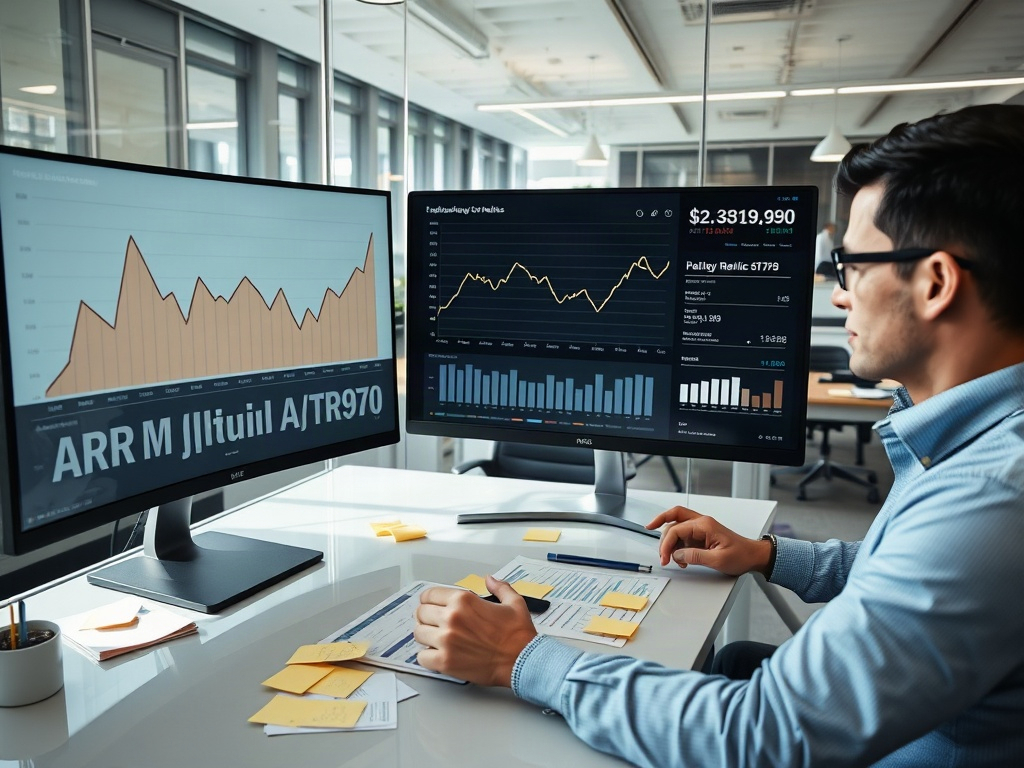
There is a number that circulates through Silicon Valley pitch decks with the force of a closed argument: ARR, or Annual Recurring Revenue. For years it was the metric that separated serious startups from those simply burning cash on hope. According to data published in 2026 by venture capital firm Madrona, 77% of companies reassess their artificial intelligence vendors every six months or even on a continuous basis.

When the Family Business Costs You Your Home
There is a pattern that appears frequently in financial advisory sessions and rarely shows up in business viability analyses: the moment an entrepreneur discovers that personal exposure was not in the contract they signed, but in the clause they did not read carefully enough. Brittany's call to the Money Moves with Jill Schlesinger program captures that moment with a precision that numbers alone cannot convey: a family business left her and her husband financially underwater, and now they are weighing whether selling their home is a way out or simply a way of postponing the same conversation.
FAQ
Finance
What should a reader look for when reading financial results?
The relationship between the public story and the underlying structure: what is really carrying earnings, how much capital remains to execute a recovery, and which risk looks smaller than it really is.
Why is one isolated figure rarely enough to understand a company?
Because aggregate revenue, market rebounds, or optimistic headlines can hide profit concentration, structural deterioration, or dependence on conditions that do not last.
What makes a financial story worth following here?
A concrete tension between balance sheet, strategy, and market: badly read exposure, a reverse acquisition, an expensive recovery, or an asset carrying more weight than it seems.

Five9 Trades at Deep Value Multiples as AI Revenue Grows 78% Annually
Truist Securities raised its price target on Five9 to $40 from $35, maintaining a buy rating. The rationale is not generic: analyst Terry Tillman met with CEO Amit Mathradas, CFO Bryan Lee, and SVP of Investor Relations Tony Righetti, and came away from that meeting with greater conviction about the business direction. The starting point for understanding this note is not the rating but the financial architecture Truist is reading behind it.
 Javier Ocaña8 min
Why Analysts Are Betting on a Gearbox Maker Before the Robots Even Exist
There is a pattern that repeats every time an industry anticipates its own future: serious money does not flow to the final product, it flows to whoever manufactures the parts that product will need. That is what happened with semiconductors before the PC boom. Now, as images of humanoid robots circulate at tech fairs and conferences, four top-tier investment banks are pointing to a Chinese gearbox manufacturer that most readers have never heard of.
 Isabel Ríos9 min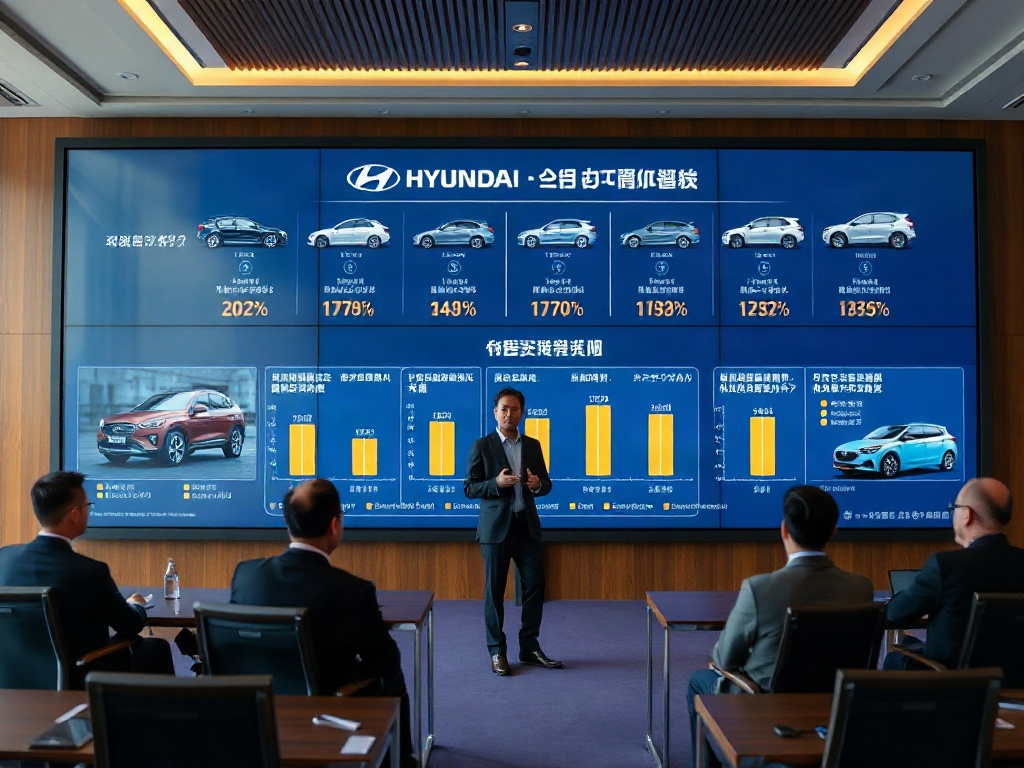
Hyundai Bets on More Than 100 Models Before 2030 and Raises Its Margin Target
On August 26, 2026, in Seoul, Hyundai Motor presented to investors the most ambitious roadmap in its recent history: more than 100 vehicle launches and renewals by 2030, an operating margin target raised above 9%, and a capacity expansion plan of 1.27 million additional units. The backdrop is uncomfortable: in the second quarter of 2026, the company reported an operating margin of just 5.8%, down from 7.5% in the same period the previous year.
 Mateo Vargas7 min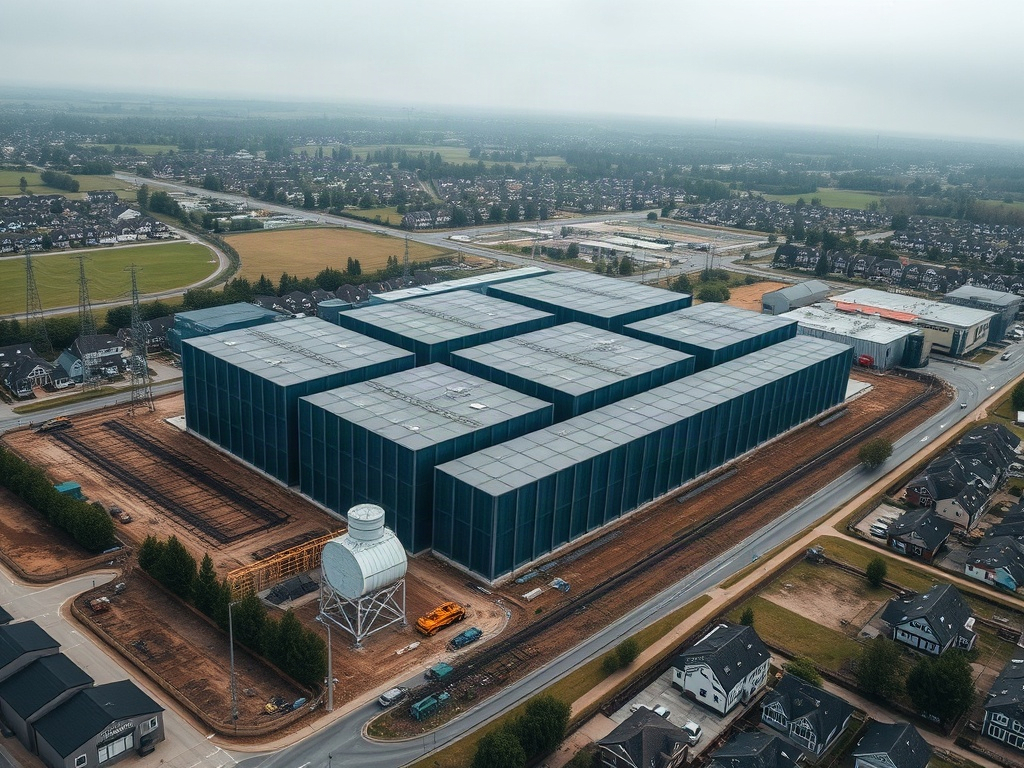
Why AI Data Centers Became the Most Political Asset in the Tech Sector
The week of August 18, 2026 sent a signal that was hard for infrastructure investors to ignore. GE Vernova fell 9.5% for the week and Eaton lost 6.7%, two names that for months had functioned as safe bets on data center growth. There was no chip demand collapse or budget cuts from major hyperscalers: what happened was a state governor signing an executive order on a Tuesday afternoon.
 Sofía Valenzuela8 min
Why Banning ESG Funds from Children's Accounts Reveals More About Power Than Sustainability
The US Treasury Department has just drawn a line that goes far beyond a technical fund eligibility decision. On August 20, 2026, the administration published proposed regulations governing permitted investments in the so-called 'Trump Accounts' — tax-advantaged savings accounts for minors created under the 'One Big Beautiful Bill' Act. The rule does two things at once: it sets an extraordinarily low fee cap of 0.1% annually on invested balances and explicitly excludes any fund linked to environmental, social and governance criteria.
 Lucía Navarro9 min
LBS Bina Chooses Margins Over Volume as Malaysia's Property Market Cools
LBS Bina Group Bhd's most recent quarter tells two distinct stories depending on which line of the income statement you look at first. Revenue grew. Net profit fell by nearly half. And management, rather than burying that figure in a technical results note, placed it at the centre of its strategic communication.
 Francisco Torres9 min
How to Buy a YouTube Channel Without Buying the Creator
The creator economy is worth approximately $250 billion and growing at a double-digit annual rate. Goldman Sachs projects it could reach $480 billion by 2027. Yet institutional capital has spent years watching that market from the sidelines, unwilling to fully commit.
 Andrés Molina9 min
Why Canada's Tax Reform Starts With Small Businesses and What That Reveals About Real Power
Mark Carney's government has just admitted something tax experts have been pointing out for years with growing impatience: the Canadian tax code no longer works as it should. This is no minor statement. It is a public acknowledgment that four decades of patches, special credits, and accumulated sectoral programs have produced a system nobody deliberately designed but everyone must navigate.
Isabel Ríos9 min
Corgi Invest and the Second Commission War in Exchange-Traded Funds
There are moments in financial markets where consensus breaks from an angle no one anticipated. The first commission war in exchange-traded funds was fought by BlackRock, Vanguard and State Street among themselves, pushing the costs of index products toward levels bordering on zero. What no one had calculated was that the next front would not come from another institutional giant, but from a venture capital-backed insurer that used artificial intelligence to industrialize the regulatory process and enter the market with 197 exchange-traded funds launched in less than eight months.
Javier Ocaña9 min
Mercury Gives Credit Cards to AI Agents and That Changes the Architecture of Corporate Spending
The average founding team of a startup used to have two people and three engineers. Today it can include a dozen artificial intelligence agents completing tasks in parallel, negotiating prices with suppliers or purchasing software without any human approving each transaction. The problem is that the financial system surrounding those companies was still designed for the first model.
 Clara Montes8 min
Milky Mist Raises ₹465 Crore in Anchor Round Before Listing and Reveals a Model Global Funds Have Already Decided to Back
There is a detail in the structure of Milky Mist Dairy Food's anchor book that deserves more attention than it typically receives in standard IPO coverage: Zulia Investments Pte Ltd, a subsidiary of Temasek Holdings, did not simply enter the anchor round by purchasing approximately ₹160 crore in shares. It was already a pre-IPO shareholder, through another entity linked to the same sovereign fund. That is not a speculative entry of institutional capital. It is an investor that already conducted its analysis, already took a position, and decided to increase it just before the stock lists on NSE and BSE.
 Tomás Rivera8 min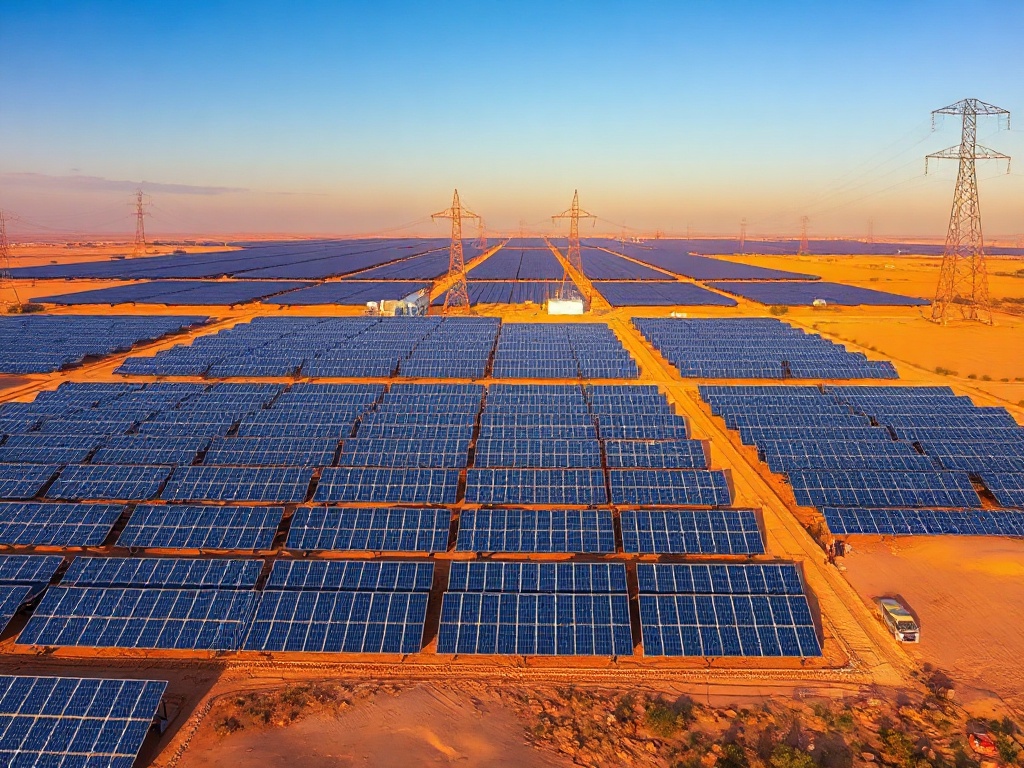
India Reaches 300 GW of Renewable Energy and Reveals Its Next Problem Is Not Generation
Crossing 60% of a national electricity capacity target four years ahead of schedule is no small achievement. On July 31, 2026, India surpassed 300.50 GW of installed non-fossil capacity, according to the Ministry of New and Renewable Energy. The figure includes 164.59 GW of solar energy, 58.14 GW of wind, 57.24 GW of hydropower, 11.75 GW of bioenergy, and 8.78 GW of nuclear.
 Elena Costa9 min
Why Ackman Bet $2.4 Billion That the Market Misunderstood Microsoft
There is a difference between buying a stock because it is rising and buying a stock because the market does not yet know what it is worth. Bill Ackman, founder of Pershing Square Capital Management, built a $2.4 billion position in Microsoft doing exactly the latter. The distinction is not semantic: it defines who assumes structural risk and who simply rides a trend.
Mateo Vargas9 min
Bank of America Spends $250 Million a Year on Weight Loss Drugs and Makes No Apologies for It
When the CEO of one of the world's largest banks publicly declares that his company spends over $250 million a year on weight loss medications and defends it without hesitation, he's not describing a medical benefit. He's describing an organizational design bet on what kind of workforce he wants to sustain, and how far he's willing to go to build it. Bank of America has spent several years absorbing the cost of GLP-1 medications, the class of drugs that includes brands like Ozempic, Wegovy, and Zepbound, as part of a healthcare package that exceeds $2 billion annually.
Ignacio Silva8 min