
New Zealand Has 50 Days of Fuel, Revealing a Fragile Architecture
On March 16, 2026, New Zealand's Minister of Finance, Nicola Willis, appeared on CNBC to announce that the country has approximately 50 days of fuel reserves. The message was carefully calibrated to convey calm. However, any analyst who understands how energy security is structured in a developed economy knows that this number is not a sign of strength; it is a snapshot of a dependency built over years of poorly applied optimization.
The International Energy Agency (IEA) requires its members to maintain a minimum of 90 days of oil reserves. New Zealand has 50. This 40-day gap is not merely an administrative detail; it is the margin that separates economic stability from a supply crisis with direct consequences for consumer prices, logistical chains, and ultimately, for inflation that the Reserve Bank of New Zealand would have to manage without adequate tools.
The Hidden Cost of Optimizing Without a Margin for Error
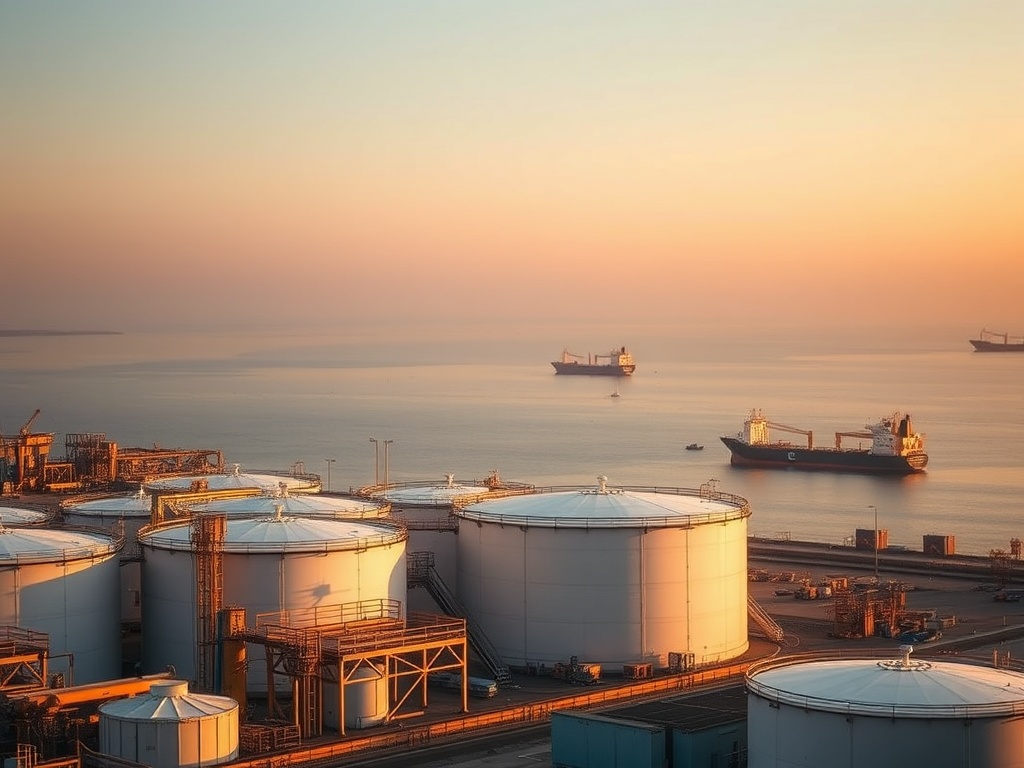
There is a seductive financial logic behind the model that led New Zealand to this situation. In 2022, the country closed the Marsden Point refinery, its only domestic processing facility with a capacity of 135,000 barrels per day, and converted it into an import terminal. The decision made sense in a scenario with stable prices and predictable supply chains: eliminate the fixed costs of operating a refinery, outsource production, and buy refined products directly from the international market.
This model reduces locked capital and improves operational margins in the short term. It works perfectly until it stops working.
The Associate Minister of Energy, Shane Jones, accurately described the problem when he criticized oil companies for shifting to a ‘just in time’ import model, minimizing physical inventories within the country. From a cost management perspective, that strategy is impeccable. From a resilience perspective in the face of external shocks, it is a gamble that transfers operational risk to the state and, ultimately, to the citizen.
The arithmetic is straightforward: if New Zealand consumes 129,000 barrels per day of refined products and only maintains 50 days of stock, that amounts to approximately 6.45 million barrels stored. To meet the IEA’s minimum standard, it would need 11.61 million barrels. The difference, more than 5 million barrels, is the safety inventory that the optimization model eliminated because it had a maintenance cost that no one wanted to pay.
What the Strait of Hormuz Charges for Efficiency
The geopolitical context surrounding this announcement is not decorative. Since February 28, 2026, the UKMTO (UK Maritime Trade Operations) has recorded at least 13 attacks on vessels in the Persian Gulf, the Strait of Hormuz, and the Gulf of Oman. Ships such as the Mayuree Naree and Express Rome have been hit. The strait, through which 17 million barrels per day of crude and refined products typically transit, is operating under active pressure.
The structural problem is that only 3.54 million barrels per day can be redirected through alternative pipelines to the Red Sea. That leaves a potential deficit of more than 13 million barrels per day with no immediate substitute if the strait is closed or severely restricted. For an economy that no longer refines anything within its borders and depends on maritime routes for 100% of its fuel supply, this scenario has concrete implications: progressive shortages, pressure on the exchange rate due to rising import bills, and an inflationary shock that would first hit transportation and logistics before spreading to the rest of the economy.
The New Zealand government has received advice on emergency measures, including purchase limits at gas stations and opening only on alternate days. These measures directly evoke the restrictions of the 1970s. Their mere mention in official documents indicates that the threshold between preventive management and demand crisis is much closer than public discourse suggests.
New Zealand's contribution to the IEA-coordinated emergency plan, which will release 412 million barrels globally, will be approximately 800,000 barrels, equivalent to six days of domestic consumption. The mechanism employed will be the so-called ‘tickets’: commercial contracts that give New Zealand the right to claim oil stored in the United States, United Kingdom, and Japan. By canceling those contracts, that volume becomes available to the international market. It’s a symbolic but functional contribution. What it reveals, however, is that New Zealand's reserves are not physically in New Zealand. They are contractually spread across three different jurisdictions, subject to transportation times and the integrity of maritime routes currently under attack.
The Comparison with Australia Exposes Lost Room for Maneuver
Australia is also participating in the IEA's coordinated release, but operates from a structurally different position. Its active refineries, Geelong with 120,000 barrels per day (operated by Viva Energy) and Lytton with 109,000 barrels per day (operated by Ampol), supply approximately 90% of the gasoline the country consumes. In the face of supply pressure, Australia temporarily suspended its 10 parts per million sulfur standard in gasoline for 60 days, allowing for imports with higher sulfur content to expand supply options.
That is the difference between having infrastructure and not having it. Australia can adjust its technical standards to gain flexibility. New Zealand does not have that lever because it eliminated the capacity that would have given it that decision-making margin. The fixed costs of operating a refinery are real and significant. But they are also the price paid to maintain operational sovereignty when international markets destabilize.
The closure of Marsden Point made financial sense in a world without geopolitical friction. In the world New Zealand operates in today, that operational saving has turned into a macroeconomic vulnerability. Fuel is the primary input for transportation, agriculture, and export logistics. Any sustained disruption does not reach the citizen as a line in the income statement of an energy company: it arrives as inflation, as a shortage of goods, and as a pressure that central banks cannot remedy with rate adjustments.
Inventory Is Not a Cost, It's Survival Capital
What this potential supply crisis teaches any CFO or operations director is not about geopolitics. It is about a financial decision that is repeatedly made in companies across all sectors: confusing operational efficiency with financial resilience.
Reducing inventories improves the return on employed capital. Outsourcing production capacity frees up assets on the balance sheet. Migrating to just-in-time supply models reduces working capital. All these decisions are correct when the environment is stable. When the environment shifts, each of those optimizations becomes a vector of fragility.
New Zealand currently has a government reviewing thresholds to ration fuel and publicly communicating how many days of reserves it has left to prevent citizens from panic buying. That scenario has a cost that appears in no operational efficiency model because it was built on the assumption that the cost of maintaining inventory was always greater than the cost of not having it.
The only coverage that has no counterpart risk is the one you pay for before you need it. Physical inventory, proprietary production capacity, and supply source diversification are not expenses: they are the price of continuing to operate when the market ceases to behave as projected by the model.