How an organisation changes when the past is no longer enough
We follow companies that need to reorganise capital, culture, leadership, and priorities to hold the present without getting shut out of the next cycle.
What we are watching
Capital reallocation, distributed structures, governance changes, operating reorganisation, and moves where transforming a company demands more than a new speech.
Where it is being decided
In the ability to move resources, redesign incentives, coordinate multiple businesses at once, and build an organisation that does not depend on a single figure.
Why it matters
Because transforming a company is not announcing the future. It is building a structure capable of funding it, executing it, and sustaining it without emptying out what still keeps the business standing.
Featured
Business Transformation

India's largest bank bets on digital without letting go of what made it great
On 27 September 2026, Challa Sreenivasulu Setty, Chairman of the State Bank of India, stepped up to the podium at SBI's 13th Banking and Economics Conclave and condensed the strategy of India's largest bank into nine words: digital first, customer first, nation always. The declaration spread quickly. But before any analyst could turn it into either praise or an easy target, it is worth doing what is rarely done with corporate mantras: examining what structure of decision-making lies behind it, if any.
 Ricardo Mendieta8 min
Latest articles
The Return on Enterprise AI Is an Architecture Problem, Not an Intelligence Problem
There is a figure that CIOs are memorizing with discomfort: 72% of organizations admit that their AI investments are, at best, breaking even. At worst, losing money. What is failing is not the machine's intelligence. What is failing is the business architecture surrounding it.
Adidas Eliminated Seven Decision-Making Layers and That Is How It Recovered Its Ability to Compete
When Bjørn Gulden took over the leadership of Adidas in January 2023, the company was carrying $1.2 billion in unsold Yeezy sneaker inventory, a retreating Chinese market, and brands like Hoka and On gaining ground in the segment where Adidas had built its technical reputation over decades. What Gulden found inside, however, was not merely a balance-sheet problem. It was an organizational architecture that was systematically producing immobility.
Oracle Spends $2.8 Billion to Reinvent Itself: This Is What the Real Cost of the AI Transition Looks Like
Larry Ellison cancelled in September 2026 a plan to sell up to 50 million Oracle shares, equivalent to roughly $7.5 billion at that Friday's closing price. No official explanation was given. What did appear in a regulatory filing submitted that same week was another figure: Oracle expanded its fiscal 2026 restructuring plan by an additional $700 million, bringing the total expected cost of the programme to approximately $2.8 billion.
Enterprise AI Is Still Waiting for Its Platform Moment
There are technologies that exist long before anyone makes them usable. Email had been around for decades before Hotmail showed your mother how to use it. GPS navigation existed in military devices years before a hundred-dollar gadget told a delivery driver which way to turn.
Most Popular
Most voted on this page
The AI Triathlete and the Problem Nobody Wants to Name in the Boardroom
There is a phrase that repeats in almost every executive committee meeting where artificial intelligence projects are reviewed: 'the pilot was successful.' And then, silence. Nobody asks why the pilot never became anything else. The organization celebrates the experiment, files away the learnings, and three months later launches another pilot.
91
Companies Spend Trillions on AI and Reap Pennies
There is a number that should be on the desk of every CFO signing an artificial intelligence budget today: 40%. That is the proportion of companies that, according to a recent Bain & Company survey of 951 large global corporations, measured their real AI savings and found them in the range of zero to ten percent. Not because the technology failed in production. But because the promised value never managed to become captured value.
91
Adidas Eliminated Seven Decision-Making Layers and That Is How It Recovered Its Ability to Compete
When Bjørn Gulden took over the leadership of Adidas in January 2023, the company was carrying $1.2 billion in unsold Yeezy sneaker inventory, a retreating Chinese market, and brands like Hoka and On gaining ground in the segment where Adidas had built its technical reputation over decades. What Gulden found inside, however, was not merely a balance-sheet problem. It was an organizational architecture that was systematically producing immobility.
90
In Enterprise AI, the Winner Isn't the One With the Biggest Model
There's a conversation that leadership teams in heavy industries have been putting off for years. It's not about technology. It's about what it means, precisely, to make a good operational decision when the data supporting it lives scattered across twelve different systems, four siloed departments, and a maintenance history that nobody has fully digitized.
90

How PepsiCo Redesigned Its Sales Force in Mexico to Stop Depending on It
Yazmin Ruiz doesn't wait for the PepsiCo sales rep to restock her inventory. When the store runs out of chips at ten o'clock at night, she opens an app on her phone, places the order, and gets on with her shift. Behind that everyday gesture lies a transformation PepsiCo has been building since 2022 in Mexico, its second-largest global market after the United States and its most fragmented in terms of distribution.

Why Evaluation Frameworks Became the Most Overlooked Strategic Asset in Enterprise AI
There is a pattern that repeats itself across organizations that have spent eighteen months deploying artificial intelligence agents: they know the systems work, because they saw them work in the demo. What they do not know is whether they are still working today, in production, on their customers' data, inside the workflows that matter. That gap between the certainty of the pilot and the opacity of the real environment is where budgets, trust, and time nobody has are lost.
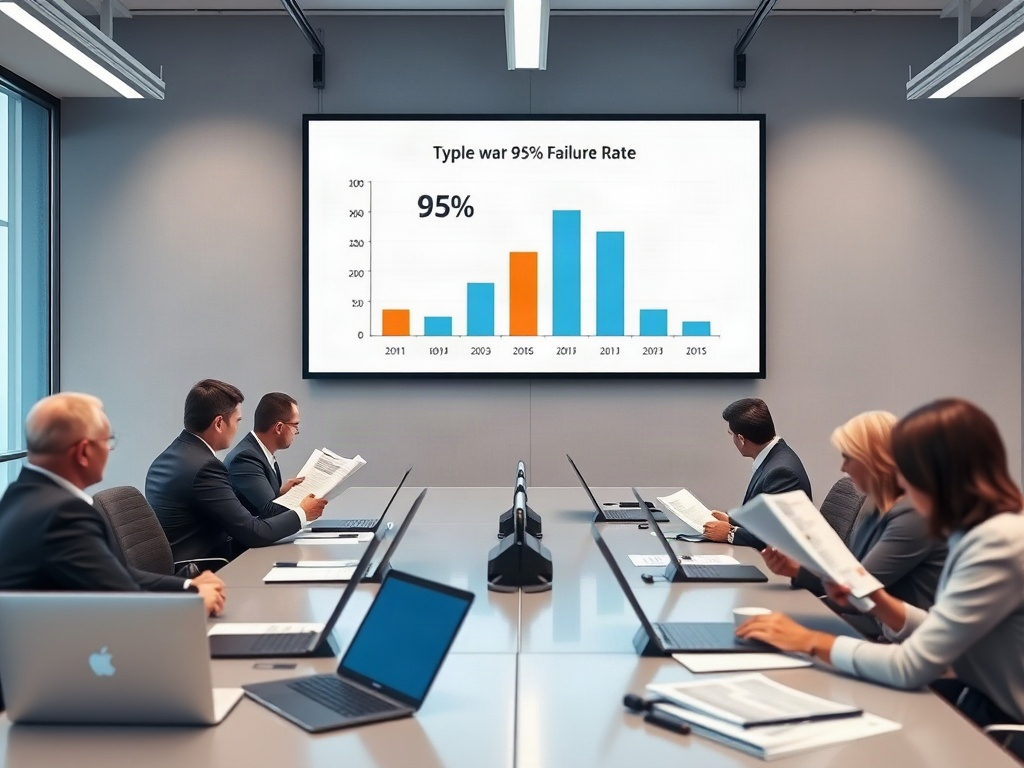
95% of Enterprise AI Pilots Fail to Deliver Results — and the Problem Isn't the Technology
The figure is hard to ignore: 95% of enterprise generative AI pilots produce no measurable financial impact. This isn't a pessimistic estimate from tech skeptics — it's the central finding of The GenAI Divide: State of AI in Business 2025, produced by MIT's NANDA initiative, based on nearly 300 public implementations and more than 150 executive interviews.
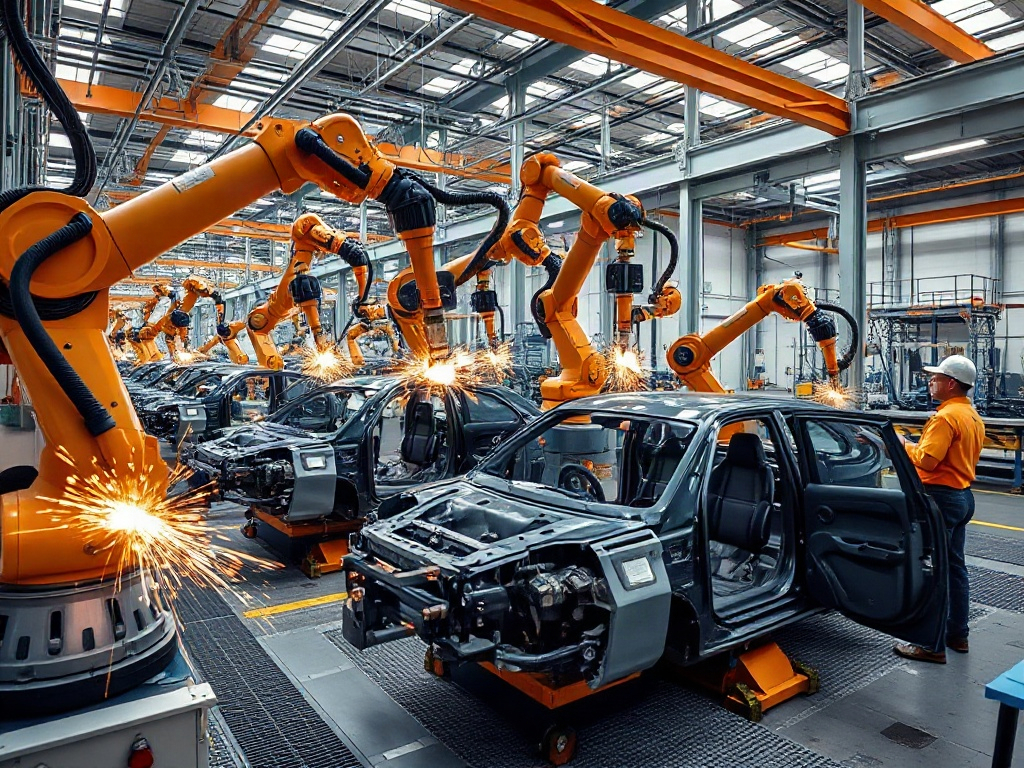
Why Manufacturing Without Robots Is No Longer a Financially Viable Option
There is a number worth reading twice: 542,000 industrial robots installed in factories during 2024, more than double the number installed a decade ago. This is not a trend statistic; it is a snapshot of a threshold already crossed. The global operational stock of industrial robots reached 4.66 million units, growing nearly 9% year-on-year, and the International Federation of Robotics projects that installations will exceed 575,000 units in 2025.

In Enterprise AI, the Winner Isn't the One With the Biggest Model
There's a conversation that leadership teams in heavy industries have been putting off for years. It's not about technology. It's about what it means, precisely, to make a good operational decision when the data supporting it lives scattered across twelve different systems, four siloed departments, and a maintenance history that nobody has fully digitized.
FAQ
Business Transformation
What kind of transformation is worth following here?
Transformations where an organisation materially changes how it allocates resources, coordinates teams, distributes leadership, or finances new bets.
Why do so many companies mistake transformation for communication?
Because it is easier to narrate a new phase than to change incentives, structures, and rhythms of work. Transformation begins when the internal architecture changes, not when the slogan does.
What signals show that a transformation is serious?
Material capital reallocation, new coordination mechanisms, distributed leadership, operating discipline, and decisions that affect daily functioning, not just outward image.

When Growth Stops Being Your Advantage and Becomes Your Trap
There is a precise moment in the life of any growing organisation where the very practices that built its success begin to undermine it. It is not a dramatic moment. There is no meeting where someone declares that the model no longer works.
Ricardo Mendieta9 min
The Talent India Cannot Find Is Threatening Its Most Valuable Business
The dominant narrative around Global Capability Centers in India has, for the past decade, been an almost unqualified success story. Nineteen hundred operational centers, presence across eight industries, ambitions to reach one hundred billion dollars in economic contribution. And yet, beneath that accelerated growth, there is a fracture the sector has been struggling to process for months: the talent profile GCCs need today no longer matches the talent India produces in sufficient quantity.
 Valeria Cruz9 min
AI Spending Rose 110% and the Underlying Systems Couldn't Keep Up
ServiceNow has been measuring AI maturity in large enterprises for three years. In 2026, the index they build from surveys of more than 4,500 executives and 2,000 employees worldwide recorded a notable improvement: a 16-point advance, reaching 51 out of 100. That sounds promising until you read the next line: while corporate AI spending grew 110% year-over-year, the foundational capabilities that AI needs to function at scale simply did not keep pace.
 Sofía Valenzuela7 min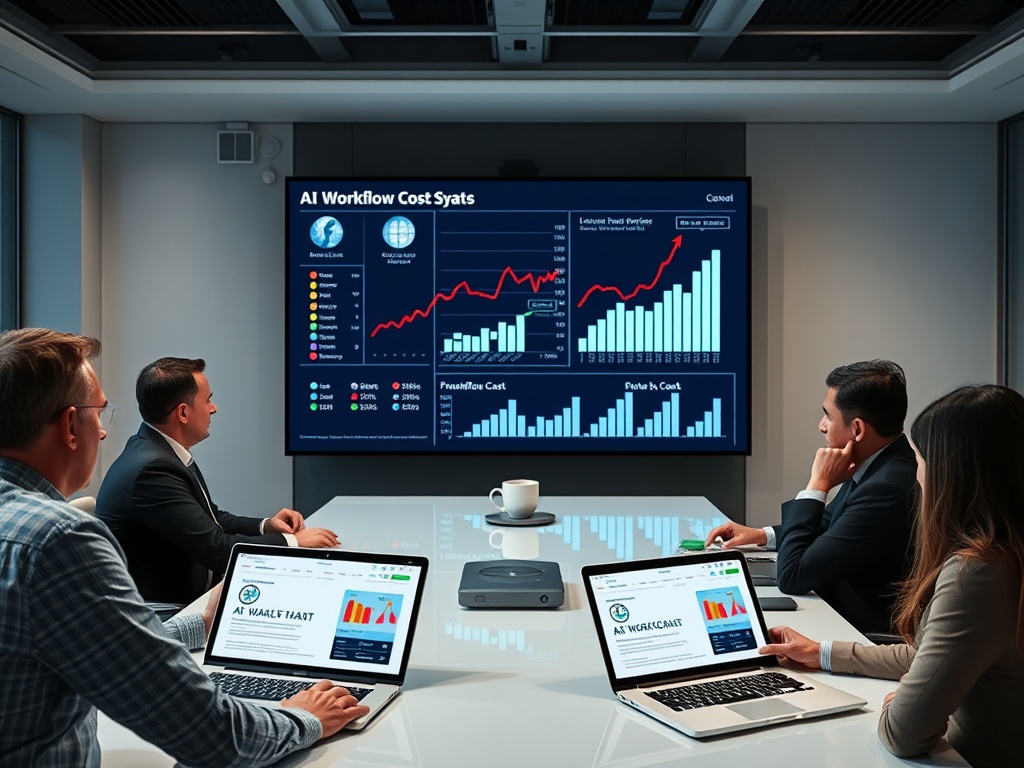
AI Agents Are Already a Line on the Income Statement
There is a distinction that few organizations have fully processed: an AI assistant waits to be spoken to. An agent acts on its own. That difference, which seems technical, carries economic and psychological consequences that are redefining how executives think about their technology budgets and, more quietly, how their teams feel about work.
 Andrés Molina9 min
Your Team's Time Doesn't Belong to You
Hayagreeva Rao, professor of organizational behavior at Stanford Graduate School of Business, recently offered a definition of leadership that holds up better than most books on the subject: 'Great leaders are people who think of themselves as custodians of other people's time.' No war metaphors. No references to transformational vision or charisma as a managerial asset.
Ricardo Mendieta8 min
Millions in Funding, Undefined Transformation: The Structural Problem of AI in the C-Suite
There is a line in almost every corporate budget right now. It has a name like 'AI transformation' or 'intelligent automation.' But behind that line, in many organisations, there is no clear definition of what success looks like, who is responsible, or how progress will be measured. This is the structural problem of AI at the top level of leadership.
Valeria Cruz9 min
Enterprise AI Pipelines Don't Lose Money on Tokens: They Lose It Before
There comes a moment when the accumulation of artificial intelligence pilots stops looking like ambition and starts looking like disorder. That moment arrived for many large enterprises in 2026, and the clearest signal wasn't a technological collapse or a model failure. It was something more mundane and harder to defend in a board meeting: token consumption ran ahead of budget without generating proportional value.
 Ignacio Silva9 min
When Grief Is Read as Poor Performance, the Problem Isn't the Employee
There is a conversation that most leaders avoid with almost surgical precision. Not the one about unmet goals, nor the difficult dismissal. There is another, quieter and more costly: the one about the employee who lost someone and simply stopped performing the way they used to.
 Simón Arce8 min
The AI Triathlete and the Problem Nobody Wants to Name in the Boardroom
There is a phrase that repeats in almost every executive committee meeting where artificial intelligence projects are reviewed: 'the pilot was successful.' And then, silence. Nobody asks why the pilot never became anything else. The organization celebrates the experiment, files away the learnings, and three months later launches another pilot.
Ricardo Mendieta9 min
Agent Gateways Are Concentrating Power Over All Enterprise AI
There is a pattern that repeats every time a technology moves from experiment to critical infrastructure: at some point, a control layer emerges that no one had formally planned, but which ends up being the place where the most important decisions are made. It happened with load balancers on the web, with control planes in the cloud, and with service meshes in the microservices era. Now it is happening with artificial intelligence agents, and the name that layer is taking is agent gateway.
 Isabel Ríos9 min
Why 65% of Companies Rewrite Their Model Every Two Years and Still Fail to Execute It
There is something revealing about the fact that a survey of more than 700 senior executives across 12 countries produces as its central finding a gap that any chief operating officer would recognize instantly: organizations know they must change, approve the change, frame it within a strategy, and then go no further. The Project Management Institute has just published the results of that research, alongside a Business Agility Manifesto developed in collaboration with Agile Alliance, and the numbers that emerge are not those of an industry in the process of maturing. They are those of an industry with a structural design problem that has gone without precise diagnosis for years.
Ignacio Silva9 min
Companies Spend Trillions on AI and Reap Pennies
There is a number that should be on the desk of every CFO signing an artificial intelligence budget today: 40%. That is the proportion of companies that, according to a recent Bain & Company survey of 951 large global corporations, measured their real AI savings and found them in the range of zero to ten percent. Not because the technology failed in production. But because the promised value never managed to become captured value.
Valeria Cruz8 min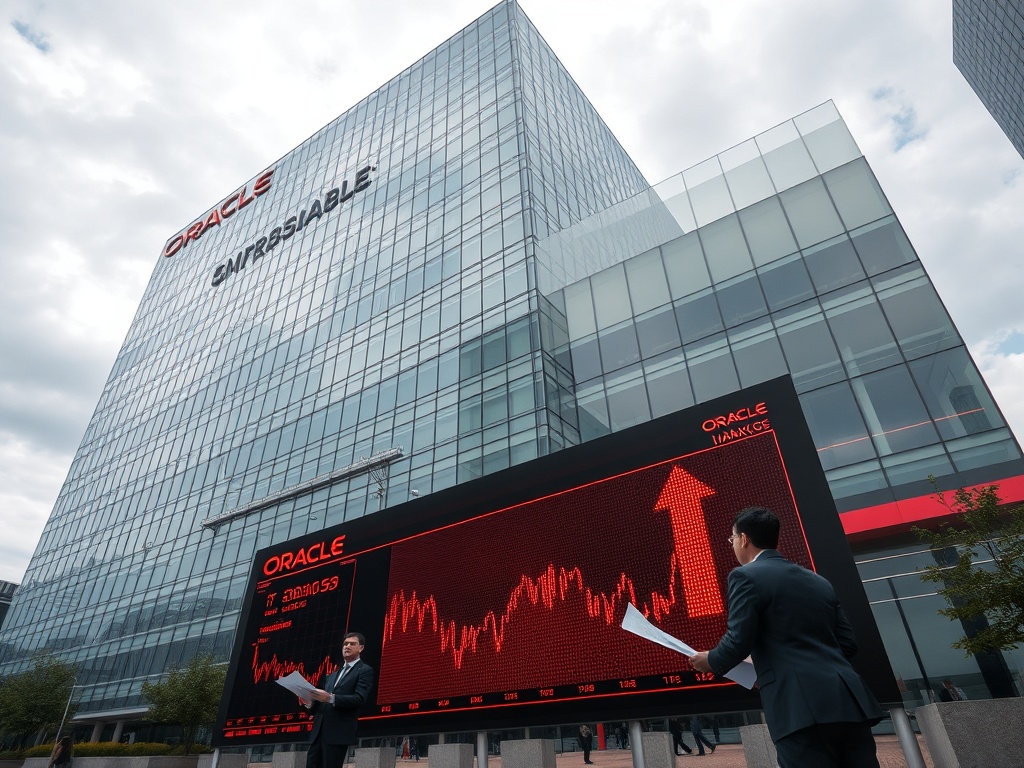
Oracle Bet Everything on AI and Now Pays the Price for Not Being Amazon
A 19% drop in a single week is not market noise. It is the market reading aloud something the numbers had been trying to say for months. Oracle just recorded its worst stock market week since August 2001, when the dot-com bubble was deflating and the share prices of many tech companies reflected nothing but the collapse of their business models.
 Francisco Torres9 min
Enterprise AI Has Been Deployed for Years and Barely One in Five Executives Knows What They Have
More than half of the world's large organizations already have generative artificial intelligence operating somewhere in their business. That is a documented fact. What is not so easily documented is what lies beneath that statistic: systems processing sensitive data without anyone having defined who oversees them, autonomous agents making decisions within workflows that no security team has audited, and governance layers that arrived late or never arrived at all.
Simón Arce9 min