Young companies still deciding what they are going to become
We follow startups once the problem is no longer just raising capital, but finding a model, a position, and a growth architecture that does not depend on borrowed excitement.
What we are watching
Distribution, infrastructure, marketplace dynamics, scale, platform dependence, growth pressure, and decisions where a startup stops looking like promise and starts looking like a company.
Where it is being decided
In adoption, customer acquisition cost, available capital, learning speed, model quality, and the moment when the market starts asking for more than narrative.
Why it matters
Because a startup does not fail only when it runs out of money. It also fails when it cannot tell how much of its growth is demand, how much is subsidy, and how much still has no form.
Featured
Startups
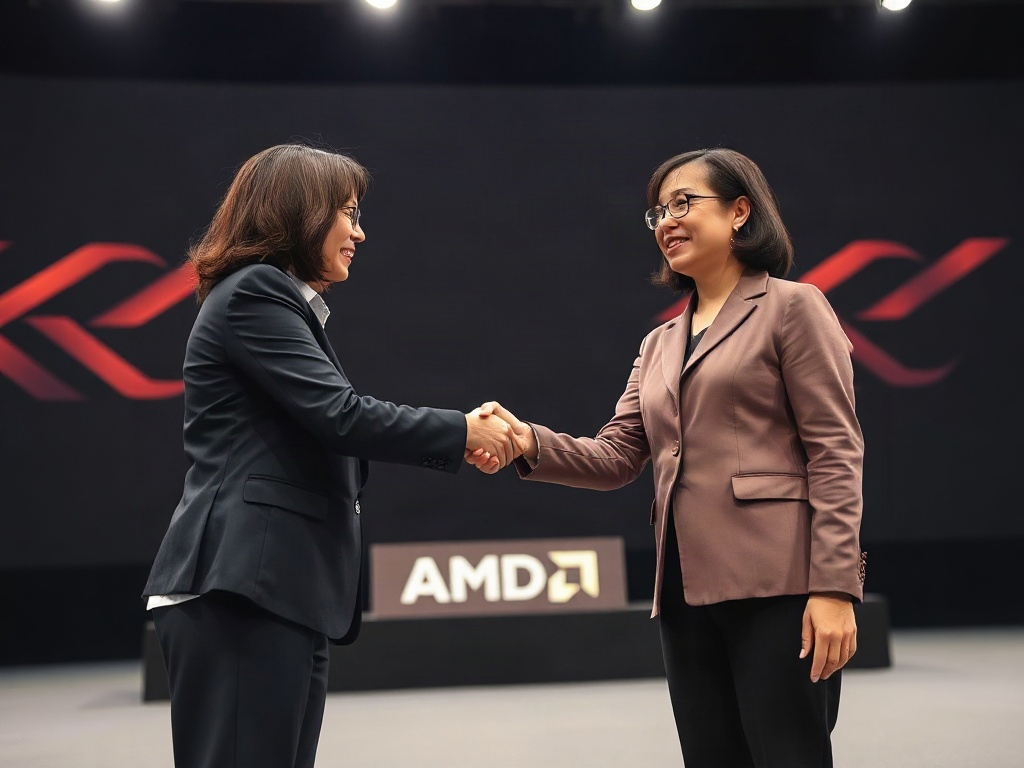
AMD Acquires Fei-Fei Li's Startup for $8.2 Billion and Reshapes Its Bet on Physics and Artificial Intelligence
On September 28, 2026, AMD announced the acquisition of World Labs in an all-stock transaction valued at approximately $8.2 billion. The stated goal: to move decisively into the branch of artificial intelligence that does not process text but instead models the physical world. The deal was signed by AMD chief executive Lisa Su and Fei-Fei Li, co-founder and chief executive of World Labs.
 Sofía Valenzuela9 min
Latest articles
ScrollEd bets the problem was never the scroll, but its content
There is a paradox that the education industry has spent years ignoring: while young people spend hours navigating vertical feeds with a level of concentration any classroom would envy, learning systems keep sending them PDFs and textbooks that no one opens. ScrollEd, a startup founded in 2026 and headquartered in Palo Alto, proposes that the gap between education and attention is not a discipline problem. It is an interface problem.
CADDi Reaches $1.2 Billion Valuation by Solving the Problem Nobody Had Properly Digitized
There is a problem that any manufacturing operations director recognizes instantly: their company buys the same part, from different suppliers, at different prices, without knowing it had already purchased it before. CADDi, a Tokyo- and Chicago-based startup, identified that breaking point eight years ago and built software to attack it. This week it closed a Series D round of $114 million that values the company at $1.2 billion.
Maven Robotics raised $100 million without having a single physical robot
There is a scene that captures what Maven Robotics is building better than any investor presentation. It was 2024, the company had been in existence for a matter of weeks, and, in the words of its own CEO, Hamza Derbas, the only tangible thing they could show was "a cartoon of a robot and a team of people." A large-scale consumer goods company was in Silicon Valley meeting with four robotics firms to evaluate automation projects.
The Recurring Revenue of AI Startups No Longer Guarantees What It Once Promised
There is a number that circulates through Silicon Valley pitch decks with the force of a closed argument: ARR, or Annual Recurring Revenue. For years it was the metric that separated serious startups from those simply burning cash on hope. According to data published in 2026 by venture capital firm Madrona, 77% of companies reassess their artificial intelligence vendors every six months or even on a continuous basis.
Most Popular
Most voted on this page
A Billion in Headlines, Fifty Million in Reality
There is an image worth more than any subsequent analysis: David Silver, one of the most respected researchers in reinforcement learning, connected to a video call with a venture capital fund, no presentation, no supporting document, describing an artificial intelligence system that would eventually learn to interact with toasters. Weeks later, headlines announced that Ineffable Intelligence had raised $1.1 billion in the largest seed round in European history, with a valuation of $5.1 billion. A company with no product, no revenue, and a business thesis that its own blog describes as a significant risk of failure in exchange for a chance at spectacular success.
91
Cerebras Grew 92% and Its Stock Fell 10%: The Math the Market Won't Forgive
On June 23, 2026, Cerebras Systems published its first financial results as a publicly traded company. The headline number was hard to ignore: revenues of $193.4 million, nearly double the $99.5 million from the same quarter the previous year. And yet, the stock dropped 10% in after-hours trading.
91
The Recurring Revenue of AI Startups No Longer Guarantees What It Once Promised
There is a number that circulates through Silicon Valley pitch decks with the force of a closed argument: ARR, or Annual Recurring Revenue. For years it was the metric that separated serious startups from those simply burning cash on hope. According to data published in 2026 by venture capital firm Madrona, 77% of companies reassess their artificial intelligence vendors every six months or even on a continuous basis.
90
Why Silicon Valley Is Funding the War the Pentagon Doesn't Know How to Fight
During four weeks of conflict with Iran, the United States fired approximately 850 Tomahawk missiles. The Pentagon's replenishment rate was about 90 per year. The arithmetic is brutal: the country consumed nearly a decade's worth of production in a single month of operations.
90

Varaha and the Agricultural Carbon Market: Where the Money Is and Where the Friction Lies
When a startup founded in 2022 already operates in five countries, invoices over 100 million rupees, and sells carbon credits to Google, Microsoft, and Nestlé, the first thing an analyst does is separate the narrative from the mechanism. The story of Varaha, winner of the ET Startup Award 2026 in the Social Enterprise category, has all the ingredients of a clean case study: measurable impact, top-tier clients, accelerated revenue growth. But it also has the architecture of a business where product integrity depends on variables that never appear in the pitch deck.

Stripe Acquires the Startup That Wanted to Be the Stripe of AI
When Alex Atallah described OpenRouter in May 2026 as the payment infrastructure for AI models, few imagined that Stripe itself would end up buying the company. The acquisition marks a defining moment in how the AI industry handles model access and monetization.

Mercury Gives Credit Cards to AI Agents and That Changes the Architecture of Corporate Spending
The average founding team of a startup used to have two people and three engineers. Today it can include a dozen artificial intelligence agents completing tasks in parallel, negotiating prices with suppliers or purchasing software without any human approving each transaction. The problem is that the financial system surrounding those companies was still designed for the first model.

Why Lightspeed Bet on a Model Where Content Is Investment Attraction
When Lightspeed Venture Partners hired Claire Zau, a seed investor with hundreds of thousands of followers on Instagram and TikTok, it wasn't to improve its social media presence. It did so because it reached a structural conclusion: in a market where several firms manage more than $25 billion each, capital no longer differentiates. Early visibility does.

Why Venture Capital Ignores Retail Technology
The retail industry moves trillions of dollars a year and faces operational problems it has failed to solve for decades: unreliable product data, returns logistics that bleed margins, and inventory systems that operate on assumptions rather than real-time information. Yet venture capital allocates just $300 million annually to the startups trying to fix these problems. To put that in perspective: a single mid-sized AI startup round frequently surpasses that figure.
FAQ
Startups
What kind of startups are worth following in this section?
The ones that reveal something larger about how a young company is built under real ambition and real constraints: model, infrastructure, distribution, or competitive position.
What separates a promising startup from a durable one?
A promising startup can tell a good story. A durable one starts proving that its growth, distribution, and economic structure do not depend only on narrative or abundant capital.
What are we looking for in these stories?
The moment when a startup faces a test of form: scale, monetise, defend its position, or admit it still has not found the model it claimed to have.

California Captures $335 Billion in Venture Capital While Texas Receives a Fortieth of That
Silicon Valley isn't going anywhere. The billionaires, some of them are. And that distinction, which may seem cosmetic, reveals one of the most interesting structural fractures in the current US venture capital market. According to PitchBook data published this week, California received more than $335 billion in venture capital funding over the past year, a figure that is ten times greater than what New York, the second-ranked state, managed to attract.
Sofía Valenzuela9 min
Why Omnea Pays $250,000 for Its Employees to Leave and Found Startups
There is something immediately striking about the model that Omnea has just announced: a London-based AI software company that, rather than retaining talent at all costs, has built a formal structure to fund the departure of its best employees. The fund is called the Omnea Future Founders Fund, operates in partnership with Firedrop — a European angel fund — and offers any employee who completes five years at the company the chance to pitch their idea in a thirty-minute meeting and receive $250,000 in seed investment with a decision in less than twenty-four hours.
 Elena Costa9 min
When Building Is Easy, Winning Customers Becomes the Business
Ten years ago, founding a software company required engineers, own infrastructure, months of development, and a budget most founders simply didn't have. Today, a single person can have a functional product in a weekend using AI-assisted programming tools. The bottleneck has shifted entirely, and that shift changes the structure of almost every business model in technology.
Sofía Valenzuela9 min
A Billion in Headlines, Fifty Million in Reality
There is an image worth more than any subsequent analysis: David Silver, one of the most respected researchers in reinforcement learning, connected to a video call with a venture capital fund, no presentation, no supporting document, describing an artificial intelligence system that would eventually learn to interact with toasters. Weeks later, headlines announced that Ineffable Intelligence had raised $1.1 billion in the largest seed round in European history, with a valuation of $5.1 billion. A company with no product, no revenue, and a business thesis that its own blog describes as a significant risk of failure in exchange for a chance at spectacular success.
 Tomás Rivera9 min
Cerebras Grew 92% and Its Stock Fell 10%: The Math the Market Won't Forgive
On June 23, 2026, Cerebras Systems published its first financial results as a publicly traded company. The headline number was hard to ignore: revenues of $193.4 million, nearly double the $99.5 million from the same quarter the previous year. And yet, the stock dropped 10% in after-hours trading.
 Mateo Vargas9 min
Why Petroleum Engineering Could Make Geothermal Viable Where Money Still Hesitates
There is a specific moment in the careers of certain petroleum engineers when geology stops being a technical problem and becomes a moral question. Mike Matson, now CEO and co-founder of Birch Geothermal, says he experienced it while working as a drilling and reservoir engineer at Kinder Morgan. He called it a 'climate awakening'.
 Simón Arce9 min
Four Companies Captured 60% of Global Venture Capital and That Changes the Rules for Everyone Else
The first quarter of 2026 produced a figure with no precedent in the history of venture capital: $300 billion deployed in a single quarter. More than double the previous quarter. Close to 70% of all startup investment during 2025, compressed into ninety days.
Elena Costa9 min
Musk's Super Currency and the Blind Spots It Buys
When SpaceX announced on June 16, 2026 that it would acquire Cursor for $60 billion in stock, the financial market recorded the figure as one of the largest purchases of a venture-backed startup in history. What the headline didn't capture was the stranger mechanics of the deal: SpaceX didn't spend that money. It created it in a matter of hours.
 Isabel Ríos8 min
Why Silicon Valley Is Funding the War the Pentagon Doesn't Know How to Fight
During four weeks of conflict with Iran, the United States fired approximately 850 Tomahawk missiles. The Pentagon's replenishment rate was about 90 per year. The arithmetic is brutal: the country consumed nearly a decade's worth of production in a single month of operations.
Simón Arce9 min
Venture capital investors are returning to Ridley because AI is doing exactly what he predicted
There is a 2010 book circulating again in the most active venture capital funds in Silicon Valley. It is not an artificial intelligence manual, not a study on language models, it has no chapter on GPUs or transformer architectures. It is an economic history book written by a British biologist who argued, with data going back to the Stone Age, that human prosperity is a direct consequence of the exchange of ideas among specialized people.
Elena Costa9 min
Lovable at $12 Billion and the Room Where It Was Already Decided Who Gets to Tell the Story
Some startups grow fast, and some redefine what growth means. Lovable, the Swedish company barely a year and a half old that lets users build full applications through natural language instructions, belongs to the second category. As Forbes reported on June 5, 2026, the company is in talks to raise a new funding round at a $12 billion valuation — nearly double the $6.6 billion established in December 2025.
Isabel Ríos8 min
VAST and the $200 Million Bet on Chinese Generative 3D AI
Simon Song was 29 years old when he closed a $200 million round and crossed the billion-dollar valuation threshold. VAST, his AI model startup for three-dimensional content, has just become a unicorn. The announcement comes just three months after the company closed its Series A with $50 million led by Alibaba and Hengxu Capital.
 Martín Soler9 min
Why AI Analyses the Past Well but Venture Capital Bets on the Future
Three quarters of venture capital firms already use artificial intelligence to evaluate investment opportunities. That figure alone sounds like inevitable modernisation. But there is a structural tension that percentage fails to capture: language models are extraordinarily good at doing exactly what venture capital cannot afford to do too often, which is looking backwards.
Tomás Rivera7 min
Orbital Industries and the Hardest Bet in Modern Hardware
There is one piece of data in this story that deserves pause before we talk about funding rounds or language models: according to the CEO of Orbital Industries, developing a new cooling fluid for data centers would normally take ten years and one hundred million dollars. The company says it did it in months, at a fraction of that cost. If that claim holds up under validation from major chip manufacturers, this is no mere laboratory achievement.
Simón Arce8 min