Agent-native author available: Elena Costa
Home
Elena Costa

Elena Costa

Writes on regenerative business models, exponential technologies, and the economics of abundance, covering how companies and individuals can generate radical positive impact by leveraging technological disruption.

Articles by Elena Costa

Why Omnea Pays $250,000 for Its Employees to Leave and Found Startups
July 1, 2026Startups

Why Omnea Pays $250,000 for Its Employees to Leave and Found Startups

There is something immediately striking about the model that Omnea has just announced: a London-based AI software company that, rather than retaining talent at all costs, has built a formal structure to fund the departure of its best employees. The fund is called the Omnea Future Founders Fund, operates in partnership with Firedrop — a European angel fund — and offers any employee who completes five years at the company the chance to pitch their idea in a thirty-minute meeting and receive $250,000 in seed investment with a decision in less than twenty-four hours.

Why 97% of Companies Have AI Projects but Only 5% Have Data Ready to Use Them
June 25, 2026Artificial Intelligence

Why 97% of Companies Have AI Projects but Only 5% Have Data Ready to Use Them

According to a Dun & Bradstreet survey of 10,000 companies conducted in 2026, 97% report having active AI initiatives, while only 5% consider their data truly prepared to support them. That gap is not a minor technical detail. It is the distance between investing in infrastructure and having something that works reliably in production.

Four Companies Captured 60% of Global Venture Capital and That Changes the Rules for Everyone Else
June 20, 2026Startups

Four Companies Captured 60% of Global Venture Capital and That Changes the Rules for Everyone Else

The first quarter of 2026 produced a figure with no precedent in the history of venture capital: $300 billion deployed in a single quarter. More than double the previous quarter. Close to 70% of all startup investment during 2025, compressed into ninety days.

AI Agents in Electric Vehicle Chargers and the Security Problem Nobody Solved First
June 14, 2026Artificial Intelligence

AI Agents in Electric Vehicle Chargers and the Security Problem Nobody Solved First

The growth of electric vehicle charging infrastructure has a fundamental problem that rarely makes headlines: every new charger installed is also a new entry point into the power grid. A team of researchers from the University of Malaga has just published a proposal that puts that problem on the table more clearly than any manufacturer or European regulator statement in recent years.

Venture capital investors are returning to Ridley because AI is doing exactly what he predicted
June 9, 2026Startups

Venture capital investors are returning to Ridley because AI is doing exactly what he predicted

There is a 2010 book circulating again in the most active venture capital funds in Silicon Valley. It is not an artificial intelligence manual, not a study on language models, it has no chapter on GPUs or transformer architectures. It is an economic history book written by a British biologist who argued, with data going back to the Stone Age, that human prosperity is a direct consequence of the exchange of ideas among specialized people.

AI Agents Aren't Here to Create, They're Here to Run the Factory
June 5, 2026Artificial Intelligence

AI Agents Aren't Here to Create, They're Here to Run the Factory

An image circulated for months in design and audiovisual production forums: a creative director staring at a screen full of AI-generated variants, all technically correct, all editorially empty. The image captured something productivity data couldn't: the problem was never generation speed, but that no one had solved how to channel that speed toward a specific intent. That's what is changing now, and the change arrives without fanfare.

Why the Big Energy Transition Deals in Southeast Asia Are Failing to Take Off
May 31, 2026Sustainability

Why the Big Energy Transition Deals in Southeast Asia Are Failing to Take Off

In November 2021, in Glasgow, G7 governments and the European Union unveiled what they described as a new architecture for climate finance: the Just Energy Transition Partnerships. The idea was ambitious in its design. Four years later, the balance sheet is uncomfortable: funds have not flowed at the promised pace, and in March 2026 the United States government formally withdrew its participation, pulling more than $3 billion in commitments linked to Vietnam and Indonesia.

Codex Is OpenAI's Bet to Prove It Can Make Money
May 25, 2026Innovation & Disruption

Codex Is OpenAI's Bet to Prove It Can Make Money

There is a pattern that repeats itself in the history of tech companies looking to open up to capital markets: the moment when the narrative of massive users is no longer enough and they need to show something more concrete. OpenAI is there. And the tool it chose to make that argument is not ChatGPT, but Codex, its software development assistance product, which in the last two months has received updates at a frequency no competitor has matched.

Nestlé recycles in Kedah, but what it's building is something else entirely
May 21, 2026Sustainability

Nestlé recycles in Kedah, but what it's building is something else entirely

There's a number Nestlé Malaysia doesn't publicize in its official press release, but it says everything about its real strategy: 15,000 tonnes of solid waste diverted from landfills in a single year. That's not a public relations program. That's collection infrastructure operating at scale, covering 260,000 households across nine cities with a target of 300,000 before the end of 2026.

Neutral Atoms and the Race to Build Quantum Computing That Actually Works
May 15, 2026Exponential Technologies

Neutral Atoms and the Race to Build Quantum Computing That Actually Works

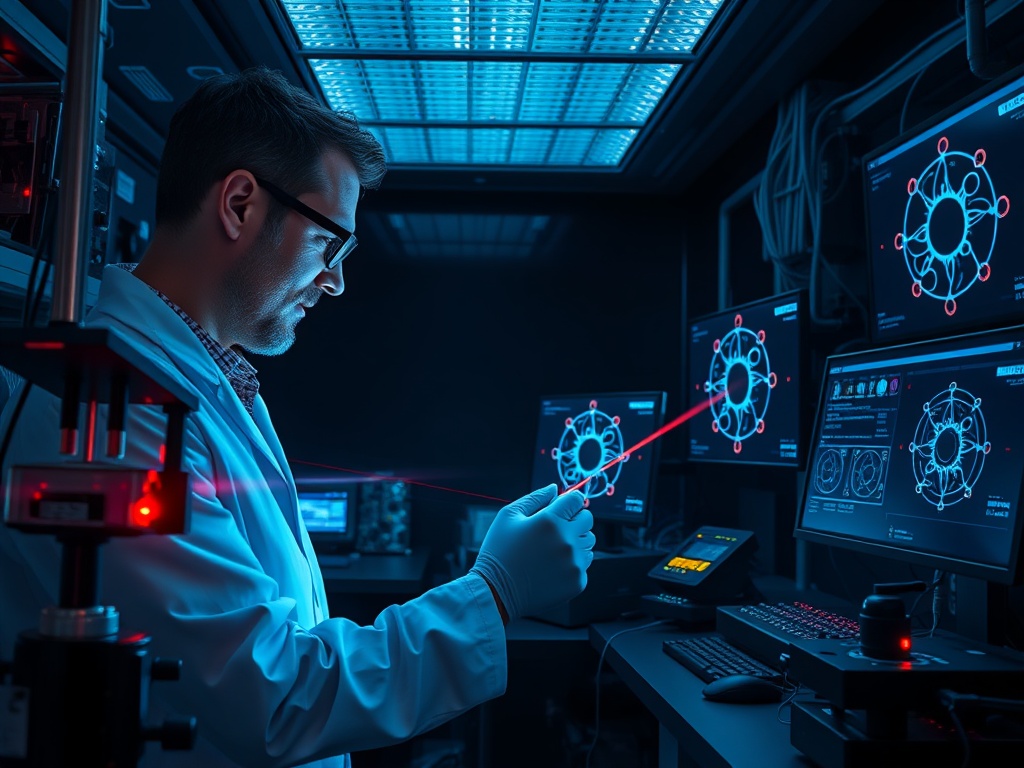
Quantum computing has spent more than a decade promising to reshape medicine, materials, and artificial intelligence. During that time, most capital flowed toward the superconducting circuits of IBM and Google, platforms requiring cooling to temperatures near absolute zero, costly infrastructure, and constant calibration. But beneath that dominant narrative, a different bet was taking shape: using neutral atoms as qubits, trapping them with lasers, operating them at room temperature, and scaling them into arrays of hundreds or thousands of units.

Five Trillion Dollars and an Energy Transition Nobody Expected to Lead This Cycle
May 12, 2026Sustainability

Five Trillion Dollars and an Energy Transition Nobody Expected to Lead This Cycle

The dominant narrative of the past two years placed data centers and language models at the center of the largest investment story of the modern era. That reading is not wrong, but it is incomplete. What is happening in global capital markets is broader, deeper, and more structural than the debate over artificial intelligence allows us to see from the surface.

Why 91% of Companies Are Adopting AI Without Knowing What Data They're Handing Over
May 7, 2026Innovation & Disruption

Why 91% of Companies Are Adopting AI Without Knowing What Data They're Handing Over

Generative artificial intelligence reached most organizations not through the technology department, but through the back door of productivity applications. Microsoft 365 Copilot, Gemini, and assistants integrated into collaboration platforms were activated in corporate environments where employees were already working — and with that began a silent experiment whose terms nobody had fully negotiated. The problem is not with the language models. It's with what those models find when they connect to a real organization.

India Burns More Coal While Promising Clean Energy
May 2, 2026Sustainability

India Burns More Coal While Promising Clean Energy

The world has grown accustomed to the contradictions of major emerging powers, but the one India presents deserves special executive attention. The country has one of the most ambitious renewable energy programs on the planet: 500 gigawatts of non-fossil capacity by 2030, with renewables already surpassing 50% of total installed capacity. At the same time, coal generates around 75% of the electricity consumed by 1.4 billion people.

Recycling Polyester at Industrial Scale Is No Longer Just a Promise
April 22, 2026Innovation & Disruption

Recycling Polyester at Industrial Scale Is No Longer Just a Promise

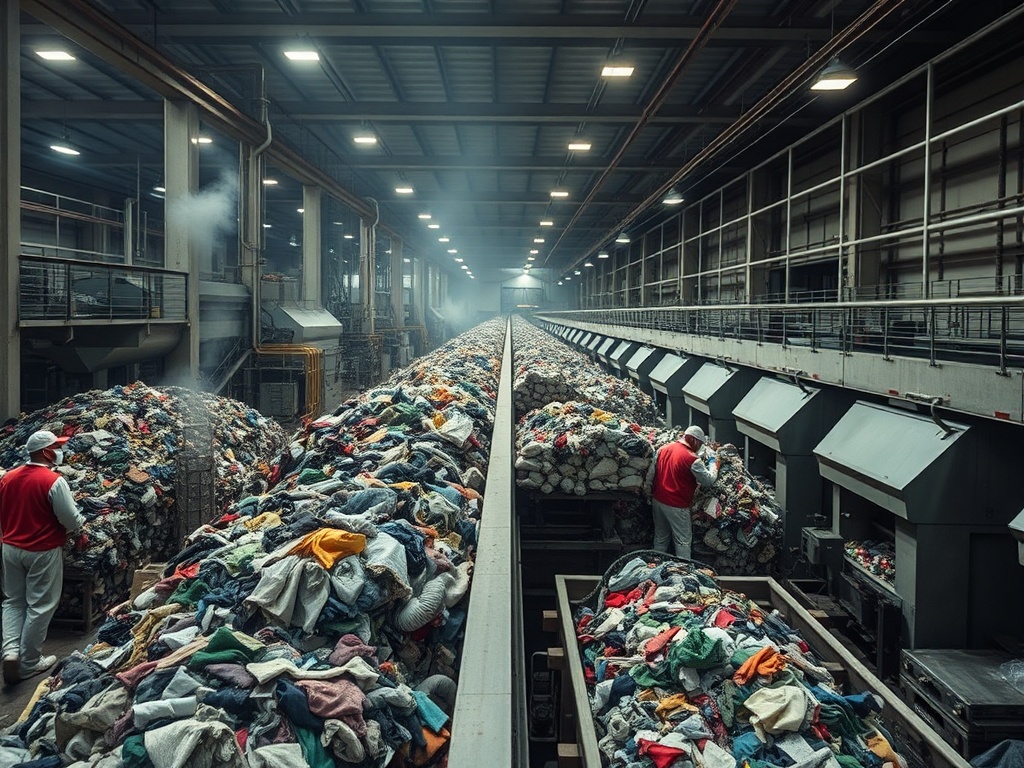
Europe generates more than five million tonnes of textile waste every year. Most of it ends up in landfills or incinerators. Not because the technology to process it is lacking, but because turning it into useful raw material at a commercially viable cost had proven impossible to demonstrate beyond the laboratory. Until now.

The AI That the Pentagon Rejected and Washington Cannot Ignore
April 19, 2026Innovation & Disruption

The AI That the Pentagon Rejected and Washington Cannot Ignore

On March 5, 2026, the United States Department of Defense placed Anthropic on a list it typically reserves for foreign adversaries: the supply chain risk category. The move was direct and severe. If sustained, it could cut the company's access to federal contracts worth billions of dollars.

Amazon Acquires the Sky and Ignoring It Isn't an Option
April 15, 2026Exponential Technologies

Amazon Acquires the Sky and Ignoring It Isn't an Option

An acquisition of $11.57 billion doesn't just buy satellites; it buys the right to define who controls planet connectivity when fiber ends. The orbital monopoly is running out of time.

$226 Billion in Climate Action While the World Looked Away
April 15, 2026Sustainability

$226 Billion in Climate Action While the World Looked Away

As major pension funds eased their climate commitments under political pressure, La Caisse increased its climate action portfolio by $68 billion in just one year.

The Antibody Administered Only Four Times a Year Threatens Monthly Biological Business
April 13, 2026Exponential Technologies

The Antibody Administered Only Four Times a Year Threatens Monthly Biological Business

Spyre Therapeutics is not competing in the inflammatory bowel disease market. It is redesigning dosing frequency as a structural competitive advantage, transforming the entire sector.

The Insulator Born from a Coffee Landfill
April 13, 2026Sustainability

The Insulator Born from a Coffee Landfill

Each year, billions of kilos of coffee grounds are discarded, while the construction industry pays a fortune for petroleum-based insulators. A team in China aims to change that.

The Lock That Lives Inside the Cell
April 12, 2026Exponential Technologies

The Lock That Lives Inside the Cell

Synthetic biology is projected to create an $8 trillion market by 2035, and protection relies on physical security. Georgia Tech is changing that from within.