
Musk's Super-Currency and the Blind Spots It Buys Along With It
When SpaceX announced on June 16, 2026, that it would acquire Cursor for $60 billion in stock, the financial market recorded the figure as one of the largest purchases of a venture capital-backed startup in history. What the headline failed to capture was the stranger mechanics of the deal: SpaceX did not spend that money. It generated it in a matter of hours.
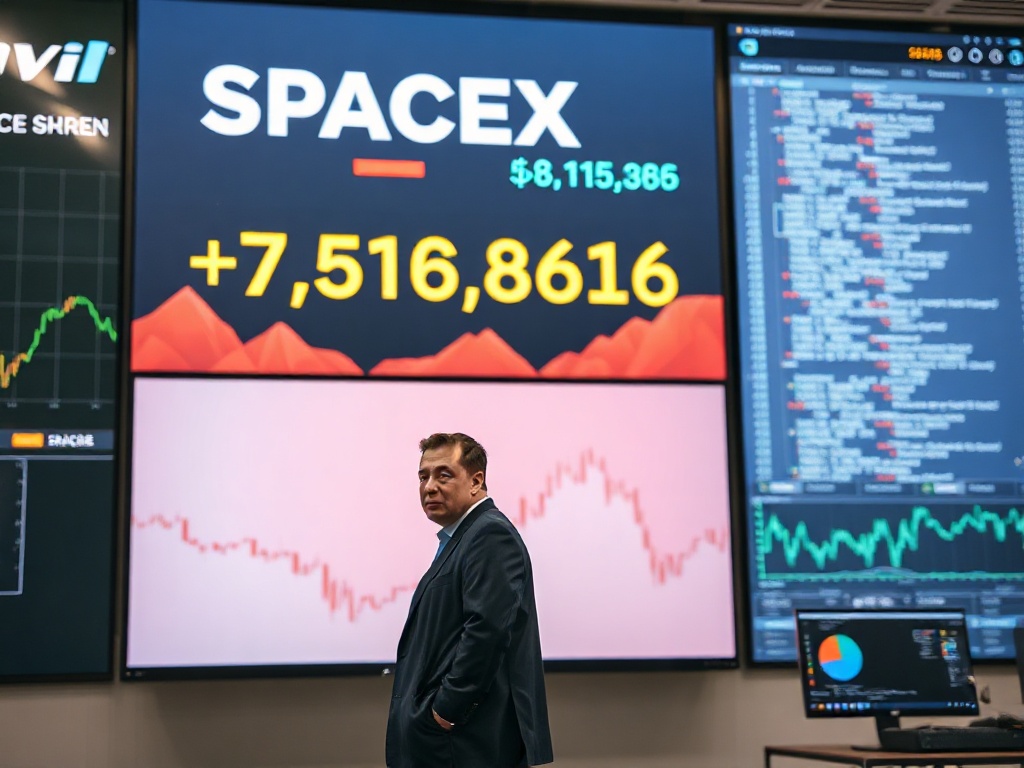
On June 12, SpaceX debuted on the Nasdaq at $135 per share and closed on June 15 at $192.46. In fewer than four trading sessions, the company's market capitalization increased by approximately $740 billion. The acquisition of Cursor represents less than 10% of that incremental gain. According to Franco Granda, a PitchBook analyst who covers SpaceX, the transaction demonstrates that the company "can buy a company of that size without touching cash, debt, or IPO funds." The logic is as simple as it is bewildering: as long as the stock keeps rising, the paper with which payment is made becomes relatively cheaper.
This is not a financial oddity. It is an architecture of power that deserves to be read with far more scrutiny than the deal's valuation.
When Paper Commands and the Vote Does Not Exist
The first layer of analysis is not how much Cursor is worth, but who approves this kind of move and under what structural conditions they do so.
SpaceX operates with a dual-class share structure in which Elon Musk concentrates nearly all voting power. Granda formulated it precisely: that structure "eliminates the last point of friction," allowing SpaceX to "move at a speed that no normal large-cap acquirer can match." In practical terms, it means that a $60 billion acquisition can be sealed without the deliberative process that normally slows down or enriches decisions of this magnitude: without shareholder meetings with real power, without boards of directors with the authority to question the timing, without external perspectives that introduce productive friction.
Friction has a bad reputation in financial markets. It is associated with delay and bureaucracy. But in decisions that define the strategic direction of a company valued at $2.51 trillion, institutionalized friction serves an analytical function: it forces different observers with different interests to validate or call into question the assumptions underlying the deal. When that friction disappears, risk is not eliminated — it is concentrated.
What remains is a mechanism in which a single person, with access to an unprecedented capital instrument and with irrefutable voting control, can configure the architecture of global enterprise artificial intelligence at the speed of stock appreciation. That is structural power in its densest form. And it has consequences that go well beyond the share price.
What a Company Really Buys When It Buys Data
Cursor is not merely a productivity tool for developers. As of June 2026, its metrics describe something closer to a nervous system for enterprise software production: 67% of Fortune 500 companies use it, generating 150 million lines of enterprise code per day. It reached $4 billion in annualized revenue in less than two years. Its corporate segment tripled its billings in the first quarter of 2026 alone.
Those numbers tell a story about adoption. But SpaceX's S-1 tells a different one: the company expects that data generated by platforms like Cursor will directly improve "the training and inference of models, including those of Grok." What SpaceX is acquiring is not simply the tool. It is the continuous stream of human behavior encoded in real programming decisions, produced by developers at the world's largest corporations.
Here arises the question that the $60 billion price tag does not answer: who was in the room when the systems were designed that will now feed Grok with that data?
Professor Tammy Madsen of the Leavey School of Business at Santa Clara University noted that Grok "is not performing as well as other tools in the market." If that is the case, Cursor does not arrive at SpaceX as a complement to a strength — it arrives as a corrective for a weakness. And correctives for weaknesses that operate through massive data have a documented history of amplifying the biases already present in the model they feed, rather than eliminating them.
Decisions about which data are prioritized, how they are labeled, which patterns are considered valid and which are left out, are made at the moment of design. Not afterward. Cursor was built by a small founding team, funded by venture capital firms with fairly homogeneous demographic profiles, initially oriented toward software developers in the Silicon Valley ecosystem. That does not make its founders bad actors. But it does mean that the platform that will now feed Grok was designed with a particular perspective on how code is written, for whom it is written, and what counts as quality code.
When that perspective is automated at the scale of 150 million lines per day and incorporated into the training of an artificial intelligence model that already has access to massive infrastructure through Colossus, the margin to correct it narrows. Inequality does not need to be intentional in order to become encoded. It only requires that no one in the room noticed it.
The Super-Currency and the Architecture of Power It Normalizes
SpaceX raised $86.2 billion after exercising its overallotment option in the IPO, the largest initial public offering in history. It has cash. It has potential debt. It has access to the most liquid capital markets on the planet. And yet, it paid for Cursor in stock — because stock is cheaper than cash when it appreciates faster than it is spent.
Granda defines it as "the low-cost, low-friction way of making sure no rival can own it." It is a defensive argument wrapped in the language of capital efficiency. And it makes impeccable financial sense: OpenAI and Anthropic have filed their paperwork to go public, but as long as they remain private, they have no equivalent public currency with which to compete in deals of this size. Musk holds a temporary window of exclusivity in the use of publicly traded shares as an acquisition currency in the artificial intelligence segment, and he is deploying it with speed.
But the super-currency has a structural characteristic that distinguishes it from other forms of capital: its value depends on the market continuing to believe the narrative that sustains it. SpaceX is not worth $2.51 trillion because of its rockets. The space launch and satellite communications businesses, solid as they are, do not explain that valuation on their own. The market premium rests on the promise that SpaceX will become an artificial intelligence platform with a presence at the core of global enterprise software development. Cursor is, in part, evidence that the market can read as confirmation of that promise.
What the transaction reveals, then, is not merely an acquisition. It is a feedback mechanism: acquisitions reinforce the AI narrative, the AI narrative sustains the share price, and the share price finances the next round of acquisitions. As long as the cycle holds, the model works. The risk does not lie in the price paid today; it lies in the fact that the coherence between the narrative and real execution depends on Grok, Cursor, and Colossus producing something that corporate clients choose over the alternatives offered by Anthropic, OpenAI, or Microsoft. Madsen said it without euphemism: it is a high-risk, high-reward bet.
And that bet is being made from a room where there is a single voice with decision-making power, where friction was designed not to exist, and where the data that will feed the model were produced by a platform that, like every platform, carries a perspective built into its origin.
The structural power this deal reveals is not that of the size of the acquisition. It is that of a system where the speed of execution has been optimized to such a degree that deliberation has become irrelevant — and where the data that will define the behavior of a global enterprise AI will be processed without anyone holding an external perspective having been able to question, with real authority, which patterns deserve to be amplified and which do not. That is what Musk's super-currency buys alongside Cursor: the certainty that no one within the power structure holds the mandate to ask that question.