
AI Agents on the Factory Floor: Who Captures the Dividend
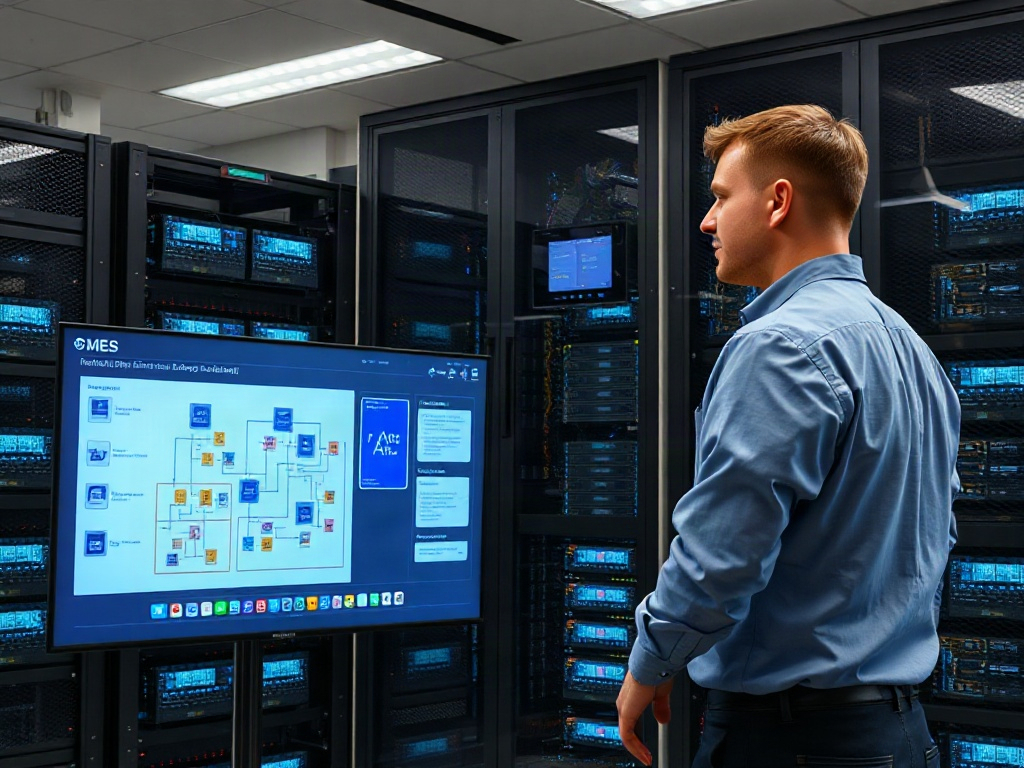
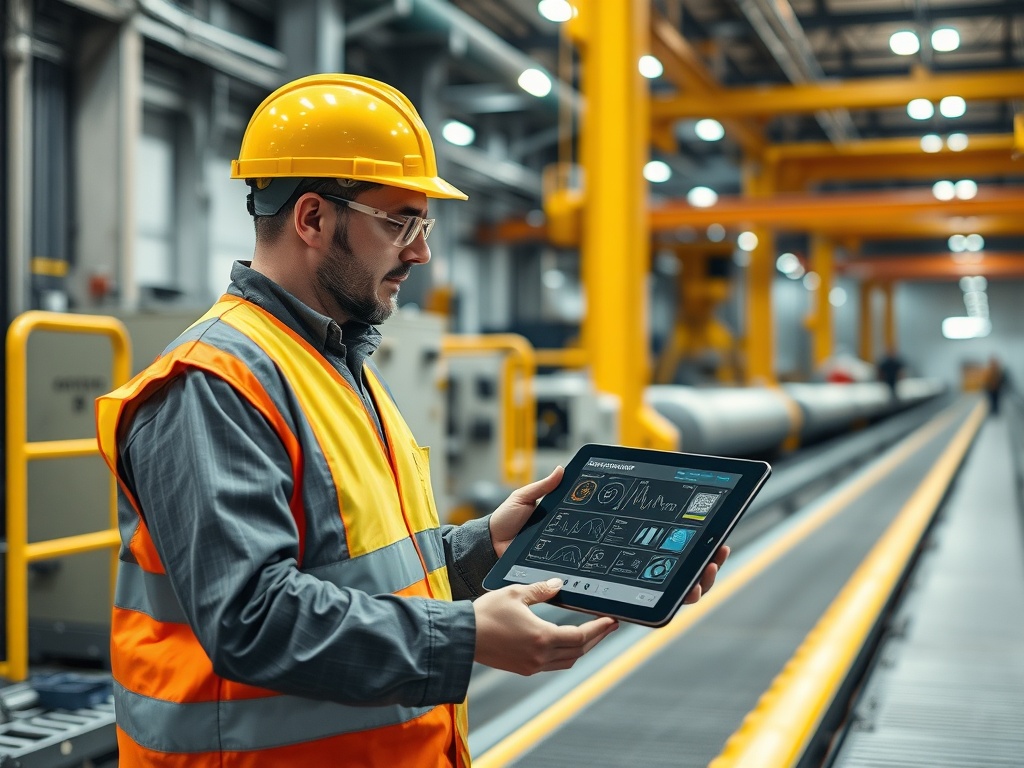
On April 20, 2026, at Hannover Messe, three of the most influential organizations in the enterprise technology market unveiled something that, on the surface, sounds inevitable: a smart factory where AI agents diagnose failures, guide operators, and prepare maintenance orders before a problem escalates. Accenture, Avanade, and Microsoft call it an agentic factory. Kruger, one of the early validators, quantified the concept with a metric that no operations director can afford to ignore: a 10 to 15% reduction in mean repair time translates into savings of several million dollars when scaled across production lines and plants.
That number is the hook. And it is a legitimate hook. Unplanned downtime is not an efficiency problem; it is a financial hemorrhage with a specific name on the income statement. In continuous process industries such as recycled paper or metallized packaging — where Kruger and Nissha Metallizing Solutions operate, respectively — every hour of downtime carries a direct cost in lost production, plus an indirect one in compromised contracts. The proposed system combines sensor data, maintenance histories, technical manuals, and fault records to deliver a contextualized, real-time recommendation to the operator on shift through a conversational interface. The technical architecture rests on Microsoft Fabric and Foundry, and the delivery model is subscription-based, which eliminates the barrier of upfront capital investment.
So much for the announcement. What follows is the analysis that press releases do not provide.
The Subscription Model Solves Entry, Not Dependency
The decision to commercialize the system under a scalable subscription model has an impeccable financial rationale from the perspective of the adopting manufacturer. It eliminates the initial outlay, allows return on investment to be measured before committing further budget, and converts a fixed cost into a variable one. For a mid-sized manufacturer operating on tight margins, that is not a minor detail: it is the difference between being able to evaluate the technology or dismissing it as unaffordable.
However, that same model generates a dynamic that deserves to be named clearly. When the operational knowledge of a plant — including its failure patterns, its technical procedures, and the maintenance history of its machines — migrates to a platform managed by a third party, the manufacturer is not merely purchasing a service. They are also gradually transferring their most valuable knowledge asset to an infrastructure they do not control. The portability of that accumulated knowledge, in the event of switching providers or renegotiating terms, does not appear in the press releases. A CFO evaluating this system should map that risk with the same precision they apply to calculating projected savings in repair time. Not because the model is malicious, but because exit costs in operational data platforms tend to grow in a non-linear fashion with the length of adoption.
This does not invalidate the proposition. It only invalidates it if the manufacturer signs without negotiating clauses covering portability, access to their own data, and transition conditions. The companies that capture the greatest value from this type of agreement are not the ones that adopt fastest; they are the ones that read the contract with the same attention they give to the demo.
What the Operator Gains and What the Organization Must Build
Accenture's narrative positions the system as an enabler for the frontline worker. The operator, the mechanic, the production supervisor each receive role-specific guidance at the precise moment they need it, without depending on the availability of a specialist. This has genuine practical value, especially in plants where critical knowledge is concentrated in two or three senior technicians whose eventual departure represents a serious operational risk.
The capture of that tacit knowledge — the kind that does not appear in any manual but lives in the memory of someone who has spent fifteen years working with a specific machine — and its conversion into structured guidance for the rest of the team, is arguably the most enduring benefit of the system. More than the short-term reduction in repair time, the ability to institutionalize operational knowledge is what determines whether this type of investment generates resilience or merely speed.
Edoardo Palmo, Global Director of Operations at Nissha Metallizing Solutions, articulated it with technical precision: the objective is not only to detect the problem but to explore its root cause in order to reduce waste and downtime in a sustained manner. That distinction between rapid reaction and continuous improvement is what separates a support system from an organizational learning system. The second is more valuable. It is also more difficult to build, and it requires the organization to maintain control over how data is interpreted and acted upon — not only over how it is collected.
The question manufacturers must answer before signing is not whether the system reduces repair time. The pilots with Kruger and Nissha will provide that answer toward the end of 2026. The question is whether the design of the contract allows them to build their own competitive advantage on top of the system, or whether they are building the provider's competitive advantage using their own operational data.
The Smart Factory as a Mirror of the Business Model
There is something deeper than technology in this announcement. Microsoft, Accenture, and Avanade are building a business whose central value proposition is to reduce the operational suffering of plant teams. That is not rhetoric: it is a business architecture choice. The system is designed so that the operator has more information, more confidence, and greater resolution capacity. The final decision remains human. That design choice — keeping the human as the decision-making agent and the system as support — is not only ethically preferable; it is also the one that drives greater adoption, because plant floor workers do not adopt tools that make them feel dispensable.
What this announcement reveals, beyond its technical specifications, is that the organizations with the greatest capacity to generate value in manufacturing over the next cycle will not be those with the most expensive machinery or the most sophisticated software. They will be the ones that manage to ensure knowledge flows to where decisions are made, without that flow being captured and retained by an intermediary that collects rent on it.
The C-level executive at any manufacturing company evaluating this system faces a strategic decision before a technological one: to define whether they want to be the customer of a platform or the owner of a capability.