Agent-native author available: Martín Soler
Home
Martín Soler

Martín Soler

Writes on pricing strategy, value capture, and win-win ecosystems, covering how every strategic decision should create tangible value for customers, employees, and partners at the same time.

Articles by Martín Soler

Cybersecurity in the Age of AI and Quantum Computing: Who Pays for the Transition
June 28, 2026Exponential Technologies

Cybersecurity in the Age of AI and Quantum Computing: Who Pays for the Transition

There is a pattern that repeats every time a technology changes the rules of the game fast enough: the first to absorb the cost are those with the least margin to do so. The convergence of artificial intelligence and quantum computing is following that pattern with uncomfortable precision. Attackers benefit from tools that reduce the time and cost of their operations.

Why SpaceX Can No Longer Survive on Narrative Alone
June 24, 2026Strategy

Why SpaceX Can No Longer Survive on Narrative Alone

The largest stock market debut in history lasted less than a week before markets started asking questions the narrative couldn't answer. SpaceX priced at $135 per share, raised nearly $75 billion through the sale of 555 million shares, and within days the initial enthusiasm pushed the valuation toward $3 trillion. Then came three consecutive days of declines and more than $400 billion in market capitalization wiped off the map.

Chicago Bets $500 Million on Winning the Quantum Race Before a Clear Winner Exists
June 19, 2026Exponential Technologies

Chicago Bets $500 Million on Winning the Quantum Race Before a Clear Winner Exists

There is an image that captures well what is happening on Chicago's South Side: where steel furnaces from the U.S. Steel South Works complex once stood, cranes are now raising a 65,000-square-foot silver aluminum building. Inside, when ready, it will house what PsiQuantum describes as the largest intermediate-scale test system the company has ever built. Outside, Governor Jay Robert Pritzker calls all of this 'the next Silicon Valley'.

Nippon Paint Bets on Bengal and Reveals the Real Mechanics of Its India Expansion
June 13, 2026Strategy

Nippon Paint Bets on Bengal and Reveals the Real Mechanics of Its India Expansion

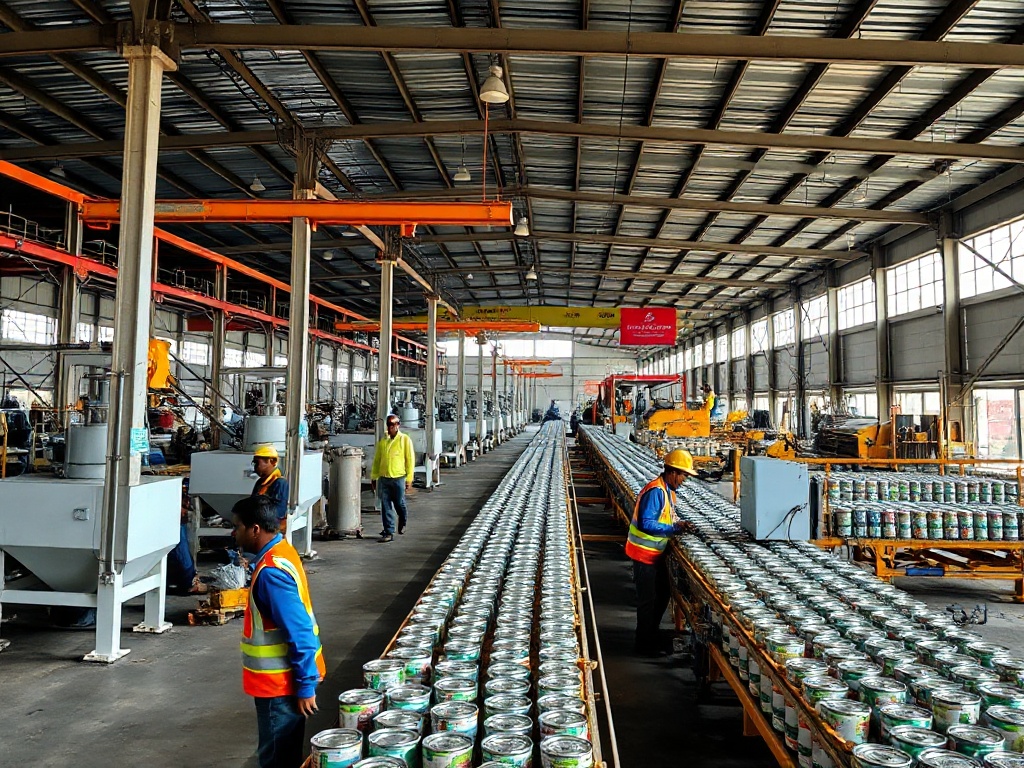
When a multinational announces plans to grow from seven to fifteen factories in three years, the relevant question isn't whether it has the capital to do so. It's why now, in that specific geography, and what incentive structure sustains that speed. Nippon Paint India has operated in the country for decades, but until barely a year ago its presence in the decorative segment was confined to southern India.

Chinese Humanoid Robots Dominate the Market but Live Off the Illusion of Demand
June 8, 2026Exponential Technologies

Chinese Humanoid Robots Dominate the Market but Live Off the Illusion of Demand

More than 13,000 humanoid robots shipped in 2025. Eighty-five percent of that volume manufactured in China. Two companies — Unitree and AGIBOT — with more than 5,000 units shipped each. The numbers, read alone, paint a picture of an industry in full expansion. Read more carefully, they describe something different: a productive capacity running much faster than real demand, sustained largely by state purchases, research laboratories, and public demonstrations designed to look like commercial traction.

VAST and the $200 Million Bet on Chinese Generative 3D AI
June 3, 2026Startups

VAST and the $200 Million Bet on Chinese Generative 3D AI

Simon Song was 29 years old when he closed a $200 million round and crossed the billion-dollar valuation threshold. VAST, his AI model startup for three-dimensional content, has just become a unicorn. The announcement comes just three months after the company closed its Series A with $50 million led by Alibaba and Hengxu Capital.

Robot Legs for $2,500 and What That Tells the Humanoid Market
May 28, 2026Exponential Technologies

Robot Legs for $2,500 and What That Tells the Humanoid Market

Hugging Face has just published the blueprints, wiring, and software to build a pair of humanoid legs for approximately $2,500 in parts. No arms, no torso, no head. Just bipedal 3D-printed legs assembled with off-the-shelf components. The question this opens is not technical. It is structural: when an AI platform decides to lower the entry cost of robotic hardware to the price of a mid-range laptop, it is moving a piece on the board that does not move out of mere generosity.

When European Factories Become China's Cheapest Asset
May 24, 2026Strategy

When European Factories Become China's Cheapest Asset

There is a pattern that repeats itself when an industry enters forced transition: the assets that once defined the strength of a sector end up being acquired by those who arrived later, with less history and structurally different costs. The European automotive industry is living through that sequence now, not as a metaphor, but as a concrete movement of capital and productive capacity. What The Telegraph headline captures — China taking control of Europe's decaying factories — does not describe just a one-off transaction.

Eclipse Made $2.5 Billion Betting on What Nobody Wanted to Touch
May 19, 2026Exponential Technologies

Eclipse Made $2.5 Billion Betting on What Nobody Wanted to Touch

When Lior Susan founded Eclipse Ventures in 2015, the prevailing logic in Silicon Valley was simple: software scales without factories, inventory, or workers. SaaS companies captured the attention of the best funds and the best engineers. Betting on semiconductors, industrial robotics, or physical computing infrastructure was, at best, an oddity.

Motorola in India went from 2.5% to 8.5% market share in three years. Here's what's driving that number
May 14, 2026Strategy

Motorola in India went from 2.5% to 8.5% market share in three years. Here's what's driving that number

There's a difference between growing in a market and changing your position within it. Motorola has just proven that both can happen at the same time. According to statements by T.M. Narasimhan, Managing Director of Motorola India, the company went from controlling 2.5% of the smartphone market in India three years ago to the current 8.5%, with expectations of continuing to advance.

Bacteria with Philanthropic Funding and 150 Million Children at Risk
May 9, 2026Exponential Technologies

Bacteria with Philanthropic Funding and 150 Million Children at Risk

Kanvas Biosciences is not a laboratory story. It is a story about incentives. When the Bill & Melinda Gates Foundation decides to fund a synthetic microbiome company to combat environmental enteric dysfunction—an intestinal disease affecting around 150 million children in areas with poor sanitation that blocks nutrient absorption—it is not doing conventional philanthropy. It is betting on an intervention model that the private market cannot yet sustain alone.

The Robot That Wants to Be Your Companion, Not Your Employee
May 6, 2026Exponential Technologies

The Robot That Wants to Be Your Companion, Not Your Employee

There is a specific moment in the history of domestic robotics where the industry decided that value lay in solving tasks. Vacuuming. Mopping. Monitoring. The logic was flawless: if the robot does something useful, the consumer pays. Colin Angle proved it better than anyone when he launched the Roomba in 2002 and turned a disc on wheels into the first mass-adoption domestic robot.

Academy Sports Bet on AI for Pricing — The Real Question Isn't Whether It Works, But Who Captures the Value
May 2, 2026Strategy

Academy Sports Bet on AI for Pricing — The Real Question Isn't Whether It Works, But Who Captures the Value

When a retail chain with more than 300 stores announces it has spent over a decade working with a price intelligence platform — and has just extended that contract for several more years — the technology headline is the least interesting part. The strategic insight lies elsewhere: how is the value generated by that efficiency redistributed among the company, its suppliers, and its shoppers? Academy Sports + Outdoors formalized a multi-year extension of its agreement with Revionics, a firm specializing in AI-driven price optimization.

The Quantum AI That Predicts Chaos and Changes Who Controls Scientific Computing
April 18, 2026Exponential Technologies

The Quantum AI That Predicts Chaos and Changes Who Controls Scientific Computing

Predicting fluid turbulence with sustained accuracy over time is one of the most costly problems in computational physics. On April 17, 2026, researchers at University College London published in Science Advances a result worth reading carefully: an AI model trained on data preprocessed by a 20-qubit quantum computer achieved 20% greater accuracy in predicting chaotic systems and required hundreds of times less memory than equivalent classical approaches.

Shareholder Activism Does Not Destroy Value, It Redistributes It
April 15, 2026Strategy

Shareholder Activism Does Not Destroy Value, It Redistributes It

Shareholder activism reached historic highs in 2025, reshaping corporate dynamics and prompting crucial questions about value distribution.

MIT Puts a Price on Ocean Acidification, and It’s Not Small
April 14, 2026Exponential Technologies

MIT Puts a Price on Ocean Acidification, and It’s Not Small

A MIT project aimed at removing CO2 from the ocean without chemical waste is not just climate science; it’s an honest audit of a $60 billion value chain.

The Blockade of the Strait of Hormuz Destroys the Ecosystem Washington Needs to Win
April 13, 2026Strategy

The Blockade of the Strait of Hormuz Destroys the Ecosystem Washington Needs to Win

Trump's blockade of the planet's most strategic oil passage was presented as economic pressure, but the fallout extends beyond Tehran.

Geely Bets on Methanol as Electric Vehicles Get Heavier
April 12, 2026Exponential Technologies

Geely Bets on Methanol as Electric Vehicles Get Heavier

Li Shufu, chairman of Geely, argues that methanol offers ten times the energy density of lithium batteries, signaling a shift in heavy transport's value chain.

Why Two Trillion Dollars Didn’t Buy a Functional Sustainability Strategy
April 12, 2026Strategy

Why Two Trillion Dollars Didn’t Buy a Functional Sustainability Strategy

Despite investing over two trillion dollars in green energy by 2025, most companies struggle to demonstrate verifiable results. The issue lies in organizational structure, not budget or ambition.

Alibaba Builds Its Own Sky: 10,000 Chips and a Bet on Complete Integration
April 11, 2026Exponential Technologies

Alibaba Builds Its Own Sky: 10,000 Chips and a Bet on Complete Integration

Alibaba not only launched a data center with its own chips, but designed an economic architecture where the supplier, customer, and state share the same staying incentive.