
Climate technology already works. What's failing is the system to scale it up
During the most recent edition of London Climate Action Week, something shifted in the tone of the conversations. Less appetite for announcements, more demand for measurable results. The field has spent years celebrating prototypes, pilots and funding rounds with the same energy that used to be reserved for actual deployments. And that confusion between proof of concept and commercial scale is beginning to cost it credibility.
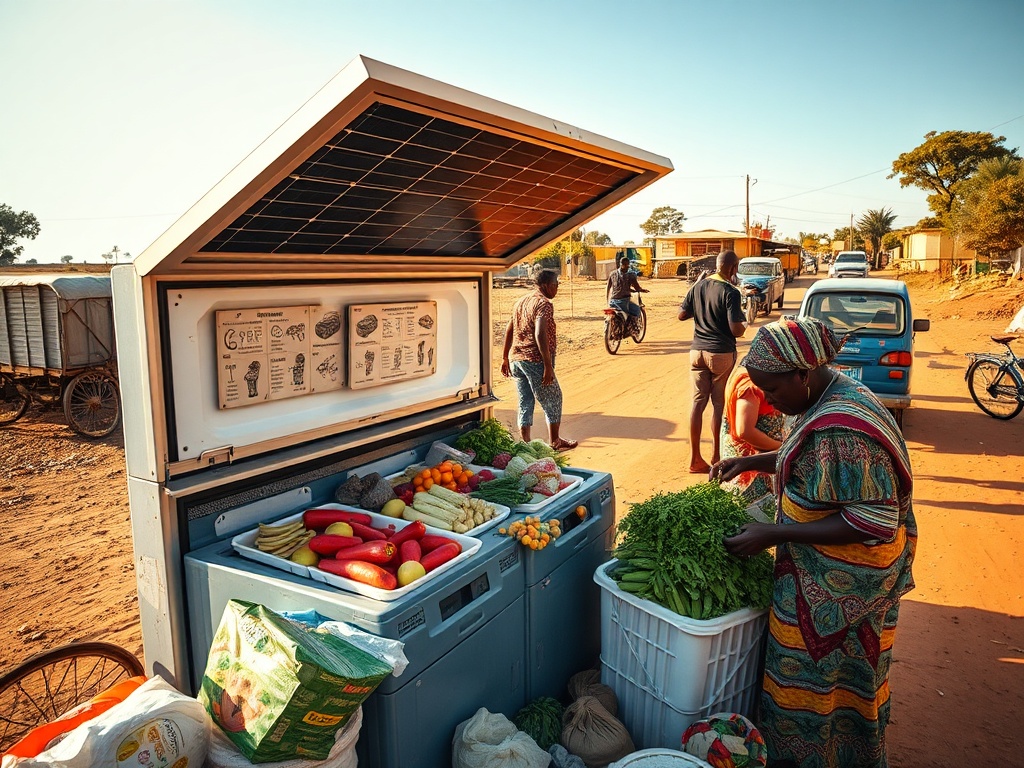
The thesis that Jonathan Berman, CEO of Shell Foundation — a charitable organisation registered in the United Kingdom that has spent 25 years working in the space of energy access and emissions reduction in emerging markets — is pushing forward is uncomfortable precisely because it is verifiable: the bottleneck of the climate transition is no longer in engineering. Solar panels work for cold storage of harvests. Electric tricycles cost less to operate than petrol-powered ones. Solar dryers preserve food and generate income for women micro-entrepreneurs. All of that works.
What does not work is the system for taking those solutions from 1,000 pilot users to 10 million market users. And in that gap, the majority of bets are lost.
The funnel nobody funds
There is one piece of data that concentrates all the structural tension of the problem: in the United States, where the abundance of seed capital is almost a cliché, roughly one in three startups that raise a seed round manage to close a Series A. In Africa, that ratio falls to fewer than one in twenty. In a tracked cohort from 2022, only 5 out of 105 companies funded at the early stage had closed a Series A in the three years that followed.
This is not a problem of entrepreneur quality. It is a problem of financial architecture. Philanthropic capital covers the early stages with grants. Institutional capital waits for returns and risk profiles that emerging markets rarely offer at intermediate stages. Between those two worlds there exists an abyss that swallows technologies that have already proven they work.
Shell Foundation describes that stretch as a problem of three simultaneous variables: distribution, cost and financing. And the logic is precise. A climate solution that has no way of reaching the last mile has no market. A solution that does reach people but costs more than its users can pay in a single transaction also has no market. And a company that has a viable product and an accessible price but no access to growth capital does not reach scale either. All three variables must be resolved at the same time, and none of the three is a laboratory problem.
What Berman documents is not merely the strategy of one particular organisation. It is the map of a systemic failure that the field has been ignoring because it is easier to fund technological novelty than to fund the organisational engineering work needed to get that technology to anyone at all.
What innovation looks like when it isn't engineering
The cases that Shell Foundation describes are useful precisely because they are concrete. Working with Zomato and Swiggy — two delivery platforms in India with around 500,000 riders each — they distributed electricity-free cooling vests to delivery riders across 14 cities. The mechanism was not to build a new logistics chain. It was to mount the product on a distribution infrastructure that already existed and already had access to the people who needed the product.
That same principle appears in electric mobility. The problem with electric tricycles in India was not the motor. It was that the initial price excluded the drivers who would benefit most from operating at lower cost. The innovation that changed the equation was separating the battery from the purchase price of the vehicle: the driver pays for energy as they operate. Battery-swapping models driven by companies such as Kinetic Green and Sun Mobility cut the entry cost of an electric tricycle in half. Without any engineering breakthrough whatsoever. Through a reconfiguration of the business model.
The third vector is risk-tolerant financing. Through the Mirova Gigaton Fund and a green credit facility with the development bank SIDBI in India, Shell Foundation uses catalytic capital that absorbs first losses and draws commercial capital in behind it. In 2024, its portfolio mobilised more than 300 million dollars, with more than 80% coming from private sources that, according to the organisation, would not have participated without someone willing to take on the initial risk. In total, since its founding, the organisation reports having leveraged more than 10 billion pounds sterling in capital and improved the living conditions of more than 288 million people.
What these cases have in common is that the innovation is not in the product. It is in the system surrounding the product: the logistics, the payment model, the financial structure that makes it possible for someone with low income and irregular cash flow to adopt a technology that works in their favour.
Philanthropic capital and the problem of other people's returns
There is a tension that Berman names with a degree of honesty that is uncommon in the field: philanthropy is habitually uncomfortable when its early bets generate profits for private investors who arrive later. That discomfort has material consequences. It prevents catalytic capital from flowing where it has the most leverage, because donors demand that their money not "subsidise" private returns.
Berman's argument inverts that logic: if the bet works and someone makes money, that is not a mission failure — it is the mission accomplished. The objective was never for the solution to remain philanthropic forever. It was for the solution to reach scale with viable business models that allow investors, companies and users to win simultaneously.
This is not a comfortable position for the sector. It implies that climate philanthropy must accept that its function is to take on the risks that commercial capital does not take on at early stages, and to celebrate when that commercial capital enters and captures value afterwards. It is a public infrastructure logic: you build the road and you do not charge a toll. The value is captured by whoever uses it.
The difficulty is that this logic requires an institutional sophistication that few philanthropic organisations have developed. It requires knowing when to enter, what type of instrument to use, when to exit and how to document the leverage generated. Shell Foundation claims 25 years of learning in that direction, and the metrics it reports suggest the model has traction. But the argument also points to something broader: the majority of philanthropic climate capital still does not operate with that logic.
The real delay is not in the laboratory
What Shell Foundation's analysis reveals, when read carefully, is a structural asymmetry in how the field allocates its attention and its money. For decades, the collective budget for technological research and development vastly exceeded the budget available for the second layer of the problem: taking those technologies to commercial scale in markets where financial and logistical infrastructure is fragile.
The result is an inventory of technically proven solutions that have no distribution, and a financial system that cannot price the risk of scaling them. The communities most exposed to climate change — which are also those operating outside formal financial circuits — are systematically left at the tail end of any commercial adoption curve. Markets serve the easiest customer first. That is not a moral failure; it is a mechanics of incentives.
Changing that mechanics requires capital willing to operate in the intermediate zone where grants no longer stretch and institutional funds have not yet entered. It requires distribution models that do not build from scratch but instead mount themselves on existing networks. It requires price and payment structures that transform a purchase no low-income household can make into a transaction that anyone can sustain with their cash flow.
None of that is materials engineering. All of it is institutional, financial and organisational engineering. And it is precisely what the field has continued to fund without the same seriousness with which it funds laboratories.
The gap between a prototype that works and a business that serves one million people is not closed by a venture capital round or by a grant. It is closed by a deliberate architecture that resolves distribution, cost and financing at the same time, in markets that do not forgive inconsistencies between those three variables. That architecture exists. What is missing is the willingness to fund it with the same ambition with which the next technology is funded.