
Caring in Both Directions Is the Problem AI Still Doesn't Know How to Solve Well
There is an enormous gap between what the artificial intelligence industry showcases in its demos and what families actually need when a parent is aging 500 miles away or an adult child with autism cannot live entirely on their own. That gap is not technological. It is a gap in diagnosis.
An AI and robotics professional published a Father's Day column in Forbes that, read at speed, looks like a personal reflection. Read carefully, it is a market indictment. The central argument: 63 million Americans perform some caregiving role, nearly one in four adults, and the value of the unpaid labor they contribute exceeds one trillion dollars annually according to AARP estimates. Yet the vast majority of AI development for the home continues to target a very different customer.
The care market exists. It is enormous, it is underserved, and it carries an emotionally very high willingness to pay. What is missing is not investment in AI. What is missing is precision in identifying the problem actually being solved.
Robots Fold Laundry. Families Need Something Else
The canonical image of AI in the home is a humanoid robot performing household chores in a laboratory video. Those prototypes capture attention, earn media coverage, and justify valuations. They also solve a problem that almost nobody has hired on an urgent basis.
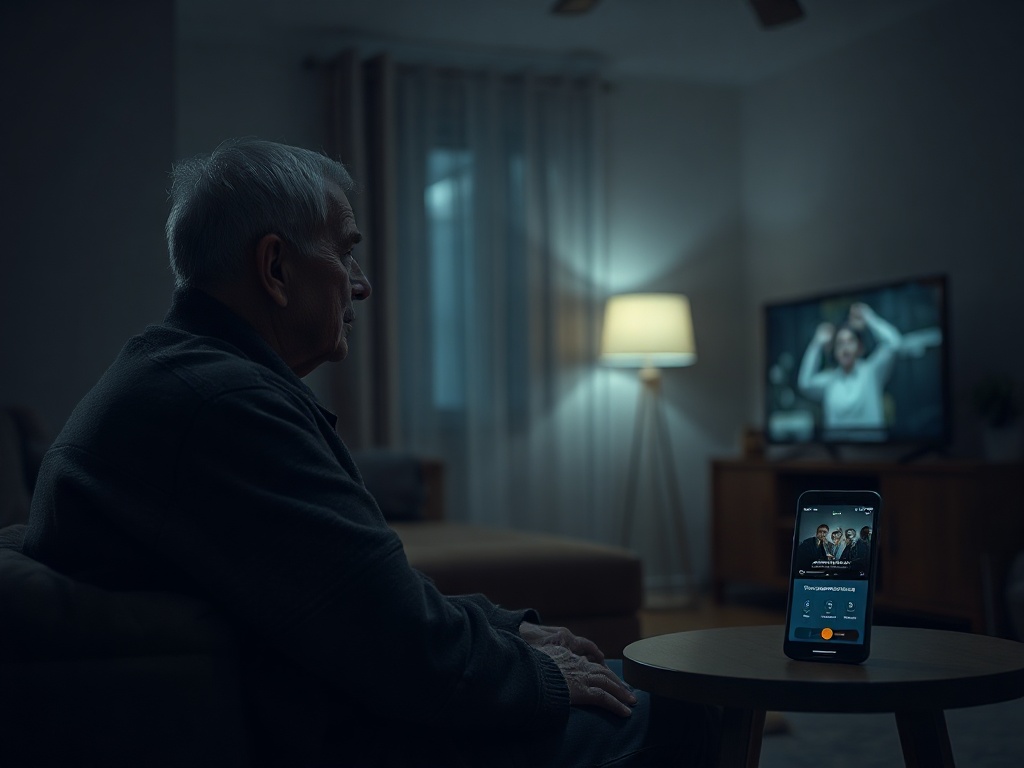
What the long-distance caregiver needs is not a robot. They need to know, at 11 o'clock at night, whether their mother took her medication, or whether the absence of movement in the kitchen is a warning signal or simply that she decided to watch television in her bedroom. They need an alert that distinguishes a fall from a phone that dropped to the floor. They need a system that learns routines rather than monitoring in real time with a camera that no older adult is going to tolerate in their bedroom.
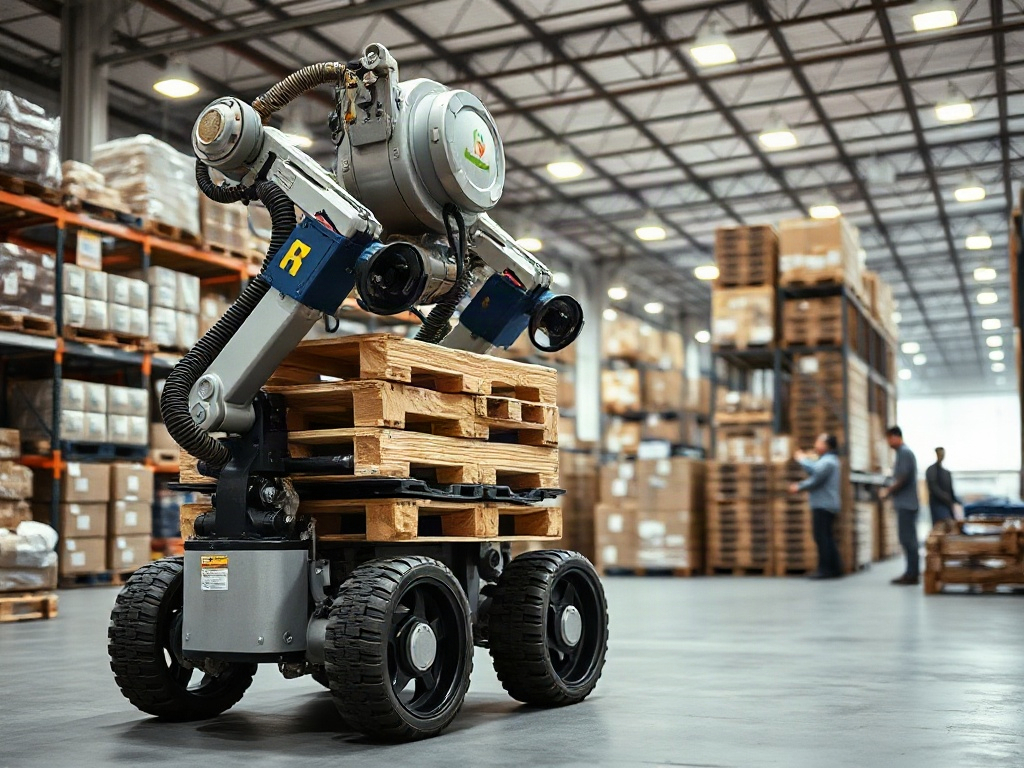
This is not a lack of technological ambition. It is precisely the opposite: it is the ambition to solve a problem that is far more difficult than folding laundry. A robot in a warehouse operates on predictable surfaces and standardized objects. A passive sensor that models the behavior of an 83-year-old person and detects anomalies without invading their privacy requires a level of contextual inference and tolerance for error that current systems handle very poorly.
The market confirms this by omission. There are AI-powered tools for navigating parental leave permit processes. There are chatbots for coordinating caregiver workplace benefits. There are reminder applications. But the underlying problem — which is keeping someone safe and independent in their own home without turning it into a hospital — remains a space where supply is nowhere near the level of demand.
The business question is not whether technology can solve this. It can. The question is why it is not doing so at scale, and that answer has far more to do with capital incentives than with engineering limitations.
Why the Care Market Is a Financial Design Problem, Not a Technology Problem
When analyzing why certain market segments remain poorly served for years despite having obvious demand, the pattern tends to be the same: the person who has the problem does not coincide with the person who holds the money, or the buying cycle is so emotionally complex that the customer cannot clearly articulate what they need.
Family caregiving satisfies both conditions. The caregiver pays, but the user is a different person, which fragments the adoption process and multiplies the criteria for success. The family wants safety. The older adult wants independence and does not want to feel monitored. The physician wants clinical data. The insurance provider wants to reduce hospitalizations. None of these four stakeholders have exactly the same interests, and a tool that serves one of them well may be perceived as a threat by another.
That explains why most products in this space address only one corner of the problem. Medical alert devices solve the emergency but not the everyday friction. Security cameras solve visibility but destroy dignity. Family coordination applications solve logistics but do not address the emotional burden of the caregiver who wakes up at 3 in the morning wondering whether the silence of their phone is a good sign or a bad one.
The missing product is one that operates at the perimeter of all those needs simultaneously — one that is passive enough not to invade, intelligent enough to distinguish relevant signals from noise, and coordinated enough to distribute the burden of attention across multiple members of a geographically dispersed family. That is a problem of product architecture and financial model design, not of computational capacity.
A company that solves it well does not sell technology. It sells peace of mind backed by evidence. And that is a product for which millions of people would pay monthly without negotiating too hard on price, which turns the segment into a subscription opportunity with extremely high retention and low churn — because switching providers means relearning the routines of the person you are caring for.
Dignity as a Technical Variable, Not a Statement of Intent
There is a phrase in the article that deserves to be treated as a product specification, not as rhetoric: "feeling watched, not observed". The distinction is not semantic. It is the difference between a system that generates data about a person and one that generates peace of mind for their family without the person feeling that they have lost control of their own space.
The technical architecture that produces that difference already exists. Passive motion sensors that learn patterns without identifying the person. Anomaly analysis that compares against the individual's own historical behavior, rather than against a population-level norm. Alerts with an adjustable threshold that reduce false positives without losing the signals that matter. Interfaces designed for remote caregivers that consolidate information rather than adding yet another screen to check.
What does not yet exist — at least not at commercial scale with mass adoption — is the combination of all those components in a single product with enough precision to generate genuine trust. Because the false positive problem in caregiving is not merely a UX problem: it is an adherence problem. A system that generates three false alarms per week trains the caregiver to ignore it, which turns the tool into a technological placebo.
That is exactly the kind of friction that destroys adoption in segments where the emotional cost of an error is high. It is not sufficient for the system to work well on average. It has to work well specifically for the individual person being monitored, which requires a period of learning, adjustment, and feedback that most current products have not designed with sufficient depth.
There is another component that the industry tends to ignore because it does not appear in the investor pitch: the onboarding of the older adult. The most sophisticated technology fails if the person who lives in the home does not want it there. Dignity is not a soft variable. It is the condition of use. And designing for it requires involving the person being cared for from the very first moment, giving them control over what is monitored and what is not, and building trust gradually before expanding the coverage of the system.
Care Is the Next Space Where AI Will Demonstrate Whether It Has Learned to Listen
What makes this segment interesting from an adoption perspective is not its size, though it is enormous. It is that it measures the maturity of AI under conditions where errors carry real consequences and tolerance for technological dazzle is zero.
A consumer can forgive a virtual assistant for not understanding their accent, or a product recommendation for being off the mark. A caregiver cannot forgive a system that generates a fall alert when it was just the cat, nor can they forgive a system that generates no alert at all when their father has not moved for three hours. The acceptable margin of error is far narrower, and that makes caregiving a more demanding testing ground than almost any other consumer AI application.
The companies that manage to operate well within that margin will not have solved merely a market problem. They will have demonstrated that they are capable of calibrating AI systems for contexts where precision matters more than launch speed, and where the end user has neither the time nor the inclination to act as a beta tester.
That is the standard that separates AI as a demo from AI as caregiving infrastructure. And the distance between the two remains, for now, far greater than the announcements would suggest.