
Why IEEE Awarded Its Highest Honor to an Engineer Who Built the Global Architecture of Robotics
Toshio Fukuda has been at this for fifty years. More than two thousand published articles. Modular robots that assemble themselves like biological Lego pieces. Inspection systems that climb high-voltage towers. And a conference he founded in 1988 that now brings together more than nine thousand researchers a year. When IEEE handed him the 2026 Richard M. Emberson Award — one of the institute's highest honors — it was not recognizing a single invention. It was recognizing someone who, over the course of decades, built the intellectual infrastructure on which modern robotics operates.
The award was presented on April 24 in New York by then-IEEE President Tom Coughlin and Vice President of Technical Activities Don Tan. The official citation reads: "for distinguished service in advancing the technical objectives of IEEE, especially in the area of robotics." A sober phrase for a career that redefines what it means to influence an industry.
What strikes me as truly significant about this case is not Fukuda's career in itself. It is what his trajectory reveals about how lasting power is built in sectors of high technical intensity, and why that model — quiet, cumulative, infrastructure-oriented — tends to surpass in impact the louder, more visible bets.
The Engineer Who Learned to Finance Himself Before Inventing
Fukuda did not arrive at robotics through technological romanticism. He arrived through an economics lesson he received relatively early: academic freedom has a price, and that price is paid by those who manage to ensure their work solves something that someone is willing to fund.
When he earned his doctorate from the University of Tokyo in 1977 and began teaching at the Tokyo University of Science, he made a deliberate decision. He went out to visit industrial plants. He wanted to understand where human labor was failing, where the hostile environments were, the repeatable risks, the inefficiencies that no one had yet been able to automate. The result was a line of inspection robots for assembly plants, oil refineries, and power stations. Chemical, petroleum, and public utility companies funded him. He describes that period with a laugh: "I got a lot of money for this very practical application, which financed my research."
That logic — understanding first who commissions the work and why — is what typically distinguishes researchers with real impact from those who produce results that no one implements. Fukuda understood this before the academic community had turned it into a slogan. It is not that his work was any less intellectually ambitious; it is that he never allowed himself the luxury of inventing without considering whether anyone needed what he was inventing.
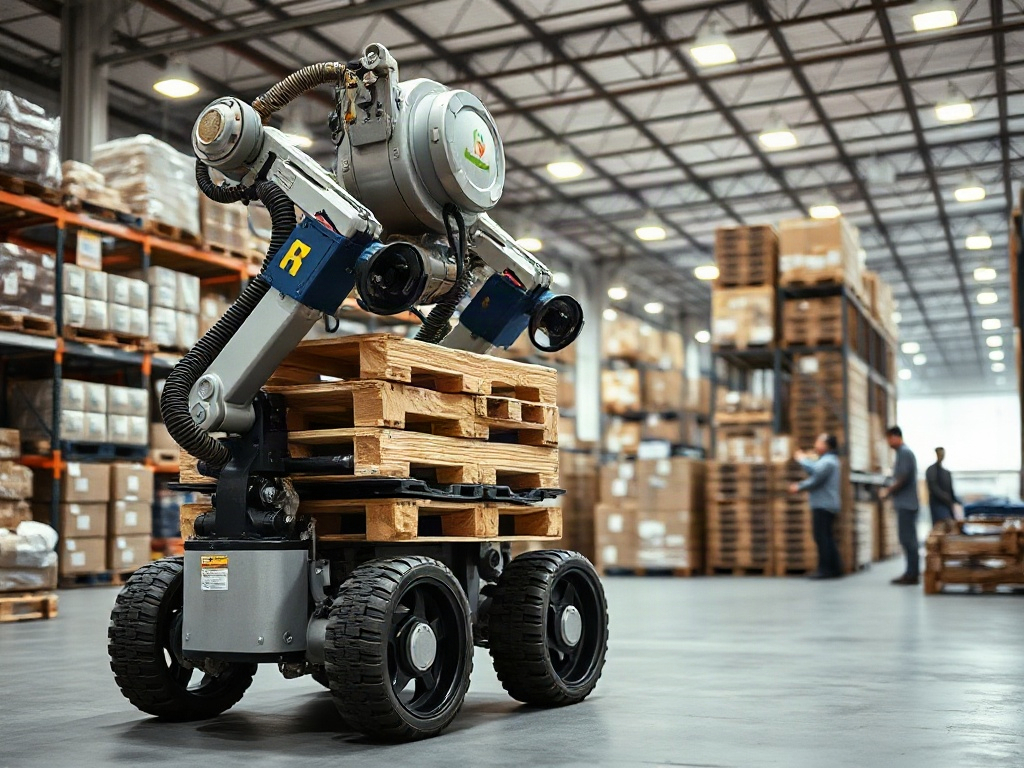
In 1985 he introduced cellular modular robotic systems, known as CEBOTs. The idea is elegant: autonomous units that connect to one another like interlocking blocks, capable of generating complex structures, redistributing themselves in the event of failures, and reorganizing in response to new tasks. A distributed, self-organized, and resilient system. Today those robots deliver medications in hospitals, assist in the sowing of crops, and transport products in distribution centers. Three decades after their introduction, they keep finding new contexts of use. That is the clearest signal that he solved something with enough friction to survive the initial wave of enthusiasm.
The Conference as a Product, and What That Reveals About Building Influence
In 1988, Fukuda founded the IEEE/RSJ International Conference on Intelligent Robots and Systems, known as IROS. That year, 330 people attended. Today the number exceeds nine thousand annual participants. According to Fukuda himself, in the most recent year IROS was the only robotics conference included in the Nature Index database — a selection that groups the scientific publications of greatest rigor and global relevance.
That is not a minor detail. Creating a conference that sustains itself nearly four decades later and that remains the most important gathering point in its field requires something that goes beyond the initial convening power. It requires that the community continues to choose it as the place to present the work that matters most to them. That only happens when the format generates genuine value for participants — visibility, contacts, legitimacy, access to talent.
The same applies to the founding of the IEEE Nanotechnology Council in 2002 and the launch of IEEE Transactions on Mechatronics in 1996. Fukuda did not merely publish research: he built the channels through which other people's research circulates. That is structural power. It is not the kind of influence measured in individual citations, but the kind that defines which work gets to be known, discussed, and applied.
Builders of intellectual infrastructure rarely occupy the center of innovation narratives. Attention tends to go toward the visible invention, the prototype that appears in the media, the startup with a nine-figure valuation. But it is the platforms — the conferences, the journals, the standards, the training programs — that determine at what speed and with what quality knowledge moves within a sector. Fukuda understood that. And he dedicated as much energy to building those platforms as to his own research.
What the Presidential Term During the Pandemic Reveals About Real Adaptation
In 2020, Toshio Fukuda became the first president of Asian origin in the history of IEEE, the world's largest professional engineering organization. And he found himself managing that presidency in the midst of a global pandemic.
The most-cited decision of that period was not a technical one: it was recognizing that IEEE's model of in-person educational services would not survive the mobility restrictions, and that it was urgently necessary to move that offering to digital platforms. The result was the IEEE Learning Network, which began with three courses and today offers nearly two thousand educational resources, including courses, seminars, and training materials.
The scale of that growth — from three to two thousand — is not merely a catalog number. It is the signal that latent demand existed that the in-person format was not satisfying, and that the crisis accelerated the validation of a model that would likely have taken much longer to materialize without that external pressure. Organizations that respond to crises by expanding their offering in genuinely useful ways — not with press releases — tend to emerge from the contraction period in a stronger position than the one they held before it.
He also drove during his presidency changes to IEEE's policies, procedures, and bylaws aimed at strengthening diversity, equity, and inclusion within the organization. Not as a declaration of intent, but as a modification of the internal rules of the game. The difference between the two is operational: one changes the discourse, the other changes the incentives.
Fukuda describes his relationship with IEEE with a phrase that carries more density than it appears to: "IEEE doesn't care who you are, what you do, what country you're from, whether you're a man or a woman. IEEE accepts people who have energy and passion. It accepted me, from the Far East. That's why I like it." It is the description of an institution that he himself helped to shape, which turns that phrase into something resembling an industrial policy statement as much as a personal expression of gratitude.
The Invisible Infrastructure Is the Kind That Lasts the Longest
The Emberson Award does not reward Fukuda's most flashy invention. It rewards the sum of decisions accumulated over decades to build frameworks, channels, and structures within which the work of thousands of researchers takes place with greater efficiency and greater reach.
That distinction matters for any organization thinking about its position within a sector. Whoever invents a product competes on that product. Whoever builds the standard, the platform, or the sector's gathering point competes at a different level entirely. The first can be displaced by a better version. The second has a different mode of permanence, because its value increases with every participant who joins the platform it created.
Fukuda moved from industrial inspection robots to modular CEBOTs, from there to brachiation robotics — those systems inspired by the pendular movement of monkeys, now used to inspect transmission towers and bridges — and then into micro and nano robotics. He never stayed with a single problem. But the thread connecting that entire trajectory is not technical variety: it is the consistency of a logic that asks first who needs this, and then how to build the space where that work can flourish.
What the market hires in figures like Fukuda is not the curriculum or the awards. It is the guarantee that the field that person has cultivated has sufficient depth to keep producing useful work for decades. That is what IEEE is today publicly certifying with the Emberson. And that is precisely what sectors of high technical intensity urgently need: not more demonstrations of what is possible, but more architects of the spaces where the possible becomes practicable.