
Wispr Flow on Android Turns Dictation Into a Mass Acquisition Channel, But Stresses Unit Economics
The launch of Wispr Flow on Android on February 23, 2026, is primarily a distribution decision. The application comes with a seemingly simple promise that is operationally complex: unlimited free dictation for any Android user, in over 100 languages, automatic corrections, punctuation, filler word removal, and contextual formatting like numbered lists. In pre-launch tests, users dictated over 1.3 million words in English in the days leading up to the release. Moreover, the company claims to have rewritten its infrastructure to achieve 30% faster dictation.
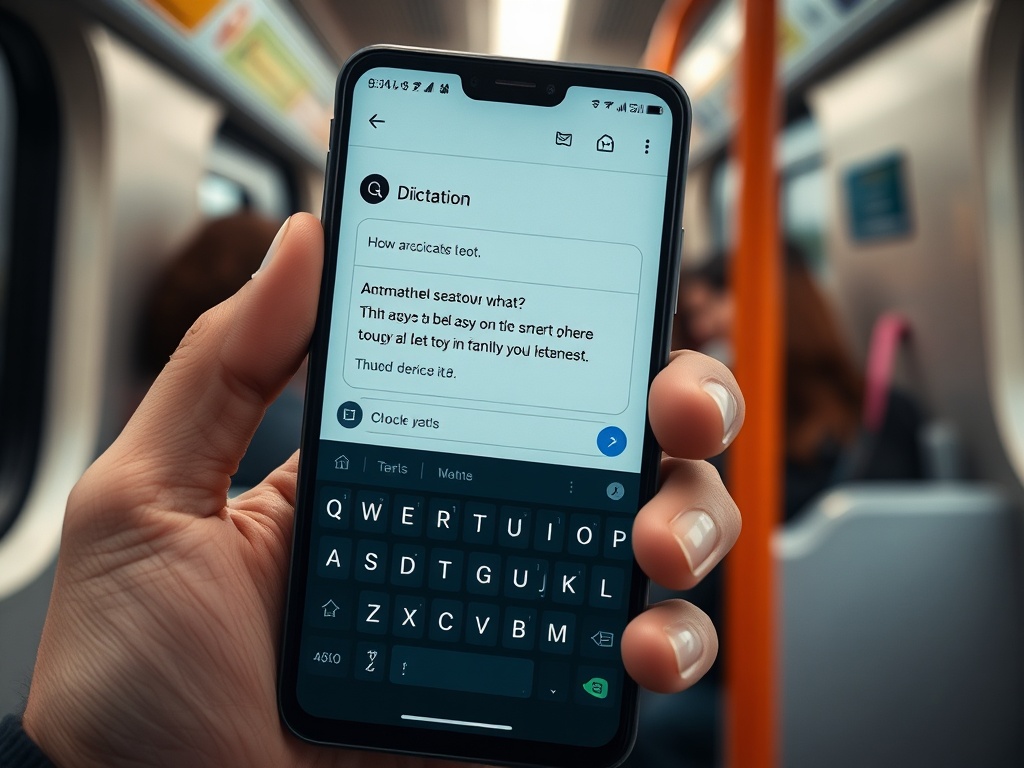
The underlying thesis behind these features is not "voice is the future," but something more pragmatic and relevant: Android allows for an integration that reduces friction. Instead of requiring the user to switch keyboards, Wispr Flow installs as a floating bubble that appears over any text field and coexists with Gboard or other keyboards. This detail shifts the product from the category of "alternative keyboard" to a cross-sectional layer of the system. In mobile, that difference drives adoption.
This launch also opens a classic dilemma of business models: dictation is infrastructure-intensive when dependent on a cloud model and requires an internet connection. Offering "unlimited" isn't just a marketing gesture; it's a strategic bet that necessitates a well-designed future conversion or a cost structure that turns growth into something fundable.
The Real Product is the Eliminated Friction
Historically, Android has been the terrain where "good enough" dominates. Gboard provides free dictation, integrated and just a touch away. For a startup to carve a space there, it isn't enough to marginally improve accuracy; it needs to change the usage flow. Wispr Flow tries to do this with two decisions: an interface that avoids replacing the keyboard and an automatic editing layer that converts natural speech into usable text.
The floating bubble is an innovation in distribution as much as in experience. The direct competitor mentioned in the coverage, Typeless, requires users to switch to an active keyboard, introducing psychological and technical friction: changing keyboards, granting permissions, and accepting that the replacement affects all writing. Wispr Flow reduces that decision to "try it now" without breaking the habit of the main keyboard. When a product sits atop existing behavior rather than demanding migration, its adoption curve is usually quicker.
The second decision is the "polishing" of text: eliminating filler words and implementing auto-corrections. This point does not compete against basic transcription; it competes against the post-editing workload. On mobile, the real cost isn’t speaking, but correcting. If the tool reduces that cost, users gain daily minutes that they perceive immediately. That perception is the retention engine.
From a business model standpoint, Wispr Flow is pushing dictation from an "accessibility feature" toward a daily productivity behavior: messages, notes, emails, and light documentation. If this habit takes hold, the product becomes sticky and, by extension, monetizable.
Free and Unlimited on Android: Aggressive Acquisition with Non-Trivial Costs
The most disruptive element is not the support for 100 languages or the Hinglish model. It’s the decision to not impose word limits on Android at launch. On other platforms, the company operates a freemium scheme with 1,000 words per week free and a Flow Pro plan for $12 per month or $144 per year for unlimited use. In Android, that barrier temporarily falls.
This move has cold logic: competing against a free, preinstalled alternative requires a frictionless, anxiety-free trial. If users feel that every sentence uses up a quota, they revert to Gboard’s dictation, which, although inferior, feels mentally “free.” By offering unlimited use, Wispr Flow buys adoption speed.
The problem is that bits aren’t what’s given away; computation cycles, inference, and bandwidth are. The note indicates that the Flow AI model is cloud-based and requires an internet connection. Operationally, that turns every minute of dictation into a direct variable cost. If the product grows quickly, costs will grow with it.
Hence, the fact about the redesigned infrastructure and 30% improvement in speed should be read as more than just "engineering." It serves as a defense line to protect gross margin. Higher speed could imply lower latency but may also mean better pipelines, reduced calls, server optimization, or more efficient models. In any case, the direction is clear: the team understands that the bottleneck isn’t only accuracy, but the cost of serving dictation at scale.
The second component of the bet is the funnel: free on Android now, conversion to paid later. The conversion won’t come from “more dictation,” because it’s already unlimited. It will have to come from premium layers: advanced features, customization, output quality, or continuity across devices. Coverage notes that desktop features like Dictionary, Snippets, Styles, or Spell Names Right are still lacking in Android. This backlog isn’t just product; it’s the future catalog of monetization.
Hinglish and 100 Languages: Market Expansion with a Support and Positioning Challenge
Wispr Flow includes a new model for Hinglish, defined by its CEO as a natural way to alternate between English and Hindi in the same conversation without falling into traditional Hindi script transcription. In markets like India, this blend is commonplace and, if well executed, could be a real differentiator.
Here, there are two complementary readings. The first is opportunity: supporting a mixture of languages is not merely a cosmetic detail; it targets a massive segment of users who currently feel poorly served by models designed for a “pure” language. If the dictation experience works in real conversations, it becomes a competitive advantage that is difficult to replicate quickly.
The second reading is cost and complexity. The more languages and scenarios supported, the more the need for quality evaluation, user support, error management, and expectation handling multiplies. In voice, failures are more visible because the user “hears” their intent. Additionally, each language typically requires constant tuning and measurement.
From a business model angle, multi-language is a volume strategy: it opens total market. But it also requires the company to precisely decide where to monetize first. The current price of Flow Pro is anchored in an individual productivity standard. If most growth comes from price-sensitive emerging markets, the company will have to balance: maintaining a viable premium plan without relying on permanent subsidies.
The competitive advantage here isn’t “having 100 languages,” but converting that coverage into organic distribution. Voice is social: people send dictated texts in chats, notes, and emails. If the output sounds cleaner, others are likely to ask what tool was used. That’s a growth mechanic that doesn’t require spend on paid acquisition, but demands that the product is consistently superior.
The Real Battle Happens in the Operating System and Gross Margin
The CEO's statement, “Android finally gave us the freedom to build the voice experience we always wanted,” acknowledges a strategic truth: the operating system decides which startups can compete on experience. On iOS, Wispr Flow arrived as a dedicated keyboard, a more limited integration. On Android, the floating bubble enables cross-sectional presence, almost like a “system function” without being one.
This positioning brings both a risk and an advantage. The advantage is that it inserts itself into any app, multiplying use cases and retention. The risk is that if the category becomes relevant, incumbents can respond where it hurts the most: native integration, marginal costs near zero for the user, and default distribution.
This forces Wispr Flow to compete where Google doesn’t typically compete with the same urgency: at the fine end of experience and personalization. Coverage mentions features like filler word removal, auto-corrections, and contextual formatting, as well as improvements against interruptions during pauses that affect Gboard’s dictation. This type of “perceived quality” can support a premium product even when the free alternative is adequate.
However, the decisive factor will remain gross margin. A cloud-based voice product needs a solid unit economics to avoid turning into a variable cost machine. The phase of “unlimited free” on Android can be seen as an investment in learning: measuring retention, understanding usage patterns, estimating cost per active user, and designing the shift to paid without losing the base.
The most sensible path, given the available data, is that payment is sold as continuity and control: advanced features, vocabulary customization, shortcuts, writing styles, and consistency across platforms. It’s no coincidence that those functions exist on desktop and are not yet available on Android: they are tools that justify a price without depending on limiting usage.
The Android Launch Forces a Monetization Strategy Based on Value, Not Restriction
Wispr Flow is using Android as a ramp for scaling. In a market where basic dictation is already free, its bet is to turn voice into a genuine substitute for typing for users who write a lot and want ready-to-send text. This bet relies on two pillars: frictionless integration and better-edited output.
The immediate challenge is financial-operational: unlimited cloud dictation is a direct subsidy to the user. The rewritten infrastructure and speed improvement suggest that the team is addressing the unit cost, but the real pressure will come when growth turns that free offering into a recurring bill. At that point, the company needs the paid plan to be a natural upgrade, not a punishment for usage.
This move aligns with a model that prioritizes organic distribution: a cross-functional product that can be tested in seconds, used in any app, and generates visible results. The sustainability of the business will depend on translating that adoption into revenues from added value and maintaining a healthy gross margin in an infrastructure-intensive service.