
Factor Turns the "Protein Gap" into a Physical Funnel: Experiential Marketing to Sell Subscriptions, Not Just Meals
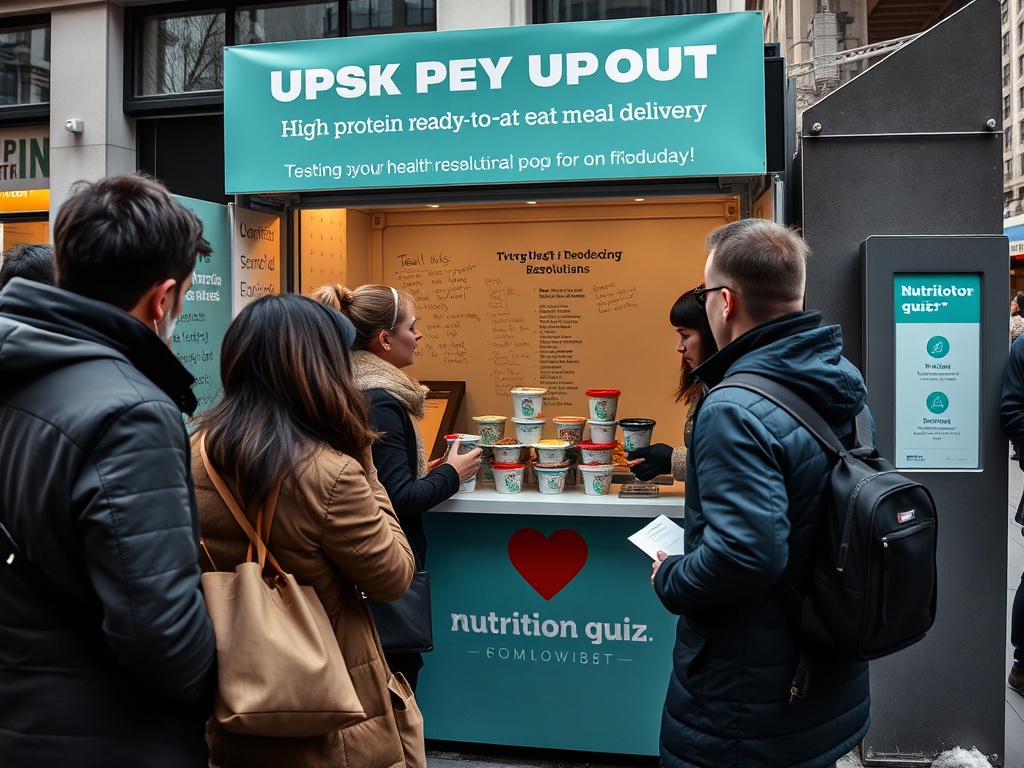
January is the month where the health market behaves like the stock market on earnings day: maximum volatility, promises everywhere, and a predictable drop when operational reality sets in. Factor, marketed as "America’s #1 ready-to-eat meal delivery service," decided to roll out a play that seems like marketing but is actually commercial architecture: the Protein Power-Up Shop, a series of pop-ups in New York City (January 8-9, 2026), Austin (January 22-23), and Chicago, from 11 AM to 4 PM. The timing is no coincidence; it targets the period associated with “Quitter’s Day,” when New Year’s resolutions start to unravel.
The company frames its initiative with its own data: 54% of Americans say they aim to eat healthier in 2026; 54% of those with health goals plan to do so by increasing protein; 74% would be more inclined to eat protein if more convenient options existed; and 54% report having difficulty getting enough protein at lunch. The kicker is an uncomfortable fact for the entire sector: only 38% actively track their protein intake, with more than half relying on social media for information.
As a strategist, I read this as a deliberate attempt to turn a confusing market into a simple decision. This isn’t about educating; it’s about reducing friction right where the purchasing decision happens, using a conversion approach that blends product testing, technical authority, and rewards.
The Real Play is Not Protein, but Reducing Friction at the Point of Abandonment
In meal delivery, the enemy isn't competitors; it's abandonment. People buy a "perfect" week and cancel in the third week when schedules and fatigue regain control. Factor designed the pop-up as if it were a financial product with three layers of coverage.
First, it tackles the convenience issue with a component called “Resolution Recharge,” which, according to available descriptions, allows commuters to "upgrade" insufficient lunches with high-protein alternatives. This targets a specific moment of the day when the gap is recognized: lunch. With more than half admitting this is where they fail, Factor is positioning its commercial contact right at the pain point, not in the feed.
Second, it installs a “Healthy Habits Resolution Wall.” This isn’t decoration; it’s a mechanism for social proof. In noisy markets, seeing others declare goals acts as a signal of normality. The business doesn’t need the goal to be virtuous; it needs the behavior to seem common.
Third, it incorporates personalization with a “Protein Quiz” to map goals to specific meals. This is important for a simple reason: consumers don’t buy protein; they buy a narrative of control. With only 38% actively tracking, most don’t want to measure; they want someone to tell them they’re “covered.” A quiz replaces calculation with trust.
All this takes place in a short time span, in dense cities. In terms of portfolio, it’s deliberate concentration: less geographic coverage, a higher likelihood of impact per square meter.
An Acquisition Model Aiming to Reduce Ad Dependency and Increase Technical Trust
Most subscription services find themselves trapped by digital advertising costs. It’s a familiar cycle: acquisition costs rise, the first month is subsidized, and profitability is deferred to a “lifetime value” that only exists if churn behaves favorably. When churn doesn’t cooperate, the model becomes a leveraged position without a safety margin.
Factor seems to be seeking an alternative: experiential marketing with technical credentials. At the pop-up, it integrates sessions with nutritionists for winners, and online it contrasts itself against “bars” or viral trends like cottage cheese. Factor’s CEO, Adam Park, frames the concept as a way to cut through the noise of “viral hacks” and “questionable sources,” replacing the shame of “science-based” and “chef-crafted” meals. This, in business terms, is an attempt to close a trust gap in a market where more than half make nutritional decisions influenced by social media.
Customers don’t need to believe in science. They just need to perceive that the product has a more robust chain of accountability than a 30-second video. In sectors with high information asymmetry, putting a white coat close to the product often captures a price premium.
The structural key here is that a well-executed pop-up can generate better-quality acquisition than a click. A visitor who samples, engages, and leaves with a personalized recommendation is a lead with friction already paid for. In other words, Factor is attempting to pre-pay trust in a channel where traditional digital conversion is becoming more expensive and unstable.
Incentives as Commercial Derivatives: Rewards for Buying Attention Without Undermining the Core
The prizes' structure is precisely described: 12 winners across three cities, with three grand prizes per city offering a year’s worth of meals and nine secondary prizes per city of three months’ subscription. Additionally, everyone receives personalized sessions with nutritionists.
Many teams see this as a “marketing cost” and leave it at that. I view it as a derivative: a defined payment to buy exposure and trial during a time when intent traffic is inflated.
The briefing estimates the total retail value of the prizes at approximately $50,000 to $100,000, not as an official number but as a reasonable calculation. What’s relevant isn’t the exact number; it’s the form. It’s a bounded, visible, and controllable expenditure. Compared to national digital outreach campaigns, where budgets evaporate in ad auctions, here the spending has a tangible component.
Moreover, the “one year” prize acts as an extreme product demonstration: if the winner genuinely consumes for months, their informal testimony carries more weight than any copy. The three-month prize is sufficient to cross the period where habit formation takes place. From a retention standpoint, three months is the minimum bridge for the consumer to stop "trying" and start "operating".
The risk, of course, is the illusion of conversion. A pop-up can become a party without sales. But at least the design shows an intent to connect experience with a funnel: quiz, recommendation, technical authority, and incentive.
Operational Modularity: Pop-Ups as Low-Commitment Experiments in a Heavy-Cost Industry
Ready-to-eat meal delivery carries unforgiving costs: production, logistics, quality control, packaging, cold chain. What kills these businesses isn’t a bad week; it’s the rigidity when demand shifts.
In this context, the pop-up is a useful tool for one reason: it is modular. It doesn’t require a permanent commitment to a location and allows for iteration of sales scripts, messaging, and activations by city. New York doesn’t behave like Austin; Chicago doesn’t buy like either of the two. Testing in three major urban markets is a way to sample elasticities without rewriting the entire operation.
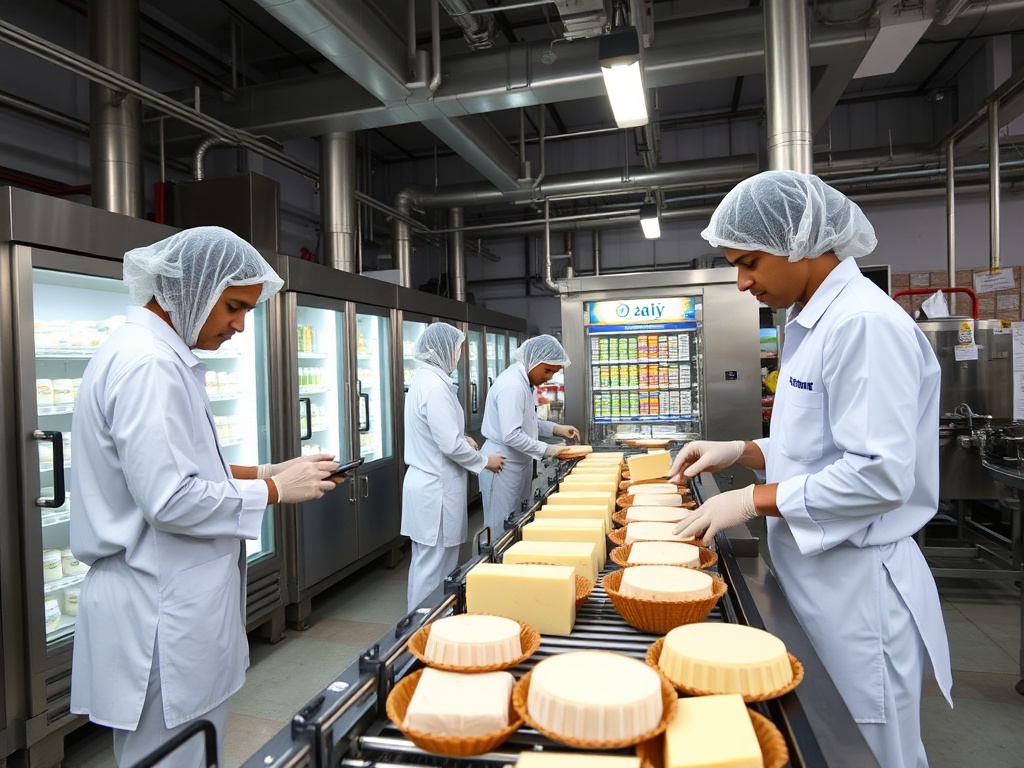
Furthermore, Factor maintains a broad portfolio: 100 meals weekly on rotation and 70+ add-ons like smoothies, juices, and snacks, designed by chefs and optimized by dietitians, with delivery across the continental United States. This portfolio is an advantage if acquisition is based on personalization: the more variety, the more capability to ”fit” a goal with a product.
But variety also carries operational risk. If the company lacks a robust supply chain and planning, a wide menu can become an expensive complexity. Here, the pop-up acts as a sensor: it allows for observation of which promises and combinations activate real intention before scaling investment in inventory or mass campaigns.
The cynical but useful point: the pop-up doesn’t need to be profitable on its own. It needs to be an experiment with positive asymmetry, where the downside is limited, and the upside is discovering a repeatable message that reduces churn and improves acquisition.
What This Strategy Reveals About the Market: The Winning Business Sells Operational Certainty, Not Macros
The protein market is saturated with claims. Factor tries to position itself as the opposite of the viral “hack”: a convenient, chef-crafted, and dietitian-optimized solution. This positioning is not ideological; it’s a bet to capture customers tired of improvisation.
The data from the company describes a market with three failures:
- High Intent: 54% want to eat healthier.
- Low Execution: lunch is the black hole for 54%.
- Unreliable Information: more than half learn through social media.
This is a manual for building an offer: simplify execution, package authority, and physically place oneself where abandonment occurs. The pop-up is timed to intercept the motivation decline, which is when the customer shifts from narrative to logistics.
My reading is that Factor is trying to convert a category of emotional commodities into a service of “operational certainty”: ready meals, high in protein, with expert signaling. If it succeeds in making consumers associate the product with consistency, then price matters less than effort reduction.
The main risk is that the initiative remains brand theater and doesn’t nurture a sustainable unit economy. Without public data on attendance, conversion, or retention, the pop-up remains an acquisition hypothesis. Nonetheless, by design, it seems a reasonable hypothesis: bounded investment, rapid learning, and a channel that can reduce ad dependency.
Survival Depends on Converting the Show into Measurable Retention
Factor chose the right tool for a real problem: people abandon habits not due to lack of desire but due to friction and informational noise. The Protein Power-Up Shop combines physical experience, personalization, and authority to push for a subscription that lives or dies by retention.
From a structural risk perspective, the positive signal is modularity: three cities, short windows, controlled incentives, and a message aligned with its own behavior data. The risk signal is the same as any subscription model in food: if learning does not translate into lower churn, the cost returns through the back door as a recurring acquisition expense. The survival of this approach depends on whether the physical funnel consistently and repeatably produces superior retention.