Claude Reaches No. 1 for an Uncomfortable Reason: People Are 'Buying' a Stance, Not a Chatbot
The weekend when Claude climbed to No. 1 on Apple’s App Store in the United States didn’t just signify a download race. It marked a more challenging battle in engineering: the battle of public interpretation.
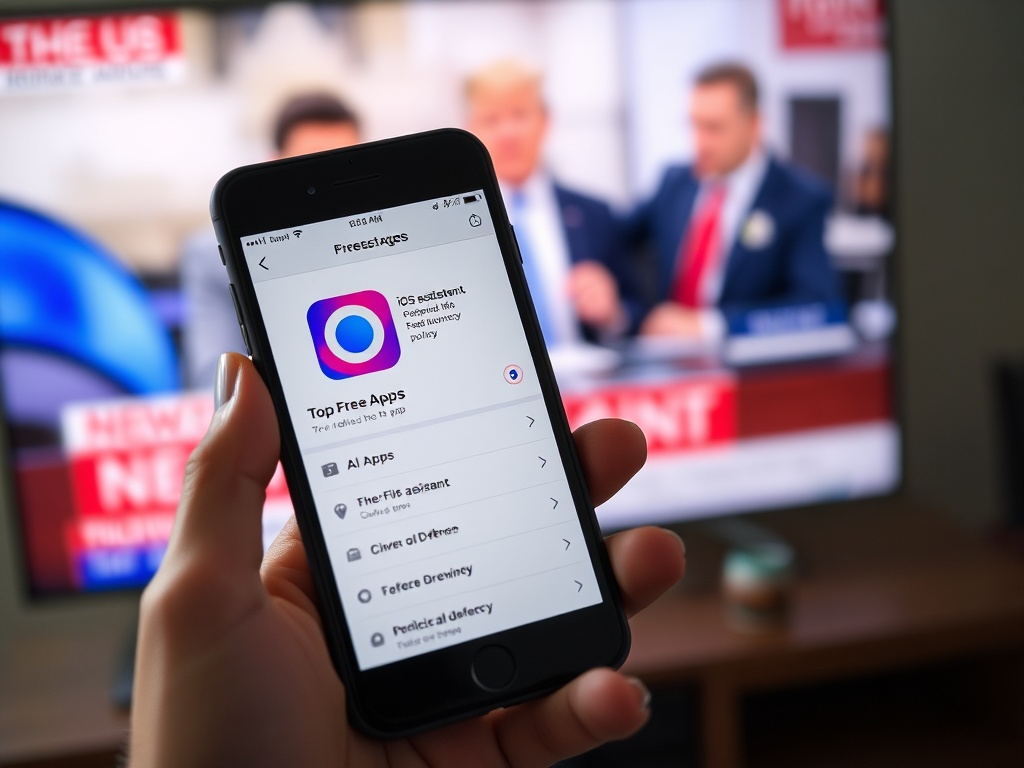
Reports cited by Business Insider and gathered by The Hill indicate that Claude surpassed ChatGPT (No. 2) and Google Gemini (No. 3) in the Top Free Apps ranking, rapidly ascending from sixth place at the end of February 2026. Sensor Tower, referenced in the coverage, suggests that Claude's growth had been building for weeks prior; however, the catalyst was a public dispute between Anthropic and the U.S. government over safeguards for domestic surveillance and autonomous weapons, along with OpenAI's announcement of an agreement to deploy its models in the classified network of the Department of Defense.
Meanwhile, the “social theater” was also at play. Posts on X reported cancellations and migrations; even public figures noted they were switching from ChatGPT to Claude. On Reddit, in the ChatGPT subreddit, calls to “Cancel ChatGPT” appeared. While none of this proves a structural trend on its own, it demonstrates a crucial insight for any leader building AI products: when users feel that technology is treading near high-risk areas, the criteria for purchasing can change in a matter of hours.
An App Store Ranking that Actually Measures Trust
Claude didn’t just hit the overall top spot in free apps; it also topped the productivity list, where the top four positions were AI tools: Claude, ChatGPT, Gemini, and Grok, according to the cited coverage. This is significant because productivity categories often have a more direct relationship to recurring usage intention.
The growth that Anthropic reported is hard to ignore: the company claimed every day last week set historical records for registrations, with active free users up by over 60% since the beginning of 2026, daily registrations quadrupled, and paid subscribers (Pro and Max plans) more than doubled this year. In contrast, OpenAI maintains a vast scale: Business Insider reported over 900 million weekly active users for ChatGPT as of February 27, 2026.
From a strategic standpoint, the App Store ranking is not a satisfaction survey. It's a thermometer of immediate intention. In this case, the intention surged due to a factor many teams underestimate: people weren’t just comparing answer quality or speed; they were assessing “perceived moral risk” and “control.”
When an app becomes a symbol of stances against surveillance or weapons, its value proposition shifts from being "an assistant that drafts and summarizes" to "an assistant that doesn’t cross certain lines." Although this nuance may be difficult for the average user to verify, it acts as a mental shortcut. And mental shortcuts dominate quick decisions.
Ironically, this type of momentum is often fragile. Rankings fluctuate easily; the coverage itself mentions hourly variations in some reports. However, the fragility of rankings does not weaken the signal. The signal is that trust now competes in the same league as features.
The Dispute with the Government Turned Ethics into a Product Attribute
What triggered the download surge was a high-voltage political and corporate sequence. The coverage describes how Anthropic refused to budge on safeguards to prevent uses in mass domestic surveillance or fully autonomous weapons during negotiations with the Department of Defense. Subsequently, President Donald Trump banned federal agencies from using Claude or other AI tools, and Defense Secretary Pete Hegseth threatened a designation of “supply chain risk,” which Anthropic stated it would challenge in court.
In this void, OpenAI announced an agreement to deploy its models in the classified network of the Department of Defense, as communicated by Sam Altman on X. OpenAI later published safeguards: its systems would not be used to direct autonomous weapons without human oversight when laws, regulations, or Department policies require it, and would not be used for unrestricted monitoring of private information of individuals in the U.S.
So far, these are the facts. Now, here’s how it works.
In consumer terms, “ethics” is rarely purchased as an abstract value. It is bought as a reduction in operational anxiety. The user isn’t auditing federal contracts; they’re trying to decide if the tool they use for work, study, or content creation brings them closer to consequences they cannot control.
Anthropic, having been narratively associated with “setting boundaries,” received a transfer of trust. OpenAI, having come to be associated with “entering the Pentagon,” received a transfer of suspicion in a vocal segment. This suspicion doesn’t need to be universal to shift the ranking; it merely needs to be intense and concentrated among influential users who post cancellation screenshots and sway others.
The strategic consequence for the industry is uncomfortable: the market is treating government alliances as part of the product. It’s no longer just a revenue channel or an enterprise business line. It's a brand variable that impacts acquisition and retention in consumer markets.
The Money Behind the “Drama”: Conversions, Plans, and a Battle for the Standard
I want to disentangle the noise from the real business.
First, ChatGPT remains a giant in terms of weekly users. This volume cushions almost any short-term reputational wave. However, the risk isn’t that OpenAI will “lose” immediately, but that its future growth may become more costly for a non-technical reason: greater trust friction in certain segments.
Second, Claude’s jump isn’t just about visibility. Anthropic communicated that paid subscribers more than doubled in 2026. If the Pro plan is $20 a month (a price mentioned in viral posts cited in the coverage), then the ranking shift matters because it brings something more valuable than downloads: monetization probability. In a category where computational costs are high, success isn’t measured by installs; it’s measured by a mix of free users, retention, and payment.
Third, there’s a silent power dynamic: the federal government is not just a large customer; it’s a validator. Being “inside” positions you for procurement, partnerships, and compliance standards. Being “outside”, if interpreted as “not yielding on safeguards,” positions you for consumer markets and companies that fear reputational risks. In both cases, there is business, but they are distinct businesses.
The most useful reading for a CEO is not to pick a side. It's to understand that the market is fragmenting into two distinct purchasing behaviors:
- An institutional buyer that hires capacity and operational control, with explicit rules.
- A consumer and SME buyer that hires a mix of utility and reputational peace of mind, with implicit rules.
When these implicit rules activate, metrics change in hierarchy. A model can be excellent, but if the narrative links it to uses the user rejects, acquisition costs rise. Conversely, a competitor can turn a political crisis into growth by becoming the symbol of limits.
Finally, this episode reveals a struggle over “who defines the standard” of responsible AI. OpenAI published specific safeguards for weapons and monitoring. Anthropic, according to the coverage, defended guardrails during negotiations. From the outside, consumers do not compare the fine print; they compare the signal.
This forces companies to operate with a new reality: communicating safeguards is no longer just for regulators and enterprise clients; it’s a marketing input and also a trigger for boycotts.
Lessons for Product and Brand Teams Focused on Retention
This case leaves a replicable pattern.
1) Users “hire” a sense of control. In chatbots, the functional proposal is obvious: drafting, summarizing, programming, generating ideas. But the emotional advance that became critical in this wave is different: using AI without feeling they are indirectly participating in practices perceived as invasive or dangerous. That emotional shift became a lever for migration.
2) Trust is earned through contrast, not proclamation. No one installed Claude due to a white paper. They installed it because the contrast with the headline was clear: one "refused" and another "signed on". The actual detail may be more nuanced, but user decision-making occurs with simple contrasts.
3) B2G alliances are no longer neutral for B2C. OpenAI’s growth in government may be financially strategic, but the potential cost appears in consumer markets: amplified cancellations and public discussions pushing towards alternatives. Conversely, the federal blockade on Anthropic may be a revenue issue in that channel, but in consumer terms, it functioned as high-impact advertising.
4) Rankings are volatile, yet cumulative reputation is not. Claude can lose the No. 1 position tomorrow. ChatGPT can reclaim the spot with a feature or pricing adjustment. What’s lasting is that consumers have learned to reward or penalize an AI provider based on its stance towards security and surveillance uses.
The implication for leaders is operational: the product team cannot design safeguards as if they are a legal addendum. They are becoming part of the perceived “core.” And the institutional sales team cannot close deals without anticipating the brand effect on consumer perception.
Claude reached No. 1 because, in this phase of the market, users are hiring the advancement of using AI with clear limits and a perceived sense of moral safety, even above familiarity with the leading brand.