
Why Managers Became the Productivity Bottleneck in the Age of AI
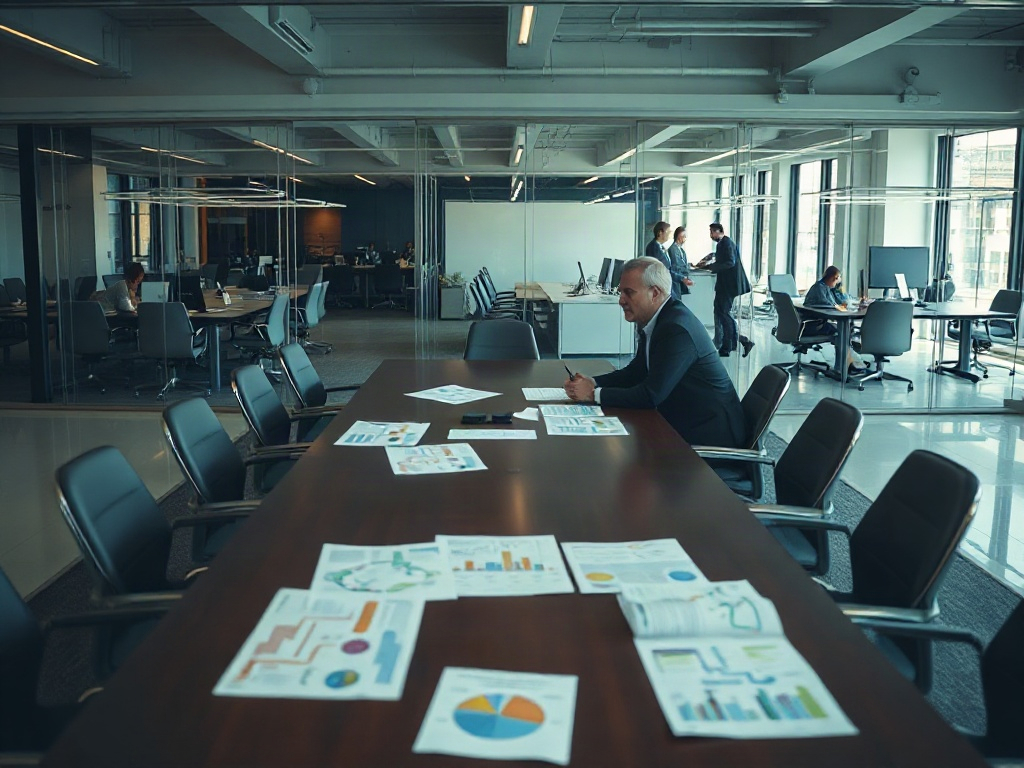
There is an image that recurs in conversations with managers from technology companies, consulting firms, and product teams: someone sitting in front of a screen at eleven o'clock at night, reading drafts that their direct reports generated during the afternoon. Not because the team worked longer hours. But because AI made them produce the equivalent of three days of work before lunch.
"Every 30 minutes someone creates something I have to review," a manager told Harvard Business Review researchers. That sentence contains an organizational diagnosis that goes far beyond personal exhaustion: it describes a work architecture whose design became obsolete without anyone formally declaring it so.
The problem is not AI. The problem is that organizations adopted tools that accelerate individual execution without simultaneously redesigning the structure of review, approval, and decision-making. The result is predictable: the speed of production increased; the speed of governance did not. And that gap carries measurable costs, even though few organizations are calculating them with any precision.
---
When Execution Outpaces Governance
Traditional management was designed for a world where execution took time. You delegated a task on Monday and reviewed progress on Friday. That interval was not inefficiency: it was the margin the system needed to function. The manager could think, prioritize, contextualize, and align. The weekly cadence was, in reality, an implicit form of governance.
AI collapsed that interval. According to data from Atlassian published in its State of Teams 2026 report, 89% of leaders agree that AI has accelerated the pace of work, generating an environment of permanent review. Another figure from the same report adds a layer of complexity: 87% of knowledge workers say their teams lack the time or capacity to coordinate, precisely because everyone is in execution mode.
That combination is the anatomy of a classic bottleneck that is being misdiagnosed. Organizations read the surface signal — more productive teams, more deliverables, faster turnaround — and conclude that the system is working. But individual productivity without effective coordination does not generate proportional value: it generates volume. And volume without a filter ends up on the manager's desk as a pile of work that no human being can process at the speed the system now demands.
What is failing is not the manager's motivation or technical capability. What fails is the design of the role in relation to the new speed of production. A manager whose function is still to review, approve, and edit every deliverable operates as if they were the neck of a bottle that someone decided to fill with a garden hose instead of a dropper.
The immediate consequence is twofold: managers burn out trying to keep pace, and teams slow down their real impact while waiting for approvals that arrive late or incomplete. The abundance of execution that AI promised crashes against a structural scarcity of managerial attention. That scarcity is not solved by working more hours. It is solved by redesigning the manager's work.
---
The Rise of "Workslop" and What It Reveals About Organizational Standards
There is a collateral phenomenon that deserves specific attention because it directly touches the quality of the output that organizations are delivering to the market. A BetterUp survey found that 54% of managers report receiving "workslop": AI-generated content that appears polished but lacks substance.
The term is new; the problem is not. What AI did was industrialize a tension that always existed between speed and quality. The difference is that previously the cost of producing low-quality work was the time it took to produce it. Now that cost has disappeared from the production side and migrated entirely to the review side. The manager pays the price of speed with their attention.
This reveals something about the design of organizational standards that few companies are addressing seriously. When Hamed Faquiryan, Executive Director of Quantitative Research at MSCI, establishes that no member of his team can send him AI-generated content without having read and edited it first, he is not making a philosophical declaration about the authenticity of human work. He is solving a design problem: without that filter, the manager becomes the sole quality control point in a system that produces without friction.
The structural problem is that such a rule, however sensible it may be, does not scale on its own. It needs the standard to be codified in the role, not just in the will of the individual. Organizations that have not explicitly defined what "good work" means in the age of AI are delegating that definition to each manager separately, which generates inconsistency between teams and exhausts those who try to maintain the standard without institutional backing.
Fernando Garcia Valenzuela, Head of Engineering at Atlassian Cloud Storage, took a different route: he built an agent that scans his direct message conversations with his reports and every two weeks generates a summary that flags poor tone, omitted recognition, and missed opportunities for relationship building. What he found were not dramatic failures but "small, consistent things": one-word responses, confirmations without concrete grounding. Minor errors that, accumulated across hundreds of interactions, define the quality of a managerial relationship.
That is organizational design applied to communication: not trusting that the manager will remember to pay attention to the relational dimension when they are overloaded with reviews, but instead instrumenting the system so that attention has a feedback mechanism built in.
---
Redesigning the Role Before Burnout Does It by Default
The instinctive response of many organizations when faced with this diagnosis is training. Teach the manager to use better prompts, to read AI summaries more quickly, to prioritize differently. It is the wrong response, even if it is the cheapest one in the short term.
The problem is not one of individual skills. It is one of role design. And redesigning a role requires making decisions that organizations avoid because they involve redistributing power, changing metrics, and relinquishing forms of control that feel safe even when they are slow.
The fundamental shift that the evidence points toward is moving the manager away from their position as the central editor of every deliverable and toward a function of direction-setting and quality governance. Reigan Combs, Vice President of Marketing for North America at Adyen, puts it precisely: "Driving accountability through metrics has been the most useful principle for ensuring my teams focus on the right work." The metric is not merely an outcome indicator; it is the mechanism that allows teams to make tactical decisions without needing approval at every step.
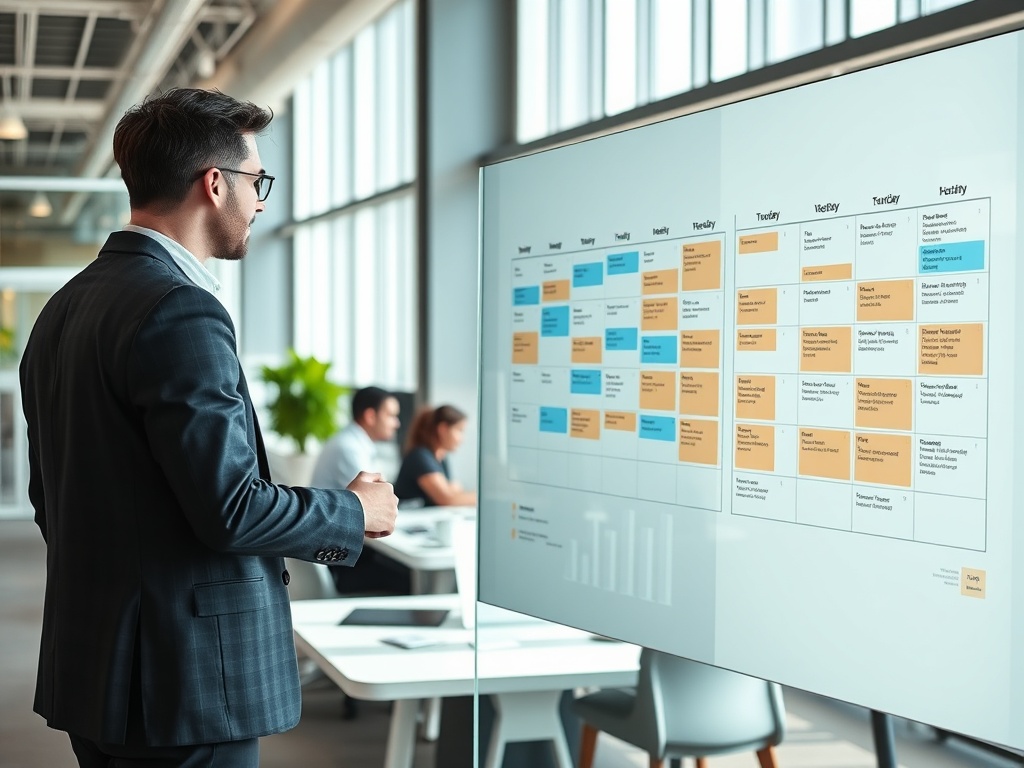
That shift has concrete implications for the architecture of meetings and cadences. Chris Gomes, Vice President of Product at Conveyer, eliminated weekly reports and biweekly product reviews and replaced that structure with short daily syncs. The logic is not to increase meeting time: it is to reduce the cost of correction when the team drifts, given that the team can now drift much faster and much further before anyone detects it.
Dr. Stefanie Tignor, Head of Data Science at Superhuman, attacks the problem from the information side: she automated a weekly summary that identifies five specific high-impact items for deep review, based on signals such as statistically significant movements in metrics, projects with high comment volume in Slack, or topics that appear across multiple executive presentations. Her thesis is direct: AI summaries flatten everything — they treat high-quality work and mediocre work the same way, and the result is too general to inform decisions. The value is not in consuming more summaries but in identifying where deep human attention makes a real difference.
What connects these three cases is not a common methodology but a design principle: the manager who tries to keep operating as the central editor of all their team's work in the new environment is not going to survive functionally. The one who defines precisely where their attention generates irreplaceable value and builds mechanisms so that the rest of the system functions without that attention can scale without burning out.
---
The Cost of Not Redesigning, and Why So Few Organizations Are Doing It
The gap between the speed of AI adoption and the speed of organizational redesign carries a cost that does not yet appear cleanly on financial statements, but that is building pressure on several fronts simultaneously.
The first is the burnout of middle management. Managers who try to keep up with the pace of review by working more hours are not being heroes: they are absorbing with their personal time a cost that the system's design should distribute differently. That burnout has a predictable conversion rate toward turnover and disengagement, which does show up in replacement costs and in the loss of institutional knowledge.
The second is the quality risk that flows out into the market. If the quality filter is overloaded, errors get through. In sectors where errors carry regulatory, reputational, or direct financial costs, this is not an internal communication problem: it is a business risk.
The third, less visible but more structural, is the loss of strategic coordination. When 87% of teams report having no time to coordinate because everyone is in execution mode, organizations are producing a great deal in many directions simultaneously. That is not a strategic portfolio; it is dispersion. And dispersion carries an opportunity cost that is rarely measured because it is difficult to see what was not done well due to a lack of alignment.
Organizations that are avoiding the redesign do so, in general, for an understandable reason: changing the manager's role involves ceding control over the process. The previous model gave leaders an illusion of granular oversight that felt like security. The new architecture asks them to trust well-oriented teams, equipped with clear metrics and explicit standards, without reviewing every single step. That requires an organizational maturity that cannot be built in a single quarter.
But the alternative is not free either. Every week that an organization leaves its manager operating as a bottleneck in an AI-accelerated system is a week in which burnout increases, quality degrades in an uneven and irregular way, and the competitive advantage that the technology promised dissipates into internal friction.
The technology has already made its decision. It accelerated. The question that every organization must answer with concrete decisions — not with declarations — is whether its management structure is designed for that speed, or merely designed to survive within it.
A design that is not updated does not stay the same: it deteriorates. And that deterioration rarely makes noise until it has already cost too much to ignore.