
Why Indian Discretionary Consumption Punishes Fast Food Chains and Rewards Jewelry Retailers
India's most comfortable macroeconomic phase in years has just come to an end. Ambit Institutional Equities says this bluntly in its latest sector report: FY27 arrives with two simultaneous pressures on discretionary consumption — slower demand and margin compression from crude-linked input inflation. What follows is not simply a portfolio rotation. It is a diagnosis of which business models have sufficient architecture to withstand that double blow, and which ones have only been absorbing it thanks to market conditions that no longer exist.
The Ambit analysis has a central finding that deserves careful attention: India does not follow the global pattern of resilience during economic slowdowns. In the United States, China, South Korea, and Southeast Asian markets, the fast food chain is the defensive asset of consumption when household budgets tighten. The standard reasoning is that the consumer does not stop eating out — they simply move one rung down from the casual restaurant to the counter burger. That "downward substitution effect" has solid empirical evidence in markets where cooking at home is expensive, complicated, or socially less common. In India, that logic does not hold. Cooking at home remains structurally cheaper than any organized fast food option, and that destroys the floor that protects the QSR segment when the economy cools.
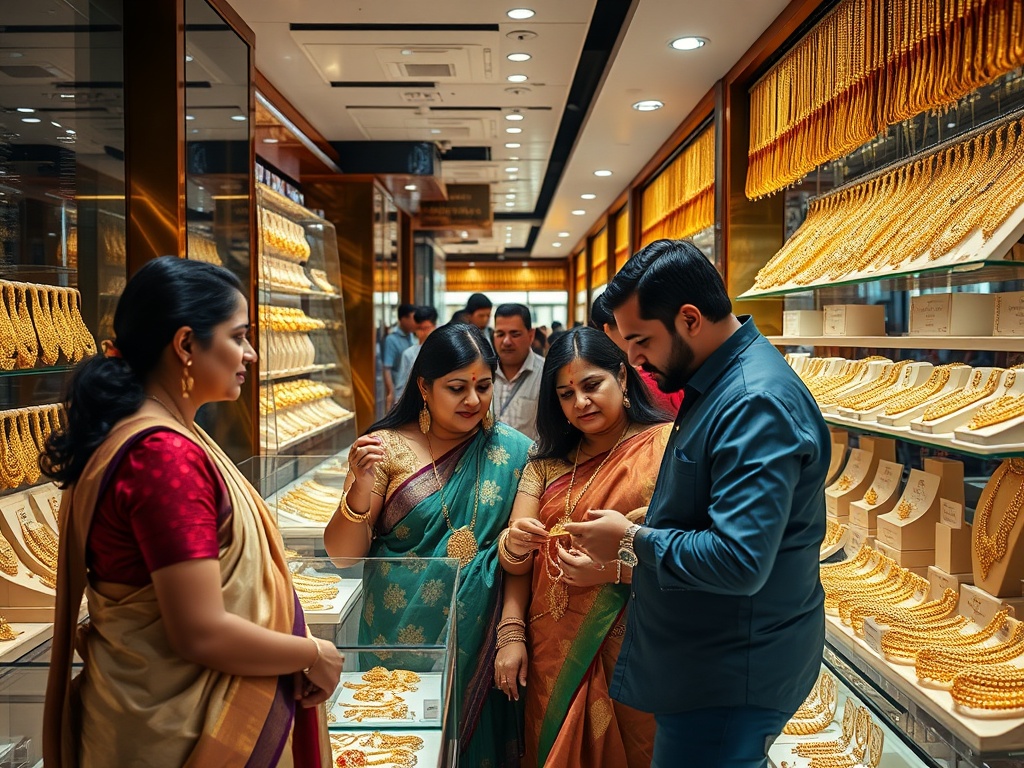
What does function as a buffer in India, according to Ambit, is jewelry. Not as a luxury category, but as a dual-function asset: occasion-based consumption with relatively inelastic wedding demand, plus a gold savings instrument with deep cultural backing. That dual role gives players like Titan Company Limited a form of protection that no hamburger franchise model can replicate.
Input Inflation as a Revealer of Business Structure
When an economy enters a high-cost cycle, what becomes visible is not only who has sufficient margin, but who built their business on assumptions of cheap inputs that have now reversed. Crude-linked inflation affects almost everything: packaging, synthetic textiles, transportation, composite materials. But the impact does not fall uniformly. It depends on three variables that Ambit identifies with precision: pricing strategy, balance sheet strength, and operating leverage.
Trent Limited and Vishal Mega Mart occupy a position that separates them from the rest. They are growth players with sufficient scale to absorb gross margin compression in the short term without deteriorating their competitive position. That capacity does not come from having fat margins — they are relatively lean for their segment — but rather from the fact that their expansion model generates store density and purchasing volume that allows them to negotiate better with suppliers and spread fixed costs over a growing base. They sacrifice margin now in order to capture market share while weaker competitors cannot keep pace.
At the other end of the spectrum are players such as Aditya Birla Fashion and Retail, V-Mart Retail, and Relaxo Footwears. Cost pressure will push them to raise prices before the market is ready to absorb them, and that opens up the risk of volume loss at a moment when demand is no longer growing fast enough to mask that kind of move. The problem is not that these are poorly managed companies. It is that they operate in the mid-premium segment with tighter balance sheets and lower negotiating power vis-à-vis suppliers, which turns every point of inflation into a dilemma between margin and volume with no clean way out.
Metro Brands, Page Industries, and Aditya Birla Lifestyle Brands have a different kind of protection: premium positioning that allows them to pass cost increases on to the consumer without destroying demand, because their customer base has lower price sensitivity. That protects them in an inflationary scenario, but does not make them immune to a deep slowdown in overall discretionary spending. Their resilience is real, but it has contextual limits.
The most structurally interesting position in terms of financial architecture belongs to DMart and Nykaa. They operate as distributors of third-party brands or as commission-structure platforms, which insulates them from the direct gross margin impact of raw material costs. They do not manufacture, they do not accumulate inventories of problematic inputs, and their margin depends more on transaction volume and category mix than on the production cost of what they sell. Lenskart adds an additional element: it is increasing in-house manufacturing, which in this cycle functions as a natural hedge against volatility from external suppliers.
The Factor Framework and What It Reveals About Growth Quality
Ambit uses a multifactor model to organize its recommendations, and the direction it points is clear: in slowdown phases, the factors that have historically generated returns are low volatility, quality, and financial strength. Those that underperform are value, point-in-time profitability, and high dividend yield. This has a direct implication for how one should think about the difference between growth and financial health.
Several of the names that Ambit places in the buy category — Titan, Trent, Metro Brands, Nykaa, Campus Activewear — are not necessarily the ones with the highest immediate profitability in the sector. Titan trades at elevated multiples for a jewelry and watch company. Trent operates at a P/E of more than 70 times on recent results that include quarterly revenues of 5,028 crore rupees and net profits of 413 crore. Those valuations are only justified if the market believes the growth rate will be sustained, which requires the business architecture to be capable of generating scale without destroying operating margins in the process. Trent's Zudio format has proven economies of scale with evidence of revenue growth exceeding 50% annually and multiplication of net profit in recent fiscal years. That is not narrative promise — it is market validation backed by numbers.
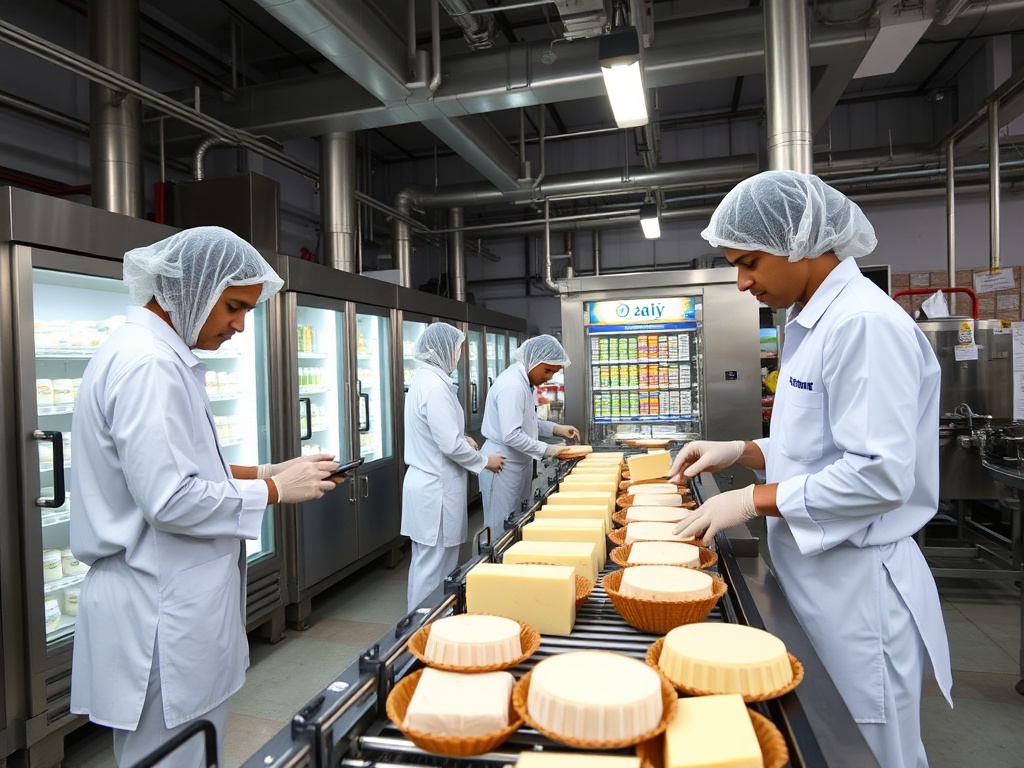
The opposite is true for QSR models. Jubilant FoodWorks, Devyani International, and Sapphire Foods India receive target price cuts of between 15 and 17 percent. The argument is not that these are operationally poorly built businesses — they are franchises of global brands with proven systems — but rather that the specific Indian context eliminates their structural advantage as a defensive asset. Without the substitution effect that protects them in other markets, the QSR model in India is exposed both to traffic declines and to margin compression from inputs, with neither the cultural buffer that jewelry enjoys nor the cost scale that mass-value formats possess.
The case of Aditya Birla Fashion and Aditya Birla Lifestyle Brands deserves separate mention. Ambit not only cuts revenue and margin estimates by 25%, but also raises the cost of capital by 50 basis points for both companies, citing "continued delays in profitability." That is a specific and weighty accounting signal: when an analyst raises the cost of capital, they are saying that the risk profile of the business has increased because there is no evidence that losses will reverse within the original horizon. It is not a penalty for a bad quarter. It is a structural adjustment to the way the market should be valuing future cash flows that continue to fail to materialize.
When the Business Model Depends on a Cycle That Has Already Changed
Ambit's decision to favor large capitalizations over small and medium-sized ones — the so-called SMIDs — carries a deeper reading than simple preference for established companies. In an environment where access to capital becomes more expensive and demand grows more slowly, businesses that need external financing to sustain their expansion face a double compression: lower revenue and a higher cost from the sources that previously funded that growth. Small companies with low internal cash generation are the most exposed to that effect.
This reveals something about the nature of the growth that several of these companies have reported in recent years. In a favorable macroeconomic cycle — low rates, growing demand, fluid access to capital — many business models that do not have solid unit economics can report sustained revenue growth over several quarters. The problem is that such growth does not build resilience; it simply postpones the moment when the underlying structure has to face more demanding conditions. When the cycle changes, the difference between growth funded by external conditions and growth generated by a healthy model becomes visible within a matter of weeks.
Titan has a balance sheet that allows it to operate in that environment without needing urgent financing. Trent has a validated expansion pace with growing profits. Metro Brands has margins and positioning that give it pricing room to maneuver. Nykaa and DMart have cost structures that are not directly exposed to manufacturing input inflation. That set of characteristics — low leverage, cash generation, pricing power, or cost insulation — is not coincidental. It is precisely what Ambit's multifactor framework prioritizes when the cycle ceases to be benign.
The operational lesson of the analysis is not that the Indian consumer is irrational for failing to behave like the American consumer when it comes to fast food. It is that every market has its own emergency substitutes, and designing a business model without having those substitutes mapped out is equivalent to building resilience on foreign assumptions. In India, the substitute for tightened discretionary spending is not the five-dollar menu. It is the pot on the stove at home. And no franchise chain can compete with that price.