
Xbox and the Premium Hardware Trap Amid an Unprecedented Component Crisis
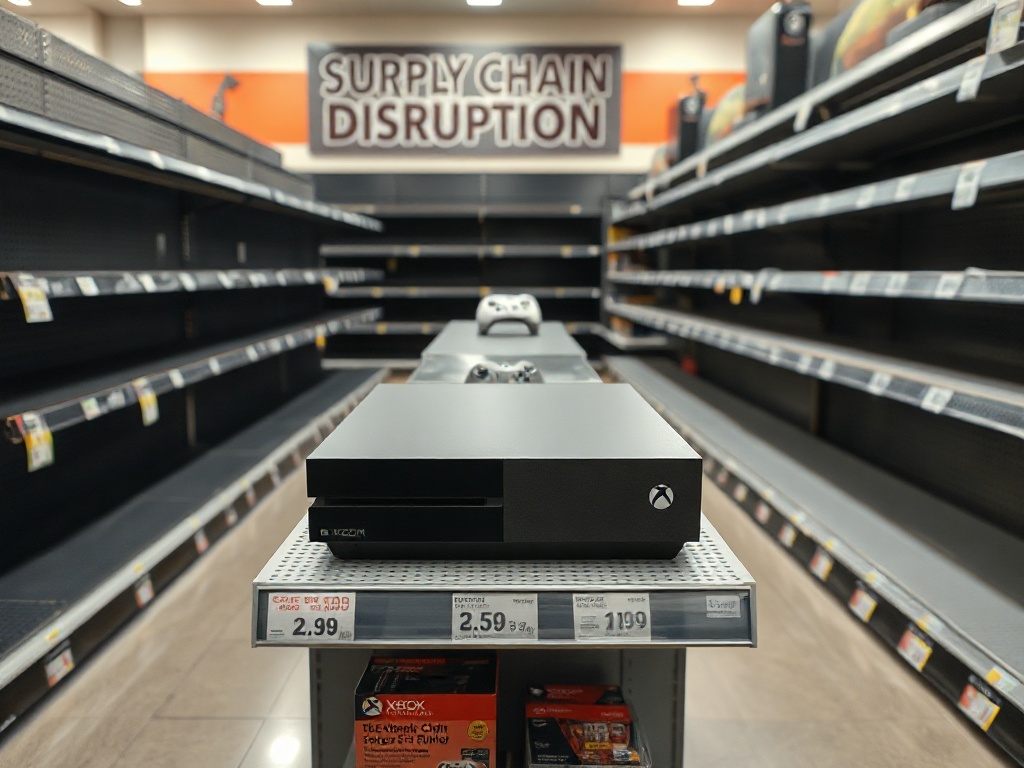
Microsoft has spent two decades building Xbox on a simple premise: sell hardware near cost, recover the margin through software and services. That model worked as long as components were predictable and generational cycles were stable. Today, a severe contraction in the global memory and storage market — informally dubbed "RAMageddon" — is pushing that structure to the point where its own executives describe the situation as a crisis affecting the entire industry.
Xbox CEO Asha Sharma said it without euphemism in an interview with Fortune: "In hardware, we are in a crisis right now, and the whole industry is." Matthew Ball, Xbox's head of strategy, completed the picture from another angle: Microsoft is "rethinking everything it can" about Project Helix, the internal name for its next-generation console, with the goal of ensuring it is both affordable and flexible. The word both of them converge on when describing the path they are exploring is the same: "radically different" business models.
That is not roadmap language. It is the language of an organization that has detected that its current architecture is not sufficient to get it where it needs to go.
When the Hardware-as-Entry-Point Model Stops Scaling
The classic console model functions as a two-stage lever: hardware enters the market with compressed or negative margin, and software — whether licensed from third parties or developed in-house — rebuilds the financial equation over the course of the generation. Microsoft expanded that model with Xbox Game Pass, adding a layer of recurring revenue that partially decouples the volume of hardware sales from the volume of active players.
The problem is that this design presupposes a console launch price that the mass consumer can absorb. Sharma put it with uncomfortable precision: "We've gotten to a point where it will be hard to imagine mass audiences being able to pay thousands of dollars for a console generation." She is not talking about the price of a single device. She is talking about the total cost of participating in an ecosystem over four or five years: hardware, accessories, additional storage, subscriptions. The sum becomes prohibitive for the segment that has historically sustained adoption volumes.
In October 2025, Sarah Bond, then president of Xbox, described Project Helix as "a premium, high-end, curated experience." Eight months later, with memory and storage costs in sustained increase and no clear signs of short-term stabilization, that positioning turns out to be incompatible with the goal of mass access. The tension is not rhetorical: it is a structural contradiction that now forces a redesign of the product before it even reaches the market.
What that sequence reveals is not a forecasting error. It is an organization that explored toward the premium segment when the environment allowed it, and that now must pivot without having yet built the infrastructure to operate under a logic of flexible portfolio management. The pivot is not impossible, but it carries design costs that Xbox's public discourse barely hints at.
The Portfolio Xbox Is Trying to Build in Real Time
Sharma pointed to several possible levers in her public remarks: different storage configurations at different price points, new compression techniques to reduce local memory demand, different access plans to broaden the base of participants, and a more explicit bet on experiences outside the console — which, in practical terms, points to a deepening of the cloud gaming business through Xbox Cloud Gaming.
Each of those levers implies a distinct organizational design decision. Offering multiple SKUs with different storage capacities is not just an engineering decision: it requires differentiated distribution channels, consistent portfolio communication, and an incentive structure that does not cannibalize the higher-end segment. Deepening investment in cloud gaming means investing in server infrastructure, reducing latency in key markets, and redefining what "the Xbox experience" means for someone who will never have a console in their living room.
Ball, in his interview with The Game Business, argued that Project Helix remains a firm commitment. The console is going to exist. The question that Microsoft has still not answered publicly is how central that console will be within a portfolio that, by definition, will have to operate simultaneously at multiple price points and access levels. That ambiguity is not strategic: it is a signal that the organization is processing a reconfiguration while still in motion.
The next-generation console has already been confirmed as capable of running both Xbox and PC games, which positions it more as a hybrid-category device than a traditional console. That convergence expands the available catalog without requiring additional exclusive developments, but it also complicates the message to the consumer. A device that simultaneously competes with the PlayStation 6, desktop PC gaming, and the handheld market of devices like the ROG Ally needs a very clear value proposition. So far, Xbox has indicated the general direction without specifying the final form.
The Structure That Is Creaking Before the Console Even Reaches the Market
There is a significant difference between a company that redesigns its business model in anticipation and one that redesigns it under external pressure. Microsoft is currently operating in the second scenario. Not because it is an organization incapable of planning, but because the collapse in memory and storage prices has accelerated a conversation that the industry would have had regardless — just at a less urgent pace.
The organizational design underlying Xbox's problem has a recognizable characteristic: the business unit efficiently exploited what it had — Game Pass, the two-SKU model with Series X and Series S, the first-party studios — without simultaneously building the flexible access mechanisms it now urgently needs. That is not negligence; it is the habitual pattern of organizations that prioritize execution of the current model and postpone exploration until the environment forces their hand.
The most useful signal this episode offers is not the one coming from the hardware. It is the one coming from the timing. Sharma says that radically different models will "start to appear later this year." That means Microsoft is designing while the clock is running, with a product in development whose component costs remain uncertain and with a consumer base that is already facing price pressure in the current generation. Demand does exist — Sharma herself acknowledged that there is more demand than supply for the current generation and anticipates the same will happen with Helix — but demand does not resolve the price equation if the cost of manufacturing makes a mass-market entry point impossible.
What Microsoft is attempting is to build an access portfolio in real time, without having finished defining the anchor product of that portfolio. It is an exercise in organizational design under adverse conditions, and its outcome will depend less on the quality of the technology than on the speed with which the organization can create decision-making structures, metrics, and channels that operate under the logic of multiple simultaneous segments — without the inertia of the premium hardware model freezing every decision that deviates from it.
An organization that for years measured Xbox's success in terms of hardware power, high-profile exclusives, and the perceived value of the Game Pass subscriber now needs to add metrics of accessibility, conversion rate from cloud gaming, and price elasticity by segment. Changing internal metrics is, more often than not, harder than changing the product itself. Metrics shape what gets approved, what gets funded, and what gets killed before it can grow. If Xbox does not recalibrate that layer before Helix reaches the market, the risk is not that the console will launch at too high a price. The risk is that the organization will make the right engineering decisions and the wrong portfolio design decisions, and that the result will be a product that no one can criticize technically but that nonetheless fails to achieve the mass adoption Microsoft needs to sustain the ecosystem.
A company that must redesign its business models while manufacturing the very product those models are supposed to sustain does not have a vision problem. It has a sequencing problem — and resolving the wrong sequence costs entire generations.