
India Burns More Coal While Promising Clean Energy
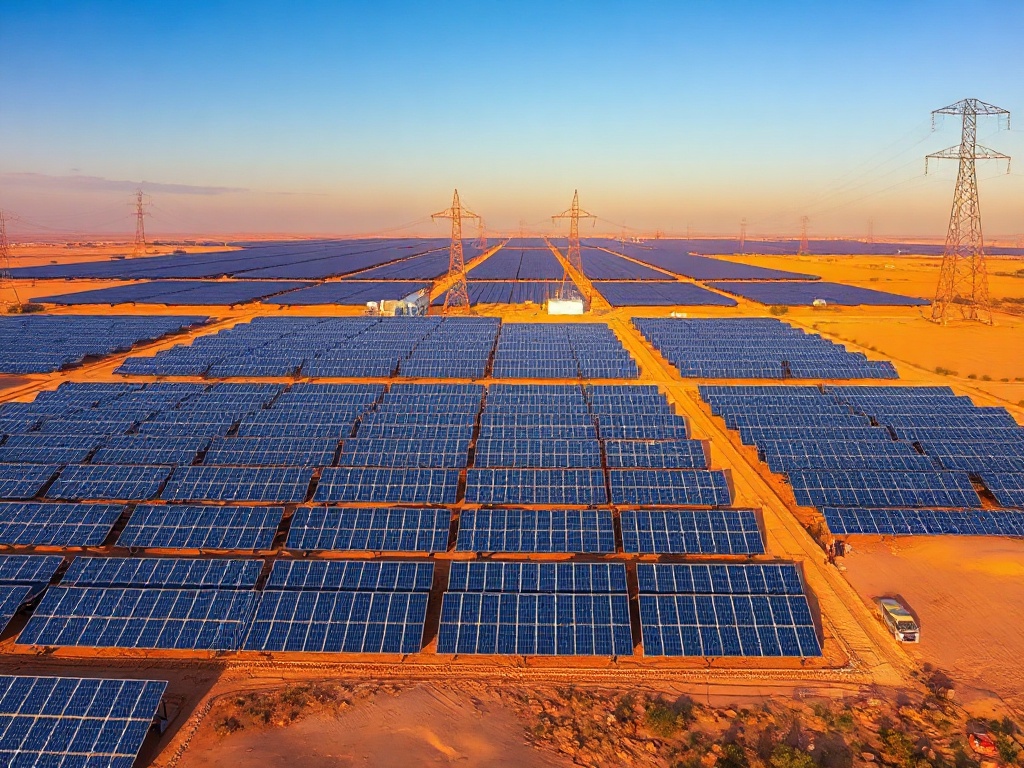
The world has grown accustomed to the contradictions of major emerging powers, but the one India presents deserves special executive attention. The country has one of the most ambitious renewable energy programs on the planet: 500 gigawatts of non-fossil capacity by 2030, with renewables already surpassing 50% of total installed capacity. At the same time, coal generates around 75% of the electricity consumed by 1.4 billion people. For any binary mental model, that appears to be a contradiction. For those who understand the real dynamics of energy transitions in emerging economies, it is a perfectly rational risk management decision.
Morgan Stanley calls it a "deliberate recalibration." I call it something more precise: the real cost of scaling green energy without having solved the intermittency problem. And that cost is being paid in tonnes of coal.
Coal as a Contingency Asset, Not an Ideology
India imports approximately 85% of its crude oil and around 50% of its natural gas. When instability in the Middle East shakes fuel markets, India cannot simply pivot to another dispatchable energy source. Coal, on the other hand, is produced locally and already surpassed 1.047 billion tonnes in fiscal year 2024–25, a year-on-year growth of 4.98%. Strategic reserves stand at around 210 million tonnes, equivalent to nearly 90 days of consumption.
That is not blind dependence on coal. It is an energy security architecture built on the only energy source the country can control without relying on maritime routes, international contracts, or geopolitical fluctuations. The logic is that of any CFO who maintains liquidity even when capital is tied up: it is not about preference for the least profitable asset, but about having the capacity to respond to extreme scenarios.
The operational problem that no one solves by merely citing renewable installation percentages is this: installed capacity does not equal energy generated. India may have 50% of its capacity in non-fossil sources, but if the sun does not generate energy at night and the wind does not blow during monsoon season, the system requires dispatchable backup. Today, that backup is coal. Thermal plants no longer operate solely as baseload generation, but as flexible assets that are activated during evening peaks when solar generation drops sharply. Peak demand exceeded 256 GW during a recent heat wave, a historic record. Without coal, that peak would have been impossible to cover.
The Gap That Separates Installed Capacity from Real Transition
The narrative that "renewables have already surpassed 50% of installed capacity" is technically accurate and strategically insufficient. In the 6Ds model of exponential disruption, India is in a phase that most analyses overlook: the Disappointment phase, that period in which technology grows exponentially on paper but has not yet displaced the dominant infrastructure because the auxiliary systems are not yet ready.
The problem is not solar or wind generation itself. The problem is that the transmission grid, battery storage, and the digitalization of grid management have not grown at the same pace. There are physical bottlenecks causing curtailment — that is, renewable energy that is generated but never reaches the consumer because the infrastructure cannot carry it. As long as those bottlenecks exist, coal will continue to serve as the system's insurance policy, regardless of how many solar panels are installed.
Morgan Stanley projects 800 billion dollars in cumulative investment over the next five years, with the investment rate scaling to 37.5% of GDP by 2030. Close to 60% of that capital will be directed toward energy transition, defense, and digital infrastructure, with the electricity sector requiring nearly 300 billion dollars through 2031. These are figures that indicate the infrastructure gap is being addressed seriously, but they also reveal that the transition requires time and capital that has not yet been deployed. Coal does not disappear by decree: it disappears when storage, transmission, and digital grid management can guarantee the same level of reliability that a thermal plant offers today. The coal exit is not a political declaration; it is an engineering milestone with a funding requirement attached to it.
Nuclear Energy as a Signal of the True Long-Term Plan
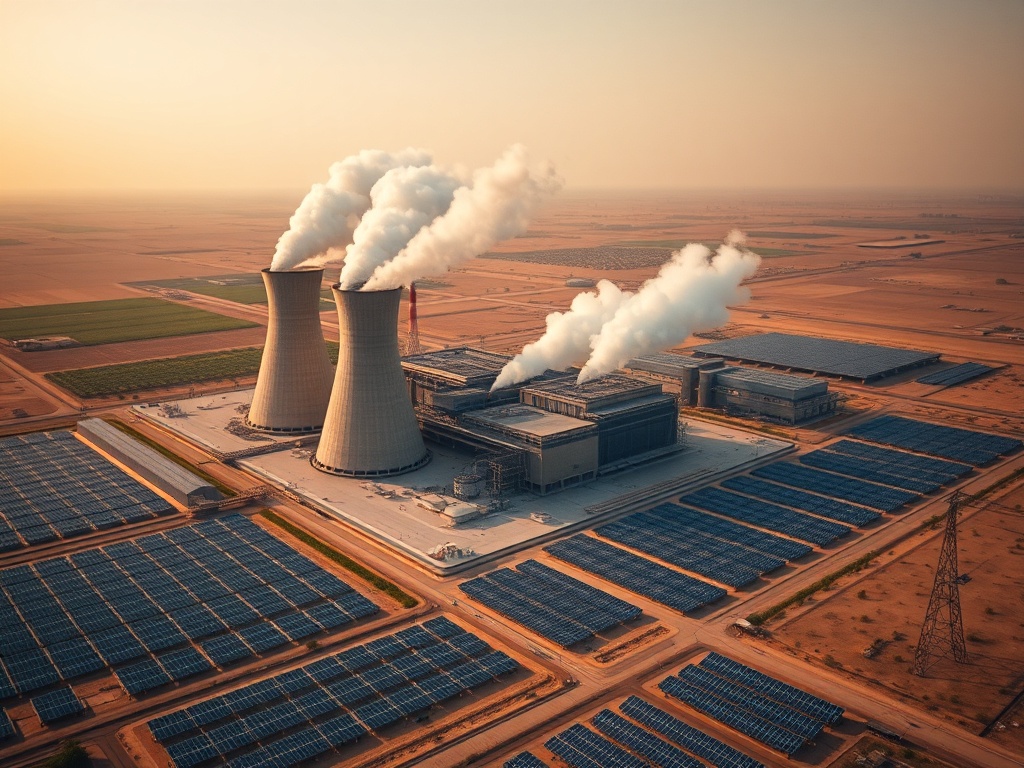
There is one piece of the puzzle that headlines about coal and renewables tend to ignore: the quiet return of nuclear energy. Today it accounts for less than 2% of India's installed capacity, but the government aims to scale that figure to more than 22 gigawatts by the early 2030s, with an emphasis on small modular reactors that can be integrated into grids with high renewable penetration.
That bet has a logic that no other energy resource can replicate: firm, low-carbon generation, with no exposure to international fuel prices and a power density that renewables cannot match. For the data centers, vehicle electrification, and industrialization that lie ahead for India, nuclear offers exactly what coal offers today — but without the emissions. The strategic decision to bet on nuclear while scaling renewables and maintaining coal as short-term backup reveals a layered plan that very few governments have the discipline to execute.
The Disappointment phase of India's energy transition will not last forever. The first recorded decline in coal generation in 52 years occurred in 2025, driven 44% by the expansion of clean energy. The tariffs for new coal plants are approaching 6 rupees per kilowatt-hour (around 68 dollars per megawatt-hour), a threshold that already renders them economically indefensible against renewables with storage. Coal will continue to serve as the system's anchor while grid infrastructure is being built, but its function as a contingency asset has an expiration date inscribed in its own economics. Disruption does not arrive when the discourse changes; it arrives when the marginal cost of the alternative makes the incumbent unviable. India is managing that transition with deliberation, not paralysis.