
When Fuel Doubles in Price and the Model Can't Hold Up
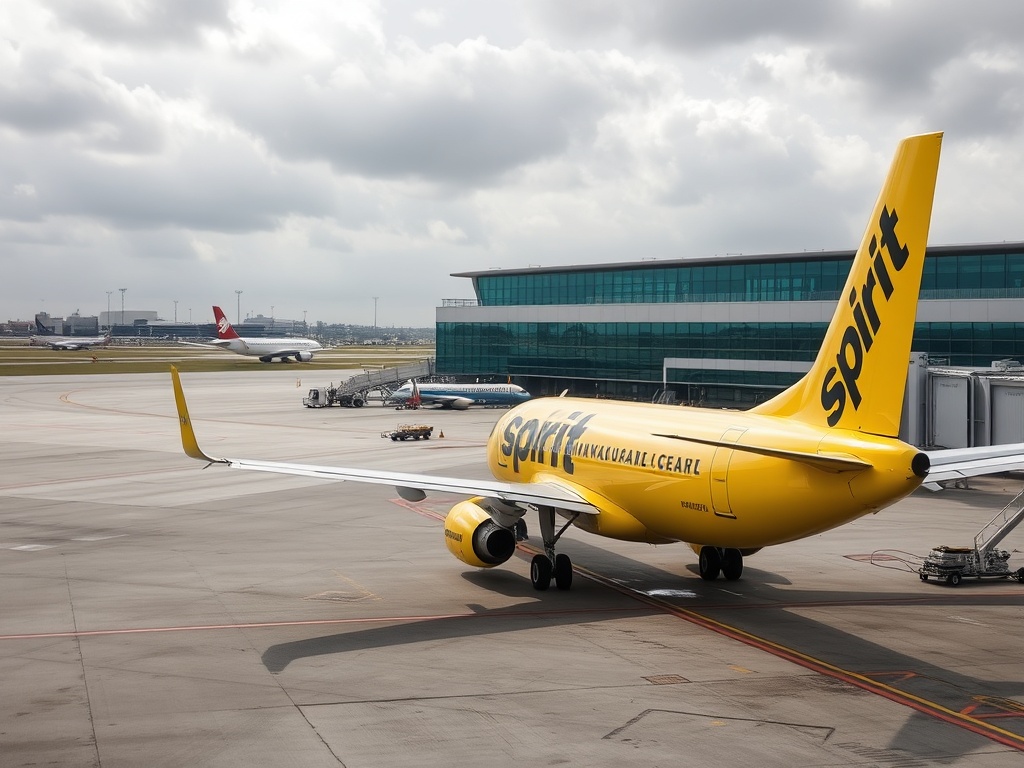
On the afternoon of Saturday, May 2, 2026, Spirit Airlines issued a statement that left no room for ambiguity: a total cessation of operations, zero flights, an express instruction to passengers not to approach airports. Seventeen thousand employees lost their jobs within a matter of hours. The airline that had spent decades fighting for the cheapest seat in the American market closed without a successor, without a merger, without a bailout. Just the statement and the silence of the engines.
The following Monday, Frontier Airlines shares rose 10% and JetBlue's rose 4%. The markets did what they always do when a direct competitor falls: redistribute expectations of market share. But that stock market reaction, so readable on the surface, conceals a more uncomfortable reading about what kind of fragility had just been exposed and about whether the beneficiaries are in a better structural position or simply less exposed for the moment.
The Model That Assumed Fuel Would Cost the Same Forever
The collapse of Spirit was not a surprise to those who had been following its cost structure. The airline had built its restructuring plan on a specific hypothesis: aviation fuel would cost $2.24 per gallon in 2026 and $2.14 in 2027. That projection was not reckless in the abstract; it was reasonable given the environment of recent years. The problem is that cost projections in sectors with direct geopolitical exposure are not a technical parameter — they are a bet on the state of the world.
When the conflict with Iran escalated in the early months of 2026, the price of aviation fuel reached $4.51 per gallon by the end of April. Double what had been projected. For an ultra-low-cost operator whose operating margin depends on keeping variable costs within razor-thin ranges, that jump is not an accounting adjustment: it is a demolition of the entire financial logic. There is no ancillary revenue, no load optimization, no fleet redesign capable of absorbing that differential in the timeframe in which it occurred.
Spirit's model, in its pure form, was structurally fragile in the face of fuel shocks precisely because it had been optimized for efficiency under stable conditions. It had sacrificed robustness for low operating costs. That trade-off makes sense as long as the environment is predictable; it becomes a fatal vulnerability when the environment ceases to be so. It is not that Spirit mismanaged fuel risk: it is that its business model had no absorption mechanism in the face of volatility of that magnitude, and the fuel hedges that some operators maintain as a structural buffer were not enough to compensate for the difference.
Here lies the hardest lesson for the sector: extreme efficiency and resilience against external shocks are, in part, objectives that compete with each other. A model can be perfectly calibrated to win under normal conditions and be completely incompatible with survival when conditions change abruptly. Spirit arrived at its 2026 crisis already weakened by its 2024 bankruptcy, by the failed merger attempt with JetBlue blocked by a federal judge, and by years of margins under pressure in a saturated segment. The price of fuel was the final trigger, not the sole cause.
What JetBlue and Frontier Are Capturing and What They Still Have to Prove
The response from both airlines on Monday, May 4, was fast and operationally coherent. JetBlue announced — from Fort Lauderdale, one of Spirit's core markets — an expansion to eleven new cities and additional frequencies on existing routes. Frontier launched discounts across its entire network and added summer routes. Southwest introduced special fares. United capped the price of its one-way tickets. American added rescue fares and revised capacity on its most affected routes.
That speed of response says something about the operational preparedness of the survivors. They are not moving like companies caught off guard: they are moving like organizations that had expansion plans on standby, contingent on there being space in the market. That alone is a signal of more sophisticated capacity management than what Spirit exhibited in its final years.
Nevertheless, the stock market jump of 4% and 10% deserves to be read with precision before drawing conclusions about the quality of the business. The markets are discounting the potential capture of displaced passengers and the possibility of exercising greater pricing power on routes where Spirit had been the most aggressive operator. That is real. But JetBlue arrives at this moment with its own deteriorated balance sheet, with years of operating losses, with the blocked merger as a recent strategic defeat, and with the same fuel pressure that brought Spirit down, albeit with a slightly less exposed cost structure by virtue of operating a differentiated service model.
Frontier, for its part, is an ultra-low-cost operator with a structure more similar to Spirit's than to JetBlue's. Its 10% rise reflects expectations of short-term market share capture, but does not resolve the fact that it operates in the same niche with the same exposure to fuel prices. The difference is that Frontier emerges from this event without the burden of a prior bankruptcy and with cleaner access to capital markets.
The strategic gain for both is genuine: more available seats on high-density leisure routes, less pricing pressure from below, and passengers who need immediate alternatives. On the Fort Lauderdale–Caribbean destinations or domestic beach routes segment, Spirit was the price floor. Without that floor, the fare equilibrium shifts upward. That is profitable for the survivors as long as they can fill the additional seats without destroying their own cost structures in the attempt to absorb capacity quickly.
The Risk That Markets Are Ignoring This Week
The most common error when analyzing the fall of a competitor is to assume that the survivor's advantage is automatic and durable. Capturing market share has operational costs: taking on routes, hiring crew, adjusting airport slots, managing the sudden demand from displaced passengers who did not voluntarily choose the airline they are now heading toward. JetBlue and Frontier are not capturing a stable business; they are capturing dislocated demand in an adverse fuel cost environment.
Fuel is at $4.51 per gallon because there is an active conflict in the Middle East. That conflict did not end with Spirit's closure. If prices remain elevated throughout the summer of 2026, the same factor that sank Spirit will continue to compress Frontier's margins and, to a lesser extent, JetBlue's. The difference is that neither of the two arrives at this moment in the process of liquidation, which gives them operational runway that Spirit no longer had. But operational runway is not immunity.
There is another element that investors are incorporating implicitly but that deserves to be made explicit: the pricing power that Spirit had been suppressing for years on its routes can now be partially recovered. This is what analysts call post-consolidation fare discipline. When the most aggressively priced operator disappears, the others can raise base fares without losing passengers to the cheapest competitor, because that competitor no longer exists. Historically, on routes where mergers or bankruptcies have eliminated the most extreme low-cost operator, average fares have risen between six and twelve weeks after the event. That adjustment is what the markets are anticipating with Monday's stock market gains.
The risk is that this anticipation is already priced into the share price before it materializes in earnings. If fares rise but fuel remains expensive, the net margin improves less than projected. If the conflict escalates and fuel rises further, the equation turns negative even with the benefit of market capture. And if leisure demand — which is the central segment for both Frontier and JetBlue — contracts due to the broader economic impact of the conflict, the additional seats will not be filled at the expected price.
None of those scenarios is the most likely at this moment. But neither are they improbable, and the 10% rise in Frontier is not discounting them.
A Market Vacuum Does Not Substitute a Structurally Sound Model
The closure of Spirit clears competitive space. That is a fact. What it does not do is resolve the question of whether JetBlue and Frontier have the financial architecture necessary to convert that space into sustained profitability under adverse fuel conditions.
JetBlue has lost money consistently for several years. Its differentiation — greater comfort, extra-legroom seats, included service — gives it room to charge more than Spirit but does not protect it from the same fuel shocks that affect the entire sector. Frontier has a lower cost structure but operates in the same leisure niche, with the same exposure to the cycle. Neither of the two has fuel hedges that materially insulate them from what is happening with the price of crude oil.
What the collapse of Spirit does is give them time. Time to capture routes, to raise fares marginally, to demonstrate to their investors that the most aggressive price competitor is no longer in the picture. But time does not change the structure of the dominant variable cost that defines their profitability. The sector's fragility in the face of geopolitical shocks that double the price of fuel within weeks did not disappear with Spirit: Spirit was simply the first to lack sufficient capital to survive the wait.
The structural quality of the growth that JetBlue and Frontier will report in the coming quarters will depend on whether they are capturing genuine demand at prices that cover their real costs, or whether they are filling seats with rescue fares that erode their average margin. The speed of expansion is not evidence of solidity: it is evidence of operational opportunism, which is valuable, but whose real financial consequences will take at least two quarters to become legible. Until then, the market is buying a promise about the future of a sector that has just lost one of its players to a cause that has not disappeared from the context.