
China's Green Alliance and Southeast Asia as a Climate Governance Laboratory
While major multilateral forums accumulate declarations without any financial architecture behind them, a region that represents more than 30% of the global population has spent a decade building something different: a network of climate cooperation with functioning projects, committed capital, and transferred capacities. The comprehensive strategic partnership between China and ASEAN is not merely a diplomatic agreement. It is a model of value distribution that deserves to be audited with precision, precisely because it functions under conditions where other models fail.
The Secretary-General of the ASEAN-China Centre, Shi Zhongjun, described this cooperation as "an essential path to achieving regional sustainable development" that has already delivered "substantial development dividends" to both parties. That phrase, spoken to mark the fifth anniversary of the partnership, encapsulates something more than diplomatic rhetoric: it encapsulates a structure that holds up to scrutiny when measured by its results.
What the Numbers Reveal About the Real Architecture
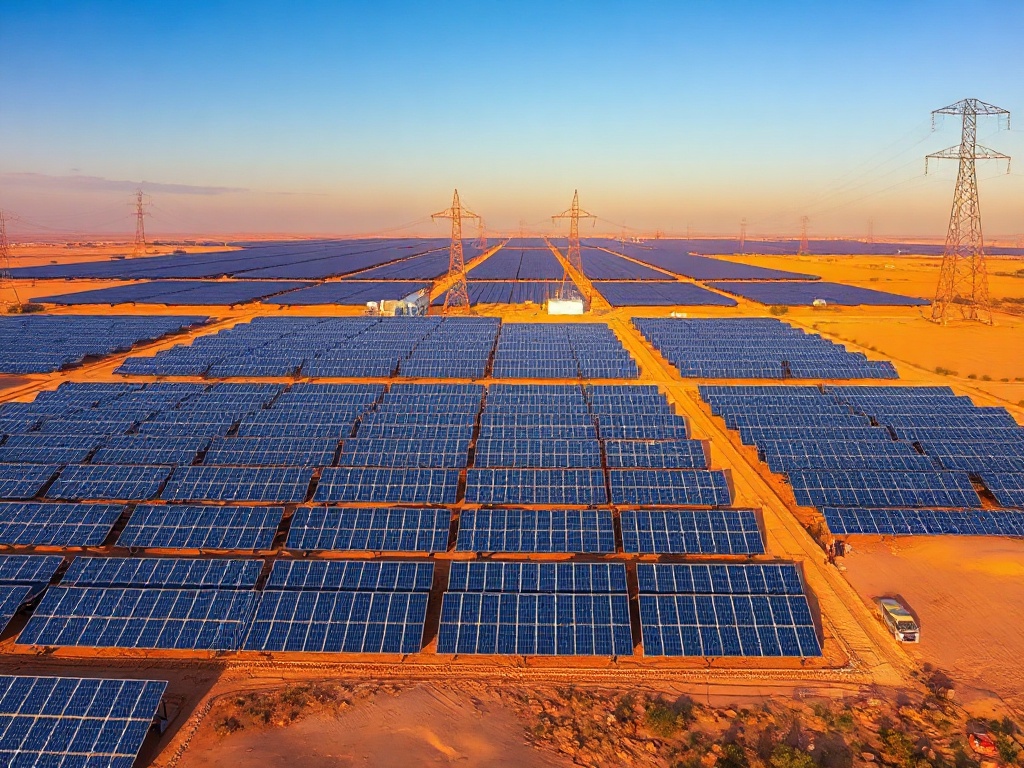
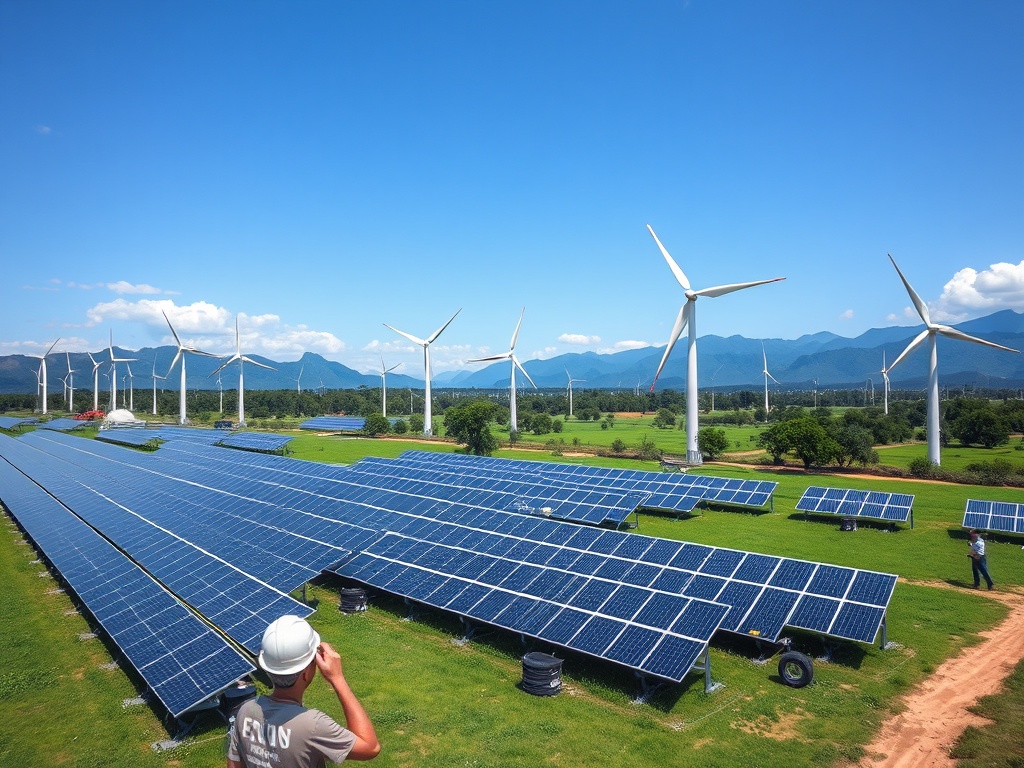
From 2014 through the end of 2024, total investment in hydroelectric, wind, and photovoltaic energy projects under China-ASEAN cooperation grew more than fivefold. Installed capacity multiplied fifteenfold. These are not projections or pending commitments: they are accumulated execution figures spanning a decade.
The ASEAN Investment Report 2025, published by the ASEAN Secretariat, records that Chinese companies accumulated 5.2 billion dollars in greenfield energy projects within the region between 2019 and 2023. Analysis by Zero Carbon Analytics confirms that China was the leading source of public investment in clean energy for Southeast Asia during the period 2013–2023 and leads clean energy trade with ASEAN markets.
These figures matter because they answer the question that any impact audit should ask first: is the impact sustained by an economic structure that does not depend on the situational generosity of a donor, or does it depend on a financing cycle that could be interrupted without prior notice? In this case, the scale and consistency of investment over ten years indicates that there is economic rationality at both ends of the relationship. China exports technology, capital, and operational expertise. ASEAN offers abundant renewable resources, markets in accelerated energy transition, and structural infrastructure demand that does not disappear with the political crises of the Global North.
The Action Plan to implement the ASEAN-China Comprehensive Strategic Partnership 2026–2030, adopted in 2025, formalized three operational pillars: strengthening green industrialization, developing and applying new energy technologies, and mobilizing green investment. The sequence is not coincidental. Industrialization first, then technology, then capital. It is the logic of a model that seeks to transfer capabilities, not to create dependence on perpetual exports.
Where the Structure Becomes More Interesting Than the Headline
The Lower Sesan II hydroelectric power plant in Cambodia, completed in 2018 by the Chinese group Huaneng, illustrates the concrete mechanics of this model. With an annual output of 1.97 billion kilowatt-hours, it supplies the electricity needs of approximately 2.6 million people. But what makes the project analytically relevant is not just the installed capacity: it is the parallel program for training Cambodian electrical engineers over a decade, with direct mentoring by Chinese experts. By 2025, more than 20 Cambodian engineers were working at the facility.
That changes the dependency equation. A project that merely exports electricity generates a supplier-client relationship. A project that simultaneously builds local technical capacity generates something more complex: an installed knowledge base that the recipient country can operate and eventually replicate with less external assistance. The distinction matters because it defines whether the impact survives the withdrawal of the original financier.
The same pattern appears in the China-Cambodia Low Carbon Emission Demonstration Zone in Preah Sihanouk Province, launched in 2019 with the provision of photovoltaic systems, solar streetlights, and capacity-building programs. In 2024, the joint China-Cambodia research on critical karst zones was included by the United Nations Office for South-South Cooperation as a "good practice in South-South cooperation for sustainable development." That external validation is not minor: it means the model passed through an independent evaluation filter.
The Monsoon wind energy project in Laos and the Sejingkat energy storage project in Malaysia complete the pattern: projects that are not extractive in their design, that operate in countries with different levels of institutional development, and that share the characteristic of creating infrastructure that remains after the construction contract ends.
The Secretary-General of the ASEAN-China Centre was explicit about the geopolitical logic underpinning this: "Without attached political conditions." That phrase carries specific weight because one of the recurring failures of North-South climate cooperation has been precisely conditionality. Multilateral climate funds frequently arrive tied to institutional reforms, governance standards, or political alignments that recipient countries cannot or do not always wish to adopt. The absence of conditionality is not merely a diplomatic argument; it is a friction variable that, when eliminated, accelerates implementation.
The Model the Global South Didn't Have but Can Now Replicate
This is where the analysis becomes most relevant for those designing cooperation models outside this region. What China and ASEAN have built is not simply a successful bilateral relationship. It is a demonstration that the transfer of capabilities in clean energy can be structured without the typical conditionality mechanisms that slow down or distort conventional climate cooperation.
China-ASEAN bilateral trade reached 6.82 trillion yuan in the first eleven months of 2025, an increase of 8.5% year-on-year. Electric vehicles were one of the drivers of that growth. This indicates that green cooperation does not operate in a compartment separate from the real economy: it is integrated into general trade flows, which gives it a sustainability that grant-financed cooperation projects rarely achieve.
The ASEAN-China Green Ambassadors Programme, which organized more than 30 activities on climate change, low-carbon development, the green economy, atmospheric governance, and environmental compliance, functions as the human capital formation arm of this model. It is not a public relations event; it is the knowledge infrastructure that sustains the capacity of recipient countries to absorb and manage the incoming green investment.
What makes this model technically replicable for other regions of the Global South is its three-layer structure: first, investment capital with economic rationality for the investor; then, operational technology transfer; then, local capacity building. All three layers need to be present simultaneously. Models that have only the first layer create dependence. Those that have only the third layer do not scale. The strength of the China-ASEAN architecture is that all three operate in parallel within the same project.
Shi Zhongjun articulated it with precision: "China possesses a complete green industrial chain, leading new energy technology, and mature experience in green development. ASEAN, for its part, has abundant renewable energy resources and a vast market potential for green transformation. Our strengths are complementary, our needs are aligned." That complementarity is not a marketing argument. It is the description of an exchange structure in which both parties have something the other needs and cannot easily obtain elsewhere.
The Climate Governance That Does Not Wait for Perfect Consensus
The most relevant contribution of this model to the global debate on climate governance is neither technical nor financial. It is methodological. While multilateral forums negotiate general commitments under the Paris Agreement, China and ASEAN execute specific projects that reduce emissions, install renewable capacity, and train local engineers. The scale may be regional, but the demonstration is global: South-South climate cooperation can advance without waiting for multilateral mechanisms to resolve their structural blockages.
This has implications for how global climate governance is conceived. The conventional model assumes that climate financing flows from North to South through multilateral mechanisms with institutional conditionalities. What the China-ASEAN alliance demonstrates is that a South-South flow can exist with its own economic rationality, superior execution speed, and lower political friction. It does not replace multilateral financing, but it offers an alternative architecture that functions where the conventional model stalls.
The 2026–2030 framework establishes concrete commitments on green industrialization, new energy technologies, and green investment. If the execution of the next decade replicates the trajectory of the previous one, the region will have demonstrated that reducing emissions and creating productive capacities are not objectives in tension but can be designed to reinforce each other mutually. That is, structurally, what other models of climate cooperation have spent decades attempting to prove without achieving the same consistency of results.