
Iran's War Accelerated What Decades of Climate Policy Could Not
On February 28, 2026, the United States and Israel launched military strikes against Iran. In less than a week, the price of oil surged by 28%. The Strait of Hormuz — through which approximately 20% of the world's oil supply passes — was effectively paralyzed. Qatar, one of the planet's largest exporters of liquefied natural gas, suspended production following drone attacks. The world simultaneously lost access to 11 million barrels per day of crude oil and 20% of global LNG trade. To put that in perspective: that deficit exceeds in magnitude the combined oil shocks of 1973 and 1979.
Ten weeks after the war began, two Danish wind turbine manufacturers and a Norwegian oil company reported earnings that exceeded market estimates. All three, for different reasons, benefited from the same shock. That coincidence is not an irony. It is the clearest signal yet that the logic that had long ordered the global energy sector is being replaced by another.
The Shock That Made Renewables Competitive Without Subsidies
For years, the economic argument in favor of renewable energy rested on a fragile equation: oil and gas prices had to remain sufficiently high, or subsidies had to be sufficiently generous, for the cost parity between renewables and fossil fuels to appear credible. That equation depended on stable political conditions, frictionless global supply chains, and governments willing to sustain long-term climate commitments under electoral pressure. None of those three conditions was reliable.
What the conflict in Iran did in a matter of weeks was to alter the denominator of that calculation in a brutal and possibly lasting way. With crude oil near 100 dollars per barrel — up from 60 dollars before the war — and LNG prices rising by more than 50%, wind energy already installed or under construction is not competing with cheap fuels: it is competing with scarce and expensive fuels. That is a structural difference, not a cyclical one.
Vestas, the world's largest turbine manufacturer, reported its best first-quarter result since 2018. Its chief executive, Henrik Andersen, did not attribute the performance to an improved regulatory environment or new subsidies. He attributed it to better operational execution across its onshore and offshore businesses in a context where demand no longer needs to be artificially stimulated. Orsted, the Danish utility that in recent years had accumulated cost overruns and supply chain friction, also beat estimates in the first quarter. Its chief executive directly linked the result to events in the Middle East, with a statement that deserves more attention than it received: Europe spends billions every week on fossil fuel imports, and that does not have to be the case.
What is remarkable is not that Orsted said something politically correct. What is remarkable is the context in which it was said: an environment where that statement suddenly became a financial argument rather than a moral one.
Why Equinor Is the Most Honest Indicator of the Transition
If Vestas and Orsted are the direct beneficiaries of the shift toward renewables, Equinor is the most precise thermometer of what is changing in the logic of companies that have historically resisted that shift. The Norwegian oil company reported its strongest quarter in three years, driven by record prices for fossil fuels. That is not surprising. What deserves attention is what its chief financial officer, Torgrim Reitan, stated in an interview with CNBC: that the conflict in the Middle East is generating additional returns in the company's energy transition division, and that the drivers of change have shifted from decarbonization toward energy security, self-sufficiency, and independence.
That distinction is not merely semantic. For years, pressure on oil and gas companies to integrate renewables came primarily from three sources: climate regulation, shareholder activism, and voluntary sustainability commitments. All three sources share a common characteristic: they can be weakened. A new administration can reverse regulations. Shareholders can reprioritize under profitability pressure. Voluntary commitments are, by definition, optional.
Energy security, by contrast, operates under a different logic. It is not a value — it is an operational necessity of the state. And when energy security becomes the central argument for accelerating the transition, the political calculus shifts in a more durable way than when the argument is climatic. Europe already learned this lesson partially in 2022 with the cutoff of Russian gas. What the conflict in Iran did was to radicalize that lesson: a continent that depends on fossil fuel imports from politically unstable regions cannot sustain that dependence as a long-term policy.
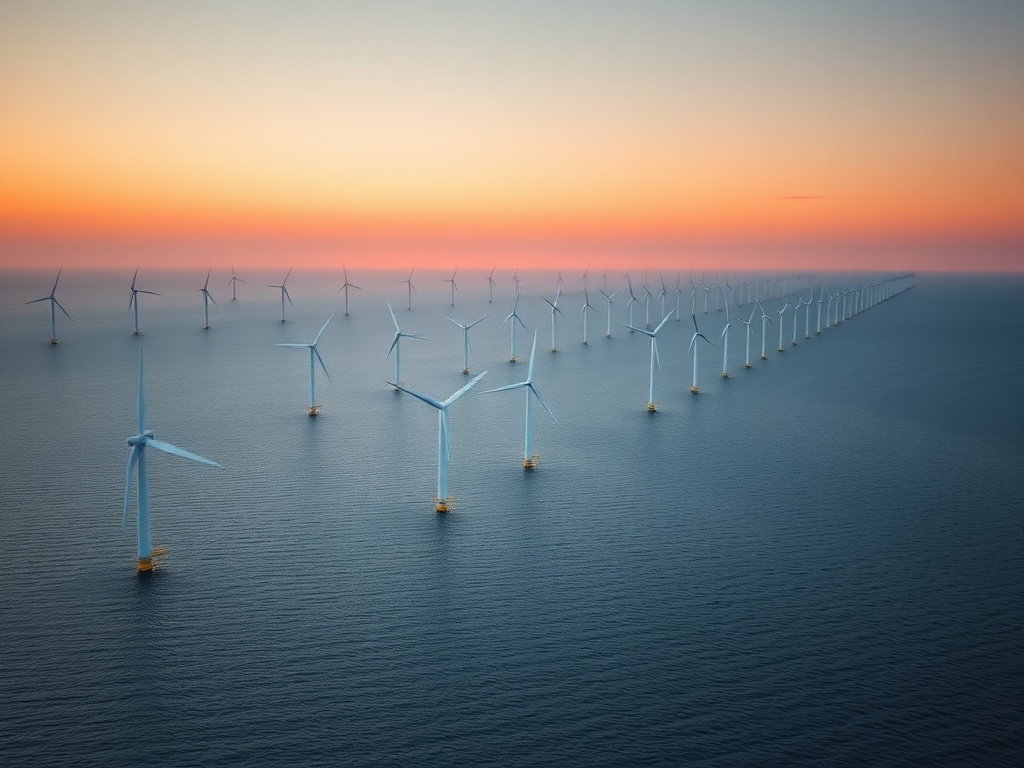
Equinor has three major offshore wind energy projects in development: one in the United States, one in Poland, and one in the United Kingdom — the latter projected to become the world's largest offshore wind farm when it enters operation. The fact that a Norwegian oil company is the one carrying that project forward is not accidental. It is the result of the material conditions of the transition having become robust enough for a player of that magnitude to commit capital at that scale.
What the Market Has Not Yet Fully Processed
There is a real tension in this narrative that would be imprudent to ignore. Tancrede Fulop, senior analyst at Morningstar, warned with precision that the impact of the Iran conflict on the short-term fundamentals of the renewable sector is more limited than the headlines suggest. As between Vestas and Orsted, he noted that the former is better positioned to capture an acceleration in capacity deployment, while Orsted remains focused on executing its existing project portfolio.
That distinction matters. A structural inflection point does not automatically translate into a symmetrical improvement for all players in the sector. The history of energy transitions shows that the winners during periods of change are not necessarily the largest or the most established, but those with the right combination of geographic positioning, access to financing, and execution capacity at the moment demand accelerates.
Equinor's chief financial officer estimates that the normalization of the Strait of Hormuz will take at least six months. If that estimate is correct, fossil fuel prices will remain elevated during that period, which extends the window of competitiveness for renewables without depending on any political decision. But it also means that inflationary pressure on supply chains — including the inputs needed to manufacture turbines — does not disappear. Vestas and Orsted resolved some of those frictions in the recent quarter; the question is whether that execution capacity holds as demand scales up.
What the market has not yet fully processed is that oil and gas prices have become structurally more expensive. If that premise holds — and there are material reasons to believe it will, beyond the specific duration of the conflict — then the returns on wind and solar projects improve without anyone having modified a regulation or approved an additional subsidy. That changes investment decision models more profoundly than any international climate agreement.
Trump may continue to ridicule wind turbines at international forums. He may slow down permitting on American soil. But he cannot control the fact that European gas costs twice what it did a year ago, nor that governments across the continent are prepared to accelerate offshore wind projects not out of climate conviction but out of geopolitical urgency. Henrik Andersen put it with calculated precision in his interview with CNBC: the fact that one person holds a mistaken perception of reality does not stop the rest of the market.
Energy Security Finished What the Climate Could Not
The climate argument for accelerating the energy transition was always politically vulnerable because it depended on consensuses that could fracture. It required governments to sustain commitments spanning twenty or thirty years under short-term electoral pressures. It required consumers to accept immediate costs in exchange for diffuse and future benefits. And it required financial markets to value assets whose returns depended on regulatory assumptions that could change at any moment.
Energy security does not have that problem. It is an immediate operational necessity, measurable in terms of import dependency, geopolitical vulnerability, and the fiscal cost of every supply disruption. Europe spends billions every week on fossil fuels imported from regions that have demonstrated, on two occasions in four years, a capacity for acute political instability. That exposure carries a concrete cost that is now easier to calculate than it was in 2019.
What the conflict in Iran accelerated was not the conviction that renewables are morally superior. What it accelerated was the perception that depending on imported oil and gas carries a risk premium that the market had not been pricing correctly. That repricing — that correction in the assessed risk of fossil fuels — is the real inflection point. Not the headline about Vestas's record earnings. Not the statement from Orsted's CEO. But the fact that Equinor, a company that extracts oil and gas as its core business, considers the conflict in Iran to be improving the returns of its clean energy division. When the logic of a Norwegian oil company begins to converge with that of a Danish turbine manufacturer, the system is not turning toward renewables out of ideology. It is turning because the arithmetic demands it.