
When Academic Medical Centers Stop Being the World's Pharmacy
For more than half a century, the great academic medical centers of the United States operated as the invisible infrastructure behind almost every drug that saves lives today. More than half of the patents supporting FDA-approved medications have their origin in research generated within these institutions. Statins were born from discoveries about cholesterol metabolism at UT Southwestern. The first targeted oncological therapies emerged from cell signaling research distributed across multiple universities. The scientific foundation of the mRNA vaccines against Covid-19 was built at the University of Pennsylvania. This is not a minor track record: it is the architecture of contemporary medicine.
And yet, that model is being surpassed in speed, in scale, and in commercial appeal by a competitor that barely appeared on the map a decade ago.
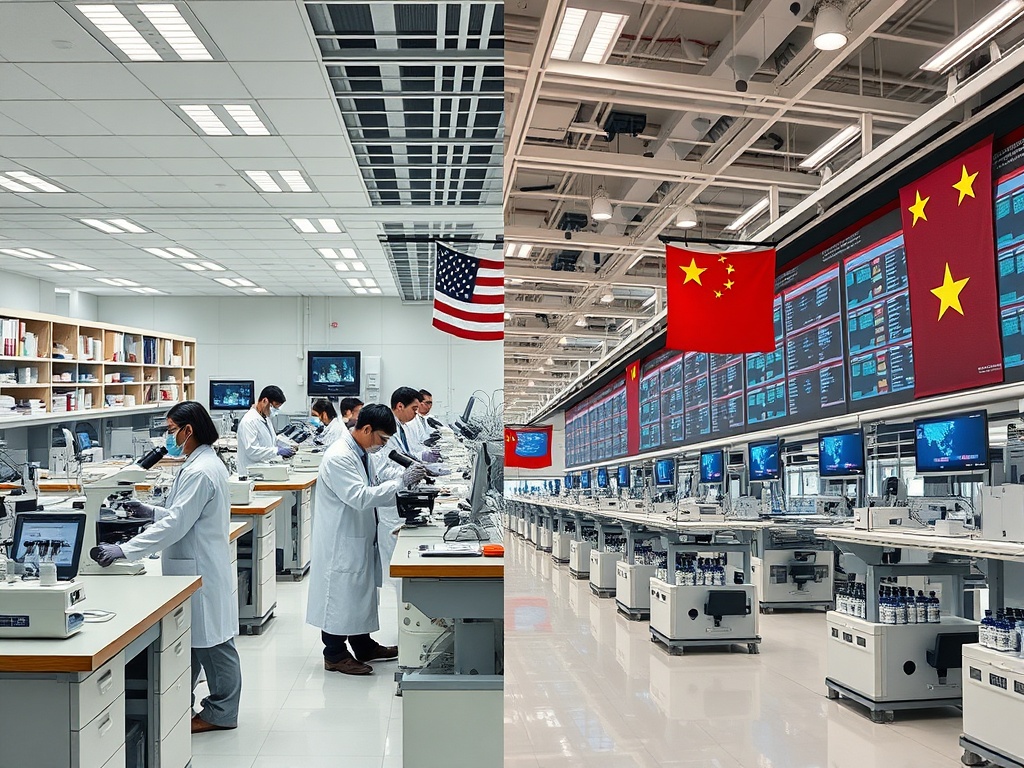
China increased its pharmaceutical development programs by 641% over the last decade. It accredited more than a thousand new clinical trial centers. Its multiregional trials, which represented 13% of all Chinese innovative drug trials in 2024, are designed to obtain simultaneous approvals across multiple markets. And the figure that should concern any CFO in the global pharmaceutical industry most: in 2025, China accounted for more than a third of major licensing deals, an increase of thirteen times in just three years. Pharmaceutical companies fly to Beijing as frequently as they do to Boston, because Chinese clinical trials are 40% cheaper and 50% faster, with a greater capacity for patient recruitment.
This is not an image problem for American academic medical centers. It is a business model problem.
When Dependence on Public Funding Becomes a Structural Vulnerability
The traditional model of academic medical centers functions on three pillars: medical education, scientific research, and patient care. For decades, these three axes financed one another in a reasonably stable equilibrium: the margins from clinical care subsidized research, public NIH funds sustained long-term projects, and alliances with the pharmaceutical industry completed the financing for the advanced stages of clinical development.
That equilibrium is under pressure from multiple fronts simultaneously. The cancellation of subsidies, the slowdown in NIH fund allocation, and the caps on indirect cost recovery are eroding one of the historical sources of funding. Healthcare margins, which always operated as the quiet cushion that made it possible to maintain laboratories and hire researchers, are being compressed. And the pharmaceutical industry, which used to look almost exclusively to Boston or San Francisco for its clinical development alliances, now has a cheaper and faster alternative in Asia.
The result is what strategists would call an innovator's dilemma, although here the threat does not come from a disruptive technology but from a more efficient operational model. Academic medical centers built their leadership on scientific depth and process rigor. China built its advantage on execution speed and trial scale. Both are legitimate ways of creating value, but in the global pharmaceutical market, where patent time is finite and the cost of each year of development is measured in hundreds of millions of dollars, speed has an economic value that depth alone cannot compensate for.
What makes this situation particularly complex from an institutional architecture perspective is that academic medical centers cannot simply replicate the Chinese model. Their missions are different, their governance structures are different, and their historical dependence on public funding places them in a different position. But that does not mean they cannot change. It means the change has to be smarter.
The Bets That Some Are Already Making
Some institutions are not waiting for Washington to resolve regulatory bottlenecks. They are experimenting with their own structures.
Stanford's Innovative Medicines Accelerator is designed as an internal unit that operates with pharmaceutical portfolio logic, not academic logic. It has more than 20 active therapeutic candidates, explicitly prioritizes projects with the potential to be first-in-class, and combines internal clinical and regulatory expertise with the capacity to connect with external partners. The difference from a traditional technology transfer office is substantive: instead of licensing discoveries and waiting for industry to develop them, the institution takes an active role in the development process. That changes the value capture equation in a significant way.
The Icahn School of Medicine at Mount Sinai launched a small molecule discovery center that integrates generative artificial intelligence with traditional medicinal chemistry. Memorial Sloan Kettering established alliances with more than ten companies specializing in AI-assisted pharmaceutical development, including platforms that allow the simulation of thousands of drug-target interactions and tools that connect patients with clinical trials in real time. Purdue is developing autonomous laboratories capable of executing experiments continuously, around the clock, with reduced error rates and real-time data capture.
Each of these initiatives attacks a different part of the problem. Stanford attacks the gap between discovery and clinical development. Mount Sinai and Sloan Kettering attack the speed and cost of molecular design. Purdue attacks laboratory productivity. What no institution has yet managed to achieve, as the authors of the analysis published in the Harvard Business Review themselves acknowledge, is the integration of all these elements into a cohesive model.
That integration gap is not a minor detail. In the pharmaceutical industry, where the average cost per approved drug exceeds 2.5 billion dollars and more than 90% of programs fail before reaching the market, institutional fragmentation carries a direct and measurable cost. Every stage that operates in silos is a stage where projects are lost, delayed, or undervalued.
Money as Fuel, Not as Destination
There is a tension that no analysis of this sector can ignore: academic medical centers have a mission that goes beyond profitability, but that mission only survives if the model sustaining it is financially viable. Philanthropy covers specific gaps. Public funds finance specific stages. But none of these sources, on their own, can sustain the speed and scale required to compete globally in pharmaceutical development.
The answer does not lie in abandoning the public mission of these institutions, but in building models that generate their own revenues without chronically depending on subsidies that can disappear with every change of administration. Academic medical centers that are investing in portfolios of therapeutic candidates with rigorous selection criteria are, in essence, learning to think like venture capital funds without ceasing to be universities.
This is not a contradiction. It is an evolution. The institutions that will remain relevant over the next twenty years are not necessarily those with the most prestigious history or the most published scientific papers, but those capable of translating that history and those papers into marketable products within competitive timeframes. The distinction between public mission and commercial capacity was always more porous than the rhetoric suggested. What is changing is that the cost of ignoring that porosity is now measured in concrete terms: in programs that are not launched, in researchers who emigrate, in licensing agreements that end up signed in Shanghai rather than in Philadelphia or Baltimore.
The real question is not whether academic medical centers can adapt. The evidence suggests that at least some of them already are. The question is whether the adaptations underway are occurring at the speed, at the scale, and with the systemic coherence necessary to reverse a structural trend that has been building for more than a decade. And whether the institutions that are not yet moving will have time to do so before the gap becomes insurmountable.
SMEs operating in the life sciences and biotechnology ecosystem, as well as investors and policymakers connected to public research infrastructure, would do well to observe these transformations not as distant academic debates but as signals of concrete changes in where the most commercially valuable knowledge will be generated in the coming years, who will control the intellectual property derived from it, and under what terms the global pharmaceutical development market will be organized. The answers to those questions will not be determined in a single announcement or a single policy. They will be determined by hundreds of institutional decisions that are being made right now, in the strategic planning offices of universities that are learning, sometimes for the first time, to think simultaneously as scientific institutions and as commercial operators.