
645 fewer stores and a bet that few see coming
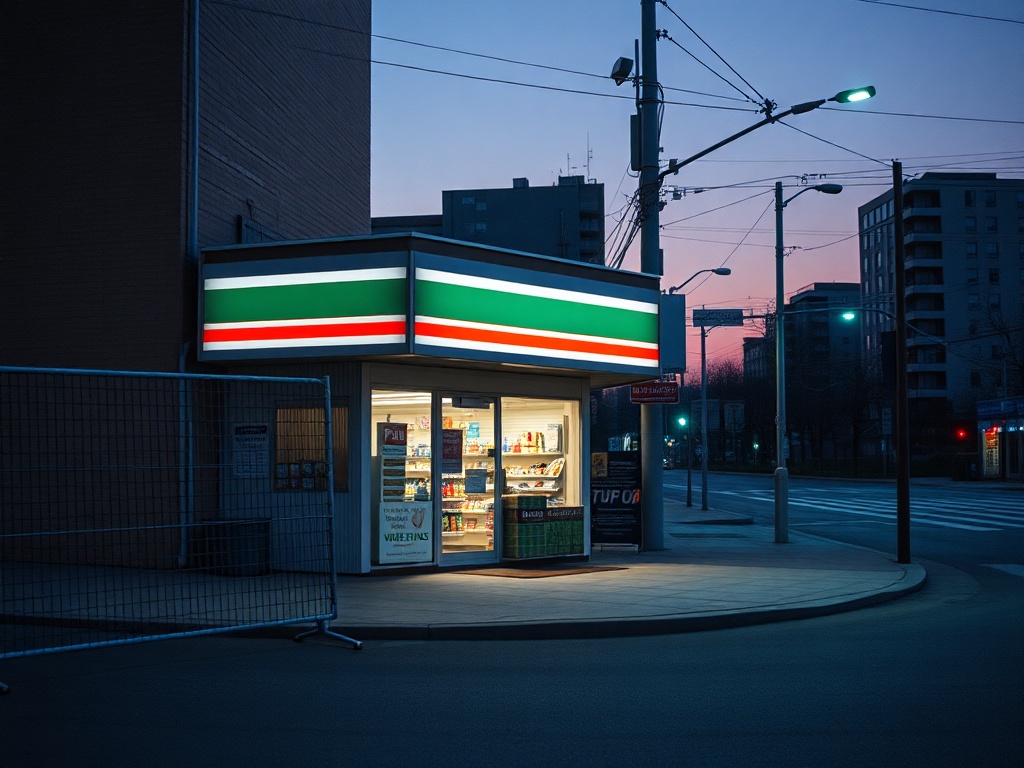
When a chain with more than 13,000 points of sale across North America announces the closure of 645 locations in a single fiscal year, the easy headline is one of decline. But reading that move as a signal of collapse means missing the real mechanics behind the decision. 7-Eleven is not shrinking by accident. It is executing, with five years of delay but with increasing precision, a restructuring of its cost architecture that has far more to do with preparing a public securities offering than with surrendering to the competition.
Its Japanese parent company, Seven & i Holdings, published the fiscal fourth quarter 2025 results documents weeks ago. In them, it confirms that between March 2026 and February 2027, 645 convenience stores in North America will be closed, while 205 new ones will open. The net result: 440 fewer points of sale. And this is happening while the company projects a revenue decline of 9.4% at the global level, down to approximately 59.5 billion dollars. The numbers seem to tell a story of retreat. But there is another reading.
The surgery that precedes a stock market listing
The figure that should interest financial analysts the most is not the volume of closures, but the destination of some of those assets. A portion of the locations that exit the convenience store count do not disappear: they are converted into wholesale fuel points of sale. By the end of 2025, 7-Eleven was already operating more than 900 of these sites in North America. The model is surgical: the company retains the fuel revenue stream by ceding daily operations to a tenant, which transforms a fixed operational cost into passive income. It is not closure — it is structural reconversion.
This move does not happen in a vacuum. The stock market listing of the North American division, originally planned for the close of the current fiscal year, was postponed by at least eleven months due to market volatility. For a company that needs to present investors with a story of clean margins and efficient operations, every loss-making store that remains open is a drag on the prospectus. The discipline of closure is not strategic pessimism; it is high-level financial cosmetics, backed by operational rationality.
Seven & i's CFO, Yoshimichi Maruyama, has linked the recent reductions to productivity improvement and internal maintenance initiatives. That is corporate language for one concrete thing: reducing the fixed cost base before external auditors place it under the microscope of an IPO.
Where the margin that matters actually lies
The core of 7-Eleven's bet is not the closures but the 205 openings that accompany them. And what differentiates those new stores from the legacy model is precisely what makes the difference on the revenue line: they are large-format locations, oriented toward prepared food, with expanded kitchens and seating areas. According to statements from 7-Eleven President Stan Reynolds, locations with this focus generate daily per-store sales approximately 18% higher than the system average. That is not a marginal figure. Across a base of thousands of points of sale, that differential represents hundreds of millions of dollars in additional revenue without the need to open a single extra store.
The economic logic is straightforward: the traditional convenience model, built around cigarettes, snacks, and bottled beverages, has been losing margin density for years. Declines in tobacco consumption are structural and irreversible. Inflation has put pressure on lower-income households, which have historically been the core of convenience traffic. And fast food chains have invaded the "two-minute lunch" space with increasingly accessible offerings.
Against that backdrop, quality prepared food has a radically different financial profile. The gross margin on food prepared in-store far exceeds that of a bottle of soda or a chocolate bar. And, unlike fuel, it creates a reason to visit that does not depend on the spot market price of gasoline. The person who comes in looking for a hot lunch returns out of habit. The person who comes in to buy cigarettes, if they can order them by delivery, does not come back.
What this model owes to its communities
Up to this point, the financial analysis is clean and the strategic direction has internal coherence. But there is a dimension to this move that the results documents do not quantify and that capital markets will not know how to value until it is too late to ignore it.
7-Eleven operates in many of the neighborhoods with the least access to fresh food options in the United States and Canada. In dozens of peripheral communities, especially in dense urban areas with few supermarkets, the neighborhood convenience store does not compete with Whole Foods: it is the only available option for buying something edible within walking distance of home. The net closure of 440 stores over two years, even if it obeys perfectly reasonable profitability criteria from a shareholder perspective, redistributes an invisible burden onto those communities. This is not an accusation; it is an operational consequence that boards of directors have a responsibility to acknowledge.
The food-forward model that 7-Eleven is building targets consumers with greater purchasing power, who have the capacity to spend on higher-value prepared food. That is not inherently bad, but it implies that the new value chain being designed serves a different segment from the one that historically depended on those locations. If per-store profitability rises by 18% but geographic coverage in low-income areas falls, the company will have resolved its financial problem by transferring part of its social cost onto communities that have no bargaining power before a board of directors based in Tokyo.
This is not an argument against the restructuring. It is an argument for the restructuring to be accompanied by an honest reading of who it generates value for and from whom it withdraws access. Brands that ignore that equation before a stock market listing tend to encounter it in the questions of ESG analysts during the roadshow, when there is no longer time to answer it well.
The model that emerges from the rubble
What 7-Eleven is building with this operation is a smaller chain, more profitable per unit and more defensible against competition from fast food chains. The stated goal is to reach 550 newly built stores by 2027, all under the food-forward standard. If that format maintains the 18% sales differential over the system average, and if the conversion of locations to wholesale fuel points sustains passive income without the operational burden, the company that arrives on the capital markets in 2027 will have a far more convincing margin story than the one it had in 2024.
But the architecture of a business model is not judged solely by what it produces for the shareholder. It is also judged by how it distributes value along the chain: to the employees whose jobs disappear with every closure, to the local suppliers who lost access to the channel when a store closed, and to the consumers who depended on that point of access. When those flows are broken without a replacement plan, the model does not become more efficient. It becomes more extractive.
C-Level executives who observe this restructuring as a case study have before them a precise evaluation opportunity: to identify whether their own model is using assets, people, and territories as disposable inputs in service of the financial cycle, or whether it has the strategic boldness to use capital as fuel to build something that generates lasting value for everyone it touches. That difference does not appear in an IPO prospectus. It appears, invariably, in the results of the following decade.