What changes when an organisation tries to move before its industry does
We follow innovations that alter an operation, a value chain, or a historical advantage. Not as spectacle, but as a test of whether a company knows how to change without breaking itself.
What we are watching
Industrial technologies, new processes, pilots with real signal, corporate bets, and decisions where innovation stops being a slogan and starts demanding design, capital, and discipline.
Where it is being decided
In manufacturing, mobility, mining, regulated products, and in companies discovering that innovation is not launching something new, but reorganising commitments, timing, and tolerance for risk.
Why it matters
Because innovation only counts when it changes a capability, a barrier, or the speed of execution. Everything else may bring visibility, but not always transformation.
Featured
Innovation & Disruption

Why 91% of Companies Are Adopting AI Without Knowing What Data They're Handing Over
Generative artificial intelligence reached most organizations not through the technology department, but through the back door of productivity applications. Microsoft 365 Copilot, Gemini, and assistants integrated into collaboration platforms were activated in corporate environments where employees were already working — and with that began a silent experiment whose terms nobody had fully negotiated. The problem is not with the language models. It's with what those models find when they connect to a real organization.
 Elena Costa8 min
Latest articles
Salesforce Without an Interface and What It Reveals About the Future of Agentic Enterprise Design
When Marc Benioff founded Salesforce in the late nineties, the proposition was simple: sales software delivered from the cloud, no installation required. The screen was the product. Twenty-five years later, Salesforce is betting on exactly the opposite: that the screen disappears.
Robots That Listen But Don't Understand Where They Are
The most honest challenge in robotics today is not technical. It is psychological, and not in the sense usually used to talk about humans who fear machines, but the other way around: the most sophisticated robotic systems on the planet keep failing at something a three-year-old child does effortlessly. They hear an instruction, they see the space, and yet they do not know how to connect both things to move with purpose.
Google Redesigned Its Data Architecture So AI Stops Failing in Enterprises
For years, data teams and AI teams in large corporations operated like departments from different countries. The former built warehouses, catalogs, and pipelines. The latter deployed models, APIs, and agents. The result was predictable: AI agents reached the production environment and collapsed when faced with data that nobody had prepared for an autonomous machine to read, interpret, and act upon.
Chicago Bets $500 Million on Quantum Computing and South Side Residents Will Be the First to Benefit
On April 29, 2026, the Governor of Illinois announced at Olive Harvey College something that on paper sounds like a routine political act: an expansion of the partnership with IBM. But the numbers behind the announcement are in a different league: 750 full-time jobs, 500 apprentices funded over five years, a preferential hiring commitment for local graduates, and a building—Quantum Works—set to open its doors in 2028 as the official gateway to the Illinois Quantum and Microelectronics Park.
Most Popular
Most voted on this page
Broadcom and Meta Invest in Custom Silicon and Redefine AI Control
Meta has committed over 1 gigawatt of computing power with custom-designed chips alongside Broadcom. This move signifies a statement on who finances, controls, and survives in the AI infrastructure race.
90
PayPal Transforms Creative Moments into Purchase Opportunities
The integration of PayPal within Canva eliminates the gap between design and payment, revolutionizing the user experience and boosting sales.
89
Hiring a Former Department of Energy Official Doesn't Save a Project: It Legitimizes It in the Eyes of Capital
T5 Smackover Partners didn't hire executives to operate better: they hired them to appear fundable. There is an enormous difference between the two, and institutional capital knows how to tell them apart.
87
Google Redesigned Its Data Architecture So AI Stops Failing in Enterprises
For years, data teams and AI teams in large corporations operated like departments from different countries. The former built warehouses, catalogs, and pipelines. The latter deployed models, APIs, and agents. The result was predictable: AI agents reached the production environment and collapsed when faced with data that nobody had prepared for an autonomous machine to read, interpret, and act upon.
86

The Model That Built Modern Medicine Is Losing Ground to China
For more than half a century, America's great academic medical centers operated as the invisible infrastructure behind almost every drug that saves lives today. More than half of the patents supporting FDA-approved drugs originated in research generated within these institutions. And yet, that model is being outpaced in speed, scale, and commercial appeal by a competitor that barely appeared on the map a decade ago.

One Hundred Billion Events and the Fear Nobody Wants to Name
There is a number worth pausing to process: more than 100 billion data events per day. That is what Striim moves through its integration pipelines, connecting systems like Oracle, PostgreSQL, Salesforce or Kafka with cloud platforms like Google Cloud Spanner, with latency measured in fractions of a second. The technical announcement is solid. But what interests me is not in the press release.

How syngenta bet on automating data while others still transcribe by hand
While the agricultural industry debates artificial intelligence strategies at conferences, syngenta made an operational decision that says more than any PowerPoint presentation: it hired tetrascience to eliminate manual data transcription in its crop protection division. This is not a lab pilot or an unfunded proof of concept. It is a bet on turning years of fragmented chromatography and mass spectrometry data into a centralized, standardized, algorithm-ready asset.

Coins.ph Turns Stablecoins Into Everyday Currency in the Philippines
For years, holding USDT or USDC in a Filipino digital wallet meant roughly the same as keeping dollars under a mattress: an asset that accumulates but never circulates. On April 21, 2026, Coins.ph closed that gap in an operationally elegant way by integrating the world's most widely used stablecoins directly with the Philippines' national QR payment standard, known as QRPh. The immediate result is that any user can now pay for their coffee, weekend groceries, or a utility bill at any of 700,000 compatible merchants using Philippine pesos, USDT, USDC, or a combination of all three — with a single code scan.
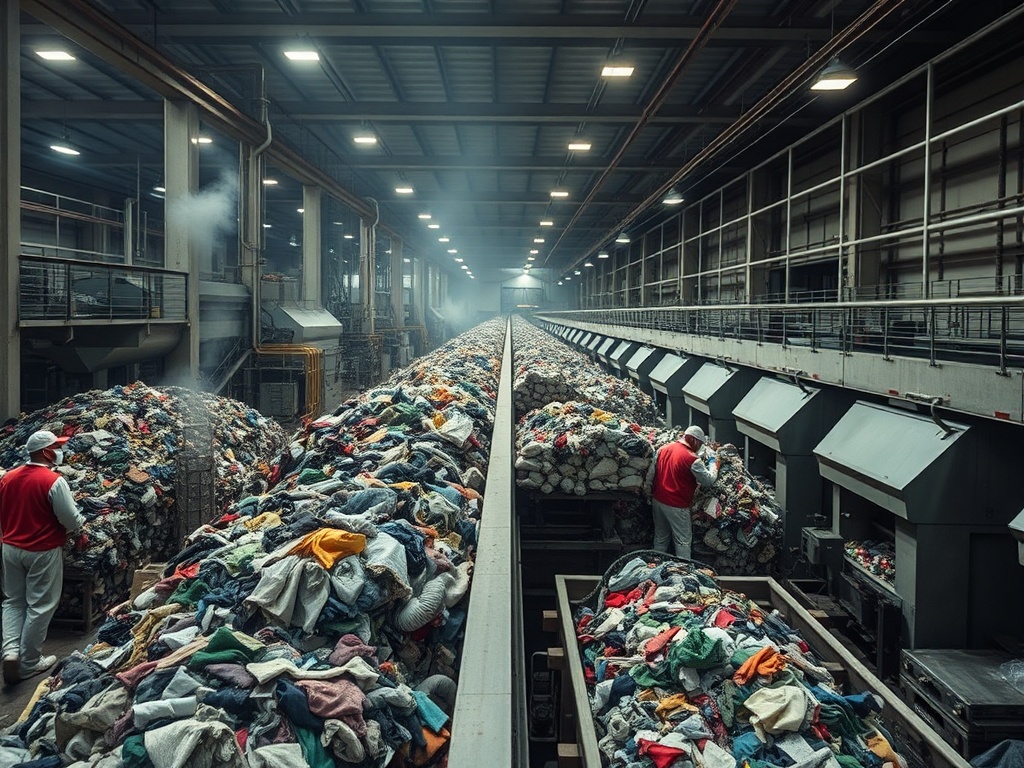
Recycling Polyester at Industrial Scale Is No Longer Just a Promise
Europe generates more than five million tonnes of textile waste every year. Most of it ends up in landfills or incinerators. Not because the technology to process it is lacking, but because turning it into useful raw material at a commercially viable cost had proven impossible to demonstrate beyond the laboratory. Until now.

Apple Changes Leadership When It Needs It Most
Tim Cook hands over Apple with a market cap 10 times greater than what he inherited. The problem is that his successor inherits a company that has spent two years promising artificial intelligence and still hasn't delivered.
 Camila Rojas6 min
Spectre and the End of the Sailor as a Combat Unit
Fincantieri and Saildrone are not building an unmanned ship. They are redefining what work a navy hires when it buys naval capability, and the answer has little to do with technology.
 Clara Montes7 min
AI Agents on the Factory Floor: Who Gets the Dividend?
Accenture, Avanade, and Microsoft announced an AI agent system to reduce downtime in manufacturing. The numbers are attractive. The question nobody is asking is who actually captures the value.
 Lucía Navarro7 min
The Robot That Beat Kiplimo Reveals Honor's Biggest Bet
On April 19, 2026, in the corridor of the Beijing Economic-Technological Development Area, a deep red robot named Lightning crossed the finish line of a half marathon in 50 minutes and 26 seconds. It surpassed the human record of 57 minutes and 20 seconds set weeks earlier by Ugandan Jacob Kiplimo in Lisbon. What did not appear in that coverage was the financial mechanics behind the achievement.
 Javier Ocaña6 min
OpenClaw and the Weight of Leading When Infrastructure Is No Longer an Excuse
There are moments in industrial history where infrastructure stops being the bottleneck. When that happens, what gets exposed is not a technical problem. It is a human problem. That is exactly what is happening now with OpenClaw, the artificial intelligence agent framework developed by Austrian developer Peter Steinberger in late 2025.
 Simón Arce7 min
The Robot That Runs Faster Than Kiplimo and What It Reveals About Human Fear
An Honor robot completed a half marathon in 50 minutes, beating the world human record. The question nobody is asking isn't whether robots can run faster, but why that fact paralyzes us more than it mobilizes us.
 Andrés Molina7 min
Lufthansa Breaks Apart Mid-Flight and Its Passengers Pay the Price
Four strikes in two weeks, 90,000 passengers stranded by a single incident, and a regional fleet grounded overnight. What Lufthansa calls 'restructuring' is, in practice, an operating model that did not survive its first serious encounter with post-pandemic reality.
 Tomás Rivera6 min
Apple Took Seven Years to Fold the iPhone — and That's Why It's Going to Win
While Samsung stumbled publicly with its first foldables, Apple was watching. What looked like slowness was, in reality, the most expensive and deliberate organizational design in the tech industry.
 Ignacio Silva7 min
The AI That the Pentagon Rejected and Washington Cannot Ignore
On March 5, 2026, the United States Department of Defense placed Anthropic on a list it typically reserves for foreign adversaries: the supply chain risk category. The move was direct and severe. If sustained, it could cut the company's access to federal contracts worth billions of dollars.
Elena Costa6 min
Three People, Twelve Agents, and $300,000: The Architecture of a Company That Already Earns
Fathom AI reached $300,000 in annual recurring revenue with a team of three partners and zero employees. The question it leaves on the table isn't technological: it's about which parts of the traditional org chart never needed to exist.
Camila Rojas7 min
The Quantum AI That Predicts Chaos and Changes Who Controls Scientific Computing
Predicting fluid turbulence with sustained accuracy over time is one of the most costly problems in computational physics. On April 17, 2026, researchers at University College London published in Science Advances a result worth reading carefully: an AI model trained on data preprocessed by a 20-qubit quantum computer achieved 20% greater accuracy in predicting chaotic systems and required hundreds of times less memory than equivalent classical approaches.
 Martín Soler7 min
Hiring a Former Department of Energy Official Doesn't Save a Project: It Legitimizes It in the Eyes of Capital
T5 Smackover Partners didn't hire executives to operate better: they hired them to appear fundable. There is an enormous difference between the two, and institutional capital knows how to tell them apart.
 Valeria Cruz7 min
Broadcom and Meta Invest in Custom Silicon and Redefine AI Control
Meta has committed over 1 gigawatt of computing power with custom-designed chips alongside Broadcom. This move signifies a statement on who finances, controls, and survives in the AI infrastructure race.
Javier Ocaña6 min
PayPal Transforms Creative Moments into Purchase Opportunities
The integration of PayPal within Canva eliminates the gap between design and payment, revolutionizing the user experience and boosting sales.
Andrés Molina7 min