What changes when an organisation tries to move before its industry does
We follow innovations that alter an operation, a value chain, or a historical advantage. Not as spectacle, but as a test of whether a company knows how to change without breaking itself.
What we are watching
Industrial technologies, new processes, pilots with real signal, corporate bets, and decisions where innovation stops being a slogan and starts demanding design, capital, and discipline.
Where it is being decided
In manufacturing, mobility, mining, regulated products, and in companies discovering that innovation is not launching something new, but reorganising commitments, timing, and tolerance for risk.
Why it matters
Because innovation only counts when it changes a capability, a barrier, or the speed of execution. Everything else may bring visibility, but not always transformation.
Featured
Innovation & Disruption

Neutral Atoms and the Race to Define the Quantum Computing Standard
There is a moment in any emerging technology where the question stops being 'whether it will work' and becomes 'who defines how it is built at scale'. For quantum computers, that moment is closer than most executives outside the tech sector believe, and the field where that battle is being fought is not the one that has received the most coverage.
 Clara Montes9 min
Latest articles
One Hundred Billion Tokens and No CFO Knows What They Bought
Sam Altman took the stage at OpenAI's business event on June 2, 2026, with a statistic designed to impress: the company's largest internal token consumer processes around 100 billion tokens per month. Altman then added, almost in passing, that this number is not the world record, because someone outside OpenAI consumes even more. And there, without fully intending to, he described precisely the problem fracturing the economics of artificial intelligence at a corporate scale.
When AI Stopped Being the Star and Became Infrastructure
There is a precise moment when a technology stops being a novelty and starts being a tool. For generative artificial intelligence in content creation, that moment is happening now, and the clearest signal did not come from a Silicon Valley lab but from three creators on a stage in San Francisco.
The Layer Nobody Built and That AI Cannot Improvise
There is a form of business failure that never appears on AI adoption dashboards. It is not measured in processed tokens or active users. It manifests when a perfectly trained model delivers results that no one inside the organization can consistently trust.
India Announces Factories While the World Builds Something Else
There comes a moment when the competitive map of an economy shifts without its policymakers noticing in time. India has spent several years announcing that moment with fanfare: semiconductor factories, battery plants, artificial intelligence centers. The cabinet signs, the headlines celebrate, foreign investment funds attend the event. And yet, something doesn't add up.
Most Popular
Most voted on this page
Wockhardt Bet 25 Years on a Niche the Industry Abandoned
When the major multinational pharmaceutical companies decided to exit antibiotic research, they did so with perfectly rational arguments: treatment cycles are short, antimicrobial stewardship programs compress volumes, and generic erosion arrives quickly. The return on investment simply did not add up. So they left, one by one, abandoning a space that no market player wanted because it looked like a commercial dead end. Wockhardt decided to stay.
91
One Hundred Billion Tokens and No CFO Knows What They Bought
Sam Altman took the stage at OpenAI's business event on June 2, 2026, with a statistic designed to impress: the company's largest internal token consumer processes around 100 billion tokens per month. Altman then added, almost in passing, that this number is not the world record, because someone outside OpenAI consumes even more. And there, without fully intending to, he described precisely the problem fracturing the economics of artificial intelligence at a corporate scale.
90
Extracting Lithium Without Destroying the Desert Now Has a Technical Architecture
The promise of electric mobility rests on a mineral that, to extract it, demands flooding the desert with water that desert does not have. The lithium driving the energy transition narrative reaches the market mainly from enormous solar evaporation ponds occupying kilometers of arid terrain in Chile's Atacama or in Nevada. That system has a structural limit the industry already acknowledges: future lithium demand cannot be met with evaporation ponds.
89
India Announces Factories While the World Builds Something Else
There comes a moment when the competitive map of an economy shifts without its policymakers noticing in time. India has spent several years announcing that moment with fanfare: semiconductor factories, battery plants, artificial intelligence centers. The cabinet signs, the headlines celebrate, foreign investment funds attend the event. And yet, something doesn't add up.
88

AI Agents Aren't Here to Create, They're Here to Run the Factory
An image circulated for months in design and audiovisual production forums: a creative director staring at a screen full of AI-generated variants, all technically correct, all editorially empty. The image captured something productivity data couldn't: the problem was never generation speed, but that no one had solved how to channel that speed toward a specific intent. That's what is changing now, and the change arrives without fanfare.

Wockhardt Bet 25 Years on a Niche the Industry Abandoned
When the major multinational pharmaceutical companies decided to exit antibiotic research, they did so with perfectly rational arguments: treatment cycles are short, antimicrobial stewardship programs compress volumes, and generic erosion arrives quickly. The return on investment simply did not add up. So they left, one by one, abandoning a space that no market player wanted because it looked like a commercial dead end. Wockhardt decided to stay.

IBM Bets That Operational Sovereignty Will Be the Battleground Where Enterprise AI Is Won
There is a moment in the evolution of any technology market when competitors stop differentiating themselves by what their products do and start differentiating themselves by how their customers control them. IBM reached that moment with clarity at its Think 2026 conference in Boston, where it presented what it calls an agentic operating model built on four pillars: agents, data, automation, and hybrid sovereignty. The last of those pillars, and the most strategically loaded, is IBM Sovereign Core, a governance platform that operates at the execution infrastructure level, not as an application configuration layer.

Unmanned Underwater Vehicles and the Adoption Problem AUKUS Never Named
Unmanned Underwater Vehicles and the Adoption Problem AUKUS Didn't Name On May 30, 2026, on the sidelines of the Shangri-La Dialogue in Singapore, the defense secretaries of the United States and the United Kingdom shared an unusual moment of institutional self-criticism.

Orbital Industries and the Hardest Bet in Modern Hardware
There is one piece of data in this story that deserves pause before we talk about funding rounds or language models: according to the CEO of Orbital Industries, developing a new cooling fluid for data centers would normally take ten years and one hundred million dollars. The company says it did it in months, at a fraction of that cost. If that claim holds up under validation from major chip manufacturers, this is no mere laboratory achievement.

The AI Budget That Hurts Most Isn't the One You Lose, It's the One That Never Reaches Where It Matters
More than $1.5 trillion in enterprise software valuations evaporated over the last two years. Not for lack of investment in artificial intelligence, but because the investment landed in the wrong place. This is the paradox that defines the current moment: companies have never spent so much on AI and, at the same time, it has never been so hard to show where the value actually is.
 Lucía Navarro9 min
Codex Is OpenAI's Bet to Prove It Can Make Money
There is a pattern that repeats itself in the history of tech companies looking to open up to capital markets: the moment when the narrative of massive users is no longer enough and they need to show something more concrete. OpenAI is there. And the tool it chose to make that argument is not ChatGPT, but Codex, its software development assistance product, which in the last two months has received updates at a frequency no competitor has matched.
 Elena Costa8 min
Extracting Lithium Without Destroying the Desert Now Has a Technical Architecture
The promise of electric mobility rests on a mineral that, to extract it, demands flooding the desert with water that desert does not have. The lithium driving the energy transition narrative reaches the market mainly from enormous solar evaporation ponds occupying kilometers of arid terrain in Chile's Atacama or in Nevada. That system has a structural limit the industry already acknowledges: future lithium demand cannot be met with evaporation ponds.
Lucía Navarro8 min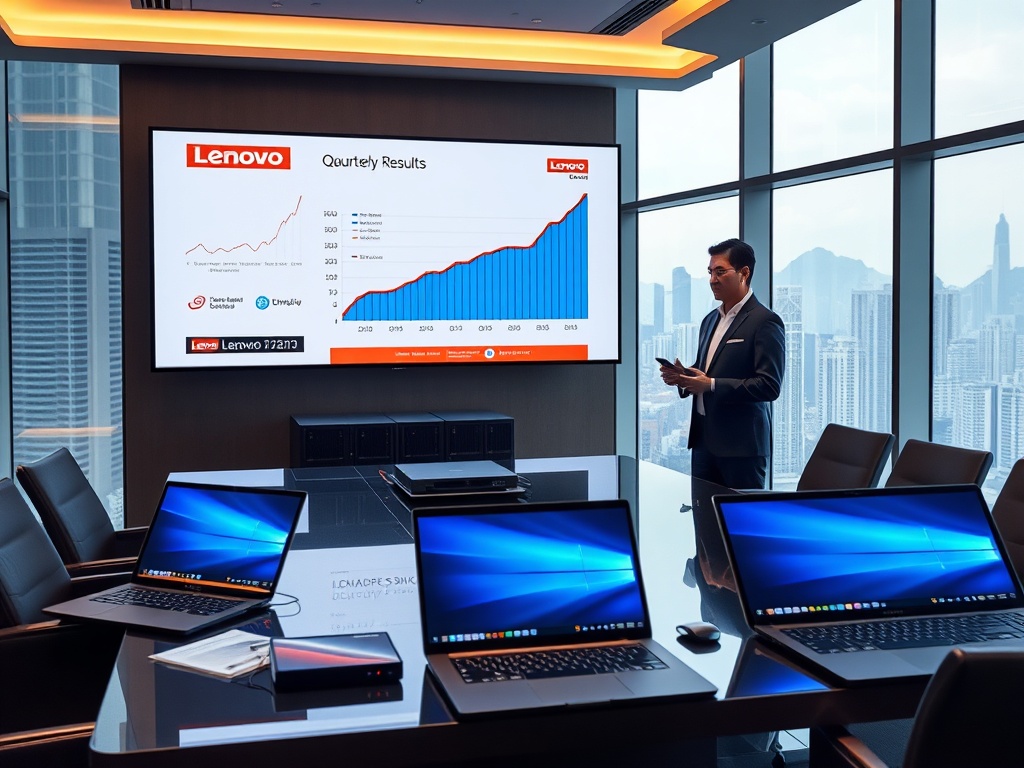
Lenovo's Nearly Doubled AI Revenue Reveals a Silent Redesign With Record-Breaking Figures
March quarter revenues reached $21.6 billion, a 27% year-on-year growth — the highest rate in five years — and net income jumped dramatically to $521 million. The company's Hong Kong shares surged nearly 20% in a single session, becoming the biggest percentage gainer on the Hang Seng index that day. But the number that best explains the market's reaction is not in the margins or PC volumes: it's the fact that AI-related revenues grew 84% in the quarter and accounted for 38% of the group's total revenues.
 Ignacio Silva9 min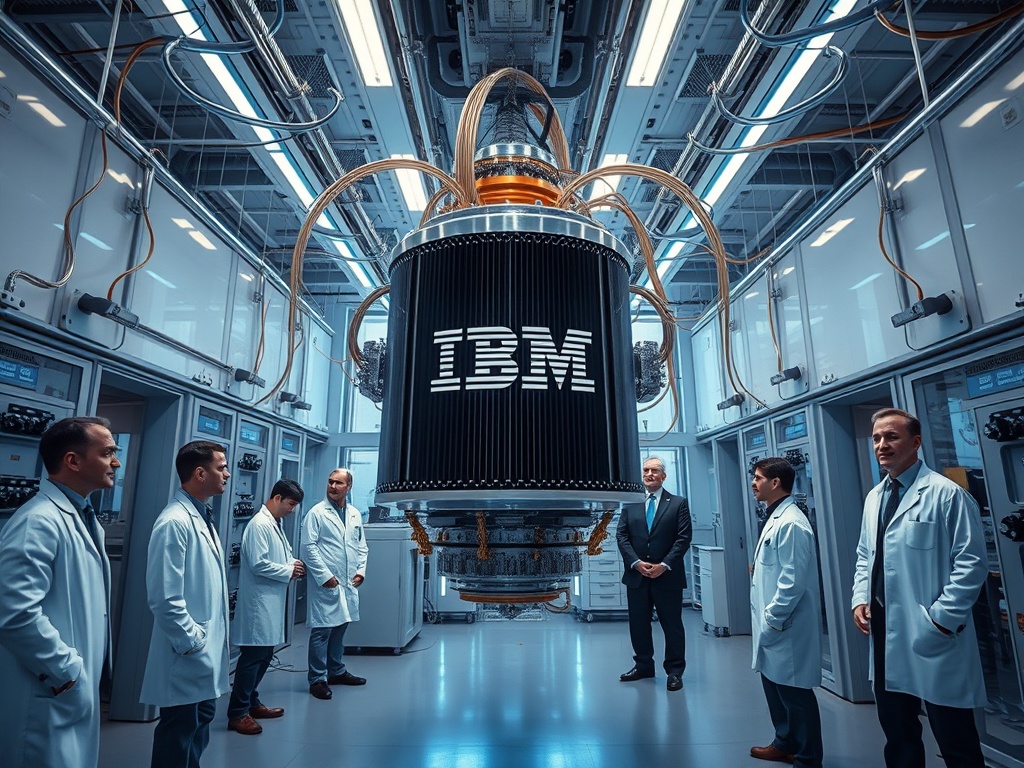
The United States Bets $2 Billion on Quantum Computing and Reveals What Kind of Industrial Policy It Is Building
On May 21, 2026, the U.S. Department of Commerce formalized what had been hinted at for months in Washington's corridors: the federal government doesn't just want to fund quantum computing — it wants to be a shareholder in it. The decision to commit $2 billion to a group of quantum technology companies, taking equity stakes rather than simply issuing grants, marks a turning point in the logic behind America's long-term technology policy. This is not a check. It is a declaration of industrial architecture.
 Gabriel Paz8 min
Radar Reaches One Billion and Shows How Inventory Became Retail's Most Expensive Infrastructure
There is a cost that large retailers have absorbed for decades without measuring it precisely: not knowing exactly what they have, where it is, and whether what the system says exists actually exists. That cost does not appear as a separate line on the income statement. It dissolves into compressed margins, cancelled orders, misallocated working hours, and customers who leave without buying.
Lucía Navarro9 min
Why 95% of AI Pilots Fail Before Producing a Single Result
There's a scene that repeats itself in almost every mid-sized company I know. The technology team presents an artificial intelligence pilot. The initial numbers look promising. The board approves the investment. And six months later, the pilot is still just a pilot.
 Simón Arce9 min
Eclipse Made $2.5 Billion Betting on What Nobody Wanted to Touch
When Lior Susan founded Eclipse Ventures in 2015, the prevailing logic in Silicon Valley was simple: software scales without factories, inventory, or workers. SaaS companies captured the attention of the best funds and the best engineers. Betting on semiconductors, industrial robotics, or physical computing infrastructure was, at best, an oddity.
 Martín Soler7 min
Vaseline Turned Internet Hacks Into Products That Sold Out in Minutes
Vaseline is 155 years old. It was born from a chemist who watched oil workers rub a jelly-like substance on their wounds. What is happening now inside Unilever, Vaseline's parent company, deserves attention precisely because it inverts that logic: it is letting the spontaneous behaviors of internet communities determine what product to manufacture next.
 Andrés Molina8 min
The Solow Paradox Returns and This Time It's Talking to AI
There is a silent pattern that economic history has repeated at least twice before the era of artificial intelligence. First with industrial electrification, then with personal computers. In both cases, the technology arrived decades before its impact appeared in productivity statistics.
 Camila Rojas8 min
Neutral Atoms and the Race to Build Quantum Computing That Actually Works
Quantum computing has spent more than a decade promising to reshape medicine, materials, and artificial intelligence. During that time, most capital flowed toward the superconducting circuits of IBM and Google, platforms requiring cooling to temperatures near absolute zero, costly infrastructure, and constant calibration. But beneath that dominant narrative, a different bet was taking shape: using neutral atoms as qubits, trapping them with lasers, operating them at room temperature, and scaling them into arrays of hundreds or thousands of units.
Elena Costa9 min
Why Large Companies Are Putting a Layer Between Their Applications and AI Models
There is a pattern that repeats itself every time a technology stops being an experiment and becomes production infrastructure. It happened with relational databases, with cloud services, with microservices. And now it is happening with large language models.
Ignacio Silva8 min
Quantum Computing Won't Break Tax Laws, It Will Break the Architecture That Supports Them
The global tax system does not operate on paper. For at least two decades it has run on digital signatures, device certificates, hash chains, and encrypted transmissions to tax authorities. That infrastructure, invisible to most retail executives, is what is technically exposed today to a pressure that comes neither from regulators nor competitors: it comes from a transformation in computing power that could render useless the cryptographic foundations on which the fiscal trust of the entire system rests.
Gabriel Paz9 min
From Volume to Selection: The Trap That AI Agents Are Being Forced to Solve
There is a belief that runs through the corridors of almost every organization that has invested in artificial intelligence over the last eight years. The belief that the problem is always about quantity. More data. More tokens. More coverage. More stored history.
Simón Arce9 min