
Vaseline Turned Internet Hacks Into Products That Sold Out in Minutes
Vaseline is 155 years old. It was born from a chemist who observed oil workers rubbing a gelatinous substance on their wounds. Since then, the company grew into a household staple — that blue tin that appears in the medicine cabinet of almost any home in the world without anyone having explicitly asked for it. It is not sold by desire; it is inherited as a habit.
What is now happening inside Unilever, Vaseline's parent company, deserves attention precisely because it inverts that logic. The company is not launching an influence campaign to promote a product that already existed. It is doing something harder and with deeper consequences: it is allowing the spontaneous behaviors of internet communities to determine which product to manufacture next. The result, at least in its first iteration, was an inventory sell-out within minutes during a live event on TikTok on March 30, 2026.
That is not marketing. It is evidence of something that marketing had only been measuring.
What Happened When the Company Stopped Looking Inward
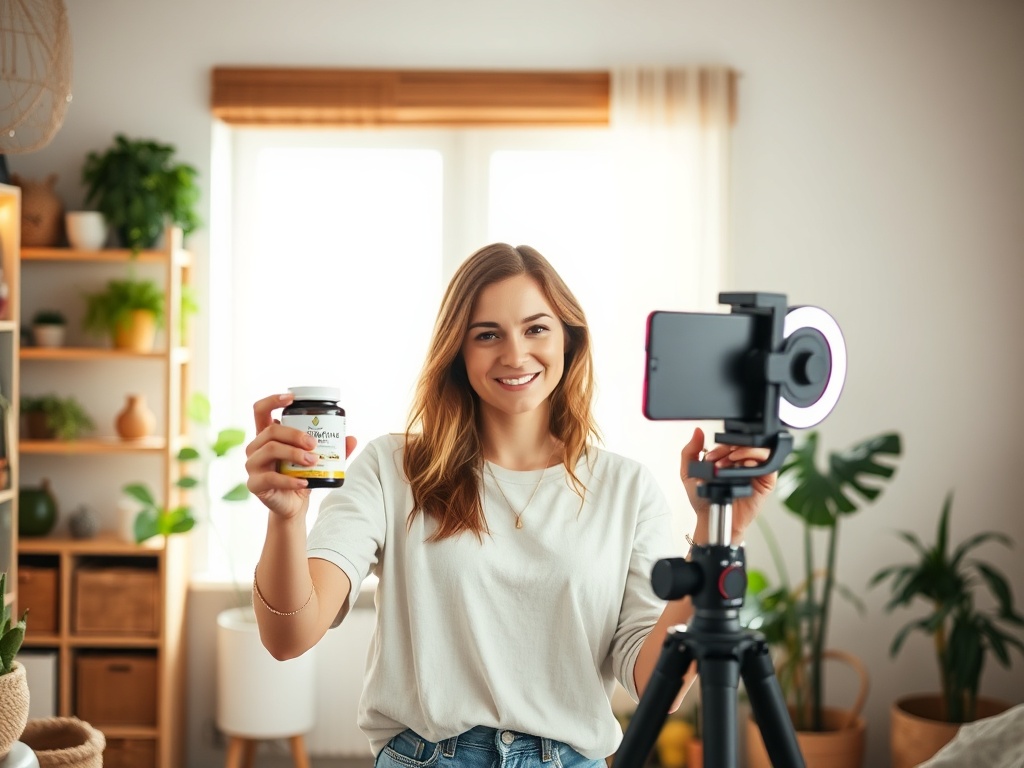
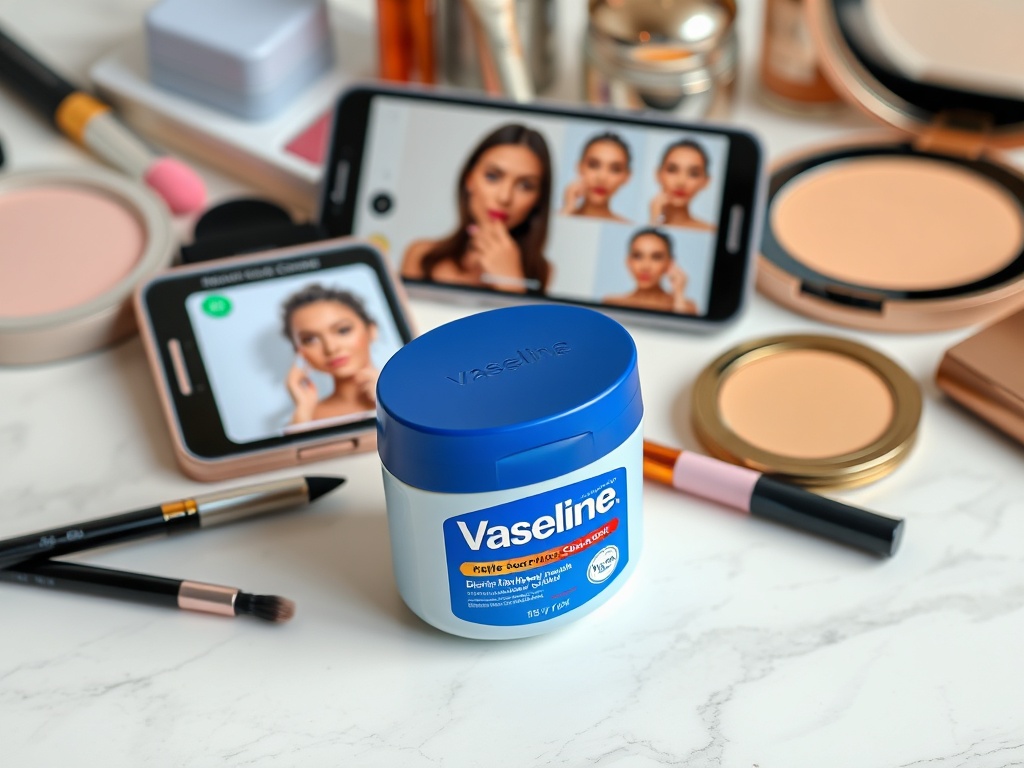
The Vaseline Originals campaign starts from a concrete fact: in 2008, content creator Jen Chae published a hack on her blog for using Vaseline as an eyebrow setter. Lauren Luke, one of the first major YouTube beauty figures, presented a similar technique for using the jelly as a facial primer. Neither of them did so in collaboration with the brand. Neither received communication instructions. Both simply found uses that the company had not documented or commercialized.
Nearly two decades later, Vaseline formally attributed authorship to them. The Vaseline Brow Tamer was born from Chae's observation. The All-In-One Primer and Highlighter Jelly, from Luke. The brand publicly recognized them as the "OGs" — the originals — behind its new lines, and the products debuted in a TikTok Live that sold out stock almost immediately.
Nathalia Amadeu, Global Brand Director at Vaseline for Unilever, described the shift in these terms: "We are moving innovation out of the boardroom and into the community. The strongest ideas don't start as slide decks; they emerge from creators and consumers, already tested by culture before they reach our labs."
This matters because it contradicts the standard model of product development in fast-moving consumer goods. The standard process begins internally: a "white space" in the market is defined, a product is designed to fill it, it is manufactured, and then someone is sought to communicate it. Vaseline is testing a reverse process: the community generates the use, the brand observes it, validates it, and scales it toward production. The behavior is already tested before the laboratory ever touches it.
Why This Model Eliminates a Friction That Market Research Rarely Detects
Consumer psychology has a central problem: people do not know how to articulate what they want until they see it working. Focus groups and intention surveys capture verbalizations, not behaviors. People say they want natural products and buy processed ones. They say they prioritize sustainability and choose the fastest shipping. The gap between what is declared and what is actually done is so systematic that it has a name in behavioral economics: the attitude-behavior gap.
Viral hacks do not have that problem. When thousands of people organically adopt an unconventional use for a product, they are acting without anyone having asked them to. They are not optimizing their response for a survey researcher. They are not trying to appear favorable in front of a focus group moderator. They are choosing, repeatedly, under conditions of scarce attention and with alternatives available a single click away.
That converts the behavioral data generated by creators into something that internal studies would rarely replicate: evidence of adoption without framing friction. Nobody asked Jen Chae whether she would "like" an eyebrow product with a Vaseline formula. She simply used it, showed it, and enough people replicated it to generate a sustained signal for nearly twenty years.
What Vaseline did was learn to read that signal with productive intent. Before the launch of Originals, the brand had already operated Vaseline Verified, an effort that documented and validated more than 3.5 million hacks shared online, and which won multiple awards at Cannes Lions, including the Titanium Lion. That first phase was essentially a mapping operation. The second phase, Originals, is the industrialization of that map.
The risk of undervaluing this point is real. Many companies that claim to "listen to their community" are actually monitoring sentiment to manage reputation, not to reformulate what they produce. The operational difference between both postures is enormous: one uses community data as an input for communication; the other uses it as an input for manufacturing. Vaseline is, according to its own declarations, in the second category.
The Economics of Converting Behavior Into Product
From a financial perspective, the model has an advantage worth naming with precision: it reduces demand risk before committing production capital.
The traditional innovation process in fast-moving consumer goods involves a bet: investment is made in development, formula testing, packaging design, initial production, and then the product is taken to market hoping that demand will justify the expenditure. Historical failure rates for new CPG launches hover between 70% and 80% in the first year. Much of that failure is attributed to the product not connecting with a real behavior.
Vaseline, under this model, is doing something different: the behavior precedes the product. The demand already exists in the form of a documented practice replicated by communities that were not incentivized to do so. The production challenge is not to create desire; it is to formalize and scale something that is already happening. That does not eliminate manufacturing risk, but it does eliminate one of the most costly ones: the risk of producing something that nobody wanted.
The inventory sell-out at the TikTok Live debut on March 30 is, in that sense, more than a public relations data point. It is a signal that pre-existing demand was converted into a transaction as soon as a purchasing format became available. The event functioned as a trigger, not as a builder of desire. The desire was already there, accumulated over nearly two decades of documented behavior.
There is also a relational capital angle worth considering. Unilever, the parent company, announced last year its intention to move investment in digital advertising spend toward creators and influencers from 30% to 50% of the total, and to multiply by twenty the number of creators it works with. Vaseline Originals is not an isolated experiment: it is a demonstration of what can happen when that spending goes beyond message distribution and touches the product development process. If the model scales, the implications for Unilever's innovation cost architecture are considerable.
What This Case Reveals About Adoption and the Psychology of Recognition
There is an element in the Originals campaign that rarely appears in creator marketing analyses: the formal recognition of authorship. Vaseline did not only convert the hacks into products. It named the people behind them, gave them explicit credit, and incorporated them into the brand's innovation narrative. That is not corporate courtesy; it is a decision with specific psychological consequences.
When a person perceives that their behavior was observed, valued, and correctly attributed, the response is not just gratitude. It is functional belonging. The creator stops being a distribution channel and begins to act as an agent with a stake in the product's success, because that success is also their own. That distinction changes the nature of the bond between brand and community in a way that standard influencer contracts do not achieve.
At the same time, there is a latent friction that the strategy will have to manage as it scales. When the search for originating creators becomes more active and systematic — and the brand has already announced that it continues looking for more "OGs" — a tension will emerge: the difference between recognizing authorship and extracting creativity. The line between both depends on the terms, on transparency, and on whether the creator has real agency over the product that carries their practice as inspiration. For now, the two documented cases appear to be well managed. But the model at scale will produce more ambiguous cases.
Amadeu stated it directly: "It's no longer about owning the message; it's about earning the participation." That phrase describes a transformation in the power relationship between brand and consumer that goes beyond communication. Brands that historically controlled the narrative because they controlled access to distribution channels no longer have that monopoly. The behavior of communities can originate culture before any creative team anticipates it.
What Vaseline is testing is not a more participatory marketing model. It is an innovation model where the competitive advantage does not come from what the company knows how to manufacture, but from what communities have already demonstrated they will adopt. The difference between both logics determines what information is valuable within the organization, who collects it, and at what point in the production process it is taken seriously. A company that learns to read organic behavior before its competitors does not simply do better marketing; it is systematically reducing the distance between what it manufactures and what the market already wants without ever having been asked.