
Why FIFA Turned a Hydration Break into Guaranteed Advertising Inventory
The most profitable decision in world football in 2026 did not arrive in the form of a new television rights contract or an expansion of sponsorship deals. It arrived disguised as concern for player health: three minutes of mandatory stoppage in each half of all 104 matches of the World Cup, regardless of whether the stadium has a roof, air conditioning, or a temperature of 18 degrees Celsius.
FIFA announced this last December. Three months later, it confirmed that broadcasters could sell advertising during those breaks. The order of announcements is not a minor detail: first, the justification was constructed, then the monetisation was enabled. That sequencing reveals quite a lot about the architecture of the decision.
The Mechanics of a New Advertising Asset
Football has historically been the sport most resistant to the commercial fragmentation of its playing time. Unlike American football, basketball, or baseball — all structured around frequent and natural interruptions — football offers 45 continuous minutes per half, with the only guaranteed advertising space being the half-time interval. That continuity is part of its identity as a product. It has also been, from the perspective of a media executive, its most frustrating commercial limitation.
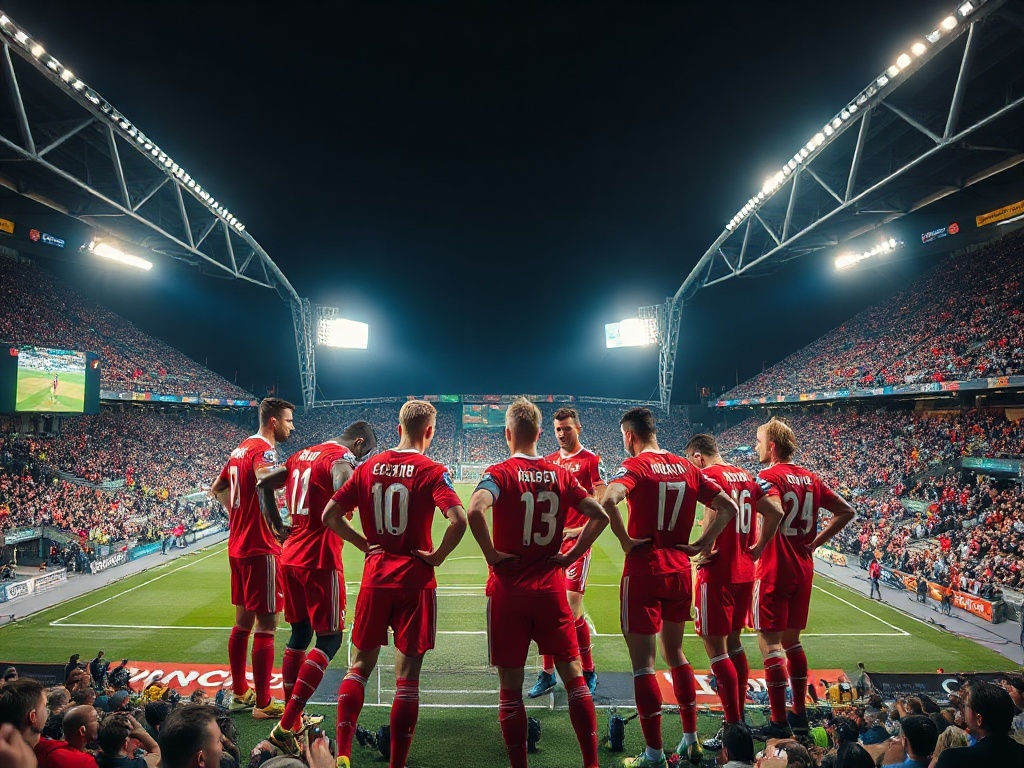
What FIFA has done with mandatory hydration breaks is solve that problem without touching the official rules of the game. Technically, the match remains two halves of 45 minutes. In practice, it now has four segments with three advertising windows: the half-time break and the two three-minute stoppages that occur around the 22nd minute of each half. The match did not change in form; it changed in function as a television product.
The difference from the breaks that previously existed is structural. Before 2026, interruptions due to heat or humidity were conditional: they depended on the wet-bulb globe temperature index exceeding 32°C, and the final decision rested with the referee. That made them unpredictable for any media planner. You cannot sell an advertising slot that may or may not exist depending on the climate in Manaus or Monterrey. An advertising asset requires certainty of appearance in order to have a price.
By making the breaks mandatory for all matches, FIFA transformed a climate risk management measure into guaranteed and standardised advertising inventory. That is the difference between a contingency and a product. And a product can be packaged, scaled, and sold at World Cup prices.
The conditions FIFA imposed on broadcasters reinforce this reading: advertising cannot begin within the first 20 seconds after the pause whistle, and the broadcast signal must return to the pitch more than 30 seconds before play resumes. FIFA did not leave the interval entirely in the hands of the channels; it bounded it, cleared it of the most visible moments, and retained control over its edges. That architecture of control suggests that FIFA understands perfectly what it is managing: a scarce asset with guaranteed demand.
What Telemundo's Refusal Reveals About the Model
There is one data point that illuminates the dynamic better than any revenue figure: Telemundo, NBC Universal's Spanish-language network that broadcasts the tournament in Spanish for the United States market, explicitly announced that it will not cut to commercial advertising during the breaks. Instead, it will maintain the pitch feed, showing the tactical huddles of coaches with their players, replays, and live analysis.
This decision is not editorial altruism. It is a deliberate positioning bet against Fox, which will cut to conventional advertising. Telemundo is choosing a segment of the audience that values the continuity of the product over advertising convenience, and is willing to sacrifice that incremental revenue in order to strengthen the perception of its signal as being closer to the game. It is the same logic that led some European broadcasters to ban advertisements during breaks: the value of the relationship with the local viewer outweighs, in that calculation, the marginal revenue of three minutes of advertising.
What this divergence between broadcasters exposes is that FIFA did not sell a single product. It sold a three-minute container and allowed each channel to decide what to place inside it, within controlled limits. The result is that the break functions differently depending on the market and the positioning of the channel. Fox turns it into direct advertising inventory. Telemundo turns it into editorial differentiation. Both decisions have their own business logic. But only one of them was in FIFA's original script.
This variability also raises something that deserves attention from a business model perspective: FIFA created the container but ceded control over its content to local operators. That maximises global adoption of the format, because each broadcaster can adapt it to their own regulatory and strategic constraints. But it also means that the viewing experience of the World Cup now varies significantly depending on where and in what language you watch it. For a tournament that has historically operated as a culturally unified product, that fragmentation of experience has implications that are not yet visible in the data.
Americanisation as a Value Extraction Model
The term that European media have used to describe these changes is the "Americanisation" of football. The word carries connotations that go beyond the purely descriptive: it implies a critique of the intrusion of commercial logic into a sport that is perceived as culturally distinct. But the critique, however understandable, obscures the actual mechanics.
What FIFA is replicating is not specifically the model of American football or basketball. What it is replicating is a product design principle: building the sport as a container of attention that is segmented, predictable, and sellable in discrete units. The mandatory breaks are only the most visible manifestation of that principle in the 2026 World Cup. The coach interviews at half-time, the final's half-time show featuring artists of global reach, the expansion to 48 teams and 104 matches: all of these are decisions that expand the product and multiply the surfaces of monetisation without formally altering the rules of the game.
The argument that this "Americanisation" is ironic because football is not even among the four most-watched sports on television in the United States misses something important. The relevance of the United States to FIFA does not depend on whether football is Americans' favourite sport. It depends on the fact that the United States advertising market is the largest in the world, that the country co-hosts the tournament alongside Mexico and Canada, and that US-based broadcasters — including Fox — paid significant sums for the broadcasting rights. The goal is not to turn the average American into a football fan; it is to capture advertising spending from that market during the tournament.
The hydration breaks are, in that context, a value extraction tool that works precisely because it is applied in every match, including those played in Seattle, with moderate temperatures and a covered stadium. The player health justification does not disappear in those contexts, but its explanatory weight is considerably reduced. What remains when the climatic variable is subtracted is the certainty that the advertising asset appears in every single match, without exception.
Football as Media Infrastructure, Not Just a Sport
The trajectory described by the 2026 World Cup points toward a deeper transformation than the simple addition of commercial breaks. FIFA is executing a conversion: from managing a sporting tournament to managing a global media infrastructure with the sporting tournament as its anchor content.
That distinction matters because it changes who the central customer of the model is. A sporting tournament has as its primary customer the fan in the stands and the television viewer. A media infrastructure has broadcasters and advertisers as its primary clients, and the fan becomes the audience that gives value to that infrastructure. The football match does not disappear; it remains the product that attracts attention. But the architecture surrounding it — including the moments of stoppage — is designed to extract value from that attention in a more systematic manner.
This logic has clear precedents in other sports. The NFL in the United States has been operating this way for decades: its two-minute warnings, the timeouts that synchronise with advertising breaks, the design of the Super Bowl as a media event more than as a football game. The NBA has moved in a similar direction. What sets football apart is that its historical resistance to that logic formed part of its identity as a global product. The continuity of play was, for millions of viewers in Europe, Latin America, Africa, and Asia, part of the implicit contract with the sport.
That contract is changing. Not abruptly, because FIFA has been careful to maintain the player health justification as the visible layer of the decision. But the change is structural: mandatory breaks in every match, coach interviews at half-time, the final's entertainment show, the expansion to more matches — all are pieces of the same redesign of the product.
What the analysis of this decision allows one to state with precision is the following: FIFA constructed a new advertising asset, packaged it inside a player welfare policy, made it mandatory in order to guarantee its appearance in every match, and then enabled its monetisation. The sequence is coherent from a product design perspective. Whether it generates the volume of revenue that justifies the reputational cost of altering the experience of the world's most devoted football viewer depends on how much the advertising market is willing to pay for those three guaranteed minutes in each of the 104 matches of the most-watched tournament on the planet. That figure is not yet public, but the architecture of the decision was built to make it significant.