
Extracting Lithium Without Destroying the Desert Now Has a Technical Architecture
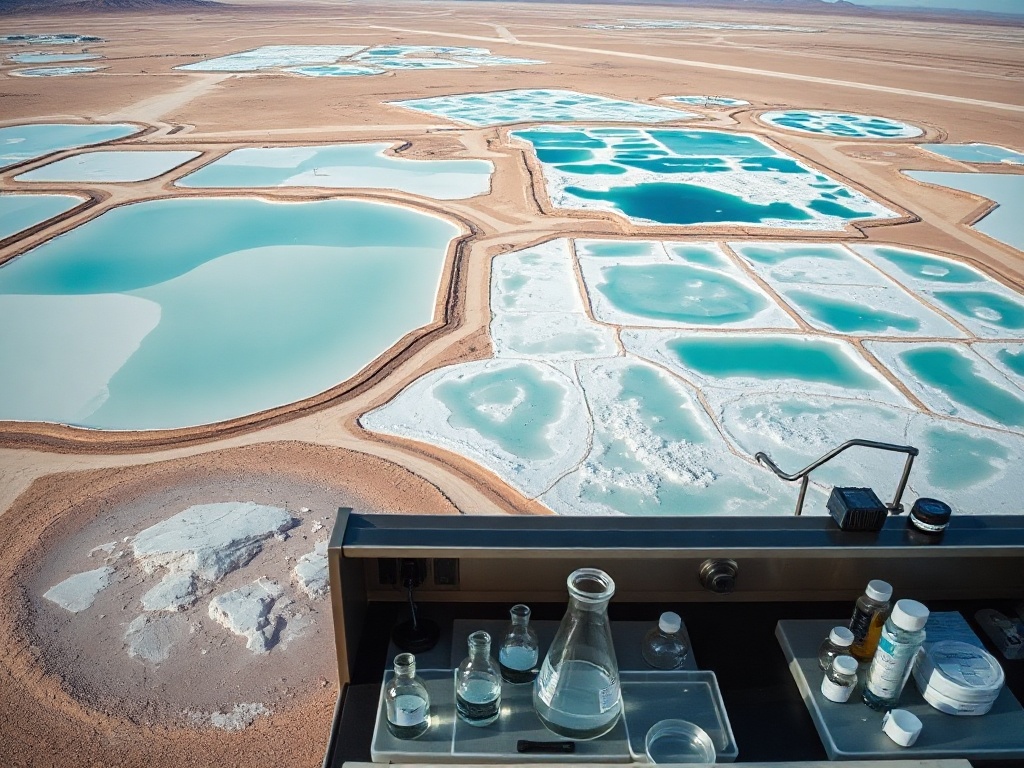
The promise of electric mobility rests upon a mineral that, in order to be extracted, demands flooding the desert with water that desert does not have. The lithium that drives the narrative of the energy transition reaches the market primarily from enormous solar evaporation ponds that occupy kilometers of arid terrain in the Chilean Atacama or in Nevada, and that require anywhere from several months to several years to produce a commercially relevant quantity of the metal. It is a slow, physically voracious process, profoundly dependent on climatic and geographic conditions that exist only in a handful of places on the planet.
That system has a structural limit that the industry already acknowledges: the future demand for lithium cannot be met with evaporation ponds, regardless of how many are built or how much land is sacrificed. Researchers at the School of Engineering and Applied Sciences at Columbia University have just published in the journal Joule a method that does not paper over that limit, but instead attempts to circumvent its entire architecture.
The process is called switchable solvent selective extraction, or S3E. The mechanism is thermodynamic rather than geographic: a solvent that responds to temperature absorbs lithium ions directly from underground brine at ambient temperature, and releases them — already purified — when heat is applied. The solvent then regenerates and the cycle begins again. There are no ponds. There is no waiting for months. There is no dependence on a flat, dry desert.
Why the Method Matters Beyond the Laboratory
The team led by Ngai Yin Yip tested the system using synthetic brines designed to replicate the conditions of the Salton Sea, a geothermal region in California estimated to contain enough lithium to supply more than 375 million batteries for electric vehicles. That reserve exists but remains practically untouched, because solar evaporation is incompatible with its conditions: the geothermal water is hot, corrosive, and complex in its chemical composition, which means that conventional evaporation ponds simply do not function there.
S3E demonstrated in laboratory tests a selectivity that merits attention: it extracted lithium at rates up to 10 times higher than those for sodium and 12 times higher than those for potassium. Magnesium, which is one of the most common and problematic contaminants in this type of brine, is removed through a separate chemical precipitation stage. After four extraction cycles using the same batch of solvent, the team recovered approximately 40% of the available lithium. The researchers are explicit in noting that the system is at the proof-of-concept stage and has not yet been optimized to maximize recovery or energy efficiency.
That level of transparency is, in itself, an analytical data point. It is not common for a scientific publication of this profile to underscore its own limitations with such clarity. What Yip and his team are placing on the table is not a finished product but a technical architecture that demonstrates viability and opens a direction for development. That distinction matters when evaluating whether this can hold up under industrial pressure, or whether it will die in the gap between the laboratory and the pilot plant.
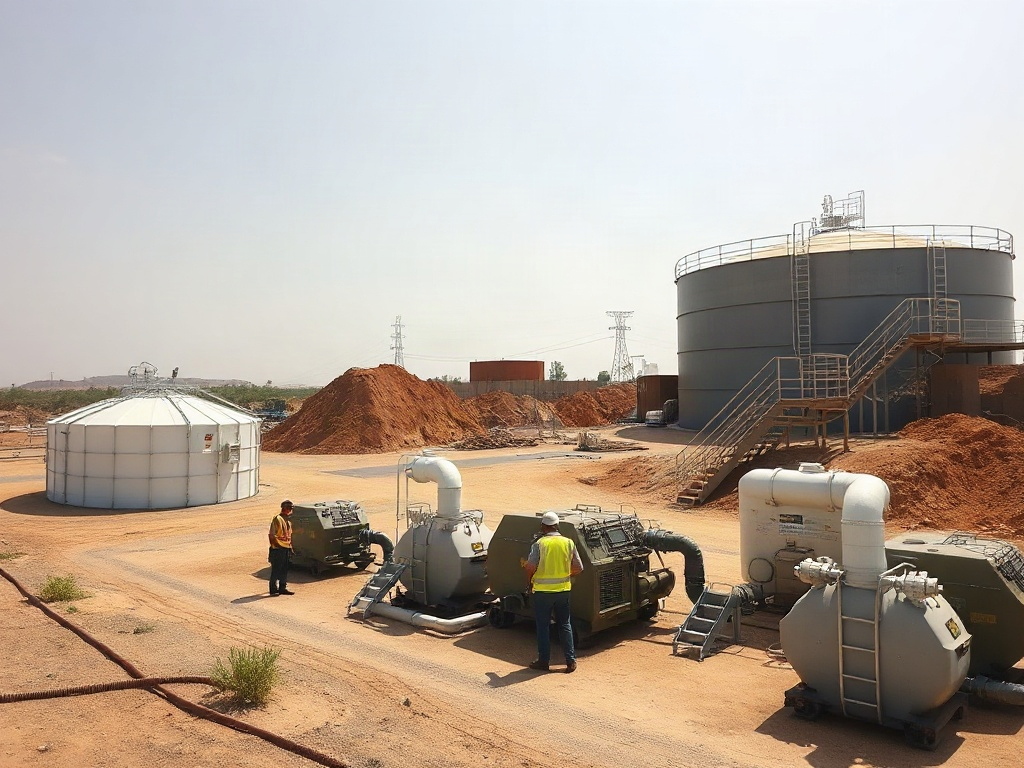
One element that significantly reduces that risk is the energy source the process requires: low-temperature heat, compatible with industrial thermal waste or with low-cost solar thermal collectors. In the context of the Salton Sea, where geothermal infrastructure already generates heat as a byproduct of electricity production, that compatibility is not a minor detail. It means that S3E could be integrated into an existing operation without requiring an entirely new energy source, which substantially changes the calculation for initial investment.
The Distribution Problem That the Green Transition Keeps Ignoring
The Columbia research arrives at a moment when the automotive industry and the energy sector are constructing decarbonization narratives that, viewed from the supply chain, reveal an evident crack. Electric vehicles are spoken of as clean technology, but the lithium that powers their batteries is extracted through processes that consume water in regions with severe water stress, occupy fragile ecosystems, and leave environmental liabilities that rarely appear in the carbon balance sheets that manufacturers publish.
That mismatch is not an academic secret. It is a tension that European regulators, some investment funds with rigorous ESG criteria, and several indigenous communities in Chile and Argentina have been documenting for years. What is missing is not the diagnosis but the technical architecture that makes it possible to separate lithium production from its current environmental cost.
S3E points directly at that separation. If the process scales, its advantages are not only operational but structural: it enables access to reserves that are currently off the productive map, reduces geographic dependence on two or three desert regions in the world, and eliminates the need for the large volumes of water that make lithium mining so socially contentious in the Southern Cone. None of those advantages appear in the unit cost of lithium carbonate traded on the market today, but all of them represent externalized costs that someone is paying — whether in the form of aquifer degradation, loss of biodiversity, or territorial conflicts that delay projects for years.
The economics of lithium extraction have a classic structure of invisible costs: the producer captures the revenue, but the environmental and social costs are distributed among local communities, ecosystems, and governments that end up absorbing the liabilities. A method like S3E does not resolve that asymmetry by decree, but it does change the technical conditions that make it almost inevitable under the current model.
For battery manufacturers and electric vehicle assemblers who face growing scrutiny over their supply chains, the availability of lithium extracted with a lower territorial footprint and lower water consumption is not merely an environmental improvement. It is a reduction in the regulatory and reputational risk that today carries a real cost in terms of the speed at which they can scale their operations.
What Still Needs to Happen for This to Change the Industry
Columbia's S3E is in the laboratory. The distance between a laboratory result and a commercial operation at the Salton Sea is not simply a matter of engineering: it involves large-scale financing, industrial partners with tolerance for technological risk, regulatory frameworks that are still being defined for direct lithium extraction operations in California, and a learning curve regarding the behavior of the solvent in real brines with variable chemical composition.
The 40% recovery rate over four cycles is promising for an unoptimized system, but the most advanced direct lithium extraction operators — some of which are already in pilot or early commercial phases — report recovery efficiencies that approach or exceed 90%. That gap does not invalidate Columbia's work, but it defines with precision how much ground remains to be covered before S3E can compete on a cost-per-metric-ton-of-lithium-carbonate-equivalent basis with systems that already have industrial traction.
What is clear from this result is that the technical direction is coherent with the logic of the problem. Lithium is not scarce in absolute geological terms; it is difficult to extract economically and cleanly from sources with low concentration or high chemical complexity. Any method that improves that selectivity without requiring large physical infrastructures is attacking the right part of the chain. The temperature-switchable solvent is a different kind of answer from those offered by sorbent-based extraction, solid-state membranes, or electrochemical systems, and that diversity of competing approaches in active development is precisely what reduces the risk of the energy transition becoming trapped in a single technological bottleneck.
Yip articulated it with precision in the study's communication: "We talk about green energy all the time, but we rarely talk about how dirty some of the supply chains are." That statement is not a call to conscience. It is a description of a structural mismatch that has concrete financial consequences for any company that depends on lithium to grow. The technology that resolves that mismatch in a scalable and economically viable way will not merely be an environmental contribution. It will be a competitive advantage with a market price. Columbia's work does not yet have that price, but it already has the right architecture.