
Robots That Listen but Don't Understand Where They Are
The most honest challenge in robotics today is not technical. It is psychological — and not in the sense typically used when talking about humans who fear machines, but rather the opposite: the most sophisticated robotic systems on the planet continue to fail at something a three-year-old child executes effortlessly. They hear an instruction, they see the space, and yet they do not know how to connect both things in order to move with any sense of purpose.
The Carnegie Mellon University Robotics Institute launched in May 2026 the new phase of its Vision-and-Language Navigation challenge, and the decision that defines this edition is the most revealing of all: they eliminated the "ground truth." Until now, teams competed with a starting map, with already-labeled objects, with a pre-digested reality. This time, robots face the world the way we do — without a manual, without predefined categories, with raw sensor data that must be interpreted from scratch.
That decision, apparently technical, exposes an enormous gap that has spent decades being the elephant in the room of applied robotics.
The Map Nobody Gives You
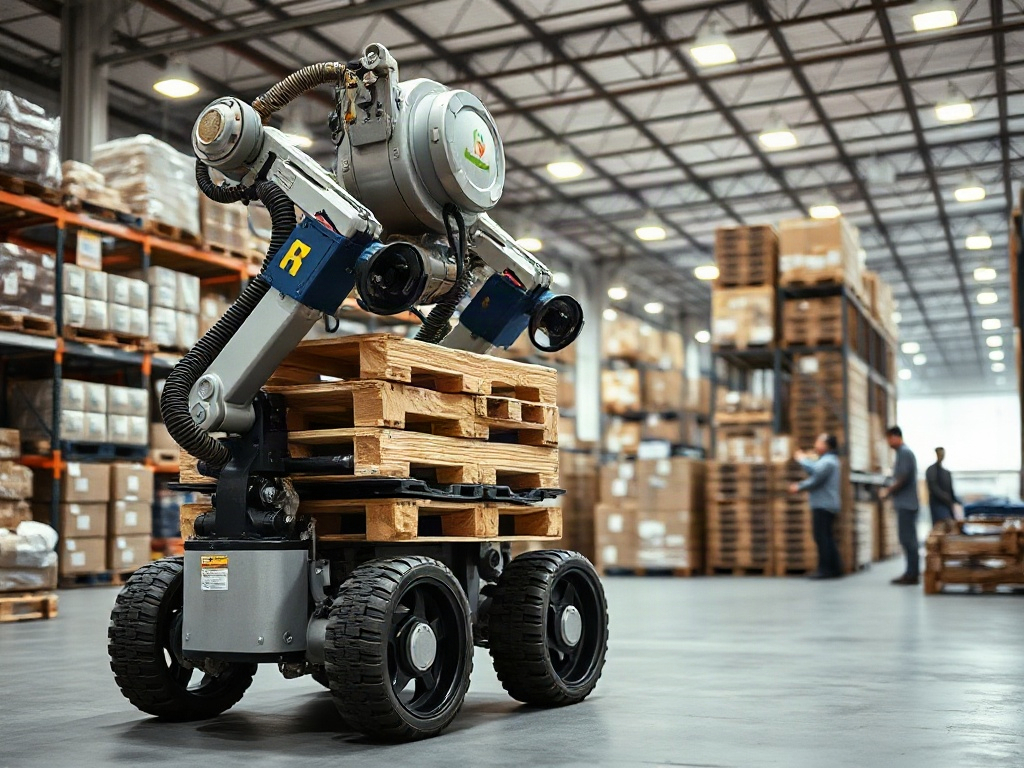
There is a reason why so many AI systems shine in demos and grind to a halt in production. Laboratory environments are spaces where the world has already been simplified so the system can operate. Ambiguities are removed. Objects are labeled. The possible route is mapped out. The robot does not navigate the world — it navigates a curated representation of the world. And the difference between the two is precisely where adoption goes to die.
What CMU is doing in this phase of the challenge is forcing a break with that logic. The participating teams must build systems that read a space without any prior scaffolding — systems that distinguish not only what an object is, but what role it plays in the spatial context where it exists. A hallway is not merely a geometric category. It is a component of a flow system. It connects. It orients. It carries implicit relationships with what comes before and after it. That kind of understanding cannot be hand-coded object by object. It has to emerge from reasoning about the environment in real time.
What this makes evident is that the most difficult leap in robotics is not making a system see or understand instructions in isolation. It is making both things operate as an integrated system under conditions of uncertainty. Until now, most advances in computer vision and language models have been developed in parallel, like two muscles that nobody trained to work together. CMU's challenge targets precisely that muscle of integration.
Why People Don't Adopt What Technologically Works
From a consumer behavior perspective, this challenge illuminates something that transcends robots entirely. The reason AI systems continue to have a massive gap between what they promise in a pitch and what they actually deliver in day-to-day operations has less to do with technical capabilities and more to do with what they demand from the human mind in order to function.
When a system requires the user to prepare the environment, label the objects, configure the initial parameters, or actively supervise the process, it is externalizing its own incompleteness onto the operator. The robot can do its part, but it needs someone to build reality for it first. That invisible cost is precisely where adoption collapses: not in the price, not in the interface, but in the undeclared cognitive load that the system imposes.
The elimination of ground truth in this competition is, in behavioral terms, the most honest decision a research team can make. They are acknowledging that any system which requires a pre-labeled world in order to function is not a system ready for the world. It is a system ready for a controlled version of the world — one that has a technical name and an everyday name. The technical name is "structured environment." The everyday name is "laboratory."
The real friction that blocks the adoption of robotics in industry, logistics, home care, or rescue operations is not the cost of the hardware. It is the inability of systems to function without prior preparation of the environment. That preparation step requires trained personnel, time, consistency, and supervision. In the vast majority of real-world operational contexts, that simply does not exist. And the teams that design robots tend not to see this because they work in environments where it does exist — the laboratory — precisely because they themselves built it.
The Robot That Understands the Room Without Anyone Explaining the Room
The format of the competition also reveals something important about how the sequence of technological maturity is currently being conceived. The challenge begins in simulation and scales up to real robots. That is not new, but the nuance matters: simulation is not the destination — it is the first controlled exposure before facing the variability of the physical world. The best teams will not be those that optimize for the simulator. They will be the ones that build systems capable of surviving the change of context — systems that do not break down when the floor texture is different, when the lighting changes, or when there is an object the model has never encountered before.
That is the transfer problem, and it is where the majority of current systems fail silently. They do not fail in spectacular ways — they degrade. They perform at 80% in the simulator and at 40% in the real world, and that difference never appears in the presentation papers.
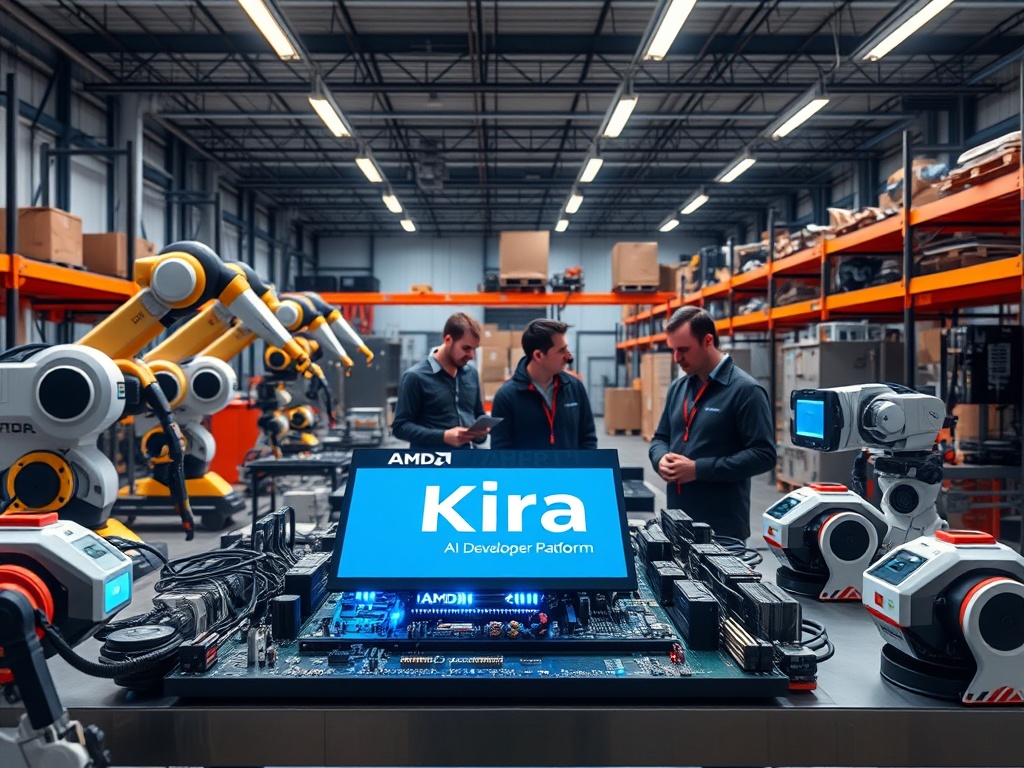
The platform CMU provides — equipped with 3D detection and measurement technology and a 360-degree camera — attempts to reduce hardware variability so that the focus remains on reasoning. That follows a clear logic: if all teams start with the same sensor, the difference lies in what they do with the data, not in how good a piece of equipment they purchased. It is a challenge design decision that prioritizes equity of access and concentrates the competition at the level where the problem is most difficult and most important.
The challenge closes with a presentation of results at the IROS 2026 conference in Pittsburgh. But the true indicator will not be who won the competition. It will be how many of those systems can operate six months later in an environment that nobody prepared for them.
The adoption of intelligent robotics is not being held back by cost or perceived technical complexity. It is being held back by the fact that systems continue to need a simplified world in order to function well — and the real world systematically refuses to cooperate. The research advancing in semantic-spatial reasoning without starting data is not solving an engineering problem. It is eliminating the silent prerequisite that causes most real-world deployments to fail before they even begin.