
MIT Puts a Price on Ocean Acidification, and It’s Not Small
There’s an unwritten rule in mature markets: when systemic risks become too costly, someone eventually performs the work that the industry has postponed. In Maine’s shellfish aquaculture, that moment has arrived. And it hasn’t come from within the sector itself.
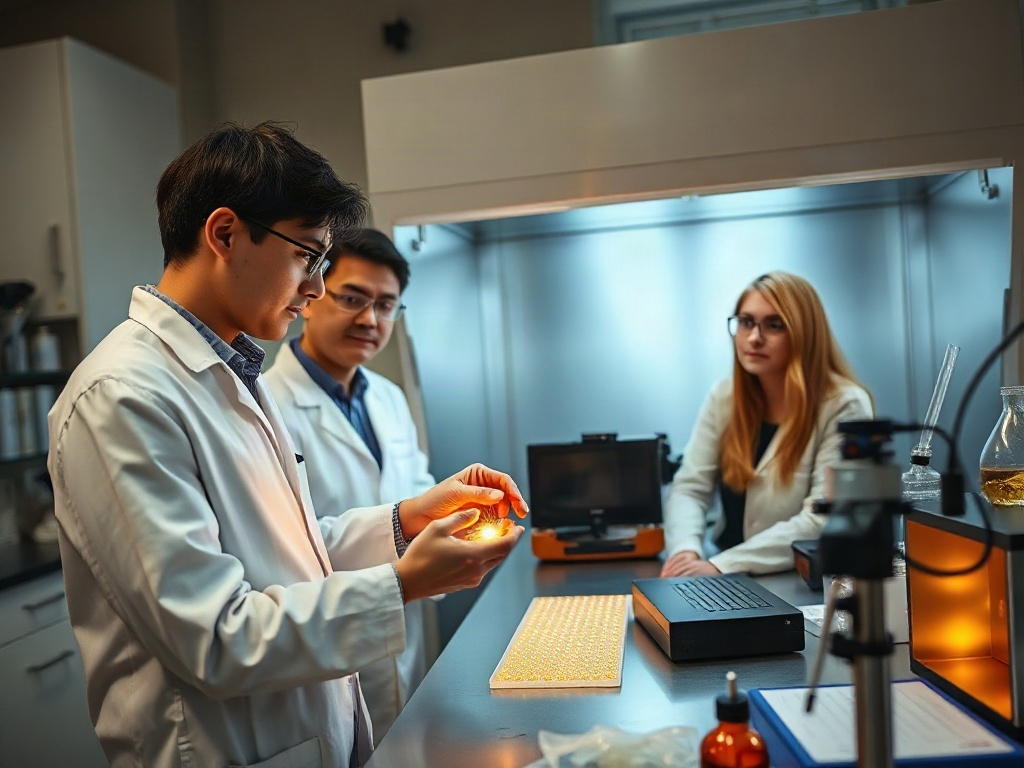
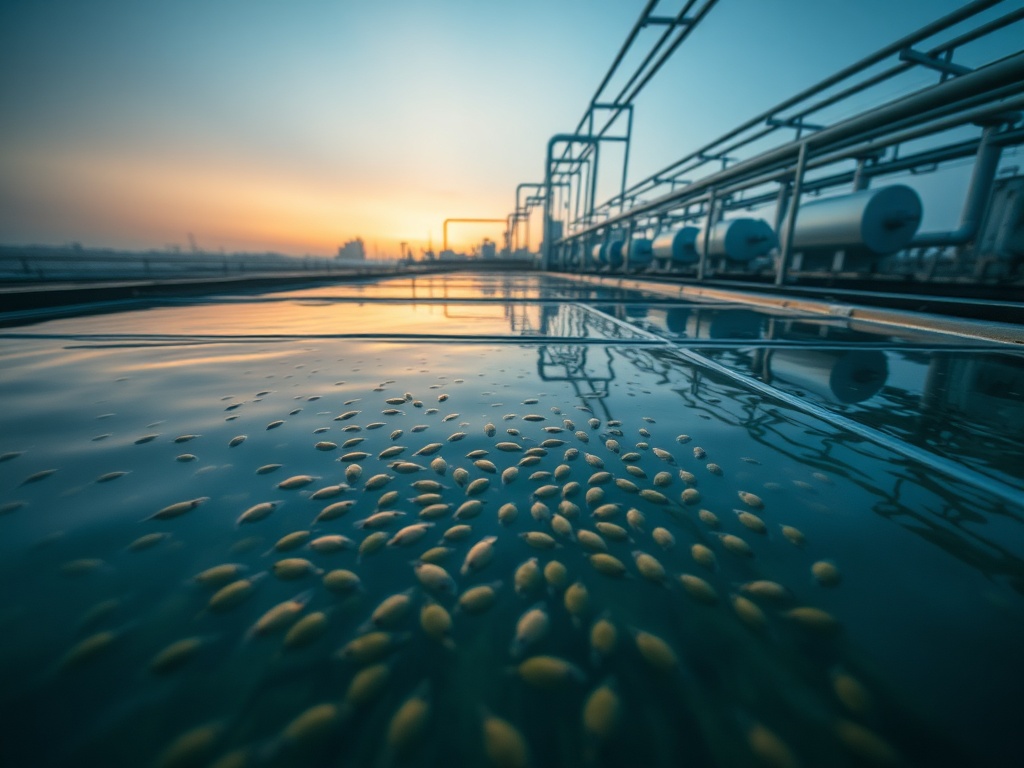
MIT researchers, led by mechanical engineering professor Kripa Varanasi, have developed a system to remove oceanic CO2 without chemicals or waste byproducts. The process is straightforward: seawater enters the system, and carbon dioxide is captured and removed. The remaining water, with its chemistry restored, is returned to the farming environment. Laboratory tests have shown that oysters treated with this method outperformed those treated with conventional mineral or chemical alternatives. The captured CO2, meanwhile, can be redirected to cultivate algae, providing food for the shellfish themselves.
This is not an academic paper awaiting industrial application in fifteen years. ARPA-E, the federal agency for high-risk, high-reward energy projects, has already funded the next phase. The University of Maine, through oceanography professor Damian Brady, is contributing aquaculture science to scale the technology under real ocean conditions.
The Value Chain No One Wanted to Audit
The global shellfish aquaculture market is valued at approximately $60 billion annually. Maine alone generates about $6.8 billion each year from marine economic activity and supports over 90,000 jobs. These are numbers that justify infrastructure, lobbying, and long-term strategic planning. However, ocean acidification, which destroys the availability of carbonate ions that shellfish need to form their shells, was impacting hatcheries and coastal systems with no technical response from the sector.
Varanasi succinctly captured the situation: "One might assume this could happen in 100 years, but what we're finding is that it’s already affecting hatcheries and coastal systems today." This “today” has immediate accounting consequences. When a hatchery loses larval production, it cannot recover that cycle. When oysters fail to form shells in early stages, there is no subsequent compensation. The damage is binary and permanent in each season.
What MIT identified was not just an ecological problem, but a coverage gap in risk in an industry that assumes the ocean is an operational constant, while in reality, it is the most unstable variable in their cost model.
This brings up a fascinating distributive mechanism. A hatchery operator in Damariscotta, Maine, does not have the individual capacity to finance carbon removal research at an industrial scale. Their historical alternative has been to absorb losses, migrate operations, or close down. None of these options preserve value for any player in the chain—not for the producer, not for the restaurants that purchase their product, not for the coastal communities that depend on employment, and not even for the states that collect revenues from this economic activity.
Why the Waste-Free Model Changes the Economics of the Alliance
From a business structure perspective, the most relevant technical detail is not the efficiency of the process but its absence of byproducts. Alternative chemical or mineral approaches generate waste that requires management, disposal, and regulatory monitoring. This transforms what should be an operational input into an additional environmental liability. The operator pays not only for treatment but also for the consequences of that treatment.
MIT's technology eliminates this second layer of cost. More importantly, it converts captured CO2 into a productive resource within the same system, available for cultivating algae to feed the shellfish. This is not circular economy rhetoric; it represents a real reduction in feed input costs, directly affecting the unit economics for producers.
Damian Brady articulated this in terms any CFO would understand without translation: "If they can couple it, aquaculture and carbon dioxide removal mutually enhance their profitability." This coupling is not a metaphor for collaboration; it’s an architecture where the marginal cost of operating the carbon removal system decreases because the captured CO2 generates direct income or savings for the operator.
The critical point is that this design aligns the incentives of all players without any sacrificing margin to subsidize the other. The shellfish producer improves their larval survival rate and reduces feed costs. The carbon removal system has a customer with an urgent and demonstrable need. The federal funder secures real-world applied validation. The University of Maine generates field data that feeds back into the science. None of these players are ceding value upwards in the chain for someone else to capture.
The Risk That Federal Money Can’t Solve Alone
ARPA-E funds validation and early scaling phases. Its mandate does not include sustained commercialization or market development. Once that funding ends, the technology will need a revenue structure of its own to justify continued operation.
This is the point where many climate tech projects with public funding collapse: confusing technical validation with commercial viability. They are not the same. A technology may work perfectly in a lab and in government-funded pilots, yet still fail to find the right billing model when it needs to stand on its own.
For MIT’s technology, the most robust scenario is not selling the system as equipment to individual producers but structuring it as a service where the producer pays for water chemistry improvement and the system operator retains the captured carbon credits to monetize in offset markets. This model separates revenue streams, lowers the barrier to entry for producers, and creates a funding source that does not depend solely on the spot price of oysters in the market.
What Varanasi described as "this can be scaled" is technically accurate. But scaling without a clear value distribution structure among the system operator, shellfish producers, and carbon credit buyers replicates the same mistake the aquaculture industry made for decades: assuming external conditions will remain favorable.
The Advantage of Designing the System Before Risk Becomes Price
Coastal regions that adopt this technology at early stages will not simply be buying climate resilience in the abstract. They will be establishing a competitive operational cost advantage over competitors who will continue to absorb production losses due to acidification without a mitigation tool available. That difference translates into margins, financing capacity, and negotiating power with institutional buyers demanding environmental traceability.
Maine is in a position to capture that differential. It has the productive infrastructure, local scientific institutions like the University of Maine, access to federal funding, and, according to data from the 2025 Blue Economy Investment Summit, a regulatory environment beginning to shift toward frameworks that reduce private investment risk rather than merely describe it.
The distributive lesson of this case is not that the technology is promising. It’s that the actor who builds the shared risk management system before risk becomes a market price captures the value that others will pay for later. Producers who rely on hatcheries without an acidification solution will not just be paying for not innovating. They will be paying for allowing the cost to be absorbed by the weakest link in their chain: the larva that fails to form a shell, the season that does not recover, the coastal community that loses income without anyone in the chain devising a mechanism to prevent it. That is the real cost of models that externalize risk downward until there’s nowhere left to continue externalizing.