
China's robot butler now has an address and a price
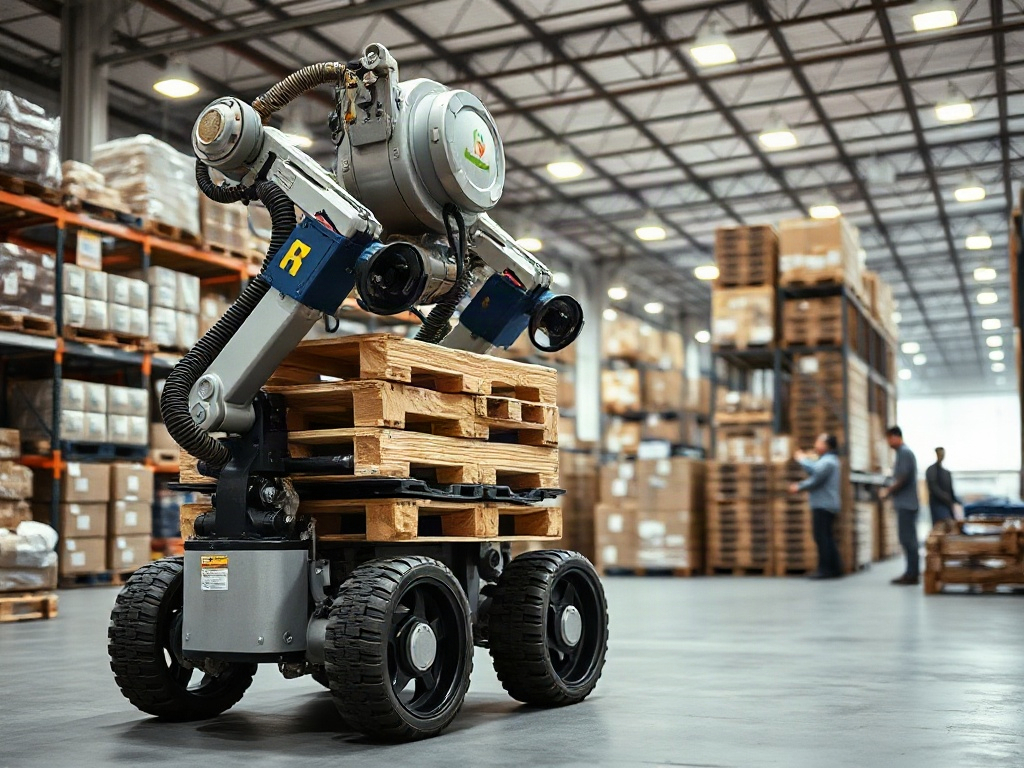
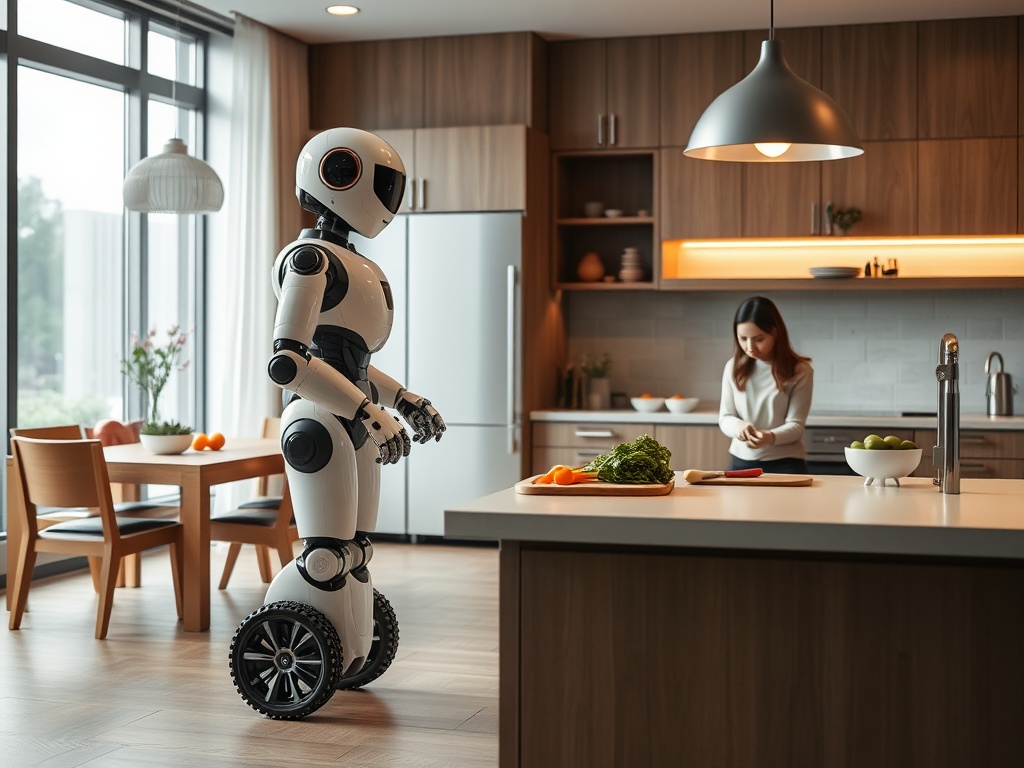
China is not testing whether a robot can mop the floor of a factory. It is testing whether it can mop the floor of your home, make your bed, and fry an egg while you shower. That is exactly what GigaAI, a startup founded in 2025 with backing from Huawei's investment arm, announced in May 2026: the SeeLight S1, a two-armed, wheeled humanoid robot designed specifically for the domestic environment. The first 100 pilot units were deployed in the homes of the company's own employees. In the first half of 2027, they will arrive in Wuhan, free of charge. And in June of that same year, if plans hold, anyone will be able to buy one for $15,000.
The news spread quickly and generated the kind of predictable coverage you would expect: comparisons to The Jetsons, headlines about the end of household chores, a demo video here and there showing the robot hanging laundry with an unsettling degree of competence. But beneath all that noise lies something more interesting than the robot itself: a structural bet on what problem China wants to solve, and whether that problem is the same one faced by the consumer they want to sell it to.
The demographic mandate behind the hardware
GigaAI was not born in a garage out of the enthusiasm of an engineer fascinated with robotics. It was born within a deliberate architecture: founded in 2025, backed by Huawei's capital, and operating in collaboration with the Hubei Humanoid Robot Innovation Centre and the Hubei Humanoid Robotics Industry Alliance, two state-backed entities. This is not a minor detail about the ownership of capital; it defines the type of risk the company is able to absorb.
China has spent years grappling with a contracting demographic. The population is ageing, the workforce is shrinking, and domestic productivity — which is never counted in GDP but is absolutely felt within households — is beginning to crack under the strain. Beijing has issued explicit directives to place embodied intelligence, that is, AI systems with a physical body capable of acting in the world, wherever there is need. The S1 is a response to that mandate as much as it is a response to market demand.
This framing changes how the product should be read. When a private company launches a domestic robot, the threshold for success is mass adoption. When a company with strategic state alignment launches that same robot, the threshold for success is broader: generating data, demonstrating technological capability, and positioning China in a market that Morgan Stanley projects will be worth five trillion dollars by 2050. That does not mean the S1 does not have to work, but it does mean it can fail in the short term without the project itself failing.
Understanding that distinction is what separates serious analysis from enthusiastic analysis. GigaAI does not need to sell a million units in 2027 for its existence to make strategic sense. It needs to generate enough operational learning for the next version to be better, and to do so before any Western competitor can.
What the demo does not show
The presentation videos for the S1 are convincing: the robot chops vegetables, loads the washing machine, opens curtains. The demos have that carefully produced quality that blends the technical with the aspirational. But there is a structural trap in how these capabilities are presented, and any analyst who has followed the history of robotics will recognise it immediately.
Mark Rolston, who designed the Apollo robot for Apptronik and served as creative director at frogdesign, puts it plainly: even if a humanoid enters some homes in 2026, it is not going to do very much. His most precise description is that it would be an expensive object for someone who wants to show off what they own, not a tool that solves anything in daily life. This is not technological pessimism; it is an observation about the current state of the art in the face of the complexity of real homes.
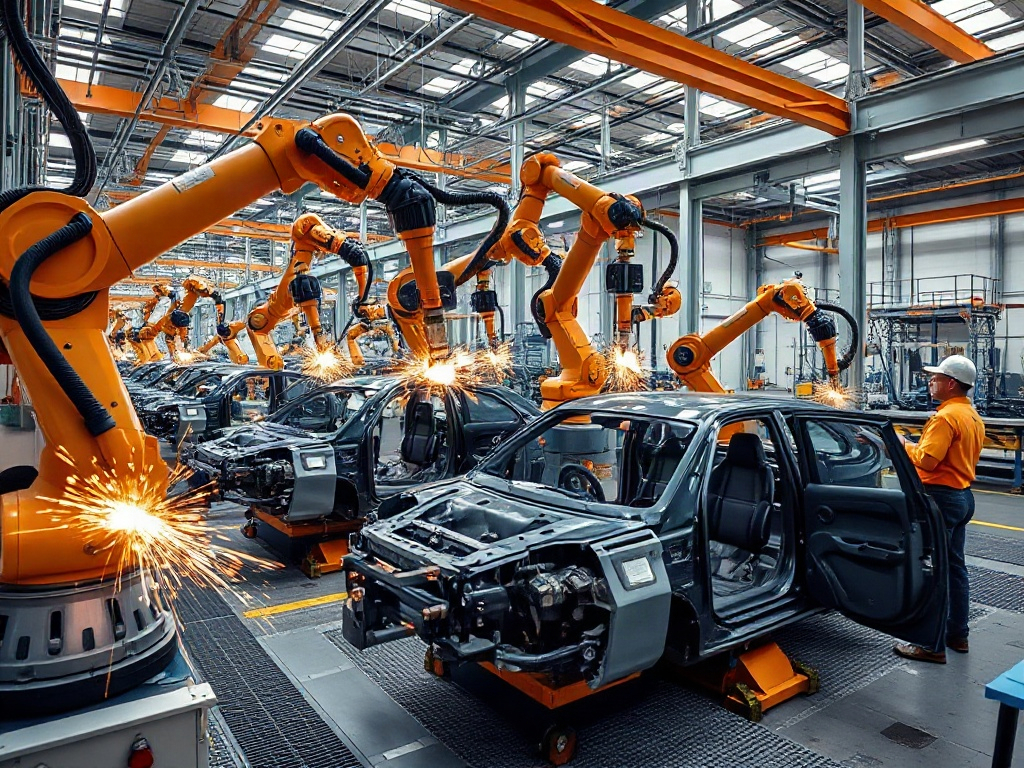
The fundamental problem is that a house is not a factory. In a factory, surfaces are predictable, objects have fixed positions, and movement flows are designed to be repeatable. An industrial robot can learn those routes and execute them reliably. A home changes every day: a chair has been moved, a child is running around, a glass is in the wrong place, a rug has bunched up. Guo Renjie, founder of the robotic design firm Zeroth, puts it directly: domestic environments are not standardised, and the robot faces a space that is different every single day.
The embodied intelligence powering the S1 attempts to solve this through real-time perception and autonomous decision-making, without step-by-step instructions. The robot reads the environment and acts. In theory, that is exactly what it needs to do. In practice, the gap between reading an environment under controlled conditions and doing so in the chaos of a family kitchen on a Tuesday night remains enormous.
There is another signal worth reading carefully: the Fast Company article that reported on the launch noted that the demos are entertaining right up until the remote operator removes the virtual reality headset. This hint at covert tele-operation is not a confirmed fact specifically for the S1, but it does describe a well-known practice in the industry: robots that appear autonomous in presentations but actually receive remote human assistance for the more complex moments. That is not fraud; it is an intermediate state of development. But if the consumer who pays $15,000 expects full autonomy and receives partial autonomy, there is an expectations gap that can be extremely costly in reputational terms.
The business model the price does not tell you about
A unit price of $15,000 places the S1 outside mass-market reach by definition. At that price point, the potential buyer is not the average middle-class household; it is the high-income early adopter, the family with domestic staff who wants to explore automation, the executive who reads about robotics and wants to be the first in their social circle to own one. That is not a negligible initial segment, but it is also not an answer to China's demographic crisis.
Here a tension emerges that the direct hardware sales model does not resolve well: what happens after the purchase? The S1 runs on embodied intelligence that needs to be updated, improved, and adapted over time. A traditional household appliance has a long and predictable life cycle. A cognitive robot has a life cycle that depends on software updates, new perception models, and the continuous improvement of the algorithms that allow it to navigate its environment. The announcement mentions no subscription model, no service contract, and no post-sale support infrastructure whatsoever. That is a significant omission.
By contrast, the San Francisco-based startup Gatsby chose exactly the opposite path: it does not sell robots, it sells cleanings. For $150 per session, a humanoid arrives at the client's apartment and cleans it. A remote operator handles the more complex moments. The model transfers the technological risk from the shoulders of the consumer to the shoulders of the company. If the robot fails, it is Gatsby's problem, not the client's. That resolves something very concrete: the uncertainty about whether the product will deliver on what it promises.
The difference between the two models is not merely financial. It is a difference in what each model is asking the consumer to commit to. GigaAI is asking them to purchase a costly physical asset whose future performance is uncertain and whose functional depreciation could be rapid. Gatsby is asking them to purchase an outcome: a clean home. One of those contracts is considerably easier to sign than the other.
This does not mean the Gatsby model scales well. With remote operators covering the complex tasks, the labour cost does not disappear — it is simply hidden behind the interface. Financial viability depends on how much can be automated before the model becomes profitable at $150 per session. But as a hypothesis about early adoption, it captures far better the kind of friction that the domestic consumer faces when confronted with a robot in their home.
The road nobody wants to travel but everyone has to travel
Rolston has one image that tends to stick: the supermarket test. Before robots can enter homes on a mass scale, they will have to learn to function in supermarkets — spaces where people with shopping carts cross paths without any discernible pattern, shelves shift in their arrangement, children run around, and unexpected situations are the norm rather than the exception. If a robot can manage that autonomously and reliably, it has some chance of working in a home.
China is betting on skipping stages. It is deploying humanoids in factories at scale, sending units to homes and elderly care residences to collect data that no laboratory can generate, and pushing toward the domestic market before the technology is mature enough to handle it. The logic is that learning requires exposure, and exposure requires deployment — even imperfect deployment.
That logic has technical merit. Operational data gathered in real environments is precisely what feeds the models that make the next version better. But it carries a reputational cost that is paid by the earliest buyers: those who pay $15,000 in 2027 and discover that the robot still requires supervision for tasks that any domestic employee carries out without a second thought. If that group talks — and they always talk — the narrative around the product can flip before the technology ever reaches the level it was said to promise.
The history of domestic robotics follows a pattern that repeats itself: the demos impress, expectations soar, and then contact with everyday reality disappoints. iRobot did not solve the problem of having a clean home; it solved the problem of having a slightly less dirty floor through a low-intensity intervention. That was enough to build a market. The S1 is promising something far more ambitious, and the distance between the promise and the delivery is, for now, the single most important variable in its commercial story.
What GigaAI is actually deploying is not a butler. It is the first instance of domestic data collection at scale, financed with the kind of patience that only state backing can provide. The robot that arrives in middle-class homes in 2030 or 2032 will learn from everything the S1 gets wrong today. That has enormous strategic value. It is just that this value is not the same thing that the consumer signing the cheque believes they are buying.