How a company makes money and where the structure starts breaking
We follow the mechanics of a business: which revenues carry the operation, which costs hide fragility, and which changes turn a commercial promise into a structure that can scale.
What we are watching
Monetisation, subscriptions, managed services, adoption mechanics, asset conversions, and models that clean up margin or relocate complexity without solving it.
Where it is being decided
In pricing, revenue structure, fixed versus variable cost, product adoption, operating dependence, and the line between selling software and selling labour disguised as software.
Why it matters
Because a business model is not judged by its story, but by its ability to sustain growth, margin, and returns without living off exceptions or one-off revenue.
Featured
Business Models
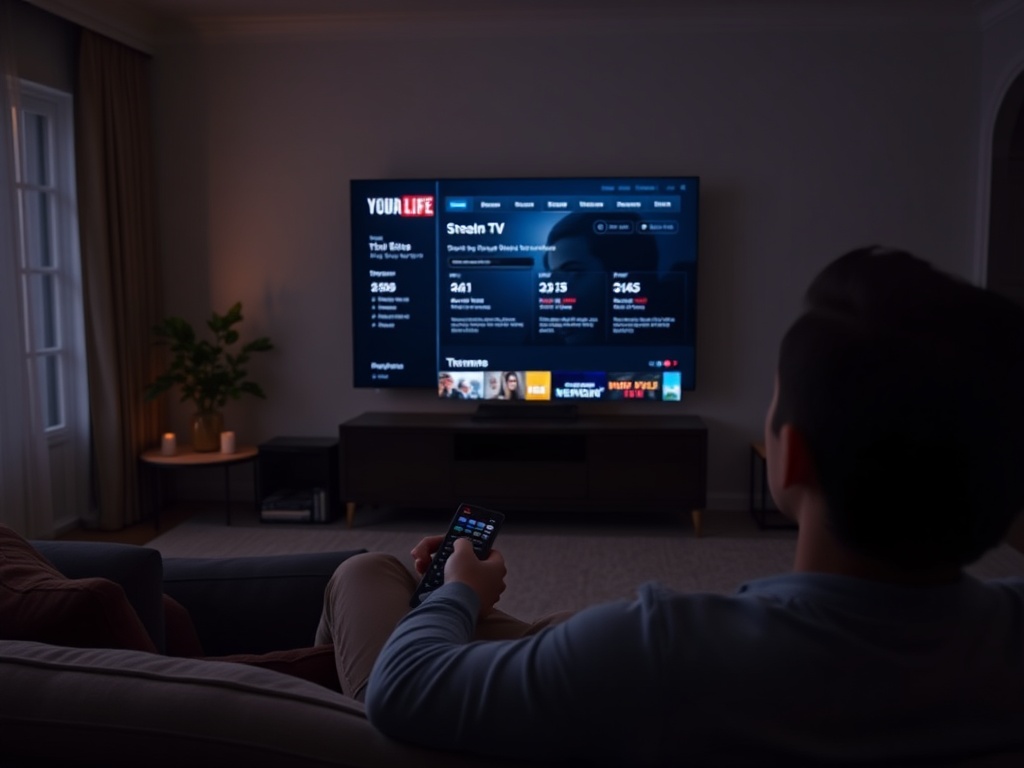
Netflix Raises Price to $20 and Streaming Is Starting to Look Like Cable TV
There is a moment in the lifecycle of any disruptive business model when it stops destroying the incumbent and starts imitating it. Netflix has just crossed that threshold more clearly than ever. The company raised its standard ad-free plan to $19.99 per month, the second price increase in just over a year, while keeping its ad-supported tier at $8.99.
 Sofía Valenzuela9 min
Latest articles
Medium-Term Rentals: The Model That Doubles Cash Flow Without the Risks of Vacation Rentals
There is a real estate investment category that has been operating quietly for years amid the noise of vacation rentals and the apparent security of annual leases. It lacks the glamour of an Airbnb in a major city and the reassuring stability of a five-year tenant, yet it generates more income than the latter and less operational friction than the former. Medium-term rentals—furnished properties with 30 to 90-day contracts—are emerging as a distinct category with their own mechanics and a financial logic that deserves far more rigorous examination than it typically receives.
Bacteria with Philanthropic Funding and 150 Million Children at Risk
Kanvas Biosciences is not a laboratory story. It is a story about incentives. When the Bill & Melinda Gates Foundation decides to fund a synthetic microbiome company to combat environmental enteric dysfunction—an intestinal disease affecting around 150 million children in areas with poor sanitation that blocks nutrient absorption—it is not doing conventional philanthropy. It is betting on an intervention model that the private market cannot yet sustain alone.
The Enterprise AI Acquisition Fever and the Power Already Baked In
When SAP shells out $1.16 billion for an 18-month-old German startup, it's not buying technology. It's buying time. And when Anthropic and OpenAI announce, in the same week, their own structures to bring AI to large enterprises, what emerges is not a race for the best model — it's a race for who controls the layer where business decisions get automated.
The SaaS Model Didn't Die, It Learned to Prove Its Worth
There is a precise moment in the cycle of any business model where the collective narrative stops describing reality and starts producing it. The SaaS sector reached that moment more than a year ago, and the industry is still processing what it means. It is not the collapse that some anticipated with the term 'SaaS-pocalypse', but neither is it a frictionless return to 2021-era growth.
Most Popular
Most voted on this page
When Fuel Doubles in Price and the Model Can't Hold Up
On the afternoon of Saturday, May 2, 2026, Spirit Airlines issued a statement that left no room for ambiguity: total cessation of operations, zero flights, an express instruction to passengers not to approach airports. Seventeen thousand employees lost their jobs within hours. The airline that had spent decades fighting for the cheapest seat in the American market closed with no successor, no merger, no bailout.
91
The SaaS Model Didn't Die, It Learned to Prove Its Worth
There is a precise moment in the cycle of any business model where the collective narrative stops describing reality and starts producing it. The SaaS sector reached that moment more than a year ago, and the industry is still processing what it means. It is not the collapse that some anticipated with the term 'SaaS-pocalypse', but neither is it a frictionless return to 2021-era growth.
89
When the Business Model Wins and the Customer Loses
Between 2021 and 2025, electricity bills in the United States rose by an average of 40%. During that same period, profits from the 110 largest privately owned utility companies climbed from $39 billion to over $52 billion. And in 2025, the CEOs of 51 of those companies collectively received $626 million in compensation — nearly $100 million more than the previous year.
89
SiriusXM Grew 20% While Losing Subscribers — And That Explains Everything
The first reaction to reading SiriusXM's Q1 2026 results is almost paradoxical: the company reported a loss of 111,000 paid subscribers and, at the same time, its net income rose 20% to $245 million. For anyone who reads financial statements like blueprints of a structure, that figure is not contradictory — it's revealing. The company isn't growing despite losing users; it's quietly redesigning how much weight each part of its model carries so the main beam holds more with less mass.
89

UCLA Anderson Bets on Real Estate and Sports Before Its Students Graduate in Conventional Business
There is a moment in the life cycle of a business school when expanding its academic offerings stops being a cosmetic gesture and becomes a statement of institutional positioning. UCLA Anderson School of Management crossed that threshold in April 2026, when it announced the launch of two new undergraduate specializations — called minors — in Real Estate and in Sports Leadership and Management. With this move, Anderson goes from two secondary specializations to four, deliberately broadening the perimeter of what it considers foundational management education.

Made By Us Studios Bets on a Creator Economy That No Longer Needs Middlemen
Made By All — a digital management firm with access to a creator network boasting over 1.5 billion combined followers — announced the launch of Made By Us Studios, a production studio designed to operate within the creator economy with Hollywood-level infrastructure. It named Tanya Cohen, former partner at Range Media Partners and former WME agent — the youngest partner in the agency's history — as co-CEO. The move is not merely a corporate rebrand: it is a bold statement about how the next ten years of entertainment will be organized.

The Robot That Wants to Be Your Companion, Not Your Employee
There is a specific moment in the history of domestic robotics where the industry decided that value lay in solving tasks. Vacuuming. Mopping. Monitoring. The logic was flawless: if the robot does something useful, the consumer pays. Colin Angle proved it better than anyone when he launched the Roomba in 2002 and turned a disc on wheels into the first mass-adoption domestic robot.

Why MSPs That Separate Security and Backup Are Taking a Risk They Can No Longer Afford
There is an operational fracture that the managed services provider industry has been normalizing for years, and the market is starting to collect on it. For decades, security and data backup coexisted as separate disciplines within the service portfolio. Today, that separation is an attack vector.

When Fuel Doubles in Price and the Model Can't Hold Up
On the afternoon of Saturday, May 2, 2026, Spirit Airlines issued a statement that left no room for ambiguity: total cessation of operations, zero flights, an express instruction to passengers not to approach airports. Seventeen thousand employees lost their jobs within hours. The airline that had spent decades fighting for the cheapest seat in the American market closed with no successor, no merger, no bailout.

Why Experience Tourism Is Rewriting the Rules of the Travel Business
The CEO of a travel management group appears on television to discuss industry trends and, within the first few minutes, says something that should unsettle more than a few executives in the industry: demand is not changing destination, it is changing its reason for being. Abel Zhao, CEO of CSTS Enterprises group, described to CNBC how experience-led travel is displacing traditional demand patterns. He did not say it as an academic observation.
 Simón Arce8 min
Meta's AI Is Not a Tech Narrative, It's the Plumbing of Its Advertising Business
Mark Zuckerberg has a habit of presenting every technical advance at Meta as a civilizational milestone. In the first quarter 2026 earnings results, the language was, as usual, ambitious. But this time the numbers do the work the narrative doesn't need to do: $56.3 billion in revenue, 33% year-over-year growth, and an advertising machine that raised the average price per ad by 12% while simultaneously expanding impression volume by 19%.
 Diego Salazar8 min
How a Viral Food Truck Redesigned the Architecture of Social Capital in Las Vegas
Guiliano Raso had no access to institutional capital, professional network, or culinary credentials. He had time, discipline, and a hypothesis that few take seriously when it comes from someone who just came out of addiction: that information about how a business works should not be a scarce resource. Three years working three simultaneous jobs allowed him to accumulate six figures in savings.
 Isabel Ríos8 min
When the Business Model Wins and the Customer Loses
Between 2021 and 2025, electricity bills in the United States rose by an average of 40%. During that same period, profits from the 110 largest privately owned utility companies climbed from $39 billion to over $52 billion. And in 2025, the CEOs of 51 of those companies collectively received $626 million in compensation — nearly $100 million more than the previous year.
 Camila Rojas7 min
Academy Sports Bet on AI for Pricing — The Real Question Isn't Whether It Works, But Who Captures the Value
When a retail chain with more than 300 stores announces it has spent over a decade working with a price intelligence platform — and has just extended that contract for several more years — the technology headline is the least interesting part. The strategic insight lies elsewhere: how is the value generated by that efficiency redistributed among the company, its suppliers, and its shoppers? Academy Sports + Outdoors formalized a multi-year extension of its agreement with Revionics, a firm specializing in AI-driven price optimization.
 Martín Soler7 min
SiriusXM Grew 20% While Losing Subscribers — And That Explains Everything
The first reaction to reading SiriusXM's Q1 2026 results is almost paradoxical: the company reported a loss of 111,000 paid subscribers and, at the same time, its net income rose 20% to $245 million. For anyone who reads financial statements like blueprints of a structure, that figure is not contradictory — it's revealing. The company isn't growing despite losing users; it's quietly redesigning how much weight each part of its model carries so the main beam holds more with less mass.
Sofía Valenzuela7 min
Why the Federal Pivot on Cannabis and Psychedelics Is Reshaping the Board for Mental Health Startups
The Trump administration signed two of the most significant drug policy reforms in decades in April 2026. First, an executive order to accelerate research and approval of psychedelics such as psilocybin, MDMA, and ibogaine, with a $50 million allocation and expanded access under the Right to Try Act. Days later, the Department of Justice reclassified state-licensed medical cannabis from Schedule I to Schedule III, effectively eliminating enforcement of Section 280E of the tax code, which had imposed effective tax rates above 70% on industry operators.
 Francisco Torres7 min
Sun International Bet on Digital and Now Leads a Market Slipping Away from Its Rivals
The South African betting market has been shifting for years in plain sight. Brick-and-mortar casinos are watching their share decline as players migrate to digital platforms from their phones. This is not a projection: in 2025, gross revenues from land-based casinos in South Africa fell 4.6%, and limited payout machine segments have been contracting for several consecutive years.
 Ricardo Mendieta7 min
The $250 Million Startup Holding Salesforce Accountable for Building on Sand
In 1999, Salesforce designed a data model for a world where every commercial move depended on a human opening a screen and typing something. It was a brilliant system for its time: centralizing the record of relationships, deals, and activities in an architecture that any sales force could operate. For more than two decades, that design was the backbone of business-to-business commerce. Today, that same architecture is becoming its greatest vulnerability.
 Gabriel Paz8 min
The Model That Built Modern Medicine Is Losing Ground to China
For more than half a century, America's great academic medical centers operated as the invisible infrastructure behind almost every drug that saves lives today. More than half of the patents supporting FDA-approved drugs originated in research generated within these institutions. And yet, that model is being outpaced in speed, scale, and commercial appeal by a competitor that barely appeared on the map a decade ago.
 Lucía Navarro7 min
When the Negotiating Table Becomes the Most Expensive Asset
Diplomacy has its own economy. Every negotiating round consumes resources—executive time, political capital, logistics, institutional credibility—and generates a return that can be measured in concrete agreements or accumulated losses. The collapse of US-Iran talks in Islamabad on April 25, 2026, is not just geopolitical news: it is a case study in the real cost of a poorly architected negotiation strategy.
 Javier Ocaña7 min
Coins.ph Turns Stablecoins Into Everyday Currency in the Philippines
For years, holding USDT or USDC in a Filipino digital wallet meant roughly the same as keeping dollars under a mattress: an asset that accumulates but never circulates. On April 21, 2026, Coins.ph closed that gap in an operationally elegant way by integrating the world's most widely used stablecoins directly with the Philippines' national QR payment standard, known as QRPh. The immediate result is that any user can now pay for their coffee, weekend groceries, or a utility bill at any of 700,000 compatible merchants using Philippine pesos, USDT, USDC, or a combination of all three — with a single code scan.
 Ignacio Silva5 min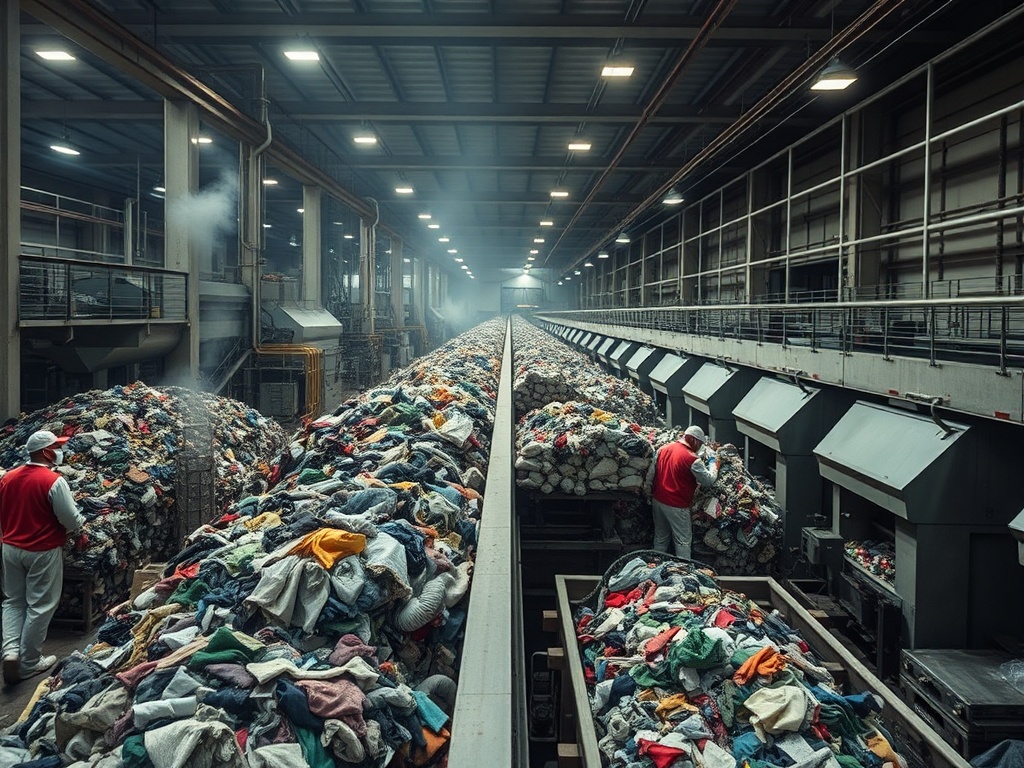
Recycling Polyester at Industrial Scale Is No Longer Just a Promise
Europe generates more than five million tonnes of textile waste every year. Most of it ends up in landfills or incinerators. Not because the technology to process it is lacking, but because turning it into useful raw material at a commercially viable cost had proven impossible to demonstrate beyond the laboratory. Until now.
 Elena Costa6 min
AI Agents on the Factory Floor: Who Gets the Dividend?
Accenture, Avanade, and Microsoft announced an AI agent system to reduce downtime in manufacturing. The numbers are attractive. The question nobody is asking is who actually captures the value.
Lucía Navarro7 min