How a company makes money and where the structure starts breaking
We follow the mechanics of a business: which revenues carry the operation, which costs hide fragility, and which changes turn a commercial promise into a structure that can scale.
What we are watching
Monetisation, subscriptions, managed services, adoption mechanics, asset conversions, and models that clean up margin or relocate complexity without solving it.
Where it is being decided
In pricing, revenue structure, fixed versus variable cost, product adoption, operating dependence, and the line between selling software and selling labour disguised as software.
Why it matters
Because a business model is not judged by its story, but by its ability to sustain growth, margin, and returns without living off exceptions or one-off revenue.
Featured
Business Models

When Hedging Gold Destroys Margins
Mokingran saw sales rise in gold's best year but profits plunge due to hedging and loans in a ruthlessly unforgiving market. The lesson isn't about jewelry; it's about financial architecture in businesses with razor-thin margins.
 Gabriel Paz6 min
Latest articles
Oracle's Bet on AI: Measuring Trust Over Capital
Oracle is investing vast sums to become a computing provider for AI. The market evaluates more than just revenue; it focuses on operational credibility and reducing buyer friction.
AI Computing Becomes Part of Payroll and Transforming Hiring
Silicon Valley is treating access to GPU computing as a salary asset, impacting how SMEs attract talent and manage costs.
Bluesky Changes CEO to Move Beyond Promise
The transition from Jay Graber to Toni Schneider as interim CEO indicates an operational acknowledgment as Bluesky aims to navigate monetization challenges.
Agilent Acquires Biocare to Address Pathology Bottlenecks
Agilent will pay $950 million for Biocare Medical to enhance its position in oncological diagnostics, focusing on efficiency rather than technology.
Most Popular
Most voted on this page
Bluesky Changes CEO to Move Beyond Promise
The transition from Jay Graber to Toni Schneider as interim CEO indicates an operational acknowledgment as Bluesky aims to navigate monetization challenges.
93
BJ’s Competitive Edge: Selling More Per Member Without Eroding Margins
BJ's Wholesale focuses on increasing member purchases in smaller packages, leveraging selective pricing to protect cash flow.
93
Pentagon's Supply Chain Risk Label Reconfigures Buyer Fears for Claude AI
The Pentagon's designation of Anthropic's Claude as a 'supply chain risk' changes the psychological landscape for buyers, segmenting risk rather than creating a total ban.
93
Apple Acquires Formula 1 in the U.S.: A Focus on Retention Rather Than Mass Audience
Apple's acquisition of F1 rights aims to boost subscriptions, while Formula 1 targets monetization in the U.S. market.
93

Ad-Free Subscription as a Test of Strategic Discipline
Waktu Solat Malaysia shifted from treating advertising as an end goal to making it an option. This move exposes a difficult decision: charge for focus and assume the political cost of segmenting users.

The Rise of Online Plant Purchases as Domestic Green Infrastructure
Mail-order gardening has evolved from a niche hobby into a vital logistics channel for biodiversity and well-being, emphasizing quality and trust.

Market-Praised Efficiency Leaves a Silent Debt for Surviving Teams
When a company announces thousands of layoffs, the market usually fixates on the single word: efficiency. But behind this facade lies a deeper challenge.

The Advantage of Starting with 500 People: Outfit Formulas and the Measurable Trust Economy
Outfit Formulas scaled not by shouting louder, but by charging early to a small group with a daily problem. Their journey underscores a crucial rule: sustainable growth begins with validating commitment, not accumulating audience.

BJ’s Competitive Edge: Selling More Per Member Without Eroding Margins
BJ's Wholesale focuses on increasing member purchases in smaller packages, leveraging selective pricing to protect cash flow.

The End of Adore Me's Subscription Reveals Economic Limits of Automatic Payments in Intimate Apparel
Victoria’s Secret acquired Adore Me for $400 million to boost its digital capabilities. Three years later, it shuts down the subscription model, converting it to a loyalty program—a sign that recurring revenue doesn't offset high return rates in intimate wear.
 Clara Montes6 min
The Balance the AI is Disrupting: The U.S. Buys Hardware and Sells Fewer Hours
AI is not just automating services; it's driving imports of chips and data centers. If the service surplus doesn't compensate, the deficit becomes structural.
 Javier Ocaña6 min
Claude's Ban in Defense Reveals a New Bottleneck: Licensing, Control, and Supply Chain
The clash between Anthropic and the Pentagon isn't a philosophical debate about safety; it's a struggle for operational control over AI deployment.
 Francisco Torres6 min
Autonomous Cleaning Becomes Infrastructure: The Business Is No Longer in the Robot, But in the Fleet
Autonomous cleaning robots are evolving from mere gadgets to operational assets. The true winner is the one who can scale deployment effectively.
 Ignacio Silva6 min
Saks Global Cuts Stores to Survive: The Shift to Luxury Demands Less Space and More Discipline
Closing stores is not a strategy; it's surgery. The real question for Saks Global is whether its reduction in physical footprint is creating a viable operation or merely buying time in Chapter 11.
 Ricardo Mendieta6 min
Pentagon's Supply Chain Risk Label Reconfigures Buyer Fears for Claude AI
The Pentagon's designation of Anthropic's Claude as a 'supply chain risk' changes the psychological landscape for buyers, segmenting risk rather than creating a total ban.
 Andrés Molina6 min
The List of 'Best Series' Isn't Marketing: It's Hulu's Financial Wall Against Subscriber Loss
In a streaming market that mirrors itself, editorial curation becomes key to revenue retention and conversion to more profitable packages.
 Camila Rojas6 min
Conservation That Scales: Why the Canadian Fund of 25 Years is a Governance Bet, Not Philanthropy
Canada recently celebrated 25 years of its longest-running program for at-risk species with a new injection of up to $5.2 million. The important aspect for C-Level executives is not the amount, but the design: a network-driven execution machine based on local legitimacy and evidence.
 Isabel Ríos6 min
The Ownership Economy Strikes Back: Gen Z Is Punishing the Easy Margin of Subscriptions
Subscription fatigue is pushing Gen Z to pay for objects they can touch, keep, and resell. This isn't nostalgia: it's a renegotiation of how value is split between platforms, creators, retailers, and consumers.
 Martín Soler6 min
The Orinoco as an Ownerless Asset: When Extraction Turns Biodiversity into Financial Liabilities
The Orinoco basin is critical for local economies, yet operates without effective governance, leading to unsustainable extraction practices.
 Lucía Navarro6 min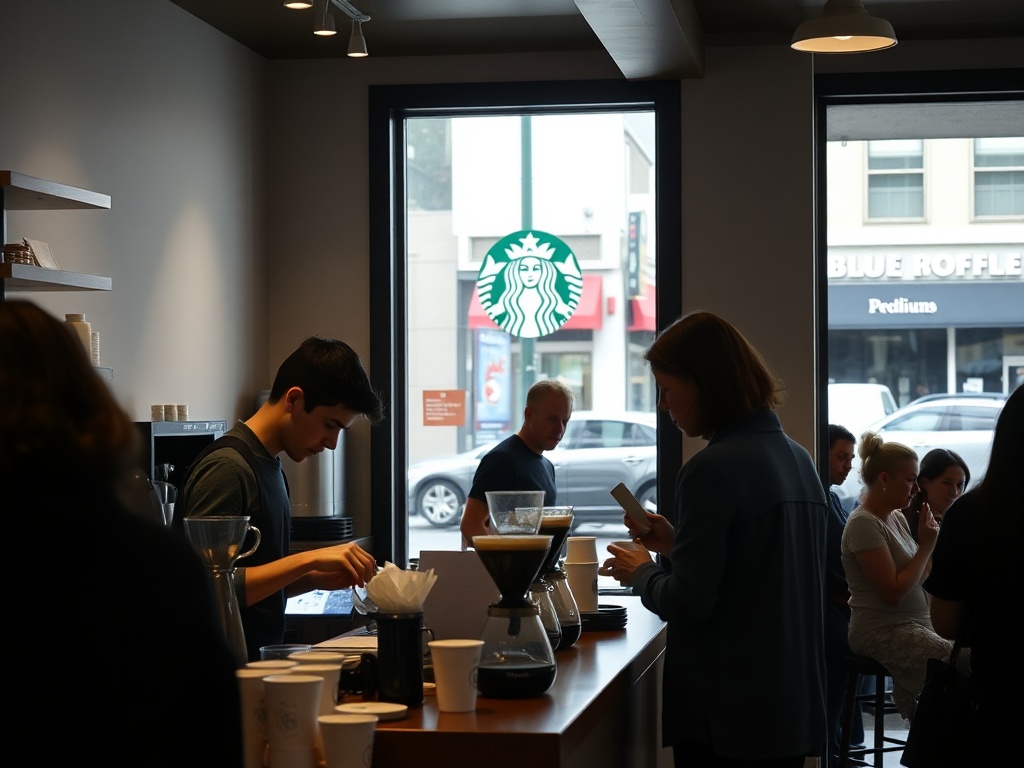
Luckin Acquires Prestige, Not Stores: The Blue Bottle Strategy to Pressure Starbucks Without Disrupting Its Low-Cost Model
Centurium, the controlling shareholder of Luckin Coffee, agreed to buy Blue Bottle's retail operations from Nestlé for under $400 million to gain premium legitimization.
Francisco Torres6 min
Apple Acquires Formula 1 in the U.S.: A Focus on Retention Rather Than Mass Audience
Apple's acquisition of F1 rights aims to boost subscriptions, while Formula 1 targets monetization in the U.S. market.
Ricardo Mendieta6 min
The Lamb Becomes a Scarce Asset: The Decline of the British Sheep Flock Forces a Redesign of the Food Chain
As the sheep flock decreases, not only does the price of lamb rise, but the economy of entire regions is rewritten, straining food security in the UK.
Gabriel Paz6 min
Costco Monitizes Loyalty: How Membership Fees Finance Pricing and Reduce Buyer Mental Effort
Costco exceeded growth expectations, not just by selling more but by transforming membership into a driver of margin, trust, and purchasing habits.
Andrés Molina6 min