
Saks Global Cuts Stores to Survive: The Shift to Luxury Demands Less Space and More Discipline
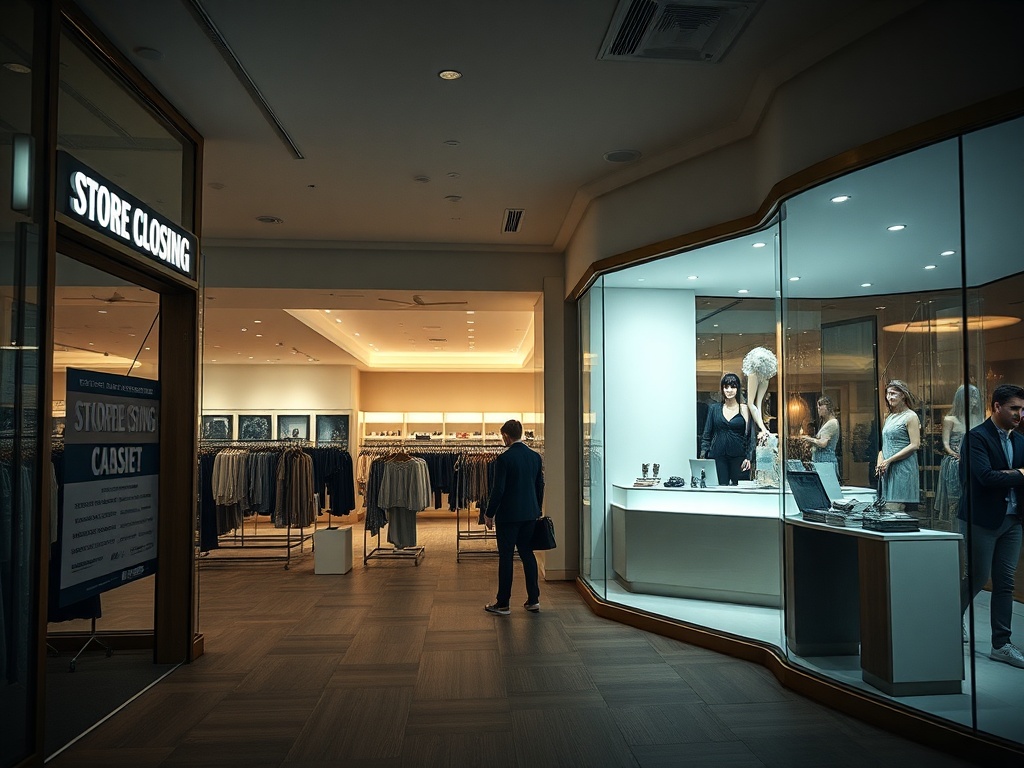
Saks Global has undertaken a drastic measure that many companies postpone until their balance sheets can no longer hide the truth: aggressively reducing physical presence in a way that reveals urgency rather than aesthetics. On March 6, the company announced the closure of 15 additional stores — 12 Saks Fifth Avenue and 3 Neiman Marcus — as part of its Chapter 11 restructuring. Following this wave of closures, the company claims it will maintain 13 Saks Fifth Avenue and 32 Neiman Marcus locations. This decision follows a previous round in February, which included 8 Saks Fifth Avenue closures and 1 Neiman Marcus closure in Boston (Copley Place), alongside cuts to personal shopping suites and a digital reorganization of Horchow. The message is clear: the store network has ceased to be an asset and has become a liability hindering operational flexibility.
The corporate temptation is to market this as "optimization" and move on. However, the market doesn't pay for euphemisms. In Chapter 11, the narrative is less important than the mechanics: transforming fixed costs into a structure that allows for the repurchase of inventory without suffocation, restoring supplier trust, and maintaining a luxury promise without the burden of an oversized footprint. CEO Geoffroy van Raemdonck describes the move as a focus on "the best-performing locations" in markets with a high density of luxury consumers, aiming to enhance experiences and personalization "across all channels." This statement holds value only if the rest of the operational design does not contradict it.
Contraction is Now the Product, Not the Symptom
The numbers illustrate a reconfiguration of size, not fine-tuning. By 2026, Saks Global will have announced the closure of 20 full-line Saks Fifth Avenue stores (8 in February and 12 in March) and 4 Neiman Marcus locations (1 in February and 3 in March). This cut coexists with another revealing decision: a retreat from discounting. The company is closing most Saks Off 5th and Neiman Marcus Last Call locations; moreover, the Saks Off 5th website — as a separate legal entity — is in liquidation and will soon shut down. Remaining Off 5th locations will serve merely as a channel for "cleaning" residual inventory, as Saks Global has stated that it will no longer buy merchandise directly for Off 5th.
This isn’t merely a cost-cutting exercise. It represents a rejection of a certain type of customer, foot traffic, and inventory movement. When discounting becomes a structural crutch, it ultimately taints the luxury positioning and trains consumers to expect markdowns. However, this rejection comes with operational consequences: without that channel, full-price sales require surgical precision in purchasing, assortment allocation, and turnover speed, as luxury margins do not tolerate stagnant inventory.
The closure of Horchow.com and the transfer of that offering to NeimanMarcus.com reinforces the same reading: fewer brands and scattered digital properties, more concentration in areas where the company believes it can rebuild volume with control. Saks Global has also closed 14 locations of the Fifth Avenue Club, leaving only 2 operational. Even in high-touch services, they opted for reduction. It is a strong gamble: personalization is promised, but the physical nodes where that personalization was executed are shrinking.
Chapter 11 as a Power Re-engineering with Suppliers
The underlying issue isn’t the number of stores but the supply chain system. Saks Global entered Chapter 11 after failed payments to suppliers and prolonged financial strain. In this context, store closures serve two simultaneous purposes: they free up cash by eliminating rents, payroll, and associated costs; and they allow for the renegotiation of terms with brands that, in luxury, hold more power than the retailer.
Here's the crucial short-term takeaway: Saks Global reported that over 500 brands have resumed shipments to its retailers and that it has reached or is near reaching agreements with over 175 brands during the restructuring process. This point is vital because without inventory continuity, there is no "luxury experience"; there is only a nice-looking space with incomplete shelves. Sources also indicate that Saks Global owes hundreds of millions of dollars to luxury suppliers, including names like Chanel and LVMH. In a business where product is king, owing money to the king means losing priority, terms, and access.
Thus, closing stores also conveys a message to the brand ecosystem: the company is reducing its total inventory needs and concentrating demand in fewer locations, which can improve sales-per-store rates and, by extension, its ability to pay. In a stressful scenario, the retailer that survives is not the one with "more doors" but the one that demonstrates that every open door has productivity and discipline.
The obvious risk is that fewer stores mean less presence and less convenience for customers, just as brands aggressively push for direct sales. Saks Global is competing for relevance with luxury conglomerates’ own boutiques and other department stores like Nordstrom and Bloomingdale’s in an environment where wholesale is losing centrality. In that landscape, restructuring cannot be limited to closures; it must redesign the value proposition so that a brand wants to continue "ceding" part of customer contact to the department store.
The Shift to Luxury Only Works if the Remaining Footprint Becomes Irrefutable
Van Raemdonck has stated that the future portfolio will retain "the most desirable" and "best-performing" locations in markets with concentrated luxury customers, and that by optimizing the footprint, they can offer elevated products and experiences with personalized service across all channels while enabling investments for long-term growth. Up to that point, the narrative is consistent. What remains is the test of coherence: that actions reinforce rather than neutralize each other.
The shift to luxury demands three things that many restructurings underestimate.
First, portfolio clarity. If Saks Fifth Avenue is left with 13 stores, each must function as an authority showcase, not as an average format. There is no room for "adequately good stores." In luxury, mediocrity is perceived within the first minute: irregular assortment, intermittent service, physically exhausting experience, digital promises that do not materialize.
Second, inventory and working capital control. The announcement that over 500 brands have resumed shipments is a sigh of relief but not a permanent state of stability. Stability is bought with timely payments, reliable forecasts, and a chain of decisions that doesn't shift every quarter. Closing Off 5th as a direct buyer and leaving it as a liquidation channel reduces temptations but also eliminates a buffer. The company must become better at the boring part of luxury: planning, allocation, replenishment, commercial discipline.
Third, an omnichannel experience that is not rhetoric. Saying "all channels" is easy; executing it with an organization in Chapter 11 is rare. The promise only becomes real if the customer perceives continuity between store, web, and high-touch services. The cut to the Fifth Avenue Club strains that promise: customization can be delivered without as many suites, but only if commercial talent and digital tools compensate for physical cuts. Otherwise, the "highly personalized service" becomes just a line in a press release.
One additional detail: Saks Global indicated that the footprint of Bergdorf Goodman remains unchanged for now. That piece of information is a strategic confession. Bergdorf is a brand asset, almost a symbol. Keeping it intact suggests that the group understands which pieces cannot be sacrificed if the goal is to continue competing at the high end of the market.
True Discipline Is Accepting That the Previous Size Will Not Return
There’s a common mistake in restructurings: treating closure as a temporary stage before "growth resumes." In luxury retail, that nostalgia is lethal. Saks Global, by cutting full-line operations and dismantling much of the off-price, is implicitly deciding that the previous scale was not profitable or could not be financed within the existing payment, rent, and supplier relationship structure.
The internal signal is also harsh. The company has a recent history of workforce reductions: reports suggest cuts of hundreds of people and an intention to reduce around 5% of corporate staff in the U.S. by 2025, in addition to facility closures and associated layoffs already in 2026. Without speculating on future numbers, the pattern is clear: the company is transforming an organization designed for expansion into one designed for selective survival.
The most constructive scenario is one where the company uses Chapter 11 to end operational self-deception: fewer stores, yes, but stores that function; fewer discounts, yes, but with an inventory machine that does not require chronic liquidations; fewer scattered digital properties, yes, but with platforms that sustain convenience and service.
The dangerous scenario remains the same: closing as a substitute for design. In that case, the organization shrinks but retains the same internal complexity, the same cross-incentives, and the same inability to maintain terms with suppliers. The result is not a clearer luxury retailer; it is a smaller retailer with the same issues.
Saks Global does not need more declarative ambition. It needs a brutally coherent map of what it ceases to be and what it chooses to protect with real resources. The leadership traversing a contraction of this magnitude only succeeds when it transforms renunciation into an operating system and upholds with discipline what it will not do, even when the instinct urges a return to being everything for everyone.