
The End of Adore Me's Subscription Reveals Economic Limits of Automatic Payments in Intimate Apparel
Victoria’s Secret & Co. confirmed on March 5, 2026, a pivot that speaks more to unit economics than to creative marketing: it discontinued Adore Me's subscription and transformed it into a loyalty program. This decision was shared during its Q4 earnings call, the same forum where it announced the closure of the Adore Me distribution center in Mexico and the initiation of a strategic review of DailyLook, an online styling service that came with the acquisition package. The purchase of Adore Me, completed in 2023, had cost approximately $400 million.
The public narrative around such acquisitions typically aligns: technology, young customers, recency. In numbers, Victoria’s Secret showcased sales strength with $2.27 billion in quarterly net revenue, nearly 8% up year-over-year, and an annual 2026 guidance of $6.85 to $6.95 billion. The problem is that, simultaneously, profitability weakened: operating income fell 14.5% and net income dropped 5% in the quarter.
The market understood the message. Despite exceeding expectations, the stock dropped over 8% in premarket trading. From my perspective, the point is not whether the company communicated the change well or poorly, but what it reveals about consumer behavior and the hidden costs of trying to "force" recency in categories that are complex to fit, highly sensitive to sizes, and easy to return.
The Subscription Promised Repetition, but Bought Friction
Adore Me’s VIP proposition relied on a familiar retail mechanic: a monthly charge unless the customer “skips” the month or makes a purchase. In theory, this system creates habits, stabilizes demand, and reduces the cost of customer acquisition by stretching their lifecycle. In practice, in intimate apparel, recurrence cannot be achieved just with reminders and perks. It only occurs when the product fits, when the experience reduces uncertainty, and when the cost of error is low for the user but not lethal for the operator.
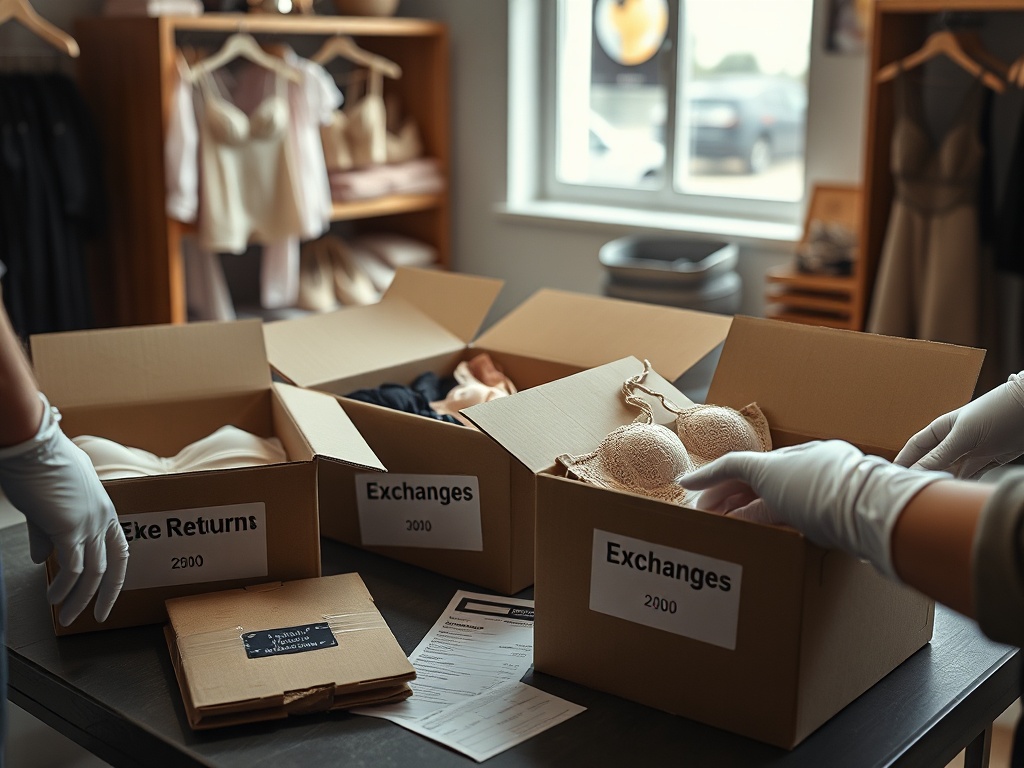
This is where the tension arises. Analyst Bruce Winder bluntly stated: the ability to return unwanted items is “cost prohibitive,” and with economic challenges particularly impacting younger consumers, the subscription model is under pressure. In clothing, that pressure often manifests as a combo: more orders to try, more returns, more repackaging, more inspection, more spoilage, more customer service, more refunds, and inventory that returns late and in worse commercial condition.
In other words, the subscription can inflate a metric that looks good on a growth dashboard but deteriorates margins on the P&L. Additionally, automatic payments have a branding cost. When users feel they must “manage” the subscription to avoid paying for something they don’t need that month, the proposition shifts from convenience to a chore. In intimate categories, where fit, style preferences, and privacy weigh heavily, that feeling amplifies.
That Victoria’s Secret has converted the subscription into loyalty is a tacit acknowledgment: the repeat business that matters is the one born of satisfied usage, not the one pushed with a billing calendar.
Converting Subscription to Loyalty is an Adjustment of Incentives, Not Just Marketing
Scott Sekella, CFO and COO, made it explicit: the company “discontinued” the subscription based on intimates and transformed it into loyalty. This shift is often interpreted as a downgrade. I view it as a correction of incentives.
The subscription maximizes one thing: predictability of gross income. Well-designed loyalty maximizes another: profitable frequency. In one, the engine is contractual; in the other, the engine is perceived value. When profitability falls while sales grow, the business is essentially shouting that its demand mix is too expensive to serve.
The closure or exit from the distribution center in Mexico follows the same logic. You don’t need to know the operational details to understand the goal: if the model changes, the logistics network must also. A subscription typically generates waves of demand and spikes in reverse logistics. Loyalty allows for more elasticity in operations since customers buy when they want, and the company can optimize promotions, product assortments, and replenishments without being tied to a billing cycle.
It also changes the type of psychological relationship. In loyalty, the customer “accumulates” benefits and feels recognized. In subscription, the customer “avoids” a charge or “justifies” the payment with a purchase. That difference, in tight economic environments, is crucial. When the budget tightens, the first relationship defends itself better than the second.
If the original ambition of the acquisition was to modernize digital capabilities and attract younger consumers, the uncomfortable lesson here is: digital does not convert a model into sustainable if the mechanics penalize the margin.
DailyLook Under Review: The Portfolio is Being Reorganized Around Margin
The same earnings call included another message: Victoria’s Secret initiated a strategic review of DailyLook, described by executives as a premium digital subscription and simultaneously a “non-core” asset. This is significant for what it suggests about the company’s moment.
When a company is in expansion mode, it tolerates peripheral experiments because growth pays for learning. When margins weaken, the organization becomes stricter: demanding focus, simplifying its portfolio, and reducing distractions. Guggenheim interpreted the DailyLook review as a step that reinforces the focus on core brands.
In consumer behavior terms, subscription styling services often promise an outsourcing of decision-making: someone chooses on my behalf. That “job” is valuable for certain profiles but is expensive to operate. Not only due to human talent or recommendation software but also because of logistics, return rates, and the cost of serving customers who try a lot before deciding.
Adding to the financial context disclosed: sales are growing, and operating income is falling. The typical outcome is that management stops rewarding complexity. Simplification isn't aesthetic; it's margin survival.
This type of review also reveals an adjusting hypothesis: the idea that buying digital assets automatically rejuvenates a legacy brand. What really rejuvenates is solving a customer pain point better and doing so profitably. If the asset doesn’t push that dual objective, it becomes a candidate for deeper integration or exit.
Pink, Stores, and the Return of “Try Before” as a Strategy to Reduce Returns
Hillary Super, CEO, announced a long-term pop-up for Pink in SoHo during 2026, framing it cautiously: she sees greater in-store sales penetration for Pink but does not anticipate a mass strategy of standalone stores.
This point connects with Adore Me’s decision more than it appears. In intimates and apparel, the store fulfills a function that e-commerce has not consistently replaced: reducing uncertainty. Trying, touching, comparing sizes, understanding fit. Each point of certainty gained at the moment of purchase equals one less return. And each less return changes the model's economics.
The rise of digital brands pushed incumbents to pursue online growth with aggressive performance marketing mechanics, discounts, and “VIP” programs. But the pendulum is swinging back to a pragmatic hybrid: using physical stores not as nostalgia but as a tool to reduce servicing costs and increase satisfaction.
That Pink is relying more on stores can be seen as a commercial mix data point, but also as an acknowledgment that young consumers value the social component and immediacy of the product. In intimates, the purchase also carries an emotional layer. A well-executed store can transform a private transaction into a confidence-building experience.
Here, innovation isn't about inventing a new payment mechanic. It’s about designing a system that aligns customer incentives with margin health: better size information, better assortments, better consultation, better change flows, and a loyalty system that rewards permanence without forcing it.
What This Shift Teaches About the “Job” the Consumer Hires
Victoria’s Secret is rearranging a bet that started as a digital acceleration: it bought Adore Me for $400 million, saw sales grow, and still faced profitability pressure. The end of the subscription and the shift to loyalty indicate that the cost of maintaining forced recurrence outweighed the value captured.
In categories with high return rates, recurring income is not synonymous with quality income. It can be, in fact, a cost amplifier. The decision to review DailyLook reinforces the same pattern: models based on shipping, trying, and returning promise convenience but become fragile when the economy tightens, and margin demands discipline.
The operational learning is clear: the company seeking to grow in intimates does not win by converting purchases into installments, but by reducing fit uncertainty and ensuring satisfaction-driven repeat purchases.
Adore Me's pivot demonstrates that consumers were hiring for progress and confidence in choosing lingerie, not a monthly payment contract.