
The Orinoco as an Ownerless Asset: When Extraction Turns Biodiversity into Financial Liabilities
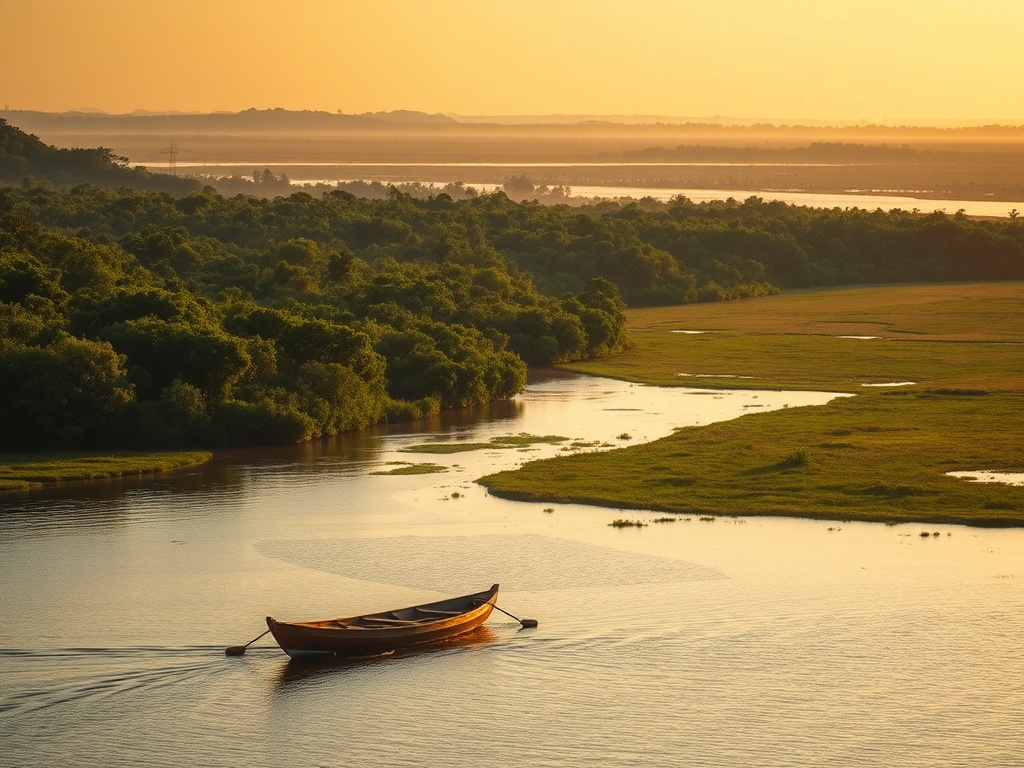
The Orinoco basin isn't just a hydrological map; it is a piece of natural infrastructure that supports fishing, fertile soils, and flooding cycles that organize the economic life of a vast portion of Venezuela. The hard figures available in supporting research are eloquent in biodiversity while being uncomfortable for extractive logic. The system is home to 995 fish species; in Venezuela alone, 939 species are reported. In the Upper Orinoco-Casiquiare, at least 4,000 vascular plant species are documented, with around 500 endemic species that are not yet fully inventoried. Furthermore, the Casiquiare link connects the Orinoco and Amazon in a unique hydrographic phenomenon with scientific and ecological value.
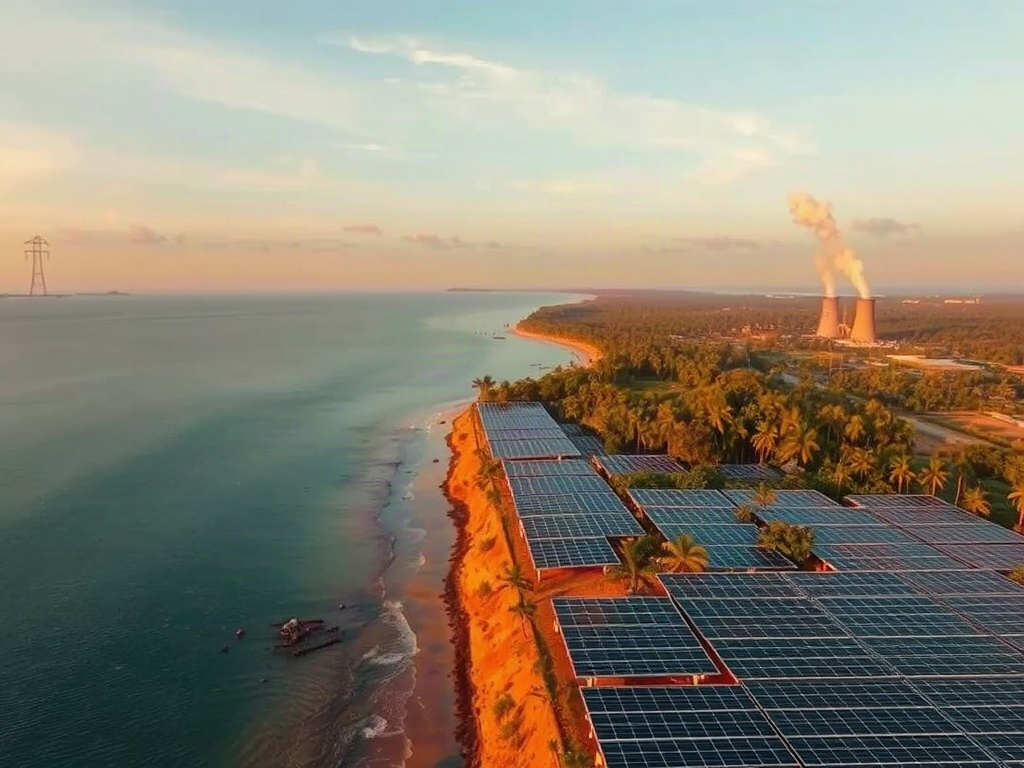
This natural capital coexists with well-known pressures: deforestation, agricultural expansion, resource exploitation, mining pollution, overfishing, and hydrological disruptions. Historical catch data (1984-2000) presents a red flag for any CFO: annual harvests range from 16,000 to 60,000 tons, equivalent to 3–12% of the total estimated biomass of the system, accompanied by poor compliance with regulations and drastic changes in species composition. When an ecological “asset” is used without effective governance, the business outcome is predictable: short-term cash flow is maximized while future returns are destroyed.
The news that inspires this analysis—published by The Conversation—places a geopolitical factor on an already fragile territory: the interest in oil and critical minerals, while illegal gold mining expands. The briefing we received is candid about its limits: it provides no specific evidence about recent U.S. policy initiatives or specific corporate actors, and acknowledges a lack of current data on illegal mining. That informational gap does not reduce risk; it increases it. In markets with low transparency, the cost of capital rises by definition.
The Orinoco Basin is Productive Infrastructure, Not Decorative “Nature”
In corporate sustainability, the most costly mistake is treating nature as a reputational issue. The Orinoco basin functions as productive infrastructure because its floodplains regulate the amplitude and duration of floods, maintain fertility, and support habitats that enable commercial, sport, and subsistence fishing. The briefing explains this plainly: those plains regulate the system and sustain real economic activities.
In business terms, this means that the Orinoco provides services without an invoice: water risk control, nutrient replenishment, protein provision, and biological connectivity. As soon as extraction erodes those services, costs arise that are not paid where they are generated. They are borne in supply chains with less stability, in weakened food security, in public health impacted by pollution, and in an even higher country risk premium.
Biodiversity is not a “bonus” for institutional photography. With 995 fish species and migratory routes that support large river species, the system resembles a logistical platform for reproduction and supply more than a picturesque landscape. When that platform degrades, the economy loses biological redundancy; and when a system loses redundancy, it becomes more sensitive to shocks. In such an environment, every extraction project that fails to internalize its impacts operates as if it could depreciate a common asset without recording the depreciation.
There is also a strategic point: the basin occupies a huge territorial scale, approximately 1 million km², and the Venezuelan stretch represents 71% of the total. This means that any material deterioration cannot be “offset” with a small intervention. At the basin scale, damages spread through water, sediments, and changes in land use. For executives, this is the difference between an isolated incident and a structural risk.
Legal and Illegal Extraction: The Same Model, Different Value Capture Channels
The briefing lists environmental pressures across multiple sub-basins: deforestation, agricultural expansion, resource exploitation, and mining-related pollution, among others. Gold mining explicitly emerges as a documented threat in several areas, albeit without recent quantification. Fishing shows historical pressure with numbers and a typical effect of overexploitation: changes in the relative composition of species and falling regulatory compliance.
From my perspective as an impact strategist, the distinction between “legal” and “illegal” extraction often obscures something more important: the economic architecture that makes degradation profitable. When governance is weak, the market rewards the player who externalizes the most costs. The one who does not pay for restoration, monitoring, effluent treatment, or traceability offers cheaper prices and displaces those who attempt to operate with controls.
In that context, the “spread” of illegal gold mining is not a marginal phenomenon: it is an indicator that the territory functions as an area of regulatory arbitrage. And when a territory becomes an arbitrage zone, it attracts opportunistic capital, informal logistics networks, and an economy that does not reinvest in long-term local capabilities.
The net result is a formula for impoverishment. Concentrated value is extracted, and diffuse liabilities are left behind. The local population receives high-volatility, high-risk employment, while the region inherits pollution, loss of fishing productivity, and soil degradation. For any board, this pattern is not only ethically unacceptable; it is a multiplier of operational instability that ultimately diminishes the value of any formal asset installed in the area.
Fishing is a useful example because it has concrete numbers. Extracting 3–12% of the biomass of fish from a basin year after year—in the reported ranges—operates a biological “stock” as if it were a mine, not a farm. Payments are taken today, and capital is depleted tomorrow. At the national scale, this weakens a protein source, raising social pressure; at the corporate scale, it translates into social conflict and erratic regulation.
Geopolitics and Critical Minerals: The Real Risk is Financing Without Social License
The note from The Conversation connects Venezuela’s environmental degradation with the push for oil and critical minerals. The material available for this assignment does not document specific policies or companies involved; thus, it is inappropriate to attribute intentions or concrete actions to governments or firms. What is appropriate is to analyze the pattern that the industry already knows: when external interest in commodities in fragile territories increases, the race to secure supplies accelerates, and the threshold for environmental risk tolerance decreases.
This scenario impacts three types of actors.
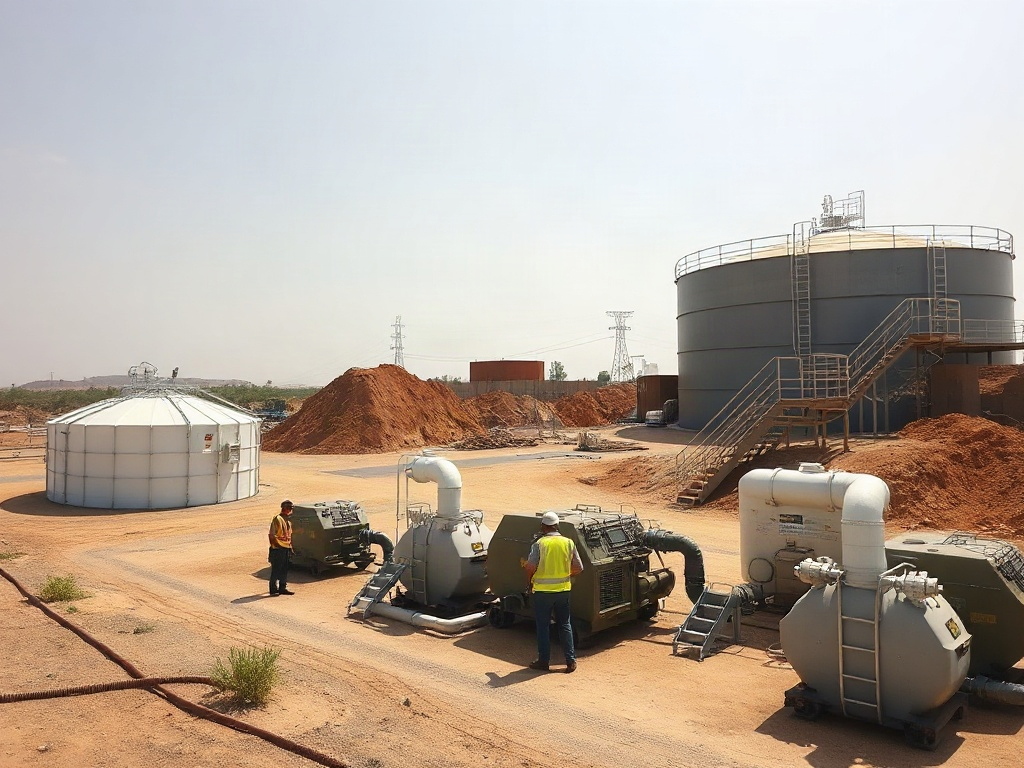
First, the financier. The lack of recent data and evidence of increasing pressures generate a risk premium that raises debt costs, limits insurance availability, and complicates long-term contracts. Without traceability and reliable monitoring, financing becomes conditional, more expensive, or outright nonexistent in regulated markets.
Second, the operator. In basins with high biodiversity and multiple water uses, conflict for resources is not a reputational issue; it is an operational risk. If the basin provides fertility and fish, any alteration perceived as a threat to those flows activates resistance, litigation, blockages, or state intervention. There is no need to idealize protest to recognize it as a business variable.
Third, the State and the real economy. When extraction captures quick rents but reduces the productivity of the territory, the State faces a smaller sustainable tax base and higher control, health, and mitigation costs. In this cycle, public policy becomes reactive, and the space for serious investments shrinks.
The key is this: a project for oil or critical minerals that doesn't originate with social license, verifiable environmental metrics, and a local reinvestment scheme is constructing a physical asset on a social liability. That combination scares away patient capital and attracts speculative capital. For a country and serious companies, this is a poor allocation of resources.
The Pragmatic Solution: Turning Conservation into Cash Flow and Risk Management
When I say I am not an idealist, I demonstrate it where it hurts: in the income statement. Conservation without an economic model is philanthropy; philanthropy without continuity is fragility. The Orinoco basin needs a different logic: to turn land stewardship into a service with demand, budget, and verification.
The briefing offers two clues for designing this logic. The first is the scale of biodiversity and endemism, which allows for structuring environmental monitoring and compliance mechanisms as a condition for market access and financing. If there are 500 endemic species partially inventoried, there exists a technical case for inventory programs, monitoring, and impact control that are not just “study” projects, but continuous operations. This represents qualified local employment and spending that stays in the territory.
The second clue is the role of floodplains as infrastructure: if they regulate floods and sustain fertility, their degradation has an economic cost that can be estimated and, therefore, managed. In practice, a serious corporate strategy here looks like this: supply contracts that reward environmental compliance; financing conditioned on water and deforestation metrics; purchasing monitoring services from local suppliers with standards; and compensation schemes that are not promises, but auditable expenditure lines.
None of this requires romanticizing anyone. It requires governance and accounting for impacts. It also requires accepting that in territories under pressure from illegal mining and low transparency, traceability is not an embellishment; it is a competitive barrier. Those who can demonstrate origin and compliance access markets; those who cannot end up selling at a discount, under the risk of disruption or sanctions.
The Orinoco, due to its size and ecological value, does not accommodate small solutions. But it does allow for a clear business principle: if the model only works by externalizing costs to the river and communities, the model is not profitable; it is simply incomplete.
Directive Mandate: Capitalize the Territory or Accept That You are Depreciating It
In Venezuela, the Orinoco basin concentrates exceptional biodiversity—995 fish species, thousands of plants, and endemics—while simultaneously bearing accumulated pressures from deforestation, mining, pollution, and overfishing. The combination described by The Conversation between increased extraction interest and the expansion of illegal activities heightens the risk that the territory ends up treated as an ownerless asset, available for quick value capture and leaving behind environmental debt.
A serious board does not delegate this equation to the communications department nor reduce it to minimal compliance. It treats it as a financial strategy: measure, control, pay for the continuity of natural infrastructure, and secure operations with verifiable traceability. Use money as fuel to uplift people and preserve the environment, or accept that your model is using people and the environment merely to generate money.