
The ownership economy wins again: Gen Z is punishing the easy margin of subscriptions
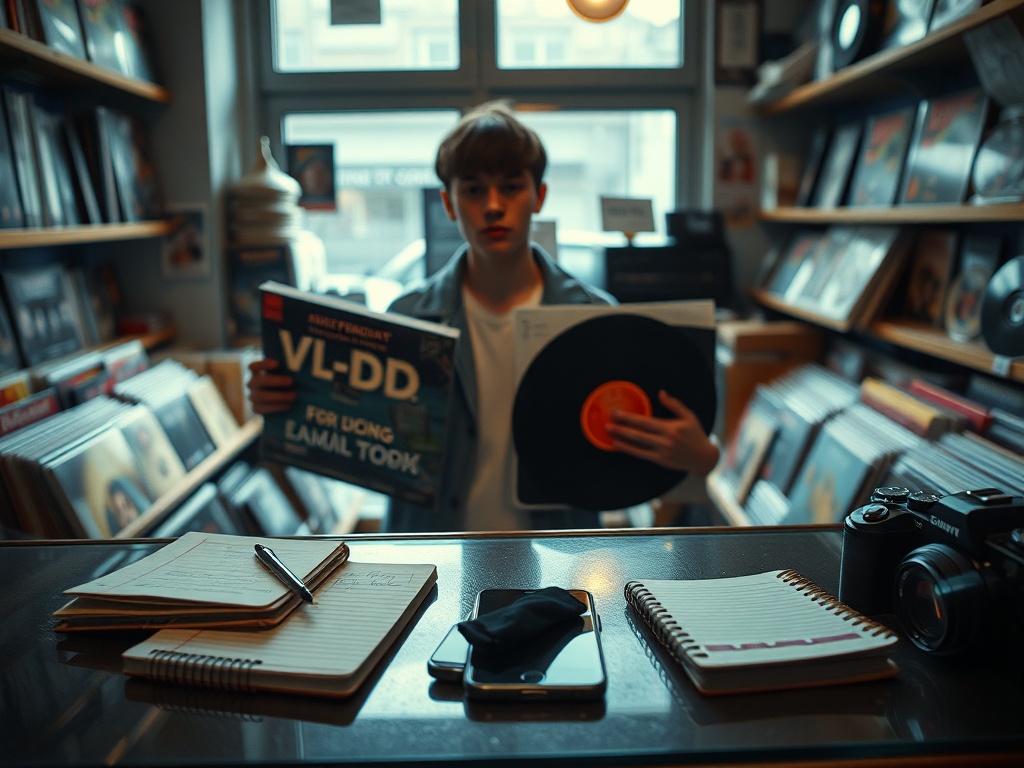
The phrase that best summarizes the shift doesn't come from a regulator or a CEO. It emerges from an everyday, almost domestic intuition: "Amazon isn't going to come into your house and take away your DVD." In March 2026, Fortune described how Gen Z in the United States is reorienting its consumption toward the physical — DVDs, vinyl records, analog cameras, notebooks, jigsaw puzzles — as a response to accumulated fatigue with the subscription economy and digital excess [Fortune].
The data accompanying the phenomenon are consistent with a break in habits: searches for analog hobbies up +136% at the start of 2026; film camera sales up +127% since 2020, driven primarily by young consumers; and an underlying reality that is difficult to ignore, with Gen Z spending 6 to 7 hours per day on the smartphone, within a device penetration that reached 91% of adults in the U.S. in 2025 [Fortune].
There is no single corporate "trigger event" in the story. The acceleration comes from social media, especially TikTok, where the format "#AnalogBag" popularizes bags filled with objects that replace digital stimuli with physical friction: journals, magazines, iPods, vinyl records, cameras, playing cards, embroidery, newspapers [Fortune]. Viewed from a business perspective, the point is not the bag. The point is the shift in preference toward ownership: moving from paying for revocable access to paying for tangible control.
When the customer stops paying for access and returns to paying for control
The subscription economy was a machine of financial efficiency for a simple reason: it converted one-time revenues into recurring income. On paper, the promise was perfect — convenience for the user and predictability for the company. The problem appears when convenience becomes dependency and the user perceives that their payment buys less and less control.
The DVD phrase works because it touches the nerve of the economic relationship: revocability. In the digital world, the user pays for the right to access content as long as conditions are met — price, catalog, licenses, availability, active account. In the physical world, the user pays for ownership, which does not depend on a platform to exist in their home. It is a small change in experience, but an enormous one in terms of power.
Subscription fatigue is not merely the exhaustion of "having too many monthly payments." It is the fatigue of a system in which the customer feels that the platform captures too much value by coordinating access, while the user assumes the risk of unilateral changes (price, catalog, terms) and the creator or supplier absorbs the pressure of volume. When Gen Z decides to return to physical formats or analog activities, it is doing something strategic without naming it: reducing dependency and increasing its margin of decision.
Additionally, analog consumption reintroduces something that digital access tends to erase: resale and a second life. A vinyl record, a DVD, or a camera has potential in the secondary market; a subscription does not. That detail alters the comparison of perceived value. Even if the initial cost is higher, the physical asset can retain utility, circulate, be gifted, or be resold. The user stops being a captive payer and becomes once again an owner with options.
The return of the physical is not romanticism: it is a realignment of incentives in the value chain
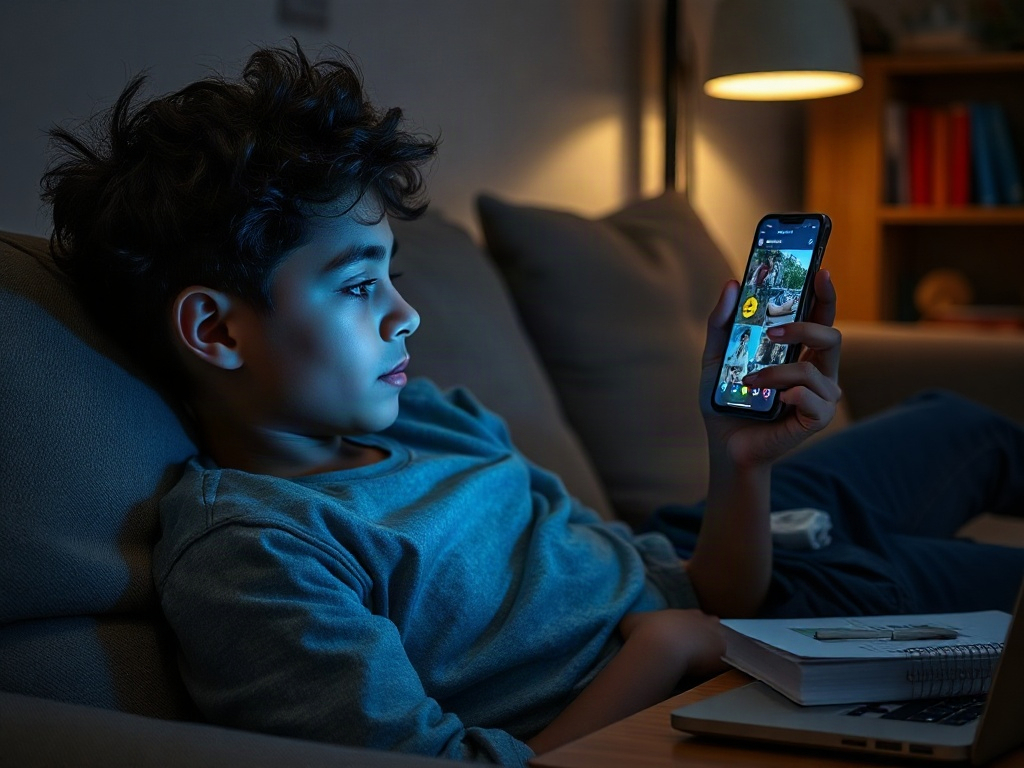
The superficial narrative will say "nostalgia." The operational narrative says something else: Gen Z is trying to escape a loop of stimuli and zero friction. With 6 to 7 hours per day on the smartphone, digital life competes not only for money, but for attention and emotional stability [Fortune]. The analog shift functions as a behavioral "brake": friction is the feature, not the flaw.
That friction redistributes value toward actors that had been compressed by the logic of digital scale. If consumption shifts — even marginally — toward vinyl records, bookstores, stationery, analog photography, and hobbies, there is a rebalancing toward physical retail, workshops, manufacturing supply chains, and local services. The streaming industry does not need to "die" for the incremental growth margin to become more expensive: it is enough for young users to incorporate alternatives that reduce screen time and, by extension, reduce exposure to advertising monetization or platform retention.
TikTok, paradoxically, acts as an accelerator of the "anti-digital": it makes #AnalogBag go viral and turns the offline into a shareable aesthetic [Fortune]. From a value distribution standpoint, this is interesting: the platform captures attention by promoting a practice that promises less attention to platforms. That contradiction does not invalidate the phenomenon; it makes it commercially more viable. The aesthetic functions as a bridge for adoption.
In parallel, communities like the "Luddite Club" in New York appear as gathering spaces without smartphones, and some young people separate their "work phone" from their "personal phone" to limit connectivity [Fortune]. Operationally, this reduces windows of access to notifications, advertisements, and impulse consumption. For businesses based on screen time, this is a foundational risk: fewer available hours mean a higher cost per retained minute.
What is relevant for executives is not whether the analog becomes the majority, but whether it becomes a habit. Habits change elasticities: the user learns that they can live with fewer subscriptions, or that "unlimited access" does not compensate for the anxiety of constant stimulation.
The real threat to platforms is not the DVD — it is the collapse of "tolerable churn"
The subscription economy tolerates cancellations as long as the cost of re-acquiring the customer is reasonable and the product maintains perceived differentiation. "Fatigue" becomes dangerous when it changes the psychology of payment: the user stops asking which service to add and begins asking which service to cut.
At that point, the DVD is a symbol, but the engine is financial and behavioral. A physical purchase is usually a one-time payment; a subscription is a self-renewing monthly tax that the user learns to audit in times of economic or mental stress. If the cultural shift instills the idea that disconnection is a luxury and "being unreachable" becomes a status symbol, the product of the platforms ceases to be entertainment alone: it becomes a drain on attention that the user wishes to limit [Fortune].
Even without revenue figures in the sources, the mechanism is clear: when a user migrates part of their leisure time toward offline activities (knitting, writing, coloring, jigsaw puzzles), their consumption of digital content competes with something else. This reduces the margin for upsells, reduces exposure to advertisements, and changes the willingness to pay for bundles or family plans.
For companies, there are two typical responses. The first is defensive: raise the price, push bundles, insert more exclusives. That response may inflate short-term revenues, but it worsens the user's incentive to rationalize spending. The second is redesign: offer plans with more control, greater transparency, and benefits that do not depend on maximizing screen time.
In other words: the risk is not losing Gen Z to the physical world, but losing the right to capture recurring revenue without negotiating perceived value. When people go back to buying objects that "cannot be switched off from the outside," they are reminding the market that digital access is convenient, but it is also fragile.
Likely winners: specialized retail and light manufacturing; likely losers: recurrence built on zero friction
The most obvious opportunity lies in categories where the physical has three attributes: permanence, identity, and community. The objects of the #AnalogBag — personalized notebooks, vinyl records, cameras, magazines, embroidery — function as a public signal and as a private tool [Fortune]. In commercial terms, this drives:
- Specialized retail: vinyl stores, bookstores, photography shops, stationery, hobbies. Not through massive volume, but through a defensible average ticket via curation and experience.
- Light manufacturing and design-driven brands: products with aesthetics, tactility, and durability become "purchasable" even when the user is reducing digital spending.
- The secondary market: resale reintroduces liquidity for the consumer and price discipline for the producer. An object that retains value competes more effectively against monthly payments.
For content platforms and services, the message is uncomfortable: the young user is signaling that they no longer want to pay for an "all-inclusive" that also includes anxiety, interruption, and a sense of external control. In this context, insisting on capturing more value through recurrence without elevating perceived value is a strategy of erosion.
The digital economy does not disappear. What changes is the user's negotiating power when they discover functional substitutes: being bored without a screen stops being a problem and becomes a space once again. This directly affects business models that depend on eliminating boredom with infinite scrolling.
The sustainable advantage becomes simple again: distribute value or lose permanence
This analog shift exposes a limit of the subscription model when it is stretched beyond convenience and becomes silent extraction: recurring payments in exchange for limited control. Gen Z is reintroducing ownership, friction, and durable objects as a counterweight to a system that optimized corporate margin above customer autonomy.
In the short term, the winners are the actors who sell physical goods and experiences with prolonged use value and a secondary market; the losers are the platforms whose growth depends on retaining attention and collecting recurring revenue without renegotiating control and transparency. The only competitive advantage that does not exhaust itself is the one that makes customers and partners prefer to stay because value is distributed more fairly than outside the system.