How a company makes money and where the structure starts breaking
We follow the mechanics of a business: which revenues carry the operation, which costs hide fragility, and which changes turn a commercial promise into a structure that can scale.
What we are watching
Monetisation, subscriptions, managed services, adoption mechanics, asset conversions, and models that clean up margin or relocate complexity without solving it.
Where it is being decided
In pricing, revenue structure, fixed versus variable cost, product adoption, operating dependence, and the line between selling software and selling labour disguised as software.
Why it matters
Because a business model is not judged by its story, but by its ability to sustain growth, margin, and returns without living off exceptions or one-off revenue.
Featured
Business Models

Stem's Shift to Software Turns Profit Margins Around
Stem Inc. reveals significant growth through its transition to software, showcasing the importance of effective pricing and operational discipline.
 Diego Salazar6 min
Latest articles
Grocery Outlet and the Real Cost of Rapid Growth: Store Closures, EBITDA, and Operational Correction
Closing 36 stores may seem like contraction, but for Grocery Outlet, it represents a capital allocation decision following a quarter with massive losses.
Denki and Financial Auditing as a Product: When Excel Stops Being Infrastructure
Denki raised $4.1 million to automate financial audits with AI, aiming to transform a manual, regulated process into an auditable, traceable SaaS product.
The IEEPA Tariff Refund is Not Just a Technicality: It's a Shift in Commercial Risk Management
When a court orders Customs to calculate refunds with interest for millions of shipments, the message goes beyond accounting; it shifts the commercial risk landscape.
When Your AI is a Supplier: The Anthropic Ban Reveals the True Cost of Dependency in Defense
Palantir is not just paying for a model change; it’s paying for architectural and governance decisions. The Pentagon's ban on Anthropic turns a tech preference into a top-tier operational, financial, and political issue.
Most Popular
Most voted on this page
The Pentagon Transforms 'Security' into a Business Lever: How the Agreement with OpenAI Redefines Revenue Distribution in AI
When a regulatory buyer decides who can sell, competition shifts from technology to revenue architecture. OpenAI's deal shapes the AI landscape.
103
Wispr Flow on Android Turns Dictation Into a Mass Acquisition Channel, But Stresses Unit Economics
Wispr Flow’s move isn’t just a better microphone; it’s a distribution game changer. Offering unlimited dictation on Android accelerates adoption but demands a surgical conversion model to sustain costs.
102
The Affordable Vegetarian Shift of EveryPlate: A Scaling Strategy, Not a Value Proposition
EveryPlate is not 'discovering' vegetarianism; it's packaging it at entry-level prices to boost volume and maintain HelloFresh's operational dominance.
102
Sustainable Competitive Advantage in 2026: A Debate
In 2026, sustainable competitive advantage is redefined, shifting from traditional advantages to verifiability and operational efficiency. This article explores a debate among experts on how sustainability becomes a financial driver and a requirement in today's market.
96

The Google-Epic Agreement Redefines Android's Toll: Lower Commissions, More Operational Control
The return of Fortnite to Google Play isn't the headline; the real story is the new commission and distribution architecture seeking to open Android while maintaining security.

Microsoft Plans to Charge for AI Agents as Digital Employees: A Shift to Secure Revenue as Staff Growth Stalls
The rumored Microsoft 365 E7 is not just a pricier plan, but a new economic unit - digital identities with email, Teams, and policies like any employee.

Staples Reduces Stores to Sell at Higher Prices: The Real Move is to Turn Retail into Value Evidence
Staples is strategically closing stores not due to bankruptcy, but to focus on online sales and B2B opportunities, aiming to reduce friction and increase profit margins.

When Clients Demand Total Access: The Anthropic-Pentagon Clash as a Stress Test for Commercial AI
The conflict isn't just about ethics; it reveals uncomfortable financial realities in AI. For certain clients, contract pricing includes control and veto power over the product.

Audible's New Pricing Strategy: A Defensive Move in the Audio War
Audible's new $8.99 plan shifts from ownership to access, aiming for cost-sensitive listeners while maintaining profitability for heavy users.

OpenAI and the Pentagon: The Business Lies in Deployment, Not Models
OpenAI's contract with the Pentagon opens a discussion on mass surveillance, emphasizing the operational control over architecture and security.
 Francisco Torres6 min
Setapp Breaks Its Flat Rate: MacPaw's Move to Charge Better Without Killing the Bundle
Setapp was born as a "Netflix for apps" for Mac. By enabling purchases and subscriptions per app, MacPaw transforms its distribution strategy without sacrificing the bundle model.
 Ignacio Silva6 min
Closing 80 Stores Is Not a Strategy: It’s the Cost of a Late-arriving Structure
Leslie’s announces the closure of 80 underperforming stores and a shift to "low prices" following a 16% drop in sales and plummeting margins.
 Valeria Cruz6 min
Memory No Longer Retains Users: Anthropic Turns Portability into Its Best Funnel
Anthropic launched a tool to import memories from ChatGPT, Gemini, and Copilot in under a minute. This isn’t just a feature; it’s a direct assault on chatbot retention.
Diego Salazar6 min
Pokémon Champions and the Business of Charging Without Selling Power: A Bet on Recurring Revenue with Controlled Friction
Pokémon Champions arrives as free-to-start and the official software for VGC 2026, focusing on monetization without 'pay-to-win'.
 Mateo Vargas6 min
The SaaSpocalypse Is Not a Collapse: It's a Structural Audit of the SaaS Model Under AI Load
The SaaS sector continues to grow, but internal mechanics have shifted. The ‘SaaSpocalypse’ represents an audit on pricing and consumption amid AI integration.
 Sofía Valenzuela6 min
Digital Transformation in SMEs: A Strategic Debate
Digital transformation in SMEs is not just about budget; it's about strategic decisions. This article presents a debate among experts on effective digitalization.
 Javier Ocaña10 min
LexisNexis Turns AI Fear into a Tool: From Search to Verifiable Execution
Investors are anxious that generalist agents might cut into LexisNexis' historical business. The company is redesigning legal work as a closed production system with built-in verification.
 Ricardo Mendieta6 min
Wispr Flow on Android Turns Dictation Into a Mass Acquisition Channel, But Stresses Unit Economics
Wispr Flow’s move isn’t just a better microphone; it’s a distribution game changer. Offering unlimited dictation on Android accelerates adoption but demands a surgical conversion model to sustain costs.
Francisco Torres6 min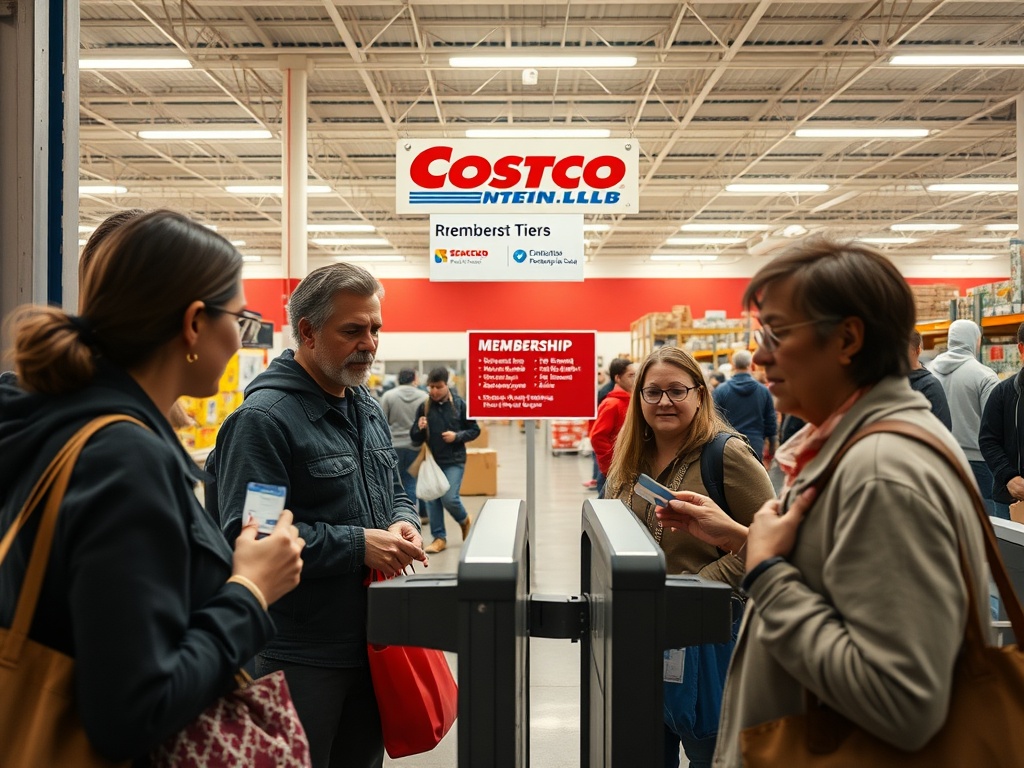
The Costco Dividend: Powered by Membership Psychology, Not Retail Sales
Costco is proving that in a low-margin business, the real cash machine is a behavior-driven promise renewed annually. The dividend relies on sustaining a sense of belonging.
 Andrés Molina6 min
The Pentagon Transforms 'Security' into a Business Lever: How the Agreement with OpenAI Redefines Revenue Distribution in AI
When a regulatory buyer decides who can sell, competition shifts from technology to revenue architecture. OpenAI's deal shapes the AI landscape.
Javier Ocaña6 min
The End of Free Storage: A Market Adjustment for Your Photos
When Google, iCloud, Snap, or Shutterfly push users to paid plans, they aren’t ‘changing their minds’: they’re closing a subsidized position that no longer makes sense.
Mateo Vargas6 min
Sustainable Competitive Advantage in 2026: A Debate
In 2026, sustainable competitive advantage is redefined, shifting from traditional advantages to verifiability and operational efficiency. This article explores a debate among experts on how sustainability becomes a financial driver and a requirement in today's market.
 Gabriel Paz12 min
The Affordable Vegetarian Shift of EveryPlate: A Scaling Strategy, Not a Value Proposition
EveryPlate is not 'discovering' vegetarianism; it's packaging it at entry-level prices to boost volume and maintain HelloFresh's operational dominance.
Ricardo Mendieta6 min