
Pokémon Champions and the Business of Charging Without Selling Power: A Bet on Recurring Revenue with Controlled Friction
It’s easy to read Pokémon Champions as just “another competitive spin-off.” However, I see it as an exercise in business model engineering under severe constraints: it has to be free-to-start, must support official competition (VGC 2026), and, according to publicly available information, its functional currency—Victory Points (VP)—cannot be purchased directly. This triple condition eliminates the obvious monetization route and compels the construction of an economy where revenue flows from the edges, not the center.
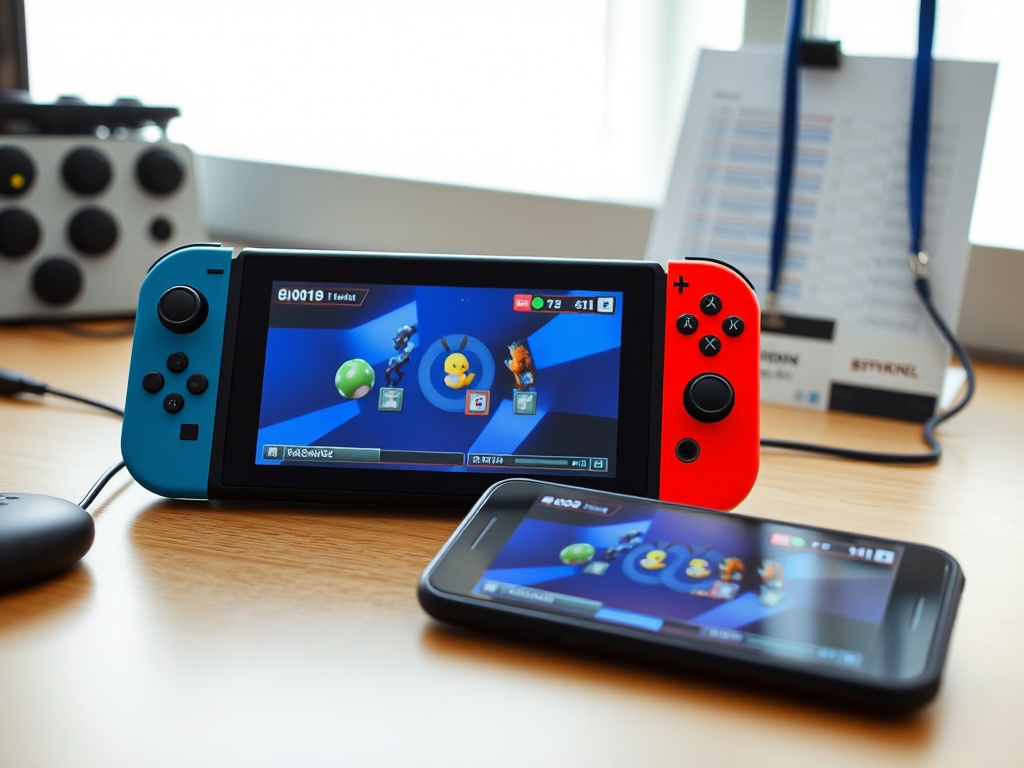
What we know for sure: Pokémon Champions is being developed by The Pokémon Works, published by The Pokémon Company, and will launch on Nintendo Switch in April 2026 (compatible with both Switch and Switch 2 as per reported briefings) before rolling out to iOS/Android later in 2026, featuring cross-play functionality. The focus is on combat (singles and doubles), with ranked, casual, and private modes. It integrates with Pokémon HOME to bring Pokémon from compatible titles—including Pokémon Legends: Z-A and Pokémon GO—but does not allow transfers out from Champions to other games. Pokémon are recruited using VP with the roster reset every 22 hours. There are early adoption incentives: downloading early grants a Dragonite along with its Mega Stone, and transfers from Legends: Z-A via HOME unlock specific Mega Stones for certain species. Moreover, it will be the official software for the VGC at the 2026 World Championship in San Francisco.
And the piece of information that, for a CFO, is worth more than cinematic trailers: retailers reported that following the announcement on February 27, 2026, pre-orders led to a 15–20% year-on-year increase in gaming merchandise sales for Q2, with conversion rates 40–50% higher than usual; such launches explain around 30% of merchandise sales in Q2 through various channels. This retail elasticity isn’t mere “fanbase noise”; it serves as cash leverage for the entire chain.
The Design of Champions Resembles a Clearinghouse More Than a Video Game
At the core of this endeavor is the decision to not sell VP directly, at least according to the official site mentioned in the briefing. In finance, when an asset isn’t directly purchased, what is achieved is controlling the risk of arbitrage: preventing the player from converting money into immediate competitive advantage.
This aligns with Champions’ role as an eSports platform: if the game turns into a market where capital buys performance, competitive credibility degrades. A title designed to become the VGC standard requires rules perceived as stable, auditable, and “clean.” In terms of reputation, selling power would be akin to issuing low-quality debt: it might seem like cheap financing at first, but the risk premium skyrockets when the market comprehends its underlying condition.
Now comes the mechanical detail: rosters reset every 22 hours and recruitment via VP. This cadence serves as deliberate friction. In a free-to-start model, friction is equivalent to a “spread”: it separates casual users from intensive players and enables value capture without destroying core equity. If the roster ages out, the system can:
The integration with Pokémon HOME and the fact that “visiting” Pokémon retain training results upon returning to their originating game (per reported sources) is another indicator: Champions does not want to become a silo; it aims to be a value node that enhances portfolio retention overall. In portfolio management, this is termed improving positive correlation within the portfolio to sustain aggregated ARPU rather than maximizing the ARPU of a single product.
The most underrated restriction is on transfers: enter from HOME, not exit from Champions. This diminishes the risk of Champions becoming the most efficient way to “manufacture” progress and export it, which would disrupt the economies of other titles. It’s a control mechanism against value leakage. In evolutionary biology, it’s like preventing a “parasite” trait from spreading and weakening the entire organism.
A Staggered Launch with Two Cash Peaks and One Brand Cost
The timeline—Switch in April 2026 and mobile later—is not a mere whim; it’s a value capture structure. The briefing mentions a potential 130+ million installed base of Switch users and a combined potential reach of 250+ million when mobile is included. If I were managing risk, this staggered approach reads as a hedge:
1. First Switch, where Nintendo and retailers capture a peak demand for hardware, accessories, and merchandise, and where the installation/payment friction is lower for users already within the ecosystem. Additionally, it capitalizes on the Q2 window where retailers have already noted lifts of 15–20% and pre-orders converting 40–50% better than usual.
2. Then mobile, which extends longevity and scales volume without depending on inventory. If the monetization model doesn’t sell VP directly, the mobile platform remains valuable for its critical mass for matchmaking, social content, and daily habits, enabling indirect monetization (passes, cosmetics, convenience), though sources don’t confirm prices or subscriptions.
The trick here is to avoid cannibalization. The staggered rollout allows for extracting the initial physical cash peak (merchandising and retail) without having the mobile platform prematurely commoditize the offering. It’s similar to listing a company in two markets with different investor profiles: first, the one that pays a premium for exclusivity, then the one that pays for liquidity.
The free-to-start model further reduces acquisition costs: distribution is purchased with IP, not through aggressive advertising spending. This aligns with a model funded by customers rather than cash burn. In a portfolio like Pokémon, the marketing budget exists, but the real advantage is that the brand operates as infrastructure: each launch decreases the effective CAC of the next one.
There’s also a political-industrial move: Champions positions itself as the official software for the VGC in 2026. This transforms the title into an operational standard. Standards, when functioning, are akin to long-duration bonds: they pay attention and transaction coupons for years if credibility is maintained.
The Blind Spot is Monetization: Without Subscription Data, Risks Shift to Limit Design
The headline that inspired this piece discusses storage limits and “revealed” subscription details, but the briefing is clear: no confirmation of pricing, subscriptions, or revenue figures, and “storage limits and subscription details remain unconfirmed,” aside from the direct non-purchasability of VP. This matters because, without clarity on monetization, the analysis shifts to probabilities and mechanisms.
If VP isn’t bought, typical recurring revenue would need to come from:
What can be audited is the structural risk of veering too far in the opposite direction: too much friction and poorly calibrated limits can make free-to-start a funnel with leaks. A roster that resets every 22 hours is excellent for daily activity, but it can penalize players unable to keep up. If the active base narrows, matchmaking deteriorates, and the game loses its status as the “standard” for VGC.
In portfolio terms, The Pokémon Company is balancing two assets: competitive integrity (which protects the value of the VGC and the brand) and recurring monetization (which funds servers, development, and content). The typical mistake with live services is setting high costs, expecting ARPU to magically appear. Here, the hard data available suggests otherwise: the business already captures value through retail and merchandise driven by advertising and pre-orders in Q2. This alleviates pressure to squeeze the competitive base with aggressive mechanics.
There’s another visible risk control: integration with HOME and cross-rewards with Legends: Z-A (Mega Stones for transfers of specific species). This functions as a retention derivative: the value of Champions increases if players are already invested in other games, and vice versa. The company doesn’t rely on Champions monetizing as a standalone product; it depends on elevating the performance of the whole.
A Modular Architecture that Protects the Core and Keeps Options Open
Confirmed information indicates that Champions is designed as a modular product: combat as the core, HOME as a connector, VGC as the institutional anchor, and platforms (Switch first, mobile later) as channels that activate at different times. This modularity reduces fragility. If mobile takes time or doesn’t convert as expected, Switch has already captured value, and the product continues to thrive competitively. If the competitive scene requires balance changes, the combat core can iterate without rewriting an entire RPG.
The decision to prevent transfers out from Champions also represents defensive modularity: it safeguards the economy and progress of other titles. In business, this equates to segmenting critical systems to prevent a failure from contaminating the entire operation.
Where I would place a yellow light is on the asymmetry of expectations: the gamer market is trained to equate “free-to-start” with explicit monetization. The lack of confirmation regarding subscription and limits leaves a vacuum filled with speculation. In reputational risk management, this informational vacuum functions as implied volatility: even if the underlying is solid, the price of uncertainty rises.
Even so, with the data available, the overall pattern aligns with a pragmatic approach: capturing retail peaks when they exist (15–20% lift, 40–50% better pre-order conversion) and building a competitive standard that sustains activity for years without compromising integrity by selling direct power. Technically, it’s a structure with redundancies and indirect revenue streams that reduces fragility against platform changes and consumer cycles.