
Memory No Longer Retains Users: Anthropic Turns Portability into Its Best Funnel
The chatbot war has shifted from merely a contest of “who responds better” to a battle over who retains your context. This context—including preferences, projects, style, directives, and useful personal information—isn’t built in a day. It accumulates through friction, time, and effort, making it the most obvious defensive moat: the more an AI “remembers,” the costlier it becomes to switch.
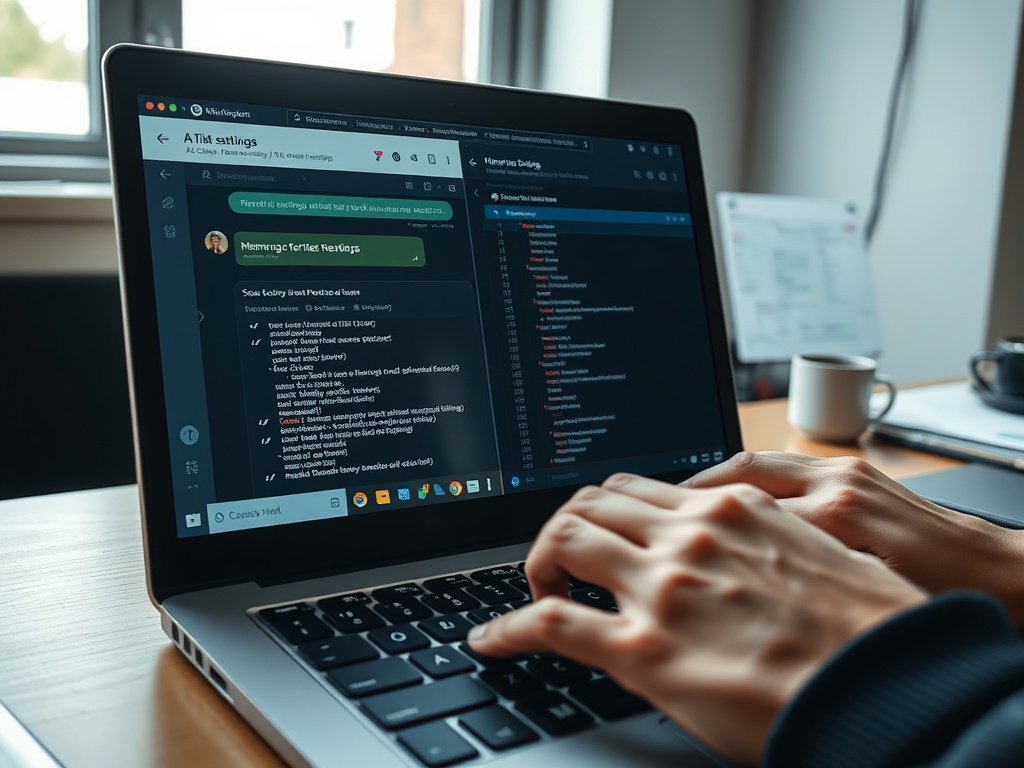
Anthropic has decided to blast this logic apart with a brutally effective move: a “Memory Import” tool in Claude that allows users to transfer memories and context from ChatGPT (OpenAI), Gemini (Google), and Copilot (Microsoft) through a straightforward copy-paste flow. According to reports, the mechanism is almost insultingly simple: the user pastes a prompt into the source chatbot that lists “all saved memories” and learned context, which is delivered in a specific code format; the user then pastes that output into Claude's memory settings. The transfer takes less than 60 seconds, and Claude assimilates the information within about 24 hours. Source: Fast Company.
On a surface level, this seems “convenient.” However, the real takeaway is about the business model: if memory was the lock, Anthropic just sold the key.
The Product Doesn’t Compete on Intelligence: It Competes on Friction
In mature software markets, the winner is rarely the one that “does more things”; it’s often the one that reduces the mental and operational cost of adoption. Memory in chatbots has effectively become an entrenching cost: “I’ve already taught it how I work,” “it already knows my projects,” “it already understands my tone.” This sunk cost transforms into a disguised retention strategy.
Anthropic redefines the game with a proposal that targets users’ most sensitive spot: not having to start from scratch. The import tool tells the market—without stating it outright—that switching providers is a mere formality. This poses a direct threat to the most defensive asset of incumbents.
The architecture is impeccable for one reason: it doesn’t require faith; it demands action. The promise is operational, not aspirational. The user executes a script, receives a data block, pastes it into Claude, and there it is. From a business standpoint, Anthropic is boosting willingness to pay on two fronts: it enhances the “perceived outcome” (Claude feels personalized from day one) and increases certainty (the process is prescribed step-by-step). Simultaneously, it reduces two classical deterrents: wait time (less than a minute to transfer) and effort (copy and paste).
Furthermore, this news comes alongside another decision that hints at aggressive acquisition: Claude extended its memory function to the free plan, which was previously paid. Fast Company reports that memory was introduced in August 2025 for paying users and later expanded, now available without a subscription to import or use basic memory. That combination—portability + free—is not “generosity.” It’s conversion math: opening the funnel's top and capturing volume with onboarding that eliminates the most significant switching cost.
Portability as a Weapon: When the “Moat” Becomes a Commodity
Until recently, the industry assumption was that deep personalization would create individual network effects: the more you use it, the more value it yields back, making migration increasingly difficult. This assumption begins to break down when “memory” becomes transferable with a prompt.
Interestingly, Anthropic didn’t need agreements with competitors or complex integrations. According to coverage, it relies on the rival chatbot to “explain” what it knows about the user by listing memories and contextual inferences. It’s a low-cost, high-impact solution because it transforms accumulated value—your history and preferences—into a movable package.
There’s a structural shift here: memory transitions from a defensive advantage to an expected feature. Once a critical mass of users internalizes that switching is easy, providers can no longer charge rent for “retaining” context. This pressures all players to re-competitor on what truly matters: model quality, work tools, performance, data governance, support, and—above all—consistency.
Fast Company also mentions an unverified claim that 700,000 users of OpenAI cancelled their subscriptions following the launch. Whether the number is accurate or inflated isn’t the point; what matters to a CEO is the pattern: a migration feature reduces the exit cost to almost zero and amplifies any reputational crisis or price change.
Ultimately, Claude rising to #1 in free apps on iOS after the announcement indicates the typical correlation of these moves: when friction is removed, distribution accelerates. It’s not just about having a “better product”; it’s about a product that makes switching feel inevitable.
Free Today, Charge Tomorrow: The Real Monetization Plan
With Anthropic offering memory and importation without a subscription, it sends a clear market message: “Try and migrate now.” For the financial reader, what's crucial is what comes next.
First, the memory creates functional dependence, even if it was imported. Once Claude operates with your context, users begin to adjust, correct, and enrich that memory. That process, while easier than before, creates an asset again: it’s no longer the original history; it’s the iterated version within Claude.
Second, the report states that Claude can organize memories into compartments to separate project contexts and can be edited from “Manage Memory.” This sounds like product detail, but it’s a monetization lever: people pay for control, not magic. In B2B, memory without controls is a risk; memory with controls is a premium feature. Anthropic can capture teams needing continuity across projects, reduce errors due to context misinterpretation, and ensure internal audits.
Third, by opening memory to the free plan, Anthropic is doing what many successful products do when the market hardens: shifting value to the free tier to boost adoption and reserving charges for capabilities that affect measurable real-world outcomes. Fast Company notes that Anthropic has been expanding free functionalities and maintaining a “no ads” stance for free users, contrasting with others' shifts towards ads. This differentiation directly implies that if you’re not monetizing through advertising, you need to monetize through paying customers. For that, you need a solid conversion from free to paid based on value, not entrapment.
In other words, the memory import tool is the hook; the real business is converting Claude into the workspace where users operate their work and context with less friction than elsewhere.
The Side Effect: Ethics Also Becomes an Acquisition Channel
The coverage inspiring this piece mentions an element that, if managed well, can serve as an accelerator for migration: the public conversation about ties to the defense sector.
The briefing indicates that Anthropic rejected a deal from the Pentagon for “all legal purposes” due to risks associated with mass surveillance and autonomous weapons, and was subsequently labeled a “supply chain risk” for military contractors. Furthermore, it is stated that OpenAI signed a deal with the Pentagon, which fueled reactions on social media and cancellation guides. This part mixes facts and social reactions, and not all claims come with the same solidity or level of corroboration; therefore, responsible analysis focuses on the mechanism, not on moral judgment.
The mechanism is clear: when the product reduces the cost of change, any reputational shock becomes more expensive for the incumbent. Previously, an upset user might stay due to laziness or fear of losing personalization. With memory import, the user can take immediate action.
This turns “ethical positioning” into something less philosophical and more operational. Not because the market is moralistic, but because migration is now easy. When switching costs a minute, personal values—or public perception—shift from conversation to behavior.
For the industry, the implication is stark: if your retention depended on accumulated data rather than superior results, you’ve just lost your shield.
The Lasting Advantage Won’t Be Data Retention; It Will Be Delivering Results
Anthropic is executing a strategy that many growth teams dream of: taking the most defensive attribute of the market leader and turning it into a transferable “commodity.” Memory importation is not a mere product detail; it is a direct attack on the permanence mechanism.
From here, the market will organize around three realities. First, context portability will become an expectation and, sooner or later, a de facto standard—even if only through reusable prompts. Second, friction-based retention becomes fragile in the face of reputational changes, pricing, or platform policies. Third, billable value shifts towards what truly moves metrics in an organization: control, reliability, speed, quality, and tools that minimize errors and man-hours.
Claude may attract users with a one-minute onboarding process, but sustained monetization will depend on whether that user feels they work better, decide faster, and make fewer mistakes. That’s the only retention that requires no tricks.
Commercial success in this market will belong to whoever designs an offer that minimizes friction, elevates perceived certainty of outcomes, and increases willingness to pay with tangible value, making provider switching a formality and the choice of product an obvious decision.