Decisions that change the direction of a company
We read moves that alter position, margin, control, and competitive advantage. Not just what a company is doing, but what it is trying to win, defend, or avoid.
What we are watching
Portfolio bets, price wars, infrastructure control, shareholder pressure, and redesigns that change who gets to capture value.
Where it is being decided
Competition, corporate governance, pricing, expansion, vertical integration, and decisions that look tactical until they start redefining a position.
Why it matters
Because strategy is not measured by intention, but by consequences: who gains margin, who loses control, and what hidden costs each move leaves behind.
Featured
Strategy
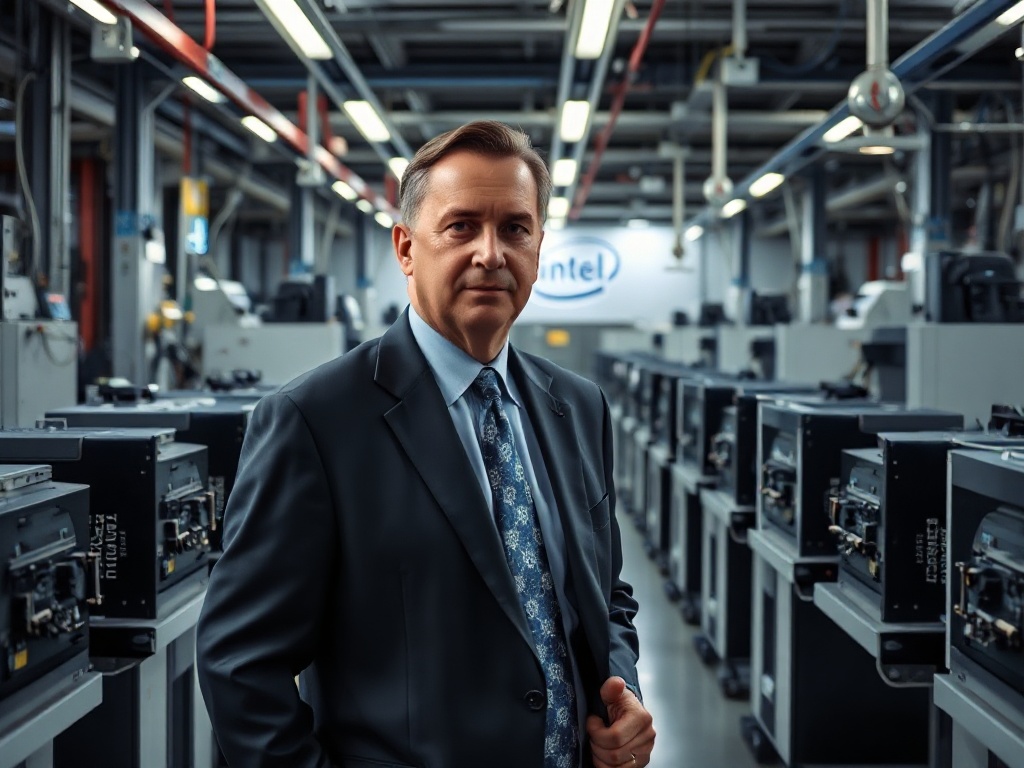
How Lip-Bu Tan Halved Intel and Multiplied Its Value by Five
There is an image that persists in the corporate memory of Silicon Valley: the label of a company that was once the undisputed king of semiconductors, now fighting to reclaim its throne under the radical leadership of Lip-Bu Tan — a CEO who cut Intel in half to make it worth five times more.
 Simón Arce8 min
Latest articles
Oppo and Instagram Bet on Micro Creators — and That Says More About Their Business Models Than About India
When two corporations the size of Oppo and Meta sit down to design a joint program with certifications, mentorship, and monthly content amplification, the question worth asking is not what the creator gains. The question is what business structure is sustaining that generosity, and whether that scaffolding has a backbone or is simply a public relations campaign with a proper name. The Oppo LUMO Creator Program was announced in India in June 2026.
How a Nashville Bookstore Became the Model Nobody Expected
There are industries that don't die all at once. They erode. They cede ground little by little, first at the margins, then at the center, until one day the last player closes and everyone nods as if it had been inevitable. That is what happened to independent bookstores in the United States during the first decade of the century. And it was precisely at that moment, when the narrative of collapse seemed sealed, that Ann Patchett opened Parnassus Books in Nashville.
Companies Using AI to Cut Costs Are Missing the Biggest Value Creation Bet of the Last Decade
There is a gap between what executives say they believe about artificial intelligence and what their organizations actually do with it. It is not a knowledge gap. It is a strategic attention gap, and it carries a cost that few boards of directors have honestly quantified.
When Energy Wins What Technology Cannot Guarantee
On the first day of June 2026, the US stock market delivered an image worth more than any macro report: while Intel fell 4.05% and Texas Instruments lost 4.73%, Nvidia rose 4.87% and Micron Technology surged 5.90%. On the same day, Exxon Mobil gained 2.64% and Chevron 2.68%, with a consistency the tech sector could not replicate. Technology fragmented. Energy advanced as a block.
Most Popular
Most voted on this page
When Energy Wins What Technology Cannot Guarantee
On the first day of June 2026, the US stock market delivered an image worth more than any macro report: while Intel fell 4.05% and Texas Instruments lost 4.73%, Nvidia rose 4.87% and Micron Technology surged 5.90%. On the same day, Exxon Mobil gained 2.64% and Chevron 2.68%, with a consistency the tech sector could not replicate. Technology fragmented. Energy advanced as a block.
88
IBM Bets That Operational Sovereignty Will Be the Battleground Where Enterprise AI Is Won
There is a moment in the evolution of any technology market when competitors stop differentiating themselves by what their products do and start differentiating themselves by how their customers control them. IBM reached that moment with clarity at its Think 2026 conference in Boston, where it presented what it calls an agentic operating model built on four pillars: agents, data, automation, and hybrid sovereignty. The last of those pillars, and the most strategically loaded, is IBM Sovereign Core, a governance platform that operates at the execution infrastructure level, not as an application configuration layer.
88
Salesforce Freezes Engineer Hiring and Recruits Salespeople as AI Rewrites Org Charts
There are corporate decisions that sound like efficiency moves but are really bets. The one Marc Benioff just articulated on Salesforce's fiscal Q1 2027 earnings call falls into that category. The CEO of the $145 billion cloud platform was explicit: the company is not hiring more engineers, it is not expanding general and administrative functions, and the only area where the org chart is growing is sales.
88
The Blind Spot No Executive Mentions in Their AI Reports
The official picture of corporate AI adoption looks tidy: approved investments, pilot projects underway, dashboards full of productivity metrics. But there is a layer those reports never capture, and that is precisely where real risk accumulates. Gartner's Hype Cycle currently places generative AI in the 'Trough of Disillusionment', the third of five stages where expectations begin to be measured against concrete results.
87

Inheriting an Empire and Redesigning It from Within
When Thapanee Techajareonvikul took over as President and CEO of Berli Jucker in 2023, she did not inherit a vacant position. She inherited a 142-year-old company, a family power structure that distributes control among five siblings, and the implicit expectation that nothing changes too quickly. That tension — between the inertia of a legacy and the need to stamp it with her own direction — is exactly what makes this case worth examining beyond the celebratory profile.

LKQ Corporation Trades as If the Business Is Broken, but Revenue Tells a Different Story
There is a type of stock market discount that deserves attention and another that deserves caution. The difference lies in the origin of the decline. When a stock loses a quarter of its value while revenues rise, the market is not reading the destruction of a business: it is punishing the loss of profitability on every dollar sold.

IBM Bets That Operational Sovereignty Will Be the Battleground Where Enterprise AI Is Won
There is a moment in the evolution of any technology market when competitors stop differentiating themselves by what their products do and start differentiating themselves by how their customers control them. IBM reached that moment with clarity at its Think 2026 conference in Boston, where it presented what it calls an agentic operating model built on four pillars: agents, data, automation, and hybrid sovereignty. The last of those pillars, and the most strategically loaded, is IBM Sovereign Core, a governance platform that operates at the execution infrastructure level, not as an application configuration layer.

Unmanned Underwater Vehicles and the Adoption Problem AUKUS Never Named
Unmanned Underwater Vehicles and the Adoption Problem AUKUS Didn't Name On May 30, 2026, on the sidelines of the Shangri-La Dialogue in Singapore, the defense secretaries of the United States and the United Kingdom shared an unusual moment of institutional self-criticism.

The Blind Spot No Executive Mentions in Their AI Reports
The official picture of corporate AI adoption looks tidy: approved investments, pilot projects underway, dashboards full of productivity metrics. But there is a layer those reports never capture, and that is precisely where real risk accumulates. Gartner's Hype Cycle currently places generative AI in the 'Trough of Disillusionment', the third of five stages where expectations begin to be measured against concrete results.

Asana Bought Time, Not a Solution
There is a moment when a company stops managing its transition and starts managing its fear. The acquisition of Stack AI for $75 million, announced on May 29, 2026, arrives right at that threshold. Asana has lost approximately half its market value since the AI boom began.
 Javier Ocaña9 min
Why the Big Energy Transition Deals in Southeast Asia Are Failing to Take Off
In November 2021, in Glasgow, G7 governments and the European Union unveiled what they described as a new architecture for climate finance: the Just Energy Transition Partnerships. The idea was ambitious in its design. Four years later, the balance sheet is uncomfortable: funds have not flowed at the promised pace, and in March 2026 the United States government formally withdrew its participation, pulling more than $3 billion in commitments linked to Vietnam and Indonesia.
 Elena Costa9 min
Ola Electric Rises 93% from Lows, But the Real Question Is What's Sustaining the Recovery
The stock market forgave Ola Electric in a matter of weeks. From its all-time low of 22.25 rupees per share, recorded in March 2026, the Indian electric scooter manufacturer accumulated a 93% recovery in just two months, reaching 42.88 rupees on the National Stock Exchange of India by late May. But there is an inconvenient gap that no stock market rebound can hide: Ola Electric's all-time high was 157.40 rupees per share.
 Francisco Torres9 min
Salesforce Freezes Engineer Hiring and Recruits Salespeople as AI Rewrites Org Charts
There are corporate decisions that sound like efficiency moves but are really bets. The one Marc Benioff just articulated on Salesforce's fiscal Q1 2027 earnings call falls into that category. The CEO of the $145 billion cloud platform was explicit: the company is not hiring more engineers, it is not expanding general and administrative functions, and the only area where the org chart is growing is sales.
 Ricardo Mendieta7 min
How a Fortnite Creator Built a 25-Person Studio Without Leaving the Game
There is a specific moment in Andre Rebelo's trajectory that deserves more attention than the launch of his Fortnite skin. It's not the day Epic Games added him to the Icon Series. It's the moment before, when Rebelo stopped asking himself what content he could produce and started asking what he could build.
 Sofía Valenzuela8 min
SBA Loans Reach $10 Million and Reveal Which Small Businesses Have Real Scale Potential
Starting July 4, 2026, the U.S. Small Business Administration (SBA) doubles the combined guaranteed financing limit a single borrower can receive: from $5 million to $10 million. It's the highest cap in the agency's history. And while the news may seem like a simple ceiling adjustment, what lies beneath the surface is something more uncomfortable for many small business owners: a line that separates those who can grow through the federal financing system from those who simply aren't in that game.
 Camila Rojas8 min
When Digital Transformation Loses Sight of Who It Serves
There is a pattern that repeats itself frequently enough to deserve attention: an organisation announces a digital transformation, allocates budget, hires consultants, implements platforms and, two years later, discovers that almost nothing changed where it mattered. Processes are still slow. Frontline teams did not adopt the tools. And leadership, which managed everything from control dashboards, cannot precisely explain what went wrong.
 Valeria Cruz8 min
The Human Loop Doesn't Slow Down Enterprise AI — It Makes It Possible
There is a widespread way of getting AI wrong in business. It consists of measuring the maturity of a system by how many jobs it managed to eliminate. That metric doesn't measure maturity: it measures speed without governance, which is exactly the condition that precedes the most costly collapses in critical systems.
 Isabel Ríos9 min
Tata Sons Bets ₹29 Billion Without Proving Market Demand
On May 26, 2026, at Bombay House, the neoclassical building in Mumbai where the Tata Group has made its most important decisions for over a century, the six members of Tata Sons' board of directors met for approximately six hours. There were no public statements upon leaving. What is documented is this: the unlisted companies of the Tata Group accumulated losses of ₹10,905 crore in fiscal year 2025, and internal estimates suggest that figure could climb to ₹29,000 crore as investment accelerates in aviation, digital, and electronics.
 Tomás Rivera9 min
Why Managers Became the Productivity Bottleneck in the Age of AI
There is an image that keeps coming up in conversations with managers at tech companies, consulting firms, and product teams: someone sitting in front of a screen at eleven at night, reading through drafts their direct reports generated during the afternoon. Not because the team worked longer hours. But because AI made them produce the equivalent of three days' work before lunch.
 Ignacio Silva9 min
When Companies Hire the Influencer Instead of Renting Them
There is one number that changes everything: 919%. That is how large the growth in job postings in India requiring content creation skills was between 2020 and early 2026, according to data from the employment platform Indeed. This is not a marginal variation or an emerging trend. It is a structural reconfiguration of the hiring model in marketing.
 Andrés Molina7 min
KBank Bets on SME Lending as the Rest of Thailand's Banking System Keeps Contracting
In the first quarter of 2026, Kasikornbank expanded its small and medium-sized enterprise loan portfolio by 0.5% compared to the end of the previous year. That number may not impress by its magnitude. What impresses is the context in which it occurs: the bank's total loans contracted 1.1% in the same period, and SME credit across the Thai banking system as a whole fell 4%, marking fifteen consecutive quarters of decline.
Javier Ocaña9 min
CDP Raises Its Stake in Nexi and Redefines Who Controls Italian Digital Payments
The Italian state did not privatize Nexi only to forget about it. What CDP Equity S.p.A., the investment arm of Cassa Depositi e Prestiti, has just done is a clear signal that Rome has a very defined stance on who controls the country's payments infrastructure — and it is prepared to defend that stance with capital. The board of CDP Equity approved in late May 2026 the possibility of increasing its stake in Nexi S.p.A. to a maximum of 29.9 percent.
Francisco Torres8 min
AI Generates More Human Work, Not Less, and That Changes Everything for Leaders
There's a narrative that circulates comfortably in boardrooms: artificial intelligence will eliminate positions, reduce payroll, and free up capital. It's a comfortable narrative because it takes the shape of a clean financial decision. The problem is that the data doesn't support it.
Simón Arce8 min